1010music Bluebox (2020–2023)
A palm-sized mixer that somehow holds an entire studio’s worth of workflow inside a 3.5-inch touchscreen.
Overview
You know that moment when you're knee-deep in a modular rack, cables snaking everywhere, and you just want to mix six tracks, slap on some reverb, and record the whole mess without lugging out a laptop? That’s the exact ache the 1010music Bluebox was built to soothe. It doesn’t look like much—just a little metal box the size of a pack of cards, with a tiny screen and a few knobs—but fire it up, and you’re staring at a fully realized digital mixer with multitrack recording, effects, EQ, MIDI sync, and enough routing flexibility to make a DAW blush. It’s not a synth, not a sampler, but it might be the most important piece of gear on your desk if you’re patching together electronic music in the real world.
The Bluebox runs on a 3.5-inch touchscreen with physical knobs and transport buttons, striking a rare balance between tactile control and visual feedback. You get six stereo 3.5mm TRS inputs—yes, 3.5mm, the headphone jack size—which map to twelve mono tracks or six stereo tracks, depending on how you want to slice it. That’s a lot of headroom for a device that fits in a jacket pocket. Each track has volume, pan, gain, mute, solo, and a full four-band parametric EQ with selectable filter types (low cut, shelf, parametric, high shelf, high cut). The global effects section includes reverb, delay, and a master compressor, all of which can be sent per-track via dedicated sends. And everything—every setting, every mix, every EQ curve—can be saved as a project on a microSD card, so you can recall entire sessions instantly.
It’s designed for the modern electronic musician: someone with a Eurorack system, a few grooveboxes, or a tabletop setup of Volcas and OP-Zs. But it’s not just a dumb patchbay. The interface is smart, layered, and surprisingly intuitive once you learn its gestures. Swipe left to jump between tracks, twist a knob to adjust level or pan, tap to solo. The screen shows a clear channel strip layout, with visual meters and real-time feedback. It’s not flashy, but it’s functional in the way only gear built by people who actually make music can be.
And then there’s the sound. Clean, transparent, with plenty of headroom to handle Eurorack’s wild voltage swings (up to ±5V). The preamps are solid, the 24-bit/48kHz recording is crisp, and the built-in reverb and delay—while not boutique-grade—are more than usable for sketching ideas or even final mixes. The EQ is surgical enough to carve space, musical enough to shape tone. It doesn’t color your sound; it lets your gear speak clearly. That neutrality is a feature, not a flaw.
Specifications
| Manufacturer | 1010music LLC |
| Production Years | 2020–2023 |
| Original Price | $549 |
| Track Count | 12 mono or 6 stereo tracks |
| Audio Resolution | 24-bit, 48 kHz WAV |
| Recording Medium | microSD card (up to 512GB) |
| Inputs | 6 x stereo 3.5 mm TRS (12 mono channels) |
| Outputs | 3 x stereo 3.5 mm TRS (Main, Assignable, Headphone) |
| MIDI I/O | MIDI In/Out via 3.5 mm TRS and USB-B |
| Effects | Reverb, Delay, Global Compressor |
| EQ | 4-band parametric per track (Low Cut/Shelf, 2x Parametric, High Shelf/Cut) |
| Screen | 3.5-inch color touchscreen |
| Controls | 4 rotary knobs, 8 navigation buttons, 3 transport buttons |
| Power | 5V USB-B (supports USB power banks) |
| Dimensions | 5.5″ × 5″ × 2″ (14 cm × 13 cm × 5 cm) |
| Weight | 1 lb (450 g) |
| Case Material | Durable metal housing |
| Firmware Updates | via microSD card |
Key Features
Touchscreen Meets Knobs: A Hybrid Interface That Works
The Bluebox avoids the trap of being either too screen-dependent or too knob-limited. The 3.5-inch touchscreen gives you visual feedback—meters, track names, EQ curves—while the four physical knobs let you tweak levels, pan, or effects in real time without squinting. You can work in “Mixer” mode, adjusting multiple tracks at once, or “Track” mode, diving deep into a single channel’s EQ and routing. It’s not as immediate as a full console, but for a device this small, it’s remarkably efficient. The touch interface supports swipes and taps, and once you internalize the layout, you can navigate entire mixes without opening a menu. It’s the kind of interface that feels clunky at first, then suddenly clicks—like learning a new instrument.
MicroSD Recording With Real Workflow
You can record all 12 tracks individually to a microSD card, or just capture the main mix. Playback while recording is seamless, so you can layer new parts over existing ones—ideal for solo performers or composers working out ideas. Each take is saved as a separate WAV file, which gives you flexibility but also introduces a quirk: if you’ve recorded multiple takes, you have to manually select which one plays back on each track. There’s no “comping” view, no timeline export. This isn’t a DAW, and it shows. But for capturing jams or building sketches, it’s more than sufficient. And the fact that you can save entire projects—settings, levels, EQ, effects—means you can walk away and come back to a mix exactly as you left it.
MIDI Sync and Effects That Feel Integrated
The Bluebox doesn’t just sit in your chain—it joins the conversation. MIDI in and out (via 3.5mm TRS or USB) let you sync the internal delay and reverb to your sequencer, or use the Bluebox as a clock source. The metronome can be routed to headphones only, so you can practice or record with a click without sending it to your audience. The reverb and delay are algorithmic but well-tuned—spacious without being washed out, modulated just enough to feel alive. You can assign send levels per track, and the global mix controls let you dial them in without overwhelming the main signal. The master compressor is subtle but effective, great for gluing a mix together before recording the stereo output.
Historical Context
When the Bluebox launched in 2020, the world of electronic music was deep into the “desktop revolution”—compact, interconnected gear that let musicians create entire tracks without a computer. Devices like the Elektron Box, Teenage Engineering OP-Z, and Korg Volca series had proven there was demand for self-contained creativity. But mixing? That still usually meant a laptop or a big, expensive audio interface. The Bluebox carved a niche by being the first truly portable, self-powered digital mixer with multitrack recording that fit in a backpack.
It wasn’t the first to use 3.5mm jacks—many compact synths had—but it was the first to build a full-featured mixer around them, embracing the format instead of apologizing for it. At a time when Eurorack was expanding into portable cases and battery-powered setups, the Bluebox was a natural partner. It didn’t try to replace a DAW; it offered a laptop-free alternative for recording live jams, sketching ideas, or performing solo sets. Competitors like the Tascam Model 12 or Zoom LiveTrak offered more inputs and XLRs, but they were bulkier, heavier, and required AC power. The Bluebox’s USB power option made it uniquely mobile.
It also arrived during a wave of renewed interest in tactile, screen-limited interfaces. After years of DAWs dominating production, musicians were craving gear that forced decisions, limited options, and encouraged improvisation. The Bluebox fit that ethos perfectly—small, focused, and just complex enough to be powerful without being overwhelming.
Collectibility & Value
The Bluebox was never a mass-market item, and its production run—2020 to 2023—was relatively short. As of 2026, it’s not vintage by strict definition, but it’s already becoming a sought-after tool among modular and desktop electronic musicians. Original price was $549, and used units now trade between $400 and $500, depending on condition and included accessories (the original microSD card, power adapter, and MIDI cables add value).
There are no known fatal hardware flaws, but firmware quirks have been documented. Early versions had issues with EQ-induced distortion when adjusting gain in mono mode—a bug fixed in version 1.2.21 (October 2023). Buyers should verify the firmware is up to date before purchasing. The microSD card slot is reliable, but corrupted cards can cause boot issues, so it’s wise to test the unit with a known-good card.
The biggest limitation isn’t reliability—it’s the 3.5mm jacks. While convenient for compact gear, they’re fragile and not standard in most studio environments. Owners often use TRS-to-XLR or TRS-to-1/4″ adapters, which can introduce noise or connection issues if cheap cables are used. The lack of USB audio streaming (no multichannel I/O to a computer) also limits its role as an audio interface—this is a standalone recorder, not a hybrid device.
Still, for what it does, it does it exceptionally well. It’s not for everyone—anyone with a large rack of 1/4″-only gear will find the interface annoying—but for the right user, it’s indispensable. It’s the kind of gear that, once you own it, you wonder how you ever worked without it.
eBay Listings

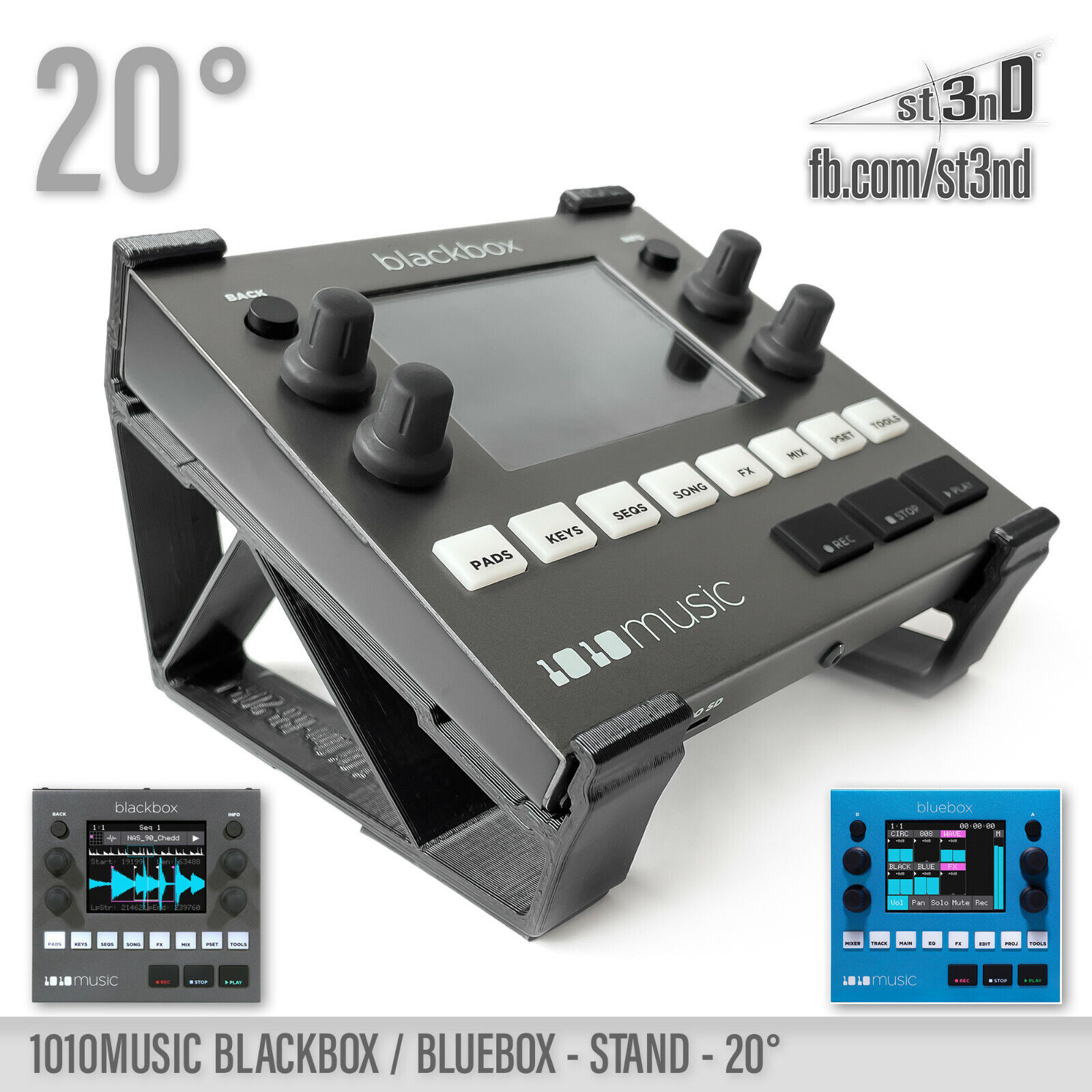


As an eBay Partner, we earn from qualifying purchases. This helps support our independent vintage technology research.