ZEISS IKON CONTAX S
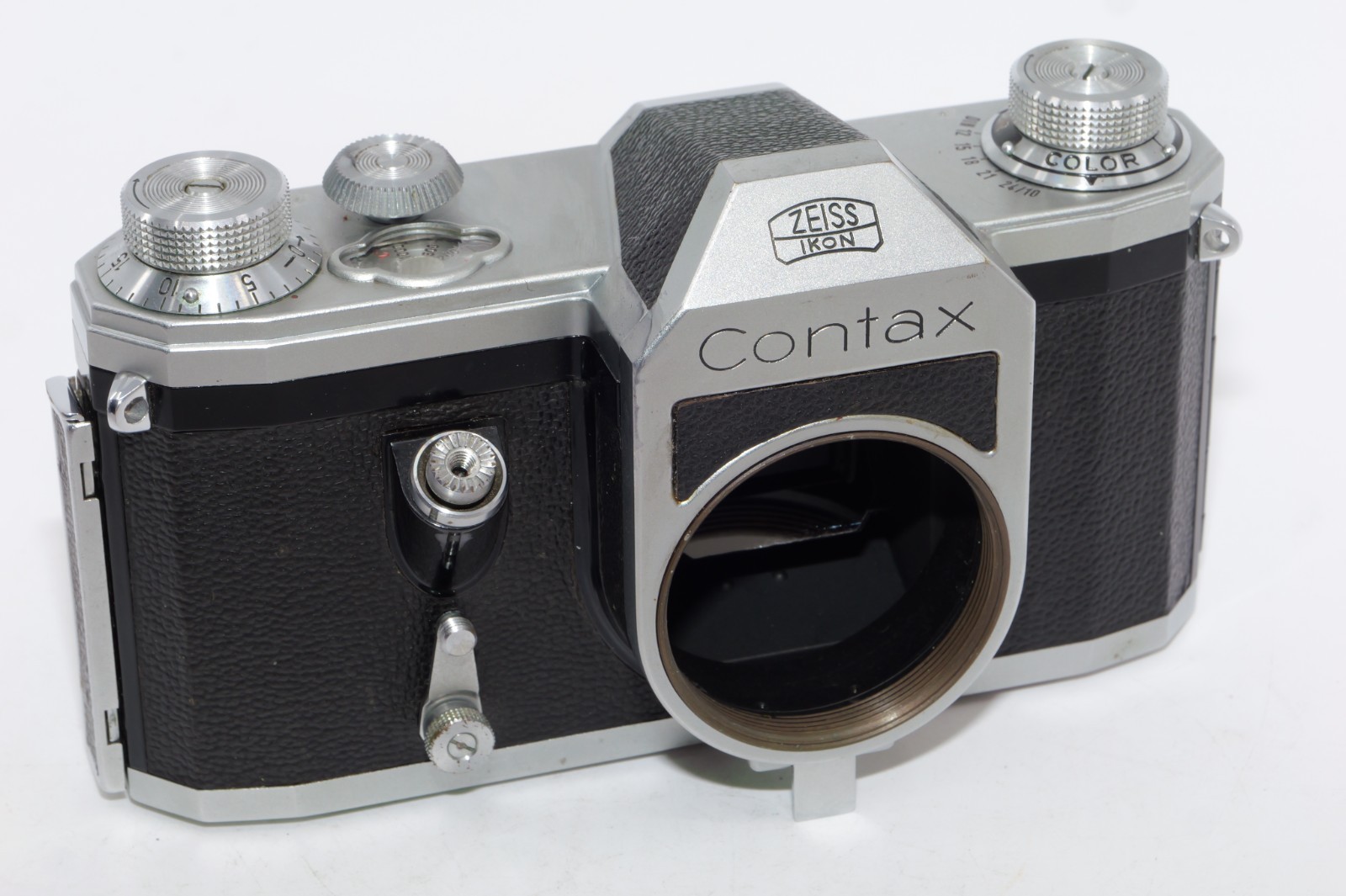
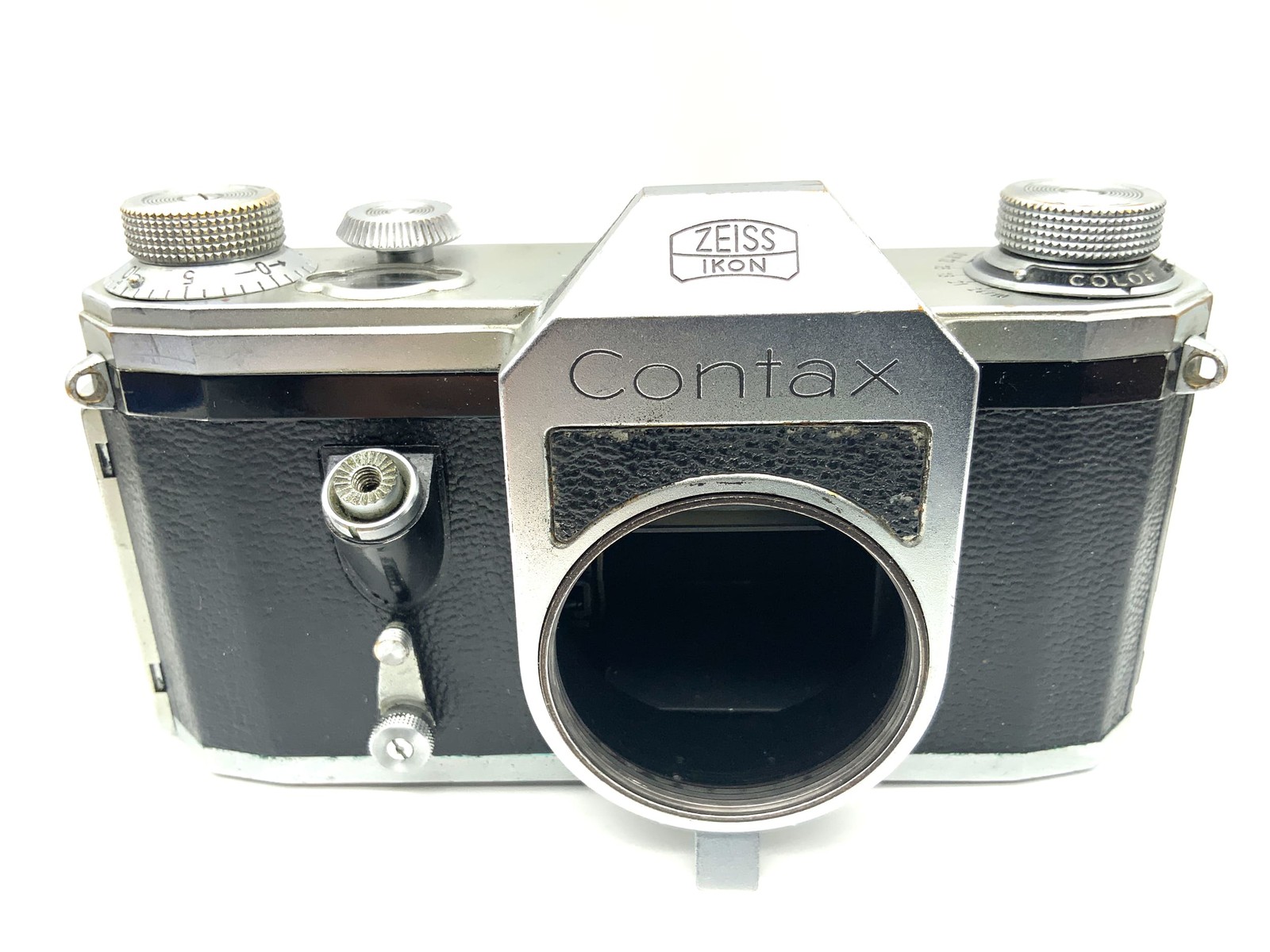
The Zeiss Ikon Contax S is a 35mm single-lens reflex (SLR) camera introduced in 1949 by VEB Zeiss Ikon in Dresden, East Germany. It holds the distinction of being the first 35mm SLR camera with a fixed pentaprism eye-level viewfinder, establishing the now-standard SLR optical layout that would dominate photography for decades.
Overview
The Contax S was developed in the post-World War II era by the remnants of the original Zeiss Ikon engineering team now operating under Soviet-controlled East Germany. It marked a pivotal transition for the Contax brand, which had previously been known for high-end rangefinder cameras like the pre-war Contax II and III. The "S" in its name is widely interpreted to stand for Spiegelreflex, German for "reflex mirror," underscoring its identity as a new direction for the line. Designed to compete with emerging SLR systems while leveraging Zeiss’s reputation for precision optics and mechanical excellence, the Contax S targeted professional photographers and advanced amateurs seeking accurate through-the-lens composition.
The camera featured a vertically traveling metal focal-plane shutter, a fixed right-angle pentaprism, and a bayonet lens mount—the Contax/Rockar bayonet (later known as the M42 screw mount predecessor). Its design prioritized durability and optical precision, with a rigid die-cast aluminum chassis and finely machined components. The Contax S also introduced the now-standard feature of a horizontally oriented ground-glass focusing screen, allowing for a natural left-right image orientation in the viewfinder—a significant improvement over earlier SLRs that produced inverted or mirrored images.
As the first in a lineage of East German SLRs, the Contax S laid the foundation for future models such as the Contax D, F, and FX series. It also influenced the broader SLR market, setting benchmarks in ergonomics and optical design that competitors would follow. Despite limited production due to postwar industrial constraints, the Contax S became a symbol of German engineering resilience and innovation during a period of political and economic upheaval.
Specifications
| Specification | Value |
| Type | 35mm Single-Lens Reflex (SLR) |
| Film Format | 35mm (135 film) |
| Years Produced | 1949–1952 |
| Lens Mount | Contax S bayonet (later adapted to M42 screw mount in successor models) |
| Shutter | Vertical-travel metal focal-plane shutter; speeds from 1 sec to 1/1250 sec, plus B |
| Shutter Speeds | B, 1, 1/2, 1/5, 1/10, 1/25, 1/50, 1/100, 1/250, 1/500, 1/1000, 1/1250 sec |
| Synchronization | X and M flash sync at 1/40 sec via PC terminal |
| Metering | None (uncoupled); accessory CdS meter available separately |
| Exposure Modes | Manual only |
| Viewfinder | Fixed pentaprism with ground-glass focusing screen, central split-image rangefinder (early example of microprism collar integration in later production) |
| Focusing Screen | Interchangeable (standard ground glass with central split-image spot) |
| Film Advance | Lever wind (single stroke, approx. 130° throw), frame counter automatic reset on back opening |
| Frame Counter | Mechanical, counts up, resets when back opened |
| Dimensions | Approx. 148 × 95 × 60 mm (W×H×D) |
| Weight | Approx. 750 g (body only, without lens) |
| Battery | None required (fully mechanical operation) |
Key Features
- First fixed pentaprism SLR with eye-level, right-side finder: Established the modern SLR viewfinder standard with an upright, laterally correct image.
- Vertical metal focal-plane shutter: Enabled faster maximum shutter speed (1/1250 sec) than most contemporaries, which typically maxed at 1/500 or 1/1000 sec.
- Contax S bayonet mount: Precursor to the universal M42 screw mount; allowed rapid lens interchangeability and influenced future SLR lens standards.
- Interchangeable focusing screens: Rare for its time, allowing customization for different shooting needs (e.g., macro, action).
- Robust all-metal construction: Built to professional standards with precision-machined components, reflecting Zeiss Ikon’s legacy of engineering excellence.
Historical Context
The Contax S was developed in the aftermath of World War II, following the partition of Germany and the relocation of key Zeiss personnel and tooling to Dresden in the Soviet occupation zone. The original Contax rangefinder line had ceased production in 1944, and the new East German Zeiss Ikon sought to reestablish its reputation in a competitive and evolving camera market. The Contax S was unveiled at the Leipzig Spring Fair in 1949, coinciding with a growing interest in SLR systems that offered through-the-lens viewing—particularly appealing to press and studio photographers.
At the time, most SLRs were either twin-lens reflex (TLR) models or waist-level SLRs with dim, reversed images. The Contax S’s pentaprism design solved these limitations, offering a bright, eye-level view with correct orientation. While the Italian Rectaflex had introduced a pentaprism SLR slightly earlier in 1948, the Contax S was the first to feature a fixed pentaprism with a horizontal ground-glass screen, ensuring consistent image orientation and usability. This innovation made it a benchmark for future SLRs, including the Exakta VX (1950) and eventually the Asahi Pentax series.
Despite its technical achievements, the Contax S faced challenges in distribution due to Cold War trade barriers. Western markets received limited quantities, and production numbers remained low—estimated at around 15,000–20,000 units—due to material shortages and industrial constraints in East Germany. Nevertheless, it earned acclaim among professionals for its build quality and optical performance, particularly when paired with Carl Zeiss Jena lenses such as the Biogon 35mm f/2.8, Sonnar 85mm f/2, and Flektogon 35mm f/2.4.
Collectibility & Value
The Contax S is a highly collectible camera, prized for its historical significance as the first true modern SLR. Surviving examples in working condition typically command prices between $800 and $1,800, depending on condition, included lenses, and originality. Fully functional units with rare accessories—such as the original leather case, instruction manual, or the Contaflex CdS exposure meter—are especially sought after. Collectors value cameras with crisp shutter operation, clear viewfinders, and uncorroded focusing helicals.
Common issues include shutter curtain deterioration (particularly in poorly stored units), lubricant hardening in the focal-plane shutter, and mold or haze on the pentaprism or focusing screen. The bayonet mount can also suffer from wear or misalignment, affecting lens seating and flange focal distance. Because the camera is fully mechanical, it does not rely on batteries, but accurate shutter timing requires professional servicing. Original lenses are often found with front element haze or internal dust, though optical performance usually remains strong.
Due to its limited production and age, finding a complete, unrestored Contax S is rare. Restoration should be approached with caution, as replacement parts are scarce and incorrect disassembly can permanently damage the shutter or mirror mechanism. Preservation over restoration is often recommended for collectors.
Similar Cameras
- Rectaflex Standard Series 1000 (Italy, 1948): First pentaprism SLR, but with a less refined shutter and ergonomics.
- Exakta VX (Germany, 1950): Improved Exakta SLR with pentaprism, competing directly with the Contax S.
- Praktiflex (Germany, 1949): Early East German SLR with waist-level finder, predecessor to the Praktica line.
- Alpa-Reflex (Switzerland, 1944–1950s): Precision-engineered SLR with interchangeable components, targeting professionals.
- Nikon I (Japan, 1948): Rangefinder, but part of Nikon’s early professional line that would later evolve into the F-series SLRs.
Repair & Maintenance
The Contax S requires no batteries and operates entirely mechanically, making it reliable in long-term storage if properly maintained. However, its vertical metal focal-plane shutter is complex and sensitive to dried lubricants, which can cause inconsistent speeds or curtain jams. Shutter servicing should only be performed by technicians experienced with vintage German SLRs. The mirror mechanism and wind-lever linkage also require periodic cleaning and lubrication to ensure smooth operation.
Common maintenance issues include stiff film advance, inaccurate frame counting due to counter gear wear, and light leaks from deteriorated body seals. The focusing screen can be replaced, but original screens are fragile and difficult to source. When purchasing a Contax S, verify that the shutter fires cleanly at all speeds, the film advance is smooth, and the lens mount is secure. Avoid cameras with cloudy or separated prisms, as prism replacement is nearly impossible today. Regular use and storage in a dry, temperature-stable environment are the best ways to preserve functionality.
eBay Listings
As an eBay Partner, we earn from qualifying purchases. This helps support our independent vintage technology research.
Related Models
- Zeiss Ikon Contaflex Alpha (1957-1959)
- Zeiss Ikon Contaflex Beta (1957-1959)
- Zeiss Ikon Contaflex I (1953-1958)
- Zeiss Ikon Contaflex II (1954-1958)
- Zeiss Ikon Contaflex III (1956–1959)
- Alpa 6 (1948-1953)
- Agfa Agfaflex
- Agfa Ambiflex
- Agfa Easy
- Agfa Futura Af zoom