ZEISS IKON CONTAFLEX IV
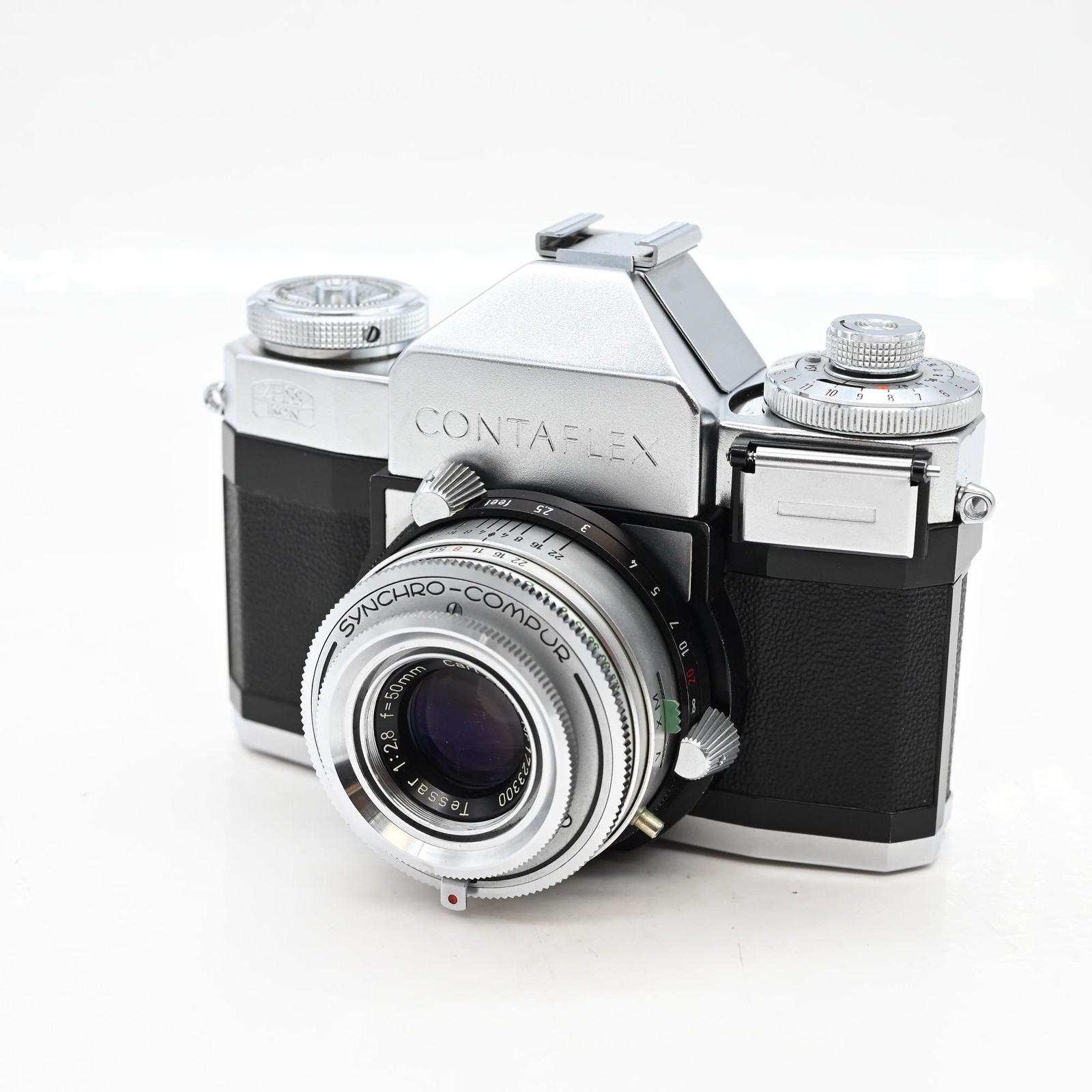
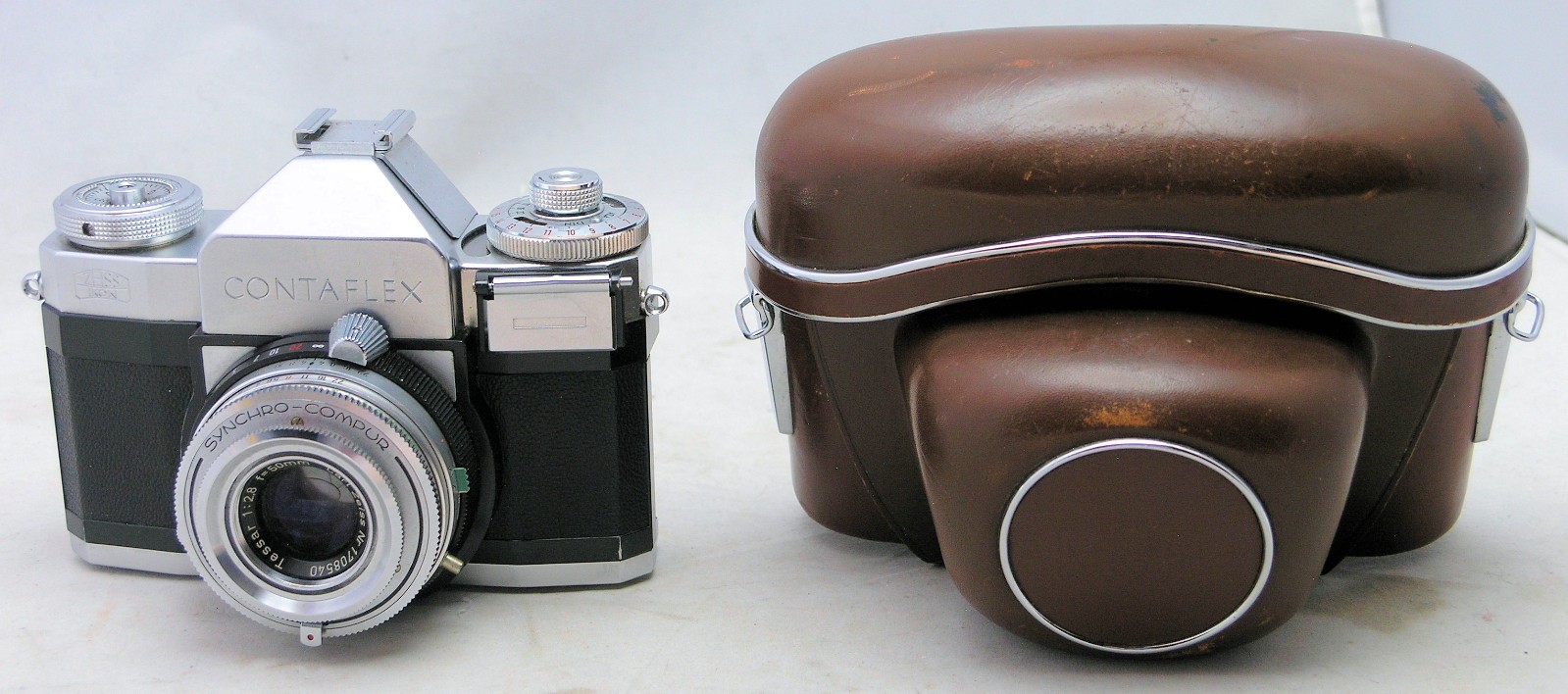
The Zeiss Ikon Contaflex IV is a high-end 35mm single-lens reflex (SLR) camera produced between 1956 and 1959, distinguished by its fast f/2 Sonnar lens and integrated selenium-cell exposure meter. Representing the pinnacle of Zeiss Ikon’s early fixed-lens SLR development, the Contaflex IV combined precision engineering with advanced optics, targeting professional photographers and serious amateurs during a transitional period in camera design.
Overview
Introduced in 1956, the Contaflex IV was part of Zeiss Ikon’s second-generation Contaflex series, which evolved from the original Contaflex I and II models. It was developed during a period when SLR cameras were gaining traction for their ability to provide through-the-lens viewing, eliminating parallax error and enabling precise composition—particularly advantageous for close-up and macro photography. The Contaflex IV was positioned as a premium offering, combining the renowned optical quality of Carl Zeiss lenses with a mechanically sophisticated leaf shutter system and built-in exposure metering, a rarity in SLRs at the time.
Unlike interchangeable-lens SLRs that would dominate the market in later decades, the Contaflex IV featured a fixed, non-removable 50mm f/2 Carl Zeiss Sonnar lens, which was optically superior to the more common Tessar designs used in earlier models. This lens provided excellent contrast, sharpness, and low-light performance, making the camera suitable for available-light photography. The integration of a selenium-cell exposure meter—positioned around the lens barrel—allowed for stop-down metering with a needle visible in the viewfinder, a cutting-edge feature for its era. The camera was manufactured in Stuttgart, West Germany, and reflected the high standards of postwar German optical and mechanical engineering.
The Contaflex IV was succeeded in 1959 by the Contaflex Rapid and later models with interchangeable lenses, marking a shift in design philosophy. However, the IV remains one of the most collectible and technically refined models in the fixed-lens Contaflex line due to its combination of speed, metering, and build quality.
Specifications
| Specification | Value |
| Type | Single-Lens Reflex (SLR) |
| Film Format | 35mm (135 cartridge) |
| Years Produced | 1956–1959 |
| Lens Mount | Fixed (non-interchangeable) |
| Lens | Carl Zeiss 50mm f/2 Sonnar, 8 elements in 4 groups |
| Aperture Range | f/2 to f/22 |
| Focus | Manual, helical focus ring with distance scale (0.9m to ∞) |
| Shutter | Compur-Rapid leaf shutter |
| Shutter Speeds | 1 sec to 1/500 sec, plus B (Bulb) |
| Synchronization | X and M flash sync via PC terminal (1/30 sec sync speed) |
| Metering | Selenium-cell exposure meter (no battery required) |
| Exposure Modes | Manual only; stop-down metering via viewfinder needle |
| Viewfinder | Ground-glass screen with Fresnel lens, central microprism spot (added in later units), frame lines for 50mm |
| Finder Magnification | Approx. 0.9x (at infinity) |
| Focusing Aid | Split-image rangefinder (early models), later models with microprism collar |
| Film Advance | Single-stroke lever (90° throw), frame counter automatic reset |
| Frame Count | 36 exposures max |
| Dimensions | 140 mm (W) × 85 mm (H) × 80 mm (D) |
| Weight | Approx. 730 g (with lens and body, no film) |
Key Features
- 50mm f/2 Carl Zeiss Sonnar lens: One of the fastest lenses available on a 35mm SLR at the time, offering superior low-light performance and shallow depth of field.
- Integrated selenium-cell exposure meter: No battery required; meter needle visible in the viewfinder for stop-down exposure reading.
- Compur-Rapid leaf shutter: Provides flash sync at all speeds, with a top speed of 1/500 sec—uncommon for leaf-shutter SLRs.
- Precision mechanical construction: All-metal body with leatherette covering, machined focusing helix, and robust internal mechanisms.
- Through-the-lens metering preview: Stop-down lever allows viewing and metering at selected aperture, improving exposure accuracy.
Historical Context
The Contaflex IV was released at a critical juncture in SLR development. While Japanese manufacturers like Asahi (later Pentax) were beginning to explore interchangeable-lens SLRs with focal-plane shutters, Zeiss Ikon pursued a different path—refining the fixed-lens, leaf-shutter design for maximum optical and mechanical precision. The IV was a direct evolution of the Contaflex III (which introduced the f/2.8 Tessar and metering), but with the significant upgrade of the Sonnar lens, elevating its status among contemporaries.
It competed with cameras like the Kodak Retina Reflex (Type S, 1957) and the Alpa-Reflex (Swiss-made, modular system), but distinguished itself through the combination of Zeiss optics and a faster maximum aperture. Despite its technical excellence, the Contaflex IV faced limitations due to its fixed lens, which restricted versatility compared to emerging systems. Nevertheless, it was well-received in Europe and among professional photographers who valued optical quality and metering convenience in a compact SLR form.
Collectibility & Value
The Contaflex IV is a sought-after model among collectors of vintage German cameras, particularly those interested in the evolution of SLR technology and Zeiss optics. Due to its relatively short production run (1956–1959) and the precision manufacturing involved, surviving examples in good working condition are relatively rare. Current market values range from $800 to $1,500 USD, depending on condition, lens clarity, shutter accuracy, and meter responsiveness.
When purchasing a Contaflex IV, collectors should inspect the selenium meter for deterioration (common issue: fading or cracking of the cell, leading to inaccurate readings), test all shutter speeds (especially 1/500 and 1 sec), and check for fungus or haze in the Sonnar lens. The focusing mechanism should be smooth without play, and the film advance should operate crisply. While the camera requires no batteries for operation, the selenium meter’s functionality is a key value factor. Restorations are possible but costly due to the complexity of the leaf shutter and meter assembly.
Similar Cameras
- Kodak Retina Reflex Type S (1957) – German-built, interchangeable lenses, f/2 Schneider Xenar, selenium meter
- Alpa-Reflex ST (1955–1958) – Swiss precision, modular design, high-end optics, no built-in meter
- Contax S (1949) – Early pentaprism SLR, M42 mount, focal-plane shutter, no meter
- Praktica FX 3 (1958) – East German M42 SLR, focal-plane shutter, aimed at broader market
- Topcon R (1957) – Japanese SLR with fast lenses and advanced viewfinder, competing in pro segment
Repair & Maintenance
The Contaflex IV requires no batteries for operation—the selenium-cell meter generates its own current but may degrade over time, leading to underexposure. Common issues include stiff or inaccurate shutter speeds, often due to dried lubricants in the Compur-Rapid shutter. These shutters can be disassembled and cleaned by experienced technicians, though parts are no longer manufactured. The helical focus mechanism may develop play or resistance and benefits from careful lubrication. The viewfinder screen can deteriorate or delaminate; replacement is possible but requires precision alignment. Due to the complexity of the integrated lens-shutter-meter assembly, full servicing is recommended only by specialists in vintage German cameras. Regular use and storage in a dry, temperature-stable environment help preserve functionality.
eBay Listings


As an eBay Partner, we earn from qualifying purchases. This helps support our independent vintage technology research.
Related Models
- Zeiss Ikon Contaflex Alpha (1957-1959)
- Zeiss Ikon Contaflex Beta (1957-1959)
- Zeiss Ikon Contaflex I (1953-1958)
- Zeiss Ikon Contaflex II (1954-1958)
- Zeiss Ikon Contaflex III (1956–1959)
- Alpa 6 (1948-1953)
- Agfa Agfaflex
- Agfa Ambiflex
- Agfa Easy
- Agfa Futura Af zoom