ZEISS IKON CONTAFLEX III
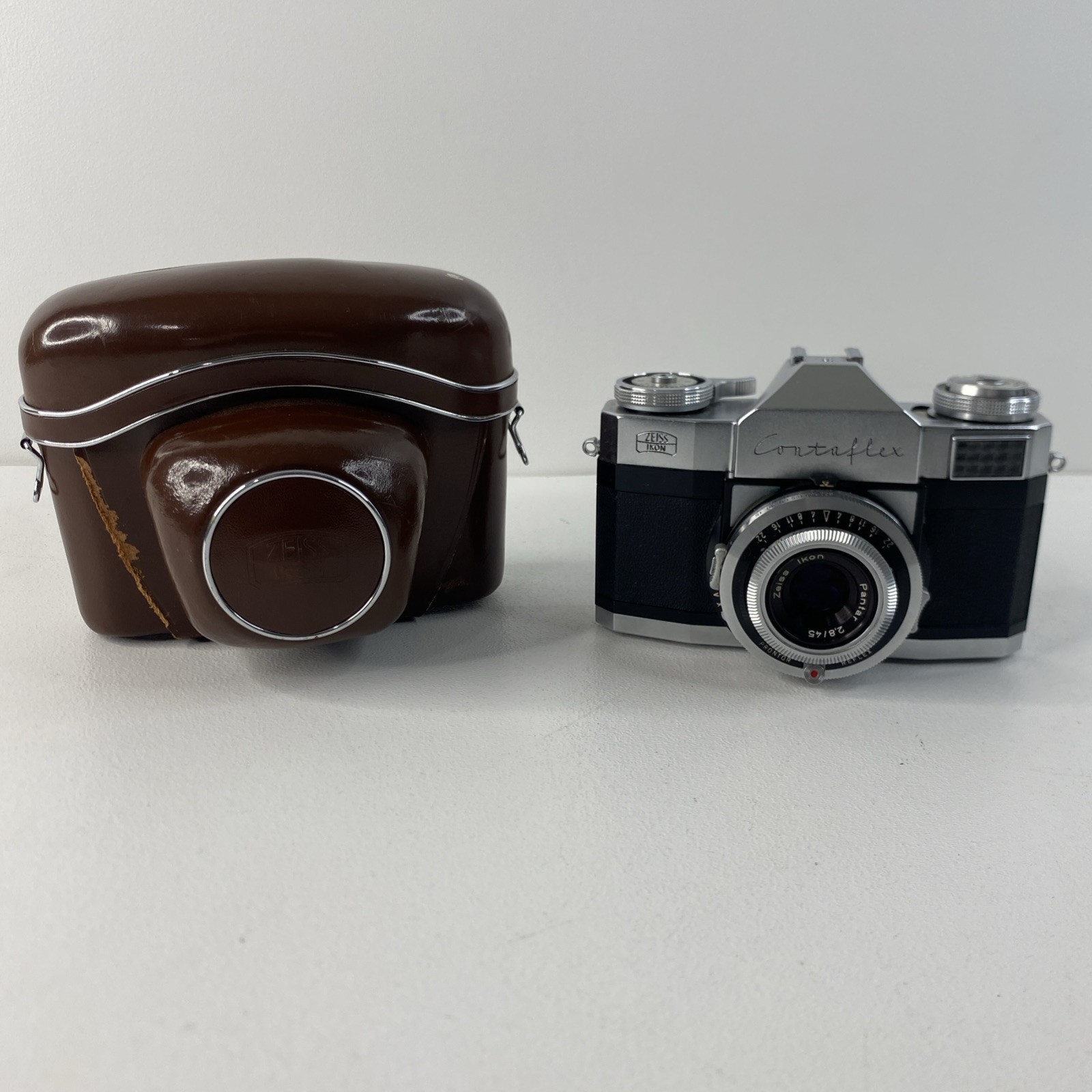
The Zeiss Ikon Contaflex III is a fixed-lens 35mm single-lens reflex (SLR) camera introduced in 1956 as part of the second generation of the Contaflex line. Distinguished by its fast Carl Zeiss Sonnar f/2 lens, the Contaflex III was engineered for photographers seeking superior optical performance in a compact SLR body, targeting advanced amateurs and professionals during a transitional period in camera design.
Overview
The Contaflex III was produced by Zeiss Ikon in Stuttgart, West Germany, from 1956 to 1959. It represented a significant evolution from the original Contaflex (I and II), which featured slower f/3.2 Tessar lenses. The III was part of a broader push by Zeiss Ikon to refine and modernize their SLR offerings, introducing a faster lens and improved mechanical systems while retaining the innovative leaf shutter design within the lens assembly. Unlike later SLRs with focal-plane shutters, the Contaflex III used a Compur-Rapid shutter located in the lens, enabling flash synchronization at all speeds—a major advantage for studio and flash photography.
Targeted at the upper tier of the amateur and semi-professional market, the Contaflex III was marketed as a precision instrument, emphasizing German engineering, optical excellence, and mechanical reliability. It shared its core body design with the Contaflex II and Super (B), but its f/2 Sonnar lens set it apart as the fastest in the Contaflex lineup at the time. The camera was designed for users who prioritized image quality and build precision over rapid-fire operation or interchangeable lenses. It lacked a built-in light meter, requiring external or handheld metering, which was typical for high-end cameras of the mid-1950s.
Within the Contaflex series, the III occupied a niche between the standard Tessar models and the more advanced Super (B) and Rapid variants. Its release coincided with Zeiss Ikon’s efforts to compete with emerging Japanese SLRs and maintain dominance in the European premium camera market. While not as widely exported as later models, the Contaflex III gained a reputation among discerning photographers for its sharp optics and robust construction.
Specifications
| Specification | Value |
| Type | Single-Lens Reflex (SLR) |
| Film Format | 35mm (135 film), 24 x 36mm frame size |
| Years Produced | 1956–1959 |
| Lens Mount | Fixed Carl Zeiss Sonnar 45mm f/2 (no interchangeable lens system) |
| Shutter | Compur-Rapid leaf shutter, speeds from 1 sec to 1/500 sec, plus B |
| Aperture Range | f/2 to f/22 |
| Metering | None (no built-in light meter) |
| Exposure Modes | Manual only (shutter speed and aperture set manually) |
| Viewfinder | Waist-level finder with pop-up hood; ground glass screen with central microprism (early version without Fresnel) |
| Focusing | Manual via rack-and-pinion knob on side of body |
| Flash Sync | X and M contacts at shutter (sync at all speeds due to leaf shutter) |
| Film Advance | Single-stroke crank (90° rotation), frame counter automatic reset on back opening |
| Frame Counter | Manual reset via knob on baseplate |
| Dimensions | 105 mm (H) × 95 mm (W) × 60 mm (D); approx. 790 g (body with lens) |
| Construction | Die-cast alloy body, leatherette covering, metal lens barrel |
Key Features
- Carl Zeiss Sonnar 45mm f/2 lens: One of the fastest standard lenses available on a 35mm SLR at the time, delivering exceptional contrast and sharpness, particularly in low light.
- Leaf shutter with flash sync at all speeds: The Compur-Rapid shutter enables X-sync at 1/500 sec, a rare and valuable feature for flash photography.
- Precision mechanical operation: Fully mechanical shutter and film advance with no battery dependency, ensuring reliability and longevity.
- Waist-level viewfinder with microprism spot: Facilitates accurate manual focusing, though lacking a pentaprism for eye-level viewing.
- Compact fixed-lens SLR design: Combines SLR accuracy with a relatively compact form factor compared to contemporary modular systems.
Historical Context
The Contaflex III was launched in 1956 during a pivotal era in camera development. While Japanese manufacturers like Asahi (later Pentax) were beginning to introduce more affordable SLRs with focal-plane shutters and pentaprisms, German brands such as Zeiss Ikon emphasized optical and mechanical refinement. The III was Zeiss Ikon’s answer to demand for faster lenses in SLR systems, leveraging the Sonnar design’s reputation for speed and contrast. It competed indirectly with the Contax S (a mirror-locking SLR with pentaprism) and predated the widespread adoption of through-the-lens (TTL) metering.
Despite its technical merits, the Contaflex III had limited market penetration outside Europe. Its lack of a built-in meter and pentaprism made it less appealing to casual photographers, while professionals often preferred interchangeable lens systems. Nevertheless, it was well-regarded among technical photographers and studio users who valued its flash capabilities and lens quality. Production ended in 1959 as Zeiss Ikon shifted focus to the Contaflex Super (B) and Rapid models, which included selenium metering and updated shutters.
Collectibility & Value
The Contaflex III is a sought-after model among collectors of vintage German cameras, particularly those interested in the evolution of SLR technology. Its combination of a fast Sonnar lens and mechanical precision makes it a standout in the Contaflex series. As of 2024, working examples in good condition typically sell for $600–$1,000 USD, with mint, fully serviced units reaching higher prices. Rarity is moderate—fewer were produced than the Tessar-equipped variants, and many have suffered from shutter deterioration or lens fungus due to age.
When purchasing a Contaflex III, collectors should inspect the shutter for consistency across all speeds, especially 1/500 sec and 1 sec, as the Compur-Rapid mechanism is prone to sticking if unlubricated. The focusing mechanism should operate smoothly without play, and the lens elements must be free of haze, fungus, or separation. The leather bellows of the waist-level finder are also vulnerable to deterioration. Because the camera is fully mechanical, no battery is needed, but servicing by a technician experienced with leaf shutters is often necessary for reliable operation.
Similar Cameras
- Konica F (1960) – Japan’s first SLR with a pentaprism and high-speed lens (Hexanon 52mm f/1.4), though later and more advanced.
- Alpa 104 (1958) – Swiss-made precision SLR with interchangeable lenses and leaf shutters, targeting a similar high-end market.
- Exakta VX (1950s) – German SLR with focal-plane shutter and wide lens selection, popular among professionals.
- Praktina FX (1952–1960) – Modular SLR system from KW, offering interchangeable lenses and high build quality.
- Contaflex Super (B) (1957–1962) – Direct successor with built-in selenium meter and updated shutter, sharing the same body design.
Repair & Maintenance
The Contaflex III requires no batteries and operates entirely mechanically, making it reliable once properly serviced. The Compur-Rapid shutter is the most critical component and often requires cleaning, re-lubrication, and timing adjustment by a specialist. Common issues include slow shutter speeds (especially 1 sec), sticky blades, and inconsistent 1/500 sec performance. The film advance mechanism is generally robust but may develop resistance if not lubricated. The focusing knob can wear over time, leading to backlash. Regular CLA (Clean, Lubricate, Adjust) by a technician familiar with vintage German cameras is recommended every 10–15 years for active use. Replacement parts are scarce, so preservation of original components is essential.
eBay Listings


As an eBay Partner, we earn from qualifying purchases. This helps support our independent vintage technology research.
Related Models
- Zeiss Ikon Contaflex Alpha (1957-1959)
- Zeiss Ikon Contaflex Beta (1957-1959)
- Zeiss Ikon Contaflex I (1953-1958)
- Zeiss Ikon Contaflex II (1954-1958)
- Zeiss Ikon Contaflex IV (1956-1959)
- Alpa 6 (1948-1953)
- Agfa Agfaflex
- Agfa Ambiflex
- Agfa Easy
- Agfa Futura Af zoom