ZEISS IKON CONTAFLEX BETA
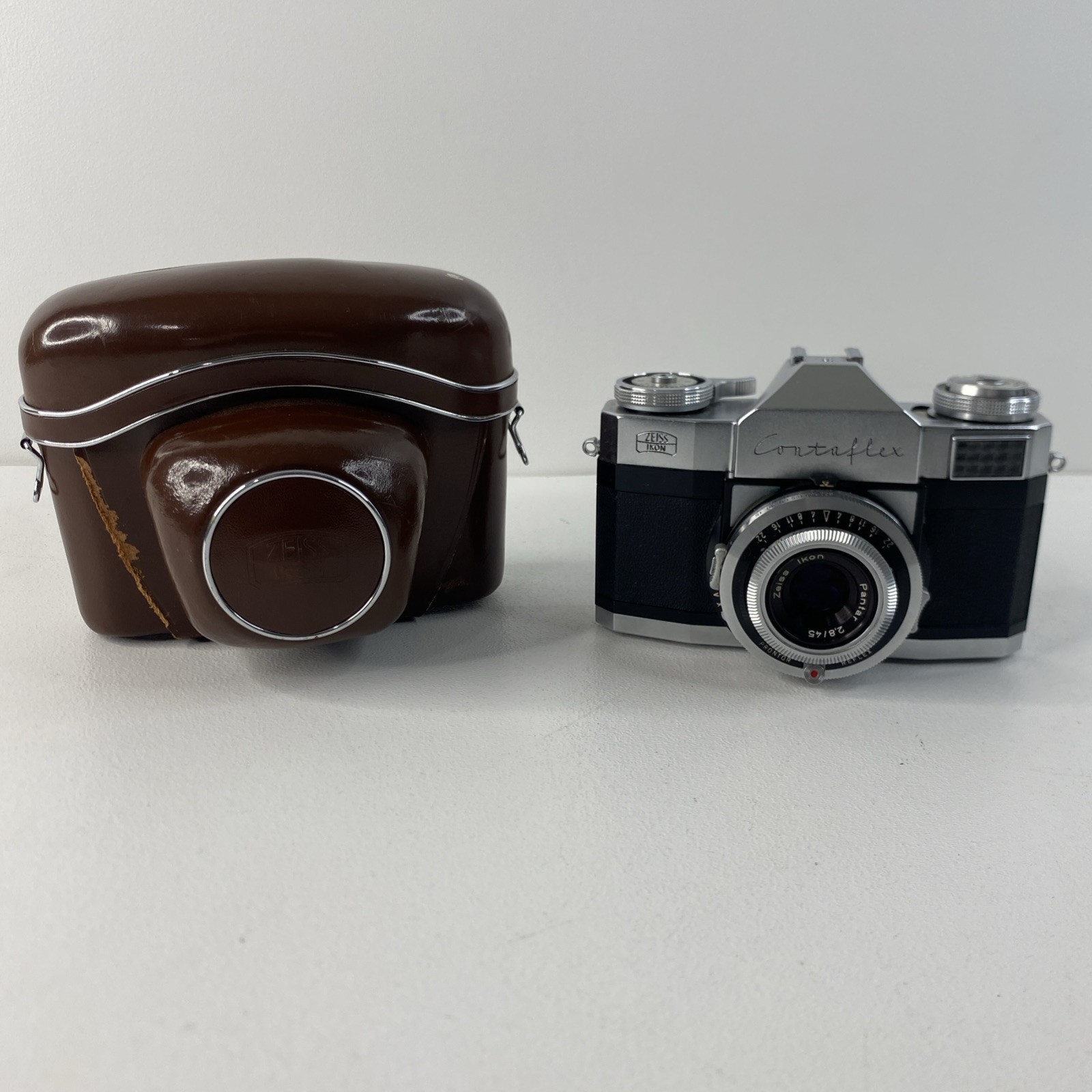
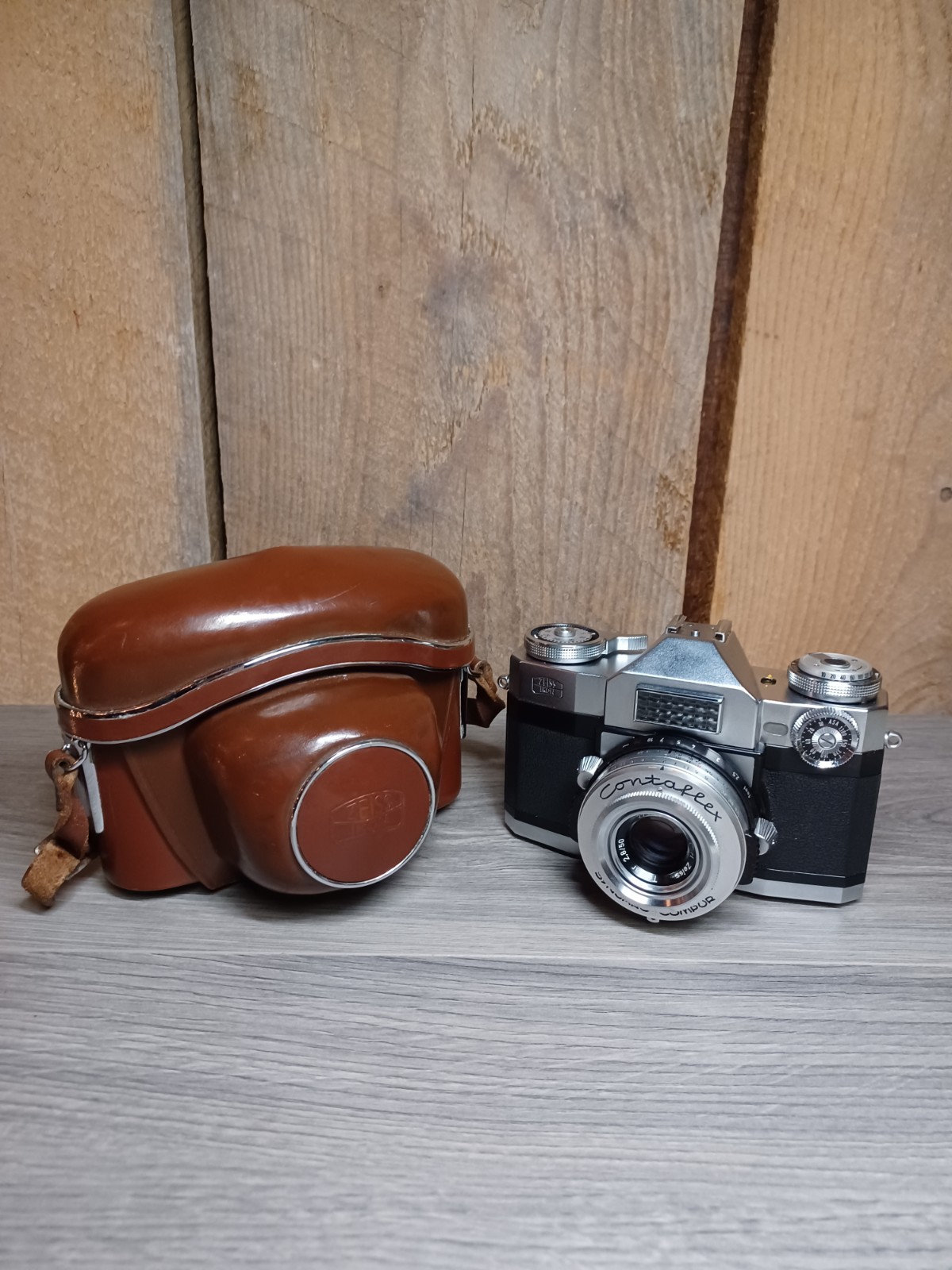
Meet the Contaflex Beta: Zeiss Ikon’s bold play to bring SLR precision to everyday photographers. Released in 1957, this compact 35mm single-lens reflex camera stripped away the luxury trappings of its siblings without sacrificing core functionality. It’s a no-frills Zeiss—built like a tank, engineered for simplicity, and quietly revolutionary for its time, thanks to a self-powered selenium meter tucked into the viewfinder housing. For amateurs craving through-the-lens composition and reliable exposure guidance, the Beta was a gateway into serious photography at a price that didn’t require a second mortgage.
Overview
Produced from 1957 to 1959, the Contaflex Beta arrived as part of Zeiss Ikon’s first wave of SLRs, following the groundbreaking Contaflex I of 1953. While the Contaflex I and II wore the prestigious Tessar lenses and premium Compur shutters, the Beta took a different path—streamlined, affordable, and focused on essentials. It shared the same rugged folding body, pop-up waist-level finder, and 45mm focal length as its siblings, but swapped the Tessar for a more economical 45mm f/2.8 Pantar triplet lens made in Zeiss-Oberkochen. This three-element design kept costs down, yet still delivered crisp results in daylight and decent performance in moderate light.
What truly set the Beta apart was its built-in selenium light meter—a rarity among entry-level SLRs of the era. Unlike the base Contaflex I, which offered no metering at all, the Beta let photographers judge exposure with a quick glance at the needle visible through the top plate window. No batteries required. The leaf shutter, built into the lens assembly, was another smart touch: flash sync at every speed, including 1/300 sec, made it a natural for fill-flash and action shots. For its time, the Beta wasn’t just practical—it was cleverly engineered to punch above its weight.
Specifications
| Specification | Value |
| Type | Single-Lens Reflex (SLR) |
| Film Format | 35mm (135 cartridge) |
| Years Produced | 1957–1959 |
| Lens Mount | Fixed lens (non-interchangeable) |
| Shutter | Compur-Rapid shutter, speeds B, 1–1/300 sec |
| Aperture Range | f/2.8 to f/22 |
| Metering | Built-in selenium cell exposure meter (center-weighted) |
| Exposure Modes | Manual exposure with meter-assisted settings |
| Viewfinder | Waist-level finder with ground glass screen (pop-up) |
| Focusing | Manual focus via helical focus ring (focus throw ~90°) |
| Flash Sync | PC terminal, X-sync at all shutter speeds |
| Film Advance | Knurled lever (single stroke, ~180° rotation) |
| Frame Counter | Automatic reset on back opening, counts up from 1 |
| Battery | None (selenium meter is self-powered) |
| Dimensions | Approx. 130 × 85 × 90 mm (W×H×D) |
| Weight | Approx. 740 g (with lens, body only) |
Key Features
- Integrated Selenium Light Meter: One of the first SLRs in its class to include a built-in, battery-free exposure meter, visible via a needle in the top plate window.
- Leaf Shutter with Full Flash Sync: The Compur-Rapid shutter allows flash synchronization at all speeds, including 1/300 sec, ideal for fill-flash and action photography.
- Fixed 45mm f/2.8 Pantar Lens: A cost-effective triplet lens offering sharp results in daylight and moderate low-light performance.
- Compact SLR Design: Retains the signature folding body and waist-level finder of the Contaflex line, making it more portable than contemporary SLRs.
- Precision Build Quality: Machined metal body, leather covering, and Zeiss engineering ensure durability and mechanical reliability.
Historical Context
The late 1950s marked a turning point for 35mm photography. Rangefinders still ruled, but SLRs were gaining ground—offering direct viewing through the lens and eliminating parallax. German manufacturers led the charge: Ihagee with the Exakta, KW with the Praktica, and Zeiss Ikon with the Contaflex series. Yet most early SLRs were either complex tools for enthusiasts or priced beyond reach. The Beta entered this landscape as a compromise with integrity: a true Zeiss-branded SLR that didn’t demand a pro’s budget.
It went head-to-head with the Kodak Retina Reflex Type I, Wirgin Edixa Reflex, and early Praktica FX models. While those often featured interchangeable lenses, they lacked built-in meters. The Beta flipped the script—fixed lens, yes, but with a working selenium meter right in the viewfinder. That gave it a real usability edge for photographers who valued exposure confidence over lens flexibility. Still, the Pantar lens couldn’t match the contrast and resolving power of the Tessar in higher-end Contaflex models. As a result, the Beta carved out a quiet niche: the thoughtful beginner’s SLR, wrapped in Zeiss craftsmanship.
Collectibility & Value
Today, the Contaflex Beta stands as a compelling artifact of mid-century camera democratization. It’s not the rarest or fastest Zeiss, but it’s a smart piece of engineering history—a moment when one of Germany’s finest optical houses said, “SLRs don’t have to be complicated.” In good working order, prices range from $250 to $400 USD, depending on condition, lens clarity, and whether the selenium meter still responds. Fully functional meters are increasingly scarce; many have dimmed or failed over time, though they don’t affect the camera’s mechanical operation.
When hunting for a Beta, watch for shutter accuracy—especially at 1/250 and 1/300 sec—where dried lubricants can cause drag. The film advance lever is robust but may stiffen after decades of dormancy. The folding prism and waist-level finder are delicate; a hard drop can misalign the optics or damage the pop-up mechanism. Still, with no electronics and a sealed lens, the Beta is remarkably resilient. Clean glass, smooth shutter action, and intact leather are the collector’s trifecta.
Similar Cameras
- Kodak Retina Reflex Type I (1957) – Fixed 50mm f/2.8 Xenar, leaf shutter, no meter
- Wirgin Edixa-Mat Reflex (1958) – Interchangeable lenses, Prontor shutter, no meter
- Praktica FX 2 (1958) – M42 screw mount, focal-plane shutter, no meter
- Contaflex I (1953–1958) – Same body, 45mm f/2.8 Tessar, no meter
- Contaflex II (1954–1959) – Tessar lens, built-in meter, premium finish
Repair & Maintenance
One of the Beta’s charms? No batteries. The selenium meter powers itself, though aging cells often lose sensitivity or develop erratic readings. That won’t stop the camera from working—it just means you’ll rely on external metering. The Compur-Rapid shutter is a known quantity among vintage camera techs: durable, but prone to sticky blades or slow speeds if neglected. A proper CLA (Clean, Lubricate, Adjust) by a specialist in German classics can restore it to crisp performance. The film advance is simple and long-lasting, though dried grease may require attention after years in storage. The lens is sealed and best left untouched—unless haze or fungus has crept in due to poor storage. For lasting reliability, keep it dry, use it regularly, and treat it to professional servicing every decade or so.
eBay Listings

As an eBay Partner, we earn from qualifying purchases. This helps support our independent vintage technology research.
Related Models
- Zeiss Ikon Contaflex Alpha (1957-1959)
- Zeiss Ikon Contaflex I (1953-1958)
- Zeiss Ikon Contaflex II (1954-1958)
- Zeiss Ikon Contaflex III (1956–1959)
- Zeiss Ikon Contaflex IV (1956-1959)
- Alpa 6 (1948-1953)
- Agfa Agfaflex
- Agfa Ambiflex
- Agfa Easy
- Agfa Futura Af zoom