YASHICA TL ELECTRO-X
Released in 1968, it represented an evolution in consumer SLR design with TTL metering, though it used conventional analog electronics rather than solid-state digital displays.
Overview
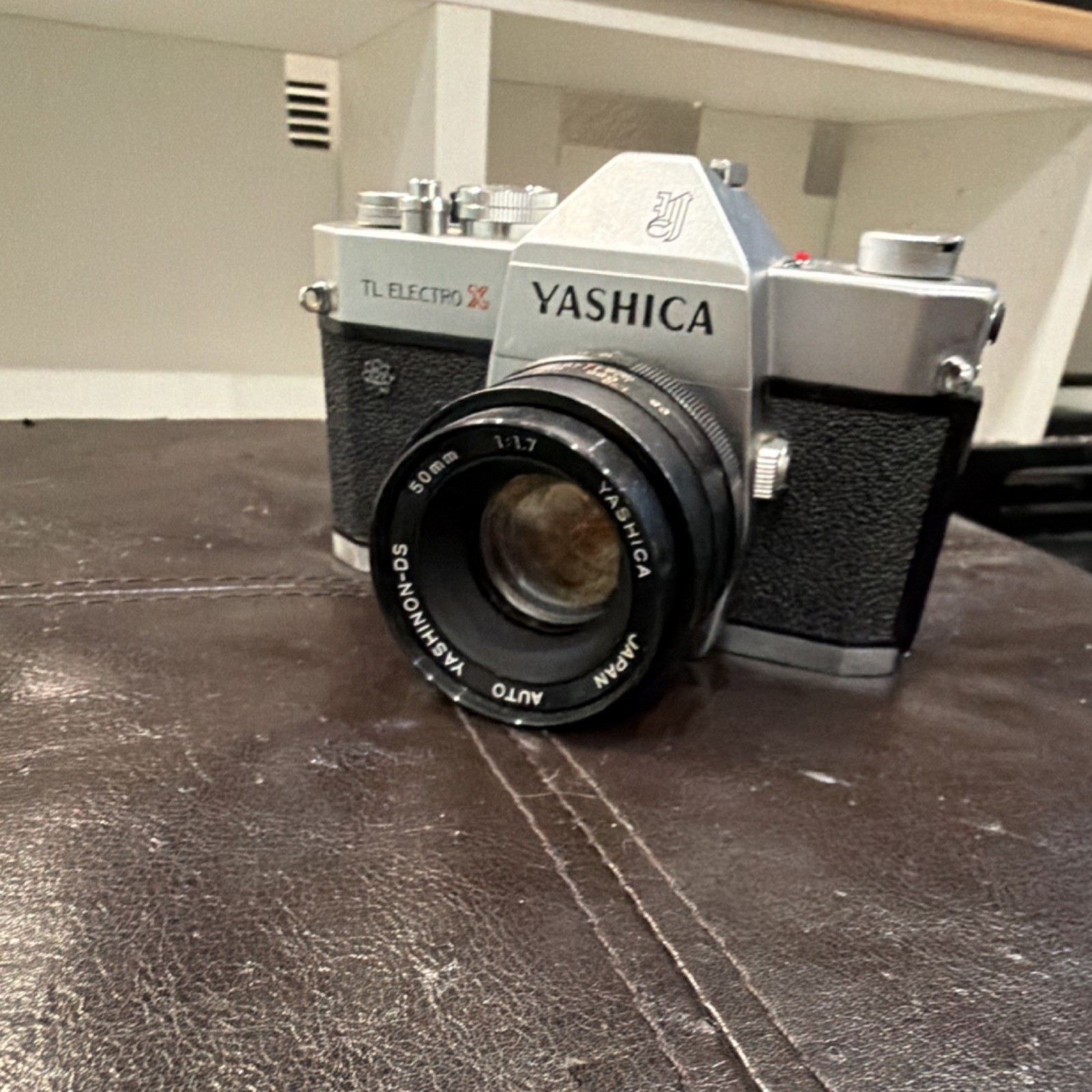
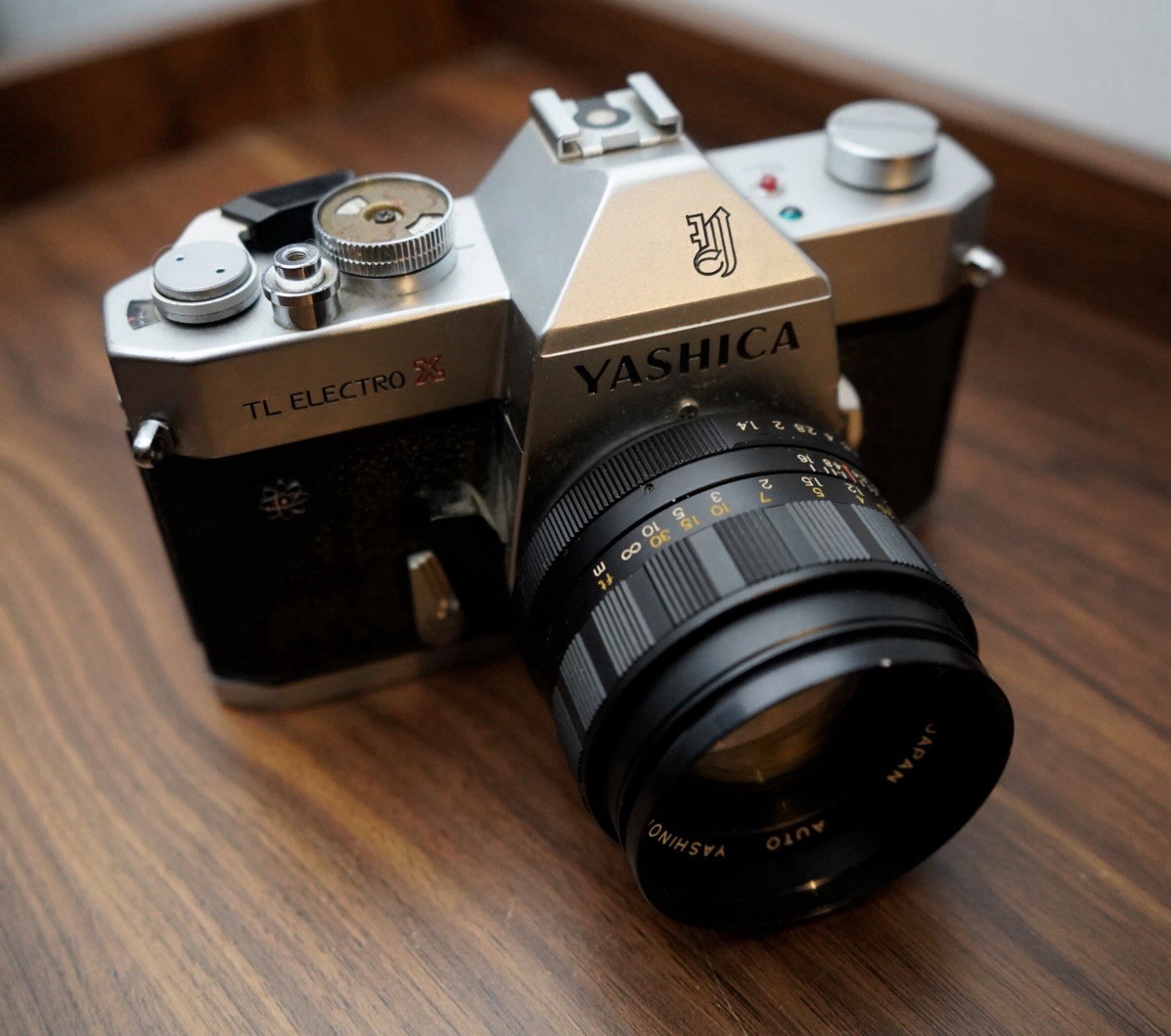
Introduced in 1970 and produced until approximately 1974, the Yashica TL Electro-X was a pivotal model in Yashica’s transition from mechanical to electronically assisted cameras. Positioned as a high-end amateur and semi-professional SLR, it was designed to appeal to photographers seeking advanced metering technology in a compact, reliable body. The camera utilized the widely adopted M42 screw-mount lens system, ensuring compatibility with a broad range of lenses from various manufacturers, including Carl Zeiss, Pentax, and Yashinon. This innovation predated similar implementations using LEDs by several years and demonstrated Yashica’s commitment to integrating emerging electronic technologies into mainstream photography.
The TL Electro-X was part of Yashica’s “TL” series, which emphasized lightweight construction, precision engineering, and modern electronics. It succeeded earlier models like the Yashica TL and TL-D and preceded the TL Super and later electro-mechanical models such as the FX series. Unlike fully automatic cameras, the TL Electro-X required manual aperture and shutter speed selection, but its TTL (through-the-lens) silicon photodiode metering system provided real-time feedback via the LED indicators. This hybrid approach—manual control with electronic assistance—struck a balance between user engagement and exposure accuracy, appealing to enthusiasts who valued both control and convenience.
Specifications
| Specification | Value |
| Type | 35mm Single-Lens Reflex (SLR) |
| Film Format | 35mm (135 cartridge) |
| Years Produced | 1968–1974 |
| Lens Mount | M42 × 1mm screw thread (Pentax Universal) |
| Shutter | Horizontal-travel, cloth focal-plane shutter; speeds from 1 sec to 1/1000 sec, plus B (bulb) |
| Metering | TTL silicon photodiode metering, center-weighted |
| Exposure Modes | Manual exposure with LED exposure guidance (no auto-exposure) |
| Viewfinder | Fixed pentaprism eye-level finder with microprism collar and split-image rangefinder spot; includes analog needle-type exposure indicator (center-the-needle) for manual exposure guidance |
| Dimensions | 140 mm (W) × 88 mm (H) × 48 mm (D); approx. 580 g (body only, no battery) |
| Battery | One 1.35V mercury PX625; modern equivalents such as Wein Cell (silver oxide) can maintain accuracy, but alkaline substitutes may cause meter inaccuracy due to higher voltage |
Key Features
- TTL center-weighted metering: Utilizes a silicon photodiode behind the reflex mirror for accurate through-the-lens light measurement.
- M42 lens compatibility: Supports a vast ecosystem of manual-focus lenses from Yashica, Pentax, Zeiss, and others.
- Compact and lightweight body: Constructed with die-cast metal chassis and polycarbonate top plate, balancing durability and portability.
- Precision shutter mechanism: Offers 1/1000 sec top speed with reliable cloth focal-plane shutter and flash synchronization at 1/60 sec (X-sync).
Historical Context
The Yashica TL Electro-X was released at a time of rapid technological evolution in the SLR market. The late 1960s saw the transition from all-mechanical cameras to models incorporating electronic components for metering and automation. Competitors such as Pentax, Minolta, and Canon were introducing aperture-priority auto-exposure models, but most still relied on analog needle displays or match-needle systems in the viewfinder. Yashica utilized TTL metering with an analog needle display in the viewfinder, consistent with contemporary designs, but did not employ LED technology. This innovation was made possible by advances in low-power semiconductor displays and reflected Yashica’s partnership with Japanese electronics firms.
Despite its technical novelty, the TL Electro-X remained a fully manual camera: users set both aperture and shutter speed, with the LEDs serving only as guidance. This approach contrasted with fully automatic models like the Pentax Electro Spotmatic (released in 1971), which offered aperture-priority autoexposure. However, the TL Electro-X’s LED system provided a more intuitive interface than traditional meter needles, especially in low-light conditions. It found favor among photographers who wanted electronic assistance without sacrificing manual control. Though not a commercial blockbuster, it established Yashica as an innovator and laid the groundwork for future electro-mechanical SLRs in the 1970s.
Collectibility & Value
Today, the Yashica TL Electro-X is a sought-after collector’s item, particularly among enthusiasts of vintage electronics and early electronic SLRs. Its status as the first camera to use LEDs in the viewfinder gives it historical significance, though it remains less widely known than contemporaries like the Spotmatic or Nikon F. Fully functional meters are rare due to the age of the selenium cells and the obsolescence of the original PX625 mercury battery, which provided the stable 1.35V required for accurate metering.
When purchasing a TL Electro-X, collectors should verify that the shutter fires correctly at all speeds, especially 1/1000 sec and the long exposures. The LED system requires the original battery or a voltage-regulated substitute to function; using modern 1.5V alkaline batteries without regulation can cause overexposure readings. Common issues include degraded light seals, stiff focusing mechanisms, and oxidized mirror springs. The viewfinder screen may also yellow or haze over time. While repair parts are scarce, skilled technicians can recalibrate the meter or retrofit modern battery solutions.
Similar Cameras
- Pentax Spotmatic (1964–1973): M42 mount, TTL metering, match-needle display; mechanical counterpart with similar target market.
- Pentax Electro Spotmatic (1971–1976): First M42 camera with aperture-priority autoexposure; direct technological successor in concept.
- Minolta SRT-101 (1966–1977): M42 mount, CLC metering, robust build; known for excellent viewfinder and reliability.
- Praktica FX3 (1973–1977): East German M42 SLR with TTL metering and analog needle exposure display; not LED-based.
- Canon FX (1964): Early Canon 35mm SLR with TTL metering, though without electronic viewfinder display.
Repair & Maintenance
The Yashica TL Electro-X requires a 1.35V mercury PX625 battery for proper meter operation. Since these are no longer manufactured, users often substitute with Wein Cell silver oxide batteries (1.35V) or zinc-air alternatives, which closely match the voltage. Alkaline PX625 batteries (1.5V) may cause overexposure errors due to higher voltage and shorter lifespan. The meter circuit is sensitive and can drift with age; recalibration by a specialist is recommended for accurate readings.
Common mechanical issues include sticky shutter curtains, especially at slower speeds, and worn foam light seals that can degrade and cause light leaks. The mirror mechanism is generally robust but may develop lag if the return spring weakens. The LED display is durable but will not function with incorrect battery voltage. Cleaning the viewfinder prism and replacing the focusing screen are possible but require careful disassembly. Due to its hybrid electro-mechanical design, repair difficulty is moderate to high; expertise in both vintage camera mechanics and analog electronics is beneficial. Regular use and storage in a dry environment help preserve functionality.
eBay Listings

As an eBay Partner, we earn from qualifying purchases. This helps support our independent vintage technology research.
Related Models
- Yashica FX-3 (1979-1985)
- Yashica FX-D (1981-1985)
- Yashica Penta J (1962-1965)
- Alpa 6 (1948-1953)
- Agfa Agfaflex
- Agfa Ambiflex
- Agfa Easy
- Agfa Futura Af zoom
- Agfa Isoflash-Rapid C
- Agfa Mini