WELTA WELTUR
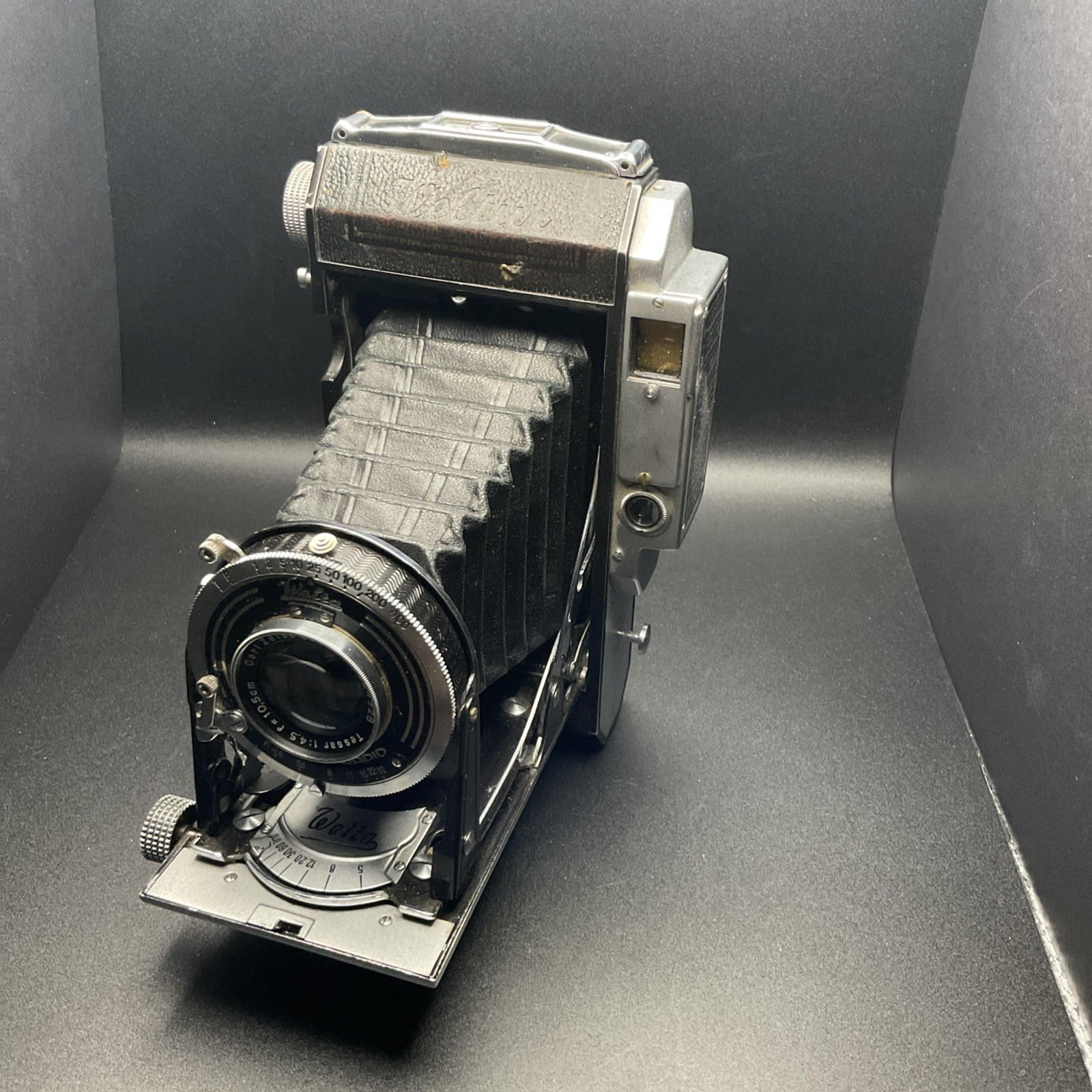
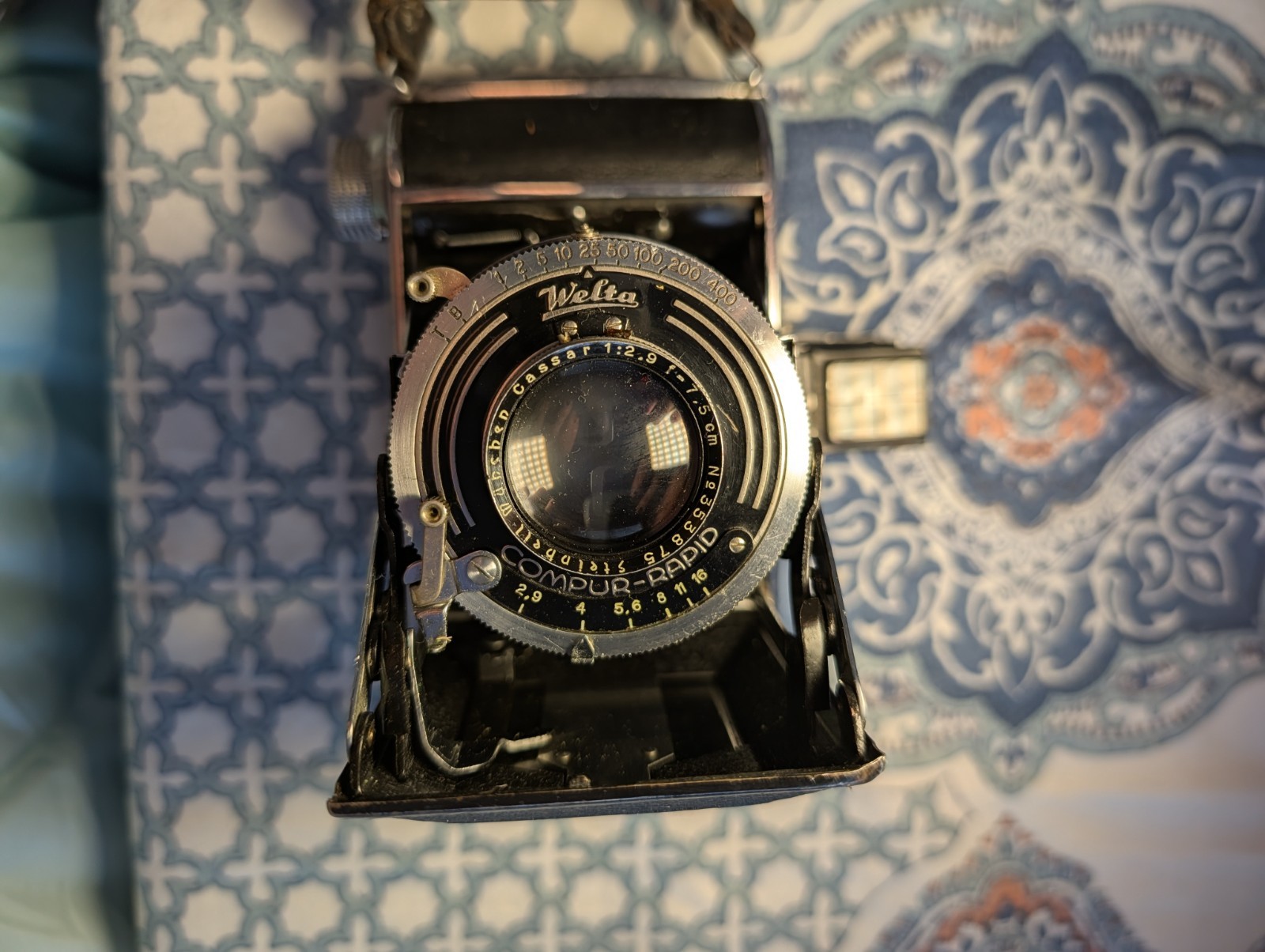
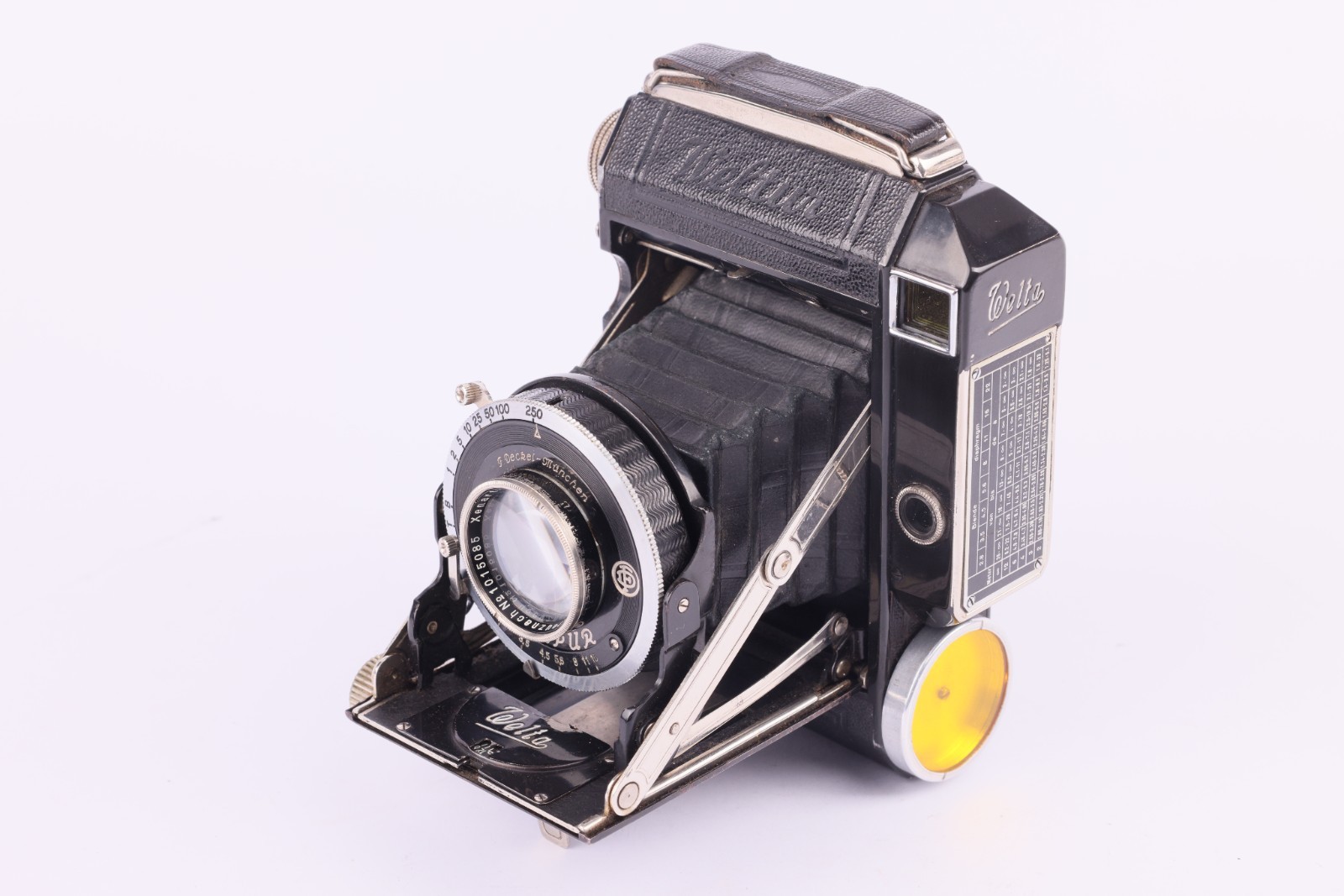
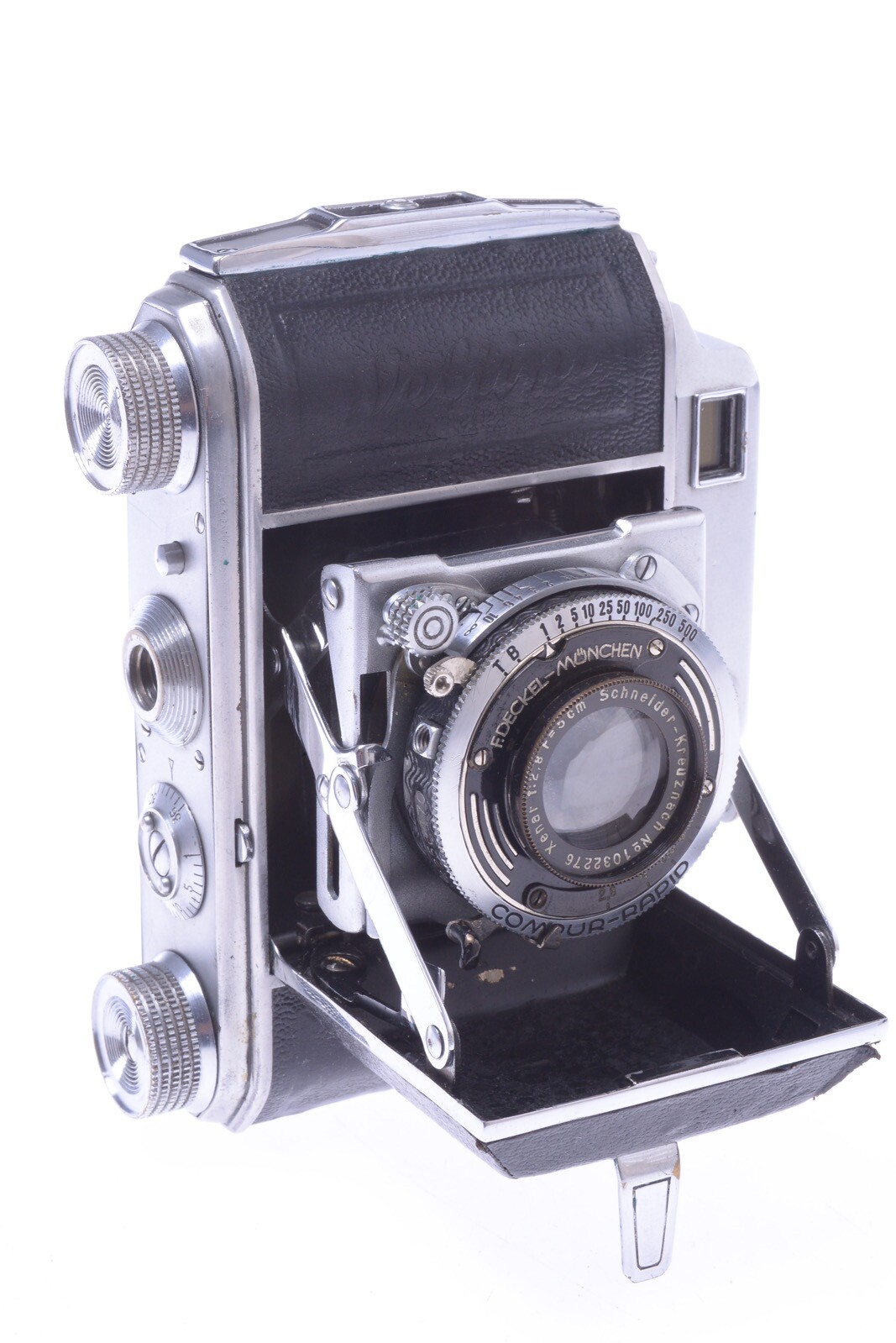
The Welta Weltur is a medium format folding rangefinder camera produced by Welta Camera Werke of Freiburg, Germany, between 1935 and 1940. Designed for 120 roll film, it captures images in the spacious 6×9 cm format, offering high-resolution negatives in a portable, collapsible body.
Overview
The Welta Weltur was introduced during a period of rapid innovation in medium format camera design, when German manufacturers were refining folding cameras to balance portability with image quality. Positioned as a premium product, the Weltur targeted advanced amateur photographers and semi-professionals who required the superior image resolution of 6×9 cm film without the bulk of a large field camera. Its integrated coupled rangefinder set it apart from simpler viewfinder folders, enabling accurate manual focusing—essential for sharp images with the wide-aperture lenses typically used.
Welta Camera Werke, founded in the 1920s, had established a reputation for well-engineered, precision-crafted cameras, often incorporating features found in higher-end models from competitors like Zeiss Ikon and Voigtländer. The Weltur represented the pinnacle of Welta’s folding camera line, combining robust construction with advanced optics and mechanical precision. It was available with a range of high-quality lenses, most commonly the 105 mm f/4.5 or f/3.5 Steinheil Culminar or the Rodenstock Pantar, paired with either a Compur or Compur-Rapid shutter. The camera’s leather-clad magnesium body folded neatly into a compact form, with a pop-up viewfinder and front standard that retracted into the body when not in use.
The Weltur’s viewfinder system included both a direct optical finder and a separate but coupled rangefinder patch in the viewfinder window, allowing precise focusing via image superimposition. The film advance used a red window on the back for frame counting, typical for medium format folders of the era. Despite its sophisticated design, the Weltur remained a fully mechanical camera with no built-in light meter, relying on external or handheld metering tools—a standard practice at the time.
Specifications
| Specification | Value |
| Type | Folding Rangefinder |
| Film Format | 6×9 cm on 120 roll film (8 exposures per roll) |
| Years Produced | 1935–1940 |
| Lens Mount | Fixed lens assembly (no interchangeable lenses) |
| Shutter | Compur or Compur-Rapid leaf shutter |
| Shutter Speeds | B, 1 – 1/400 second (Compur); B, 1 – 1/500 second (Compur-Rapid) |
| Aperture Range | f/4.5 to f/22 (Culminar f/4.5), f/3.5 to f/18 (Culminar f/3.5), f/4.5 to f/22 (Pantar) |
| Metering | None (no built-in light meter) |
| Exposure Modes | Manual only (shutter speed and aperture set manually) |
| Viewfinder | Combined optical viewfinder and coupled rangefinder |
| Focusing | Coupled rangefinder via front standard helicoid |
| Lens Options | 105 mm f/4.5 Steinheil Culminar, 105 mm f/3.5 Steinheil Culminar, 105 mm f/4.5 Rodenstock Pantar |
| Focus Range | Approximately 1.2 m to infinity |
| Film Advance | Manual knob with red window for frame counting |
| Dimensions (folded) | Approx. 16 × 9 × 5.5 cm |
| Weight | Approx. 850–950 g (depending on lens/shutter combination) |
| Construction | Leather-covered magnesium body, metal lens standard, folding struts |
Key Features
- Coupled Rangefinder: Enabled accurate focusing via a split-image patch in the viewfinder, a premium feature for precise manual focus.
- High-Quality Optics: Offered with renowned lenses such as the Steinheil Culminar and Rodenstock Pantar, known for sharpness and contrast.
- Compur-Rapid Shutter: Available with a high-speed 1/500 sec shutter, rare in medium format folders and suitable for action or daylight fill-flash.
- Compact Folding Design: Collapsible body made the camera highly portable while maintaining a large 6×9 cm negative size.
- Precision Build Quality: Machined metal components, smooth focusing helicoid, and durable leather bellows ensured long-term reliability.
Historical Context
The Welta Weltur was launched in 1935, during the golden age of German optical engineering, when companies like Leica, Zeiss Ikon, and Ihagee were pushing the boundaries of portable photography. The 6×9 cm folding camera segment was particularly competitive, with models such as the ICA Nettel Monarch, Agfa Super Avus, and Voigtländer Super Bessa vying for market share. The Weltur distinguished itself by integrating a coupled rangefinder—a feature typically reserved for more expensive cameras—into a folding body, offering professional-level functionality at a more accessible price point.
Production ceased around 1940 due to the outbreak of World War II, which disrupted manufacturing and redirected industrial capacity toward military equipment. As a result, the total production run of the Weltur was relatively limited, contributing to its rarity today. The camera reflected Welta’s ambition to compete with the leading optical firms of the era, and while it never achieved the fame of a Leica or a Hasselblad, it remains a respected example of pre-war German craftsmanship.
Collectibility & Value
The Welta Weltur is a sought-after camera among collectors of vintage medium format equipment, particularly those interested in pre-war German engineering. Due to its limited production and the attrition of time—especially damage to leather bellows and shutter mechanisms—surviving examples in working condition are uncommon. Models equipped with the f/3.5 Steinheil Culminar lens and Compur-Rapid shutter are especially prized.
Current market value for a Weltur in good cosmetic and mechanical condition ranges from $400 to $800 USD, with exceptional examples (particularly those with rare lenses or original cases and documentation) reaching up to $1,000. Collectors should inspect the bellows for pinholes or splits, test the shutter speeds across all settings (especially the high-speed end), and verify the rangefinder’s calibration. A misaligned rangefinder, common in aged units, can often be adjusted but requires specialized tools and expertise.
Similar Cameras
- Voigtländer Super Bessa (1934–1938): Another 6×9 folding rangefinder with similar format and build quality, often fitted with Color-Skopar or Skopar lenses.
- Kodak Retina II (Type 015, 1938): A 35mm folding rangefinder, smaller in format but comparable in mechanical sophistication and German design.
- Zephyr 620 Special (1940s): A British-made 6×9 folder with rangefinder, though generally less refined than the Weltur.
- Rollei 6×6 Prototype Folders (pre-war): Early medium format Rolleifolder concepts, though most remained experimental.
- Schneider-Kreuznach Super Angulon 6×9 Folder: Rare, high-end variant with exceptional optics, produced in limited numbers.
Repair & Maintenance
The Welta Weltur requires no batteries, as it is a fully mechanical camera. However, long-term storage often leads to stiff or frozen shutters, particularly in Compur and Compur-Rapid units, which benefit from a professional CLA (clean, lubricate, adjust) service. The leather bellows are prone to deterioration; replacement or restoration by a specialist is often necessary. Rangefinder alignment can drift over time and may require calibration using a collimator. Due to the scarcity of parts, repairs should be undertaken by technicians experienced in vintage German cameras. Regular use, proper storage in a dry environment, and occasional operation of the shutter and focus mechanism help preserve functionality.
eBay Listings
As an eBay Partner, we earn from qualifying purchases. This helps support our independent vintage technology research.