WELTA WELTINI
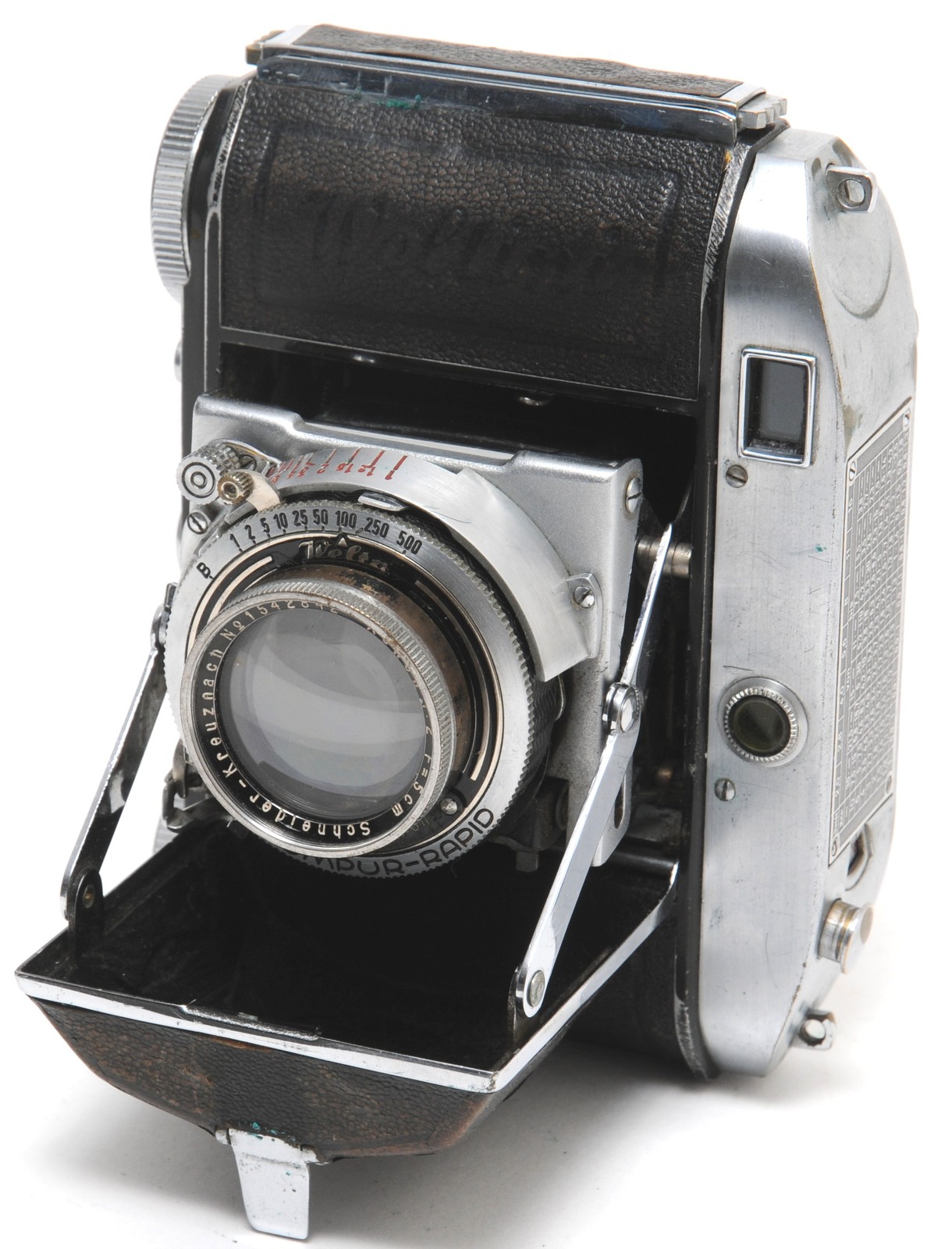
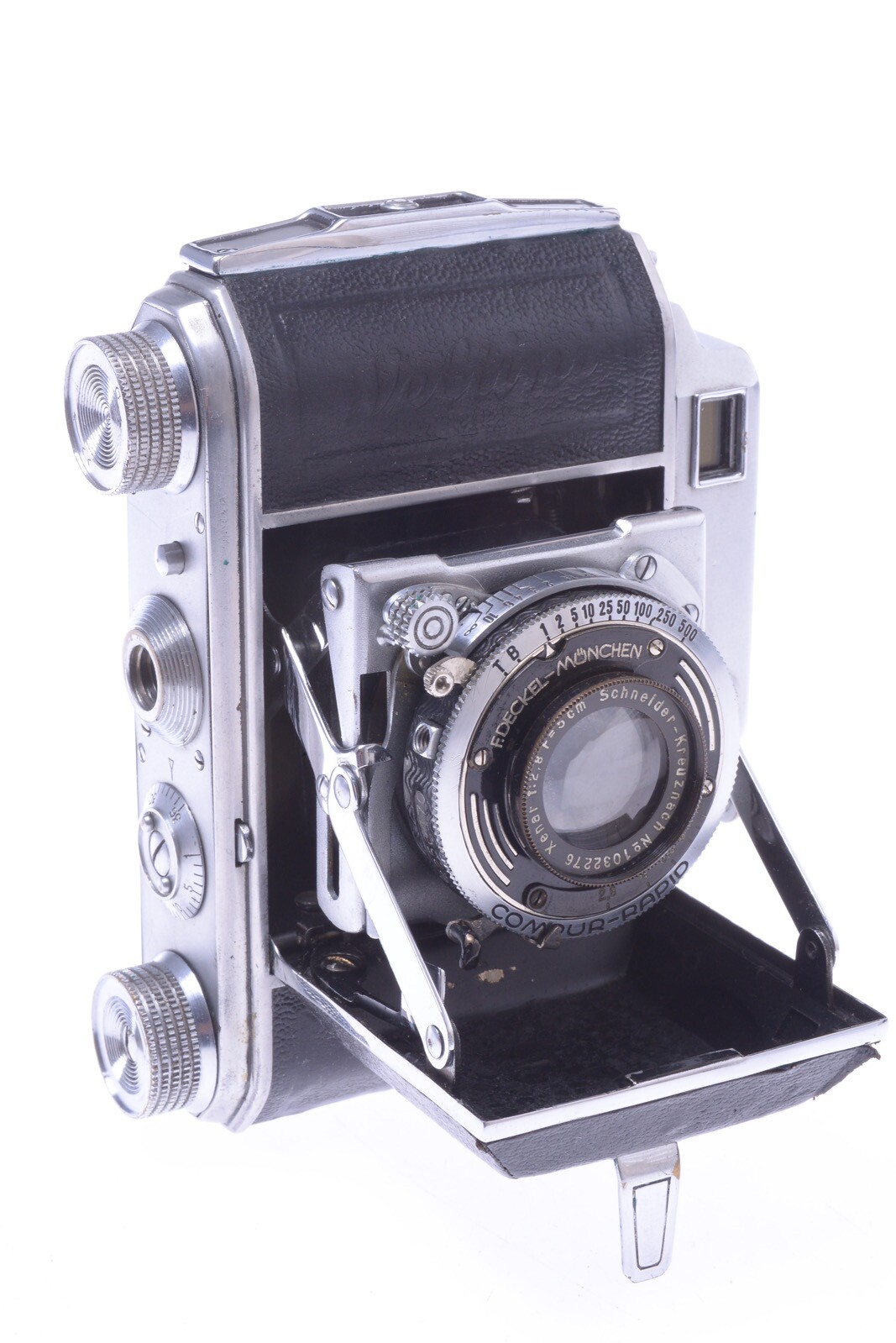
The Welta Weltini is a compact 35mm rangefinder camera produced by Welta Werk of Freiburg, Germany, between 1937 and 1940. A scaled-down derivative of the larger Welti series, the Weltini combines German engineering precision with streamlined portability, targeting amateur photographers seeking high-quality optics in a compact body.
Overview
Introduced during the interwar period of rapid innovation in 35mm camera design, the Welta Weltini represented Welta’s strategic push into the burgeoning market for compact, high-performance 35mm cameras. At a time when Leica and Contax were setting standards for rangefinder excellence, Welta positioned the Weltini as a technically refined yet more affordable alternative. The camera was designed to appeal to amateur enthusiasts and traveling photographers who desired portability without sacrificing optical quality or mechanical reliability. Built with a rigid body and featuring a coupled rangefinder, the Weltini stood out among contemporaneous subminiature and compact 35mm models for its robust construction and precision focusing.
The Weltini shares design lineage with the larger Welta Welti models but is distinguished by its reduced size and simplified controls. It uses standard 135 film cartridges and produces 24x36mm exposures on 35mm film, with a fixed film format and manual film advance via a knob. The camera features a top-mounted shutter speed dial and aperture ring on the lens, typical of pre-war German design. While lacking the rapid-wind lever or interchangeable lenses of its premium competitors, the Weltini compensates with exceptional build quality and a well-calibrated rangefinder system. It was marketed as a precision instrument for the discerning amateur, reflecting Welta’s reputation for producing technically competent, optically excellent cameras during the 1930s.
Specifications
| Specification | Value |
| Type | Rangefinder |
| Film Format | 35mm (135 cartridge) |
| Years Produced | 1937–1940 |
| Lens Mount | Fixed lens (non-interchangeable) |
| Shutter | Compur-Rapid leaf shutter, speeds 1 – 1/400 sec, B, T |
| Metering | None (uncoupled light meter not standard; users relied on handheld meters or sunny-16 rule) |
| Exposure Modes | Manual only |
| Viewfinder | Combined optical viewfinder and coupled rangefinder patch (center-aligned) |
| Dimensions | Approx. 110 × 65 × 45 mm; Weight: ~420 g (without film) |
Key Features
- Coupled Rangefinder Focusing: Precise focusing via a bright, centrally located rangefinder patch, integrated into the viewfinder for accurate manual focus.
- High-Quality Fixed Lens: Typically equipped with a 40mm f/3.5 or 45mm f/3.5 Steinheil Culmigon or Rodenstock Trinon lens, renowned for sharpness and contrast.
- Compur-Rapid Leaf Shutter: Offers a wide range of shutter speeds from 1 second to 1/400 second, with Bulb (B) and Time (T) settings for long exposures.
- Compact Rigid Body Design: All-metal construction with a non-folding, rigid body, enhancing durability and reducing mechanical failure points.
- Manual Film Advance & Frame Counting: Knob wind with automatic frame counter (resets when back is opened), ensuring reliable film transport.
Historical Context
The Welta Weltini was launched in 1937, during a golden era of 35mm camera development in Germany. At the time, 35mm film was transitioning from a novelty to a mainstream format, driven by the success of the Leica I and the rise of photojournalism. Welta, already established with its Welti series, sought to capture a segment of the market that valued Leica-like performance but at a more accessible price point. The Weltini was engineered to deliver this balance—offering a coupled rangefinder and high-grade lens in a compact, rigid body, while avoiding the complexity and cost of interchangeable lenses or rapid-wind mechanisms.
Competitors included the Kodak Retina I (introduced in 1934), the Wirgin Edinex, and the early Zeiss Ikon Contessa 35. While these models shared similar film formats and target demographics, the Weltini distinguished itself with superior shutter performance (thanks to the Compur-Rapid unit) and tighter build tolerances. However, its production run was cut short by the outbreak of World War II in 1939. Civilian camera manufacturing in Germany was largely suspended by 1940, and Welta shifted focus to military optics. As a result, the Weltini was produced in relatively limited numbers, contributing to its current rarity.
Collectibility & Value
The Welta Weltini is a sought-after collectible among pre-war 35mm camera enthusiasts, particularly those focused on German engineering and compact rangefinder history. Due to its short production span and the disruption of WWII, surviving examples in functional condition are uncommon. On the secondary market, values typically range from $400 to $900 USD, depending on lens quality, shutter functionality, and overall condition. Cameras equipped with Steinheil lenses often command a premium over those with Rodenstock or lesser-known optics.
Collectors should inspect several key areas when acquiring a Weltini: the smoothness of the rangefinder coupling, the accuracy of shutter speeds (especially at higher speeds like 1/400 sec), and the condition of the lens (checking for haze, fungus, or separation). The leather covering and film advance knob are common wear points. Because the camera uses no batteries and has purely mechanical operation, functional examples can still be used today with care. However, aged lubricants may cause shutter drag or sticky aperture blades, necessitating professional CLA (clean, lubricate, adjust) servicing.
Similar Cameras
- Kodak Retina I (Type 117) – A folding 35mm rangefinder with similar target market and era; used Kodak’s own lenses and offered reliable performance.
- Wirgin Edinex – German-made compact 35mm camera with rangefinder; shared design philosophy but used less robust shutters.
- Zeiss Ikon Contessa 35 – Later model (1950s), but conceptually similar as a compact German rangefinder with high-quality lens.
- Adox Adrette – Contemporary German 35mm viewfinder camera with similar size and fixed lens; lacked rangefinder but was simpler and more affordable.
- Plaubel Makina 67 (early variants) – Though medium format, Plaubel’s reputation for compact precision mirrors Welta’s engineering ethos.
Repair & Maintenance
The Welta Weltini requires no batteries and operates entirely mechanically, making it suitable for long-term use with proper maintenance. The Compur-Rapid shutter is serviceable by experienced technicians, though spare parts are not readily available and must often be sourced from donor cameras. Common issues include sluggish shutter speeds due to dried lubricants, stiff aperture blades, and misalignment of the rangefinder linkage—often caused by impact or age-related wear. The film advance mechanism is generally robust but may require cleaning of the sprocket and counter gears. A full CLA is recommended for cameras that have been in storage for decades. Lubrication should use modern, non-acidic watchmaker’s oils to prevent future gumming. Given the scarcity of parts, repair difficulty is rated as moderate to high, and only specialists in vintage German cameras should attempt disassembly.
eBay Listings


As an eBay Partner, we earn from qualifying purchases. This helps support our independent vintage technology research.