SMENA SYMBOL
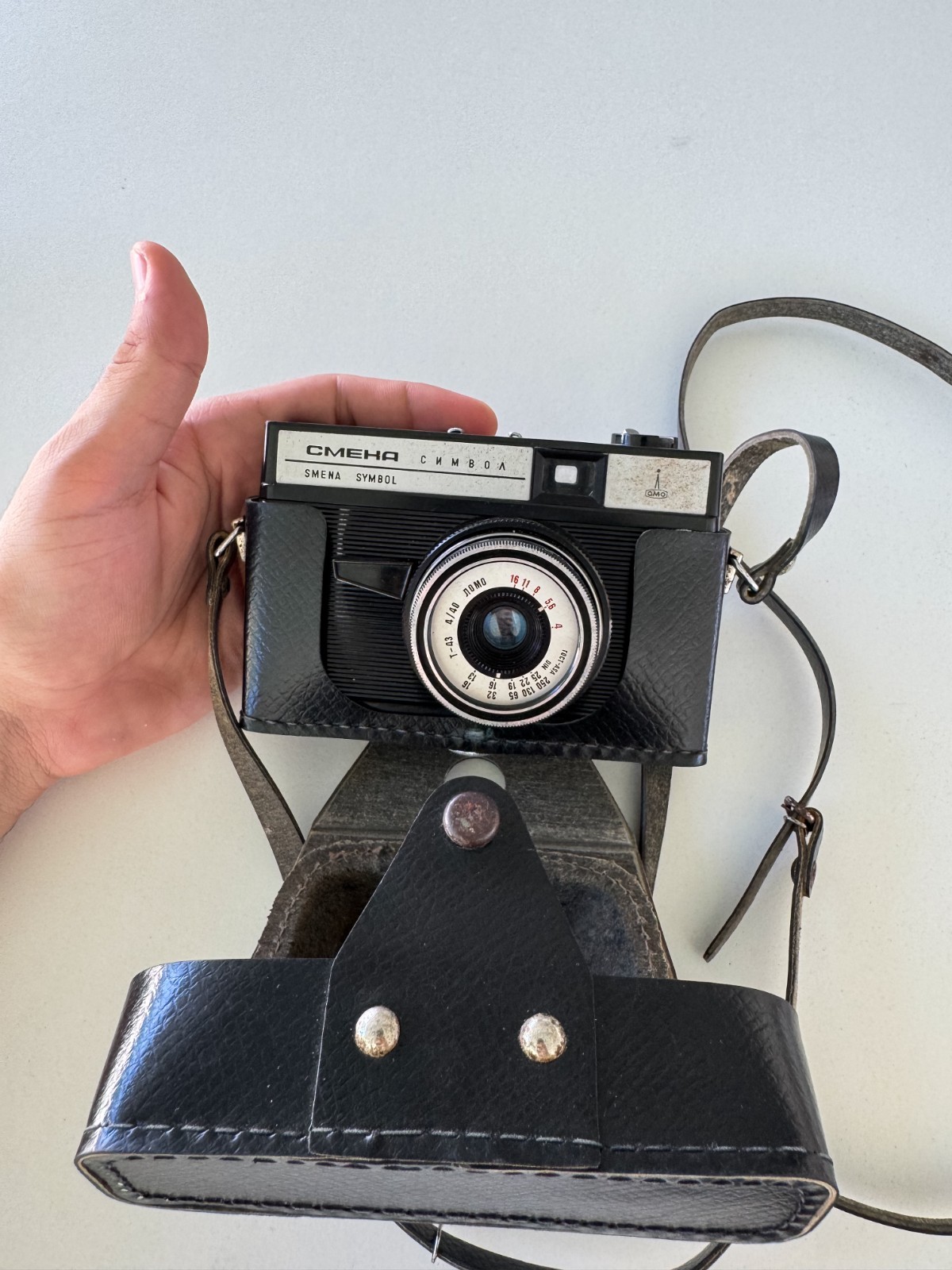
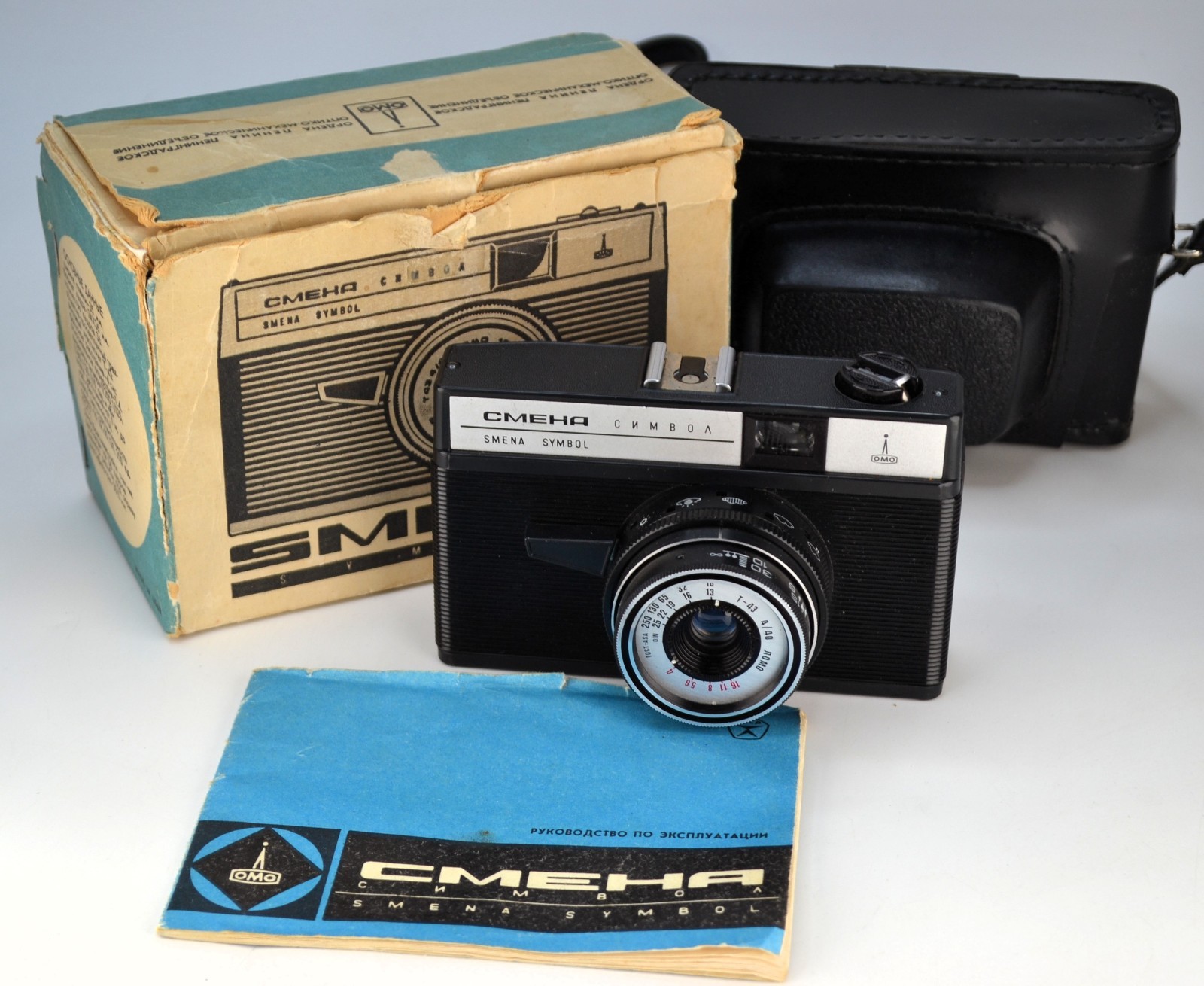
The Smena Symbol is a 35mm compact scale-focus camera produced in the Soviet Union by LOMO (Leningrad Optical Mechanical Association) from 1970 to 1993. It represents a refined version of the earlier Smena 8M, featuring improved build quality, a more polished finish, and minor ergonomic enhancements while retaining the simple, fully manual operation typical of Soviet-era consumer cameras.
Overview
Introduced during the height of Soviet industrial production, the Smena Symbol was designed as an affordable, durable 35mm camera for amateur photographers and students. It succeeded the Smena 8 and 8M models, incorporating aesthetic and mechanical refinements that elevated its appeal without increasing complexity. Unlike professional-grade cameras of the era, the Symbol was built for mass accessibility, emphasizing reliability and ease of use over advanced features. It was marketed as a step-up model within the Smena lineup, offering a more premium feel with its black enamel finish, chrome trim, and improved focusing mechanism.
The Symbol shares the same core design philosophy as its predecessors: simplicity, ruggedness, and mechanical reliability. It lacks a light meter, requiring users to set exposure manually using external calculations or the sunny-16 rule. The camera’s top plate includes a manual shutter speed selector and film advance lever, while the front-mounted lens assembly houses a fixed Tessar-type optic. Despite its rudimentary nature by Western standards, the Smena Symbol was widely distributed across the Eastern Bloc and remains emblematic of Soviet photographic engineering—functional, no-frills, and built to last.
Specifications
| Specification | Value |
| Type | Fixed-lens compact camera (rangefinder-styled) |
| Film Format | 35mm (135 cartridge) |
| Years Produced | Approx. 1970–1991 |
| Lens Mount | Fixed Minitar-1 4-element Tessar-type lens |
| Lens | Minitar-1 43mm f/4 (fixed, non-interchangeable) |
| Aperture Range | f/4 to f/16 (manual selection via aperture ring) |
| Shutter | Leaf shutter with speeds of 1/30, 1/60, 1/125, and B (Bulb) |
| Shutter Type | Mechanical, spring-wound via film advance |
| Metering | None (manual exposure only) |
| Exposure Modes | Manual only (shutter speed and aperture set manually) |
| Viewfinder | Optical direct-vision viewfinder with frame lines and parallax correction marks; no rangefinder coupling |
| Focusing | Scale focusing (estimated distance via engraved scale on lens barrel) |
| Flash | Cold shoe and PC sync port; supports flash at all shutter speeds |
| Film Speed Range | User-selectable via calculator dial on front (no built-in meter; used for exposure reference only) |
| Frame Size | 24 × 36 mm |
| Frame Count | Up to 36 exposures (film counter is manual-reset but not exposure-selective) |
| Dimensions | 120 mm (W) × 70 mm (H) × 50 mm (D) |
| Weight | Approx. 320 g (body only) |
| Construction | Metal body with black enamel finish, plastic top-plate controls |
Key Features
- Improved Build Quality: Compared to the Smena 8M, the Symbol features a smoother enamel finish, better paint durability, and more precise control dials.
- Fixed Minitar-1 45mm f/4 Lens: A high-quality 4-element Tessar-type lens known for sharpness and contrast, especially when stopped down.
- Manual Scale Focusing: Simple distance-based focusing system ideal for snapshots and zone focusing techniques.
- No Battery Required: Fully mechanical operation ensures functionality without reliance on batteries.
- User-Selectable Film Counter: Allows customization of film length (12, 20, or 36 exposures), useful for specialty or cut film.
Historical Context
The Smena Symbol was developed during a period of standardization and refinement in Soviet consumer optics. As LOMO sought to modernize its product line in the 1970s, the Symbol emerged as a premium variant of the long-running Smena series, which had been in production since the 1950s. While Western manufacturers like Olympus, Canon, and Pentax were introducing compact automatic cameras, the Soviet Union prioritized mechanical reliability and cost-effective mass production. The Symbol filled a niche for budget-conscious photographers who valued durability and optical quality over automation.
It competed indirectly with cameras like the Zenit-E (SLR) and FED rangefinders but was positioned as a simpler, lighter alternative for everyday use. Its lack of a light meter reflected economic constraints and the design priorities of mass-produced consumer cameras in the Eastern Bloc. Despite limited export outside the Eastern Bloc, the Smena Symbol gained a quiet reputation for its robust construction and surprisingly good lens performance.
Collectibility & Value
Today, the Smena Symbol is a sought-after model among analog photography enthusiasts and collectors of Soviet-era cameras. Its appeal lies in its historical significance, mechanical simplicity, and the cult status of LOMO products—particularly following the rise of the Lomography movement in the 1990s. While not rare, well-preserved examples with intact enamel, clean viewfinders, and smooth shutter operation command higher prices, typically ranging from $15 to $40 on the secondary market, depending on condition.
When purchasing a Smena Symbol, collectors should inspect the shutter at all speeds for consistency, check the lens for fungus, haze, or separation, and ensure the film advance and rewind mechanisms function smoothly. Common issues include stiff aperture blades, light leaks from deteriorated film door seals, and worn shutter curtains. However, due to the camera’s modular design and widespread parts availability, most problems are repairable by experienced technicians or DIY tinkerers.
Similar Cameras
- FED 2 / FED 3 – Soviet rangefinder with interchangeable lenses, targeting more advanced users.
- Zorki 4 – Another Soviet rangefinder, based on the Leica II, offering coupled focusing.
- Olympus 35SP – Japanese compact with built-in metering and high-quality D.Zuiko lens.
- Canon Canonet QL17 GIII – Fully manual rangefinder with automatic exposure selection.
- Rollei 35 – Compact German 35mm camera with premium build and Tessar lens.
Repair & Maintenance
The Smena Symbol requires no batteries and operates entirely mechanically, making it highly reliable with minimal maintenance. The shutter is powered by the film advance lever, which tensions the shutter spring—ensuring functionality as long as the mechanism is lubricated and free of corrosion. Common repair needs include CLA (clean, lubricate, adjust) servicing of the shutter and aperture blades, replacement of the light seal around the film door, and cleaning of the viewfinder prism.
Due to its simple construction, the Symbol is considered moderately easy to repair, with many parts interchangeable with earlier Smena models. However, disassembly requires care to avoid damaging the fragile shutter curtain or losing small internal components. Enthusiasts are advised to use light machine oil on moving parts and to avoid over-lubrication, which can attract dust and gum up the mechanism. With proper care, a Smena Symbol can remain functional for decades, serving as both a working camera and a piece of photographic history.
eBay Listings


As an eBay Partner, we earn from qualifying purchases. This helps support our independent vintage technology research.