ROLLEICORD VA
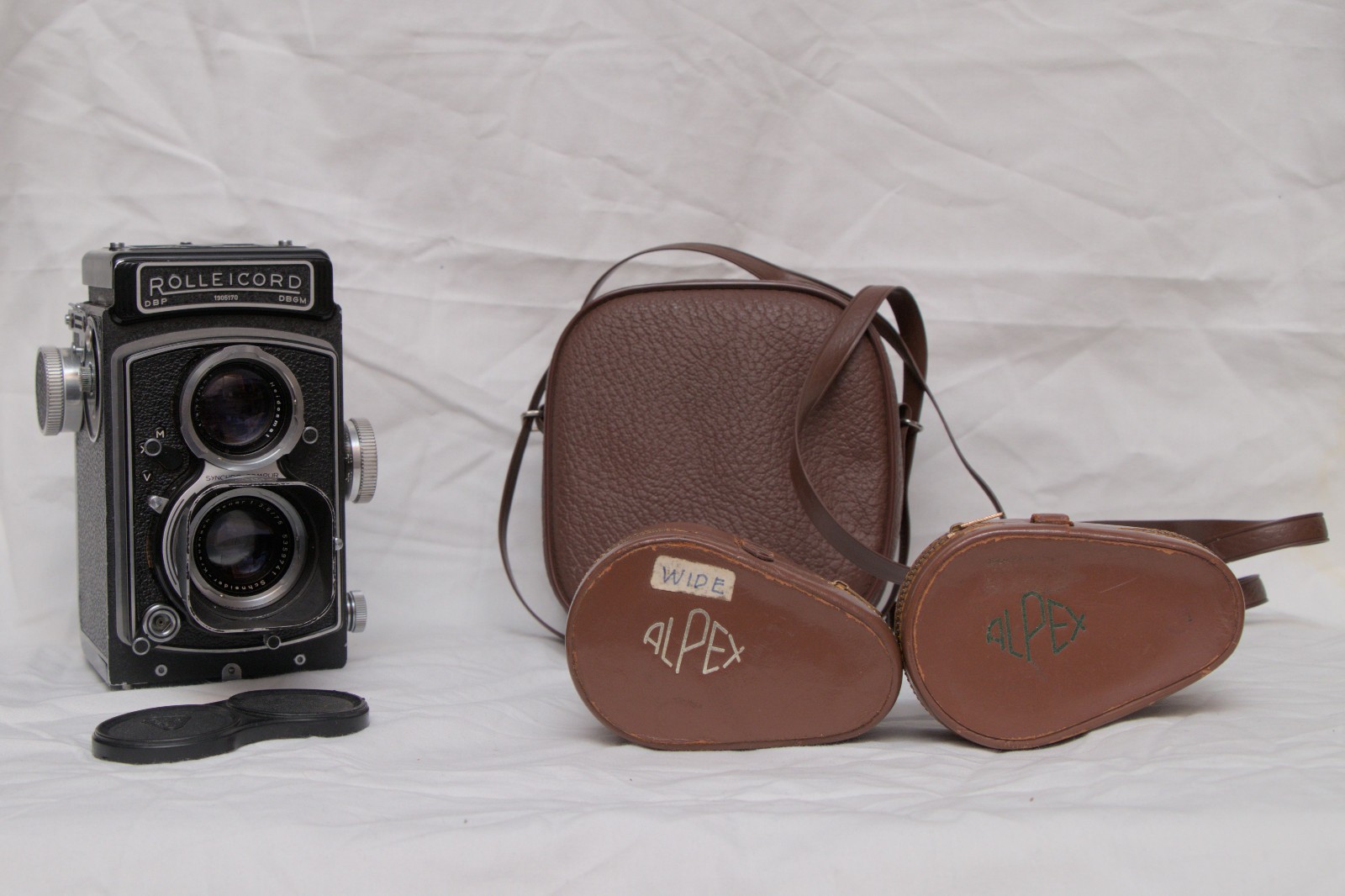
The Rolleicord Va is a twin-lens reflex (TLR) medium format camera produced by Franke & Heidecke between 1957 and 1962. As the final evolution of the Rolleicord V series, the Va offered modest but meaningful improvements over its predecessors, delivering reliable 6×6cm image quality in a mechanically robust and user-friendly design aimed at amateur photographers seeking a more affordable alternative to the premium Rolleiflex line.
Overview
Introduced in 1957, the Rolleicord Va succeeded the Rolleicord Vb and marked the culmination of the Rolleicord V lineage, which had begun with the V model in 1954. Positioned as a budget-conscious counterpart to the professional-grade Rolleiflex TLRs, the Va maintained the classic TLR configuration with a fixed lens and viewing system, while incorporating refinements that improved usability and reliability. It was designed for amateur photographers, students, and enthusiasts who desired high-quality medium format photography without the premium price tag of the Rolleiflex models.
The Va featured a simplified mechanical design compared to its Rolleiflex counterparts, omitting features such as automatic film counter advance and focus-coupled parallax correction. However, it retained the essential TLR layout: a viewing lens above a taking lens, both fixed in a coupled focusing assembly. The camera used 120 roll film to produce sixteen 6×6cm exposures per roll, with a waist-level finder as the primary viewing method. Its construction emphasized durability, with a die-cast aluminum body covered in leatherette and precision-machined focusing gears.
Within the Rolleicord product hierarchy, the Va represented the top-tier model in the Rolleicord line at the time of its release. It was succeeded in 1962 by the Rolleicord Vb (not to be confused with the earlier Vb), which introduced minor cosmetic updates but no significant mechanical changes. The Va’s production run coincided with a transitional period in camera design, as 35mm SLRs began to gain popularity, yet it remained a respected tool for medium format photography due to its image quality, build, and intuitive operation.
Specifications
| Specification | Value |
| Type | Twin-Lens Reflex (TLR) |
| Film Format | 6×6cm on 120 roll film (16 exposures) |
| Years Produced | 1957–1962 |
| Lens Mount | Fixed Heidosmat (viewing) and Xenar (taking) lenses |
| Taking Lens | Carl Zeiss Jena 75mm f/3.5 Tessar (4 elements in 3 groups) |
| Viewing Lens | Heidosmat 75mm f/2.8 |
| Shutter | Compur-Rapid MXV leaf shutter |
| Shutter Speeds | 1 – 1/500 sec, B, X-sync at 1/30 sec |
| Aperture Range | f/3.5 to f/22 |
| Focusing | Helical focus via knob on right side; min focus 3.3 ft (1m) |
| Metering | None (unmetered) |
| Exposure Modes | Manual only |
| Viewfinder | Waist-level ground glass with pop-up hood, Fresnel lens, and grid lines |
| Film Advance | Single-stroke crank with automatic frame counter (via red window backup) |
| Flash Sync | PC terminal for X and M sync; selectable via shutter dial |
| Dimensions | 10 x 10.5 x 20 cm (approx. 3.9 x 4.1 x 7.9 in) |
| Weight | ~760 g (27 oz) without film |
Key Features
- Compur-Rapid MXV shutter with full shutter speed range from 1 to 1/500 sec, enabling versatility in varied lighting conditions.
- Carl Zeiss Jena 75mm f/3.5 Tessar taking lens, renowned for sharpness, contrast, and minimal aberration, delivering excellent image quality for a mid-tier TLR.
- Single-stroke film advance crank with automatic frame counter, reducing winding effort and improving efficiency over earlier two-stroke models.
- Parallax-corrected viewfinder markings for closer focusing (below 3m), aiding composition accuracy despite the fixed viewing system.
- X and M flash synchronization, selectable via shutter dial, accommodating both electronic flash and older flashbulbs.
Historical Context
The Rolleicord Va was released at a pivotal moment in photographic history. By the late 1950s, 35mm rangefinders and the emerging SLR format were beginning to challenge the dominance of medium format TLRs in both amateur and professional markets. Nevertheless, TLRs like the Rolleicord Va remained popular for portrait, studio, and general photography due to their quiet operation, lack of mirror slap, and high image resolution. The Va was marketed as a dependable, high-value option for photographers who needed quality optics and solid build without the cost of a Rolleiflex.
Competitors included the Yashica-Mat 124 (introduced later in 1968), Minolta Autocord (1958), and earlier models like the Petriflex TLRs. However, during its production period, the Rolleicord Va faced limited direct competition in the premium amateur segment. Its main rival was arguably the earlier Rolleiflex 2.8F, though that model was significantly more expensive. The Va’s reputation for reliability and its use of Zeiss optics gave it strong credibility in the marketplace, particularly in Europe and North America.
Collectibility & Value
Today, the Rolleicord Va is considered a solid and accessible entry into medium format TLR collecting. While not as highly sought after as Rolleiflex models, it is valued for its mechanical simplicity, excellent lens performance, and historical significance as the final major update in the Rolleicord V series. In good working condition, with a clean screen and responsive shutter, the Va typically sells for $250–$400 USD. Fully serviced examples with fresh light seals and calibrated shutters may command higher prices, especially if accompanied by the original case and accessories.
Collectors should inspect the focusing mechanism for smooth operation, check the shutter speeds with a tester (particularly 1/500 and 1 sec, which can drift over time), and examine the taking lens for haze, fungus, or separation. The viewing screen may be worn or cloudy; replacement or restoration can enhance usability. The film pressure plate should be flat, and the red window light seals intact to prevent fogging. While parts are not as readily available as for Rolleiflex models, many components are interchangeable with earlier V-series Rolleicords, and skilled technicians can still service these cameras.
Similar Cameras
- Rolleiflex 2.8F – Professional-grade TLR with brighter viewing screen, f/2.8 lens, and automatic film advance.
- Yashica Mat-124G – Later Japanese TLR with built-in CdS meter and comparable Tessar-type lens.
- Minolta Autocord III – Dual-lens TLR with high-quality Minolta Sexton lenses and smooth mechanics.
- Petri 7S – Budget Japanese TLR with coated lenses and reliable Copal shutter.
- Kowa Rapid II – Less common but optically excellent TLR with Color-Kowa lens and bright finder.
Repair & Maintenance
The Rolleicord Va requires no batteries, as it is fully mechanical. Shutter servicing is the most common maintenance need, particularly cleaning and lubrication of the Compur-Rapid MXV shutter, which can stick or inaccurately time if dried out. The film advance mechanism is generally robust but may require cleaning of the counter gears if the auto-reset fails. Light seals degrade over time and should be replaced to prevent light leaks, especially around the film back and hinge. The focusing knobs and gears may loosen or wear; re-tensioning or replacement ensures precise focus. Due to its modular construction, the Va is considered moderately repairable by experienced TLR technicians, though original replacement parts are increasingly scarce. Regular use and storage in a dry, temperature-stable environment will prolong its operational life.
eBay Listings

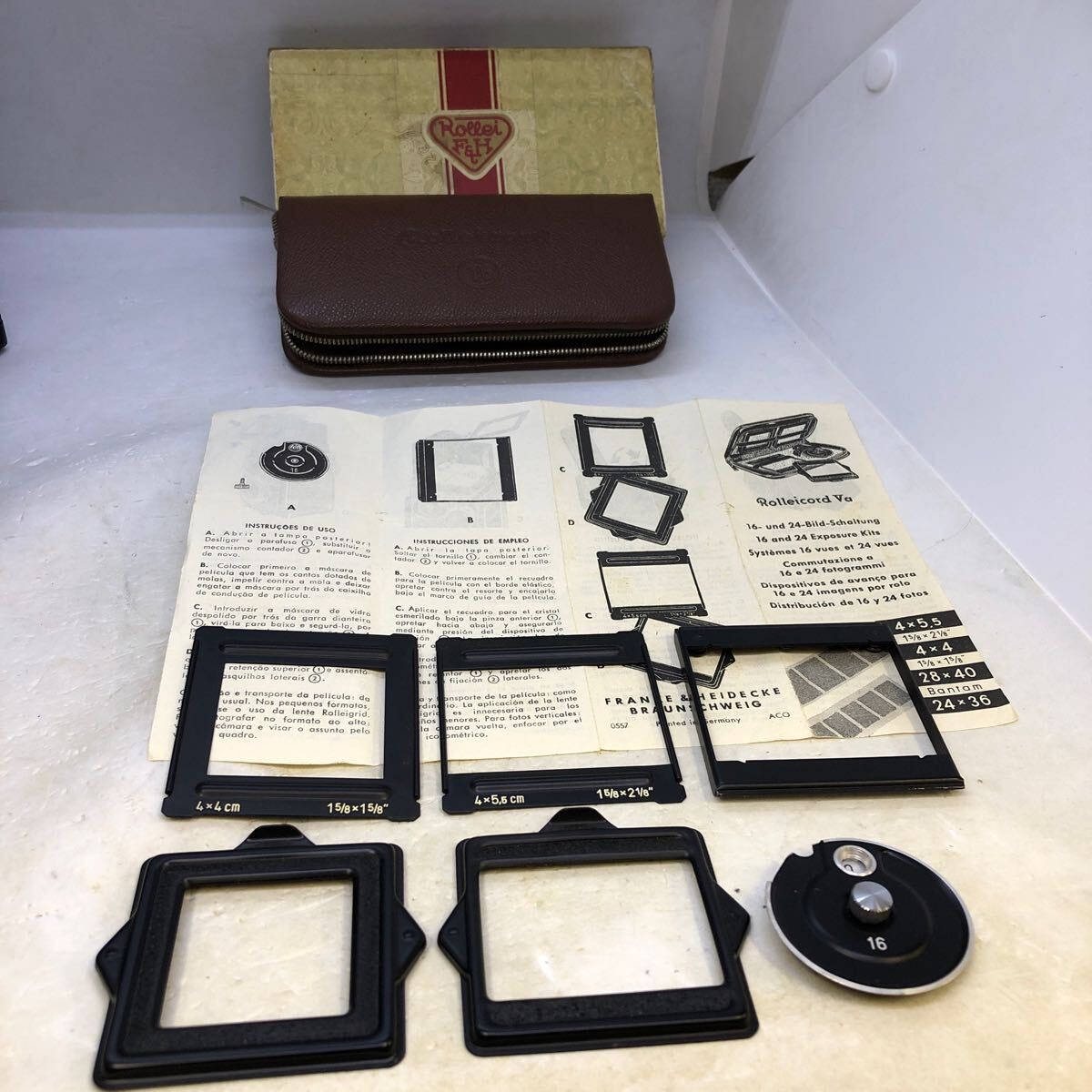

As an eBay Partner, we earn from qualifying purchases. This helps support our independent vintage technology research.
Related Models
- Rolleicord V (1954–1957)
- Rolleicord Vb (1962-1976)
- Lubitel 166 (1976-1990)
- Lubitel 2 (1955–1979)
- Mamiya C220 (1968-1975)
- Mamiya C330 (1969-1974)
- Mamiya C330f (1975-1983)
- Mamiya C330S (1983–1994)
- Rollei 2.8F (1960-1981)
- Rolleiflex 2.8F (1960–1981)