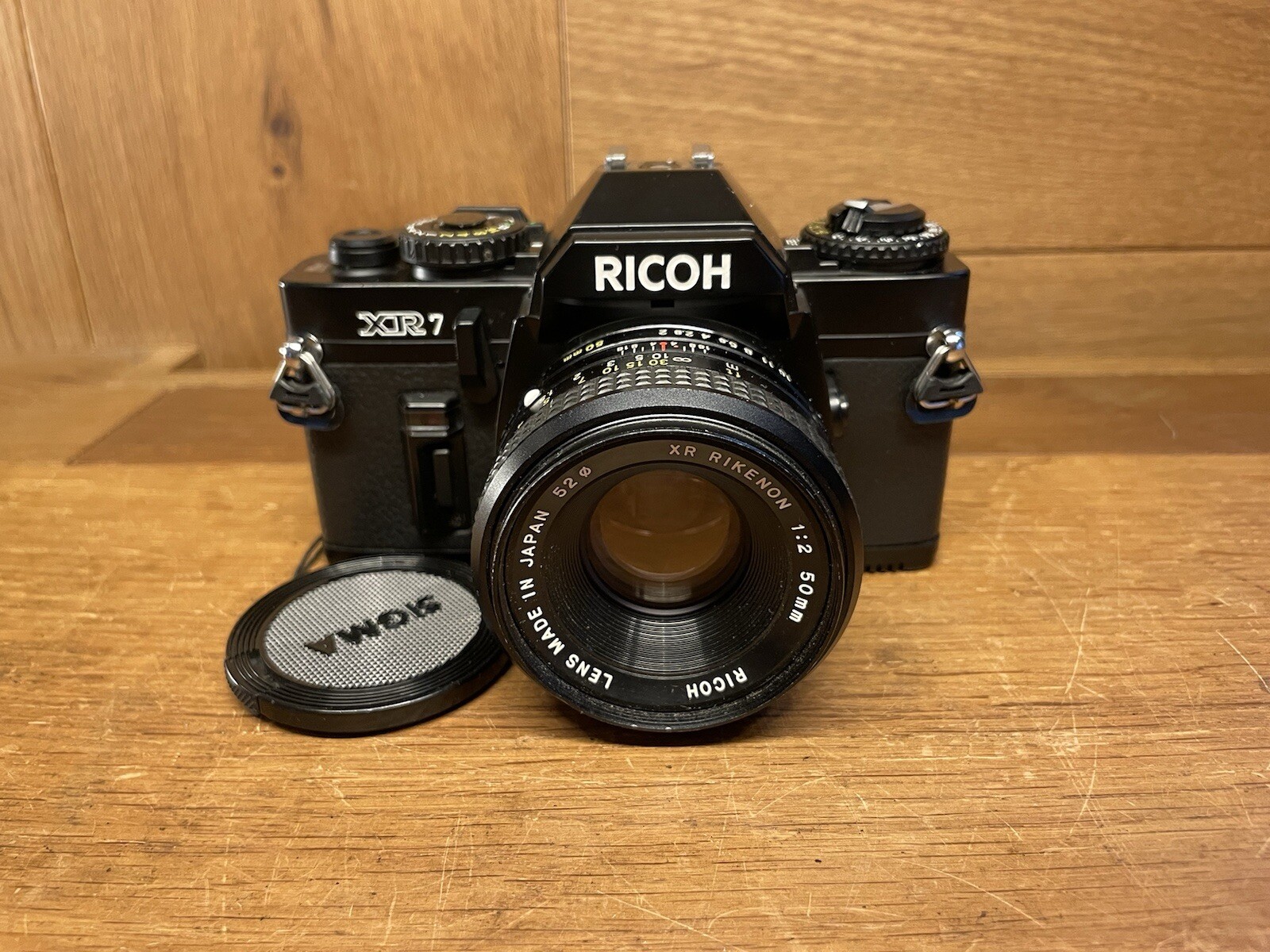
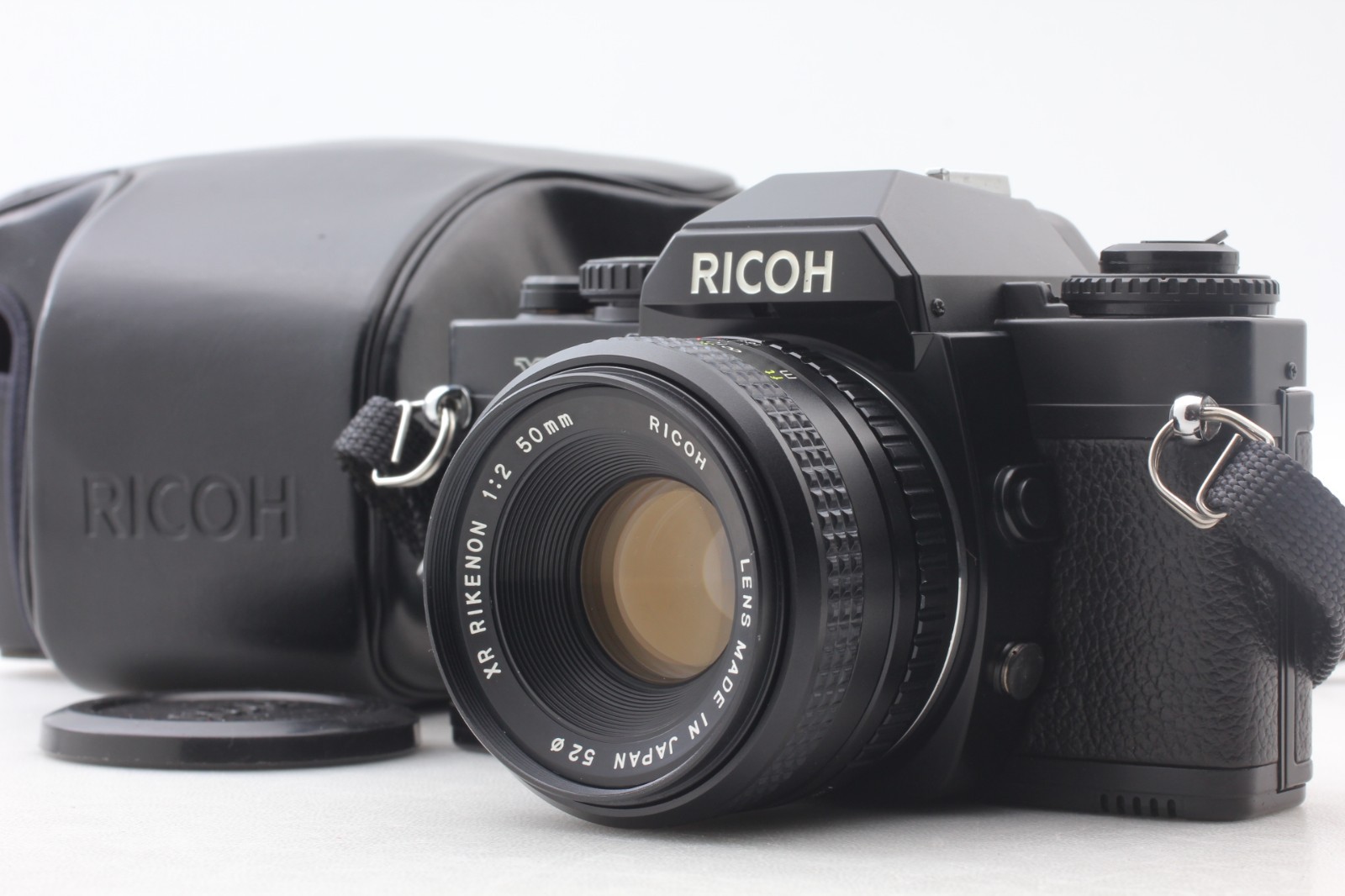
RICOH XR-7
The Ricoh XR-7 is a 35mm single-lens reflex (SLR) camera introduced in 1981 as part of Ricoh’s mid-tier K-mount SLR lineup. Notable for its early implementation of automatic exposure programming, the XR-7 combined advanced electronics with a compact mechanical design, offering photographers both manual control and a fully automatic Program mode—an innovative feature for its time.
Overview
Released in 1981, the Ricoh XR-7 was positioned as a technologically advanced yet accessible SLR for serious amateur photographers and enthusiasts seeking automation without sacrificing manual flexibility. It was part of Ricoh’s push to modernize its SLR offerings during the early 1980s, a period marked by rapid advancements in electronic exposure control and autofocus development. The XR-7 stood out in Ricoh’s lineup as one of the first models to feature a true Program exposure mode, automatically selecting both shutter speed and aperture based on metered scene luminance, a feature previously found only on higher-end models from competitors like Nikon and Canon.
Built around the Ricoh K-mount (also known as the "Ricoh KR-mount"), the XR-7 maintained compatibility with a wide range of manual and later electronically coupled lenses. It featured a vertically traveling, focal-plane shutter with speeds from 1 second to 1/1000 second, plus Bulb mode, and included TTL (through-the-lens) open-aperture center-weighted metering. The camera’s compact magnesium alloy body housed a bright viewfinder with interchangeable focusing screens, appealing to users who valued customization and optical clarity. While lacking autofocus, the XR-7’s emphasis on exposure automation and solid build quality made it a competitive offering in the transitional era between fully mechanical cameras and the emerging electronic SLR standard.
The XR-7 was succeeded in 1985 by the XR-7s (sometimes referred to as XR-7 Super), which added support for Ricoh’s newer RE (Ricoh Electronic) lenses with open-aperture metering and improved electronics. The original XR-7 was discontinued the same year, marking the end of its four-year production run.
Specifications
| Specification | Value |
| Type | 35mm Single-Lens Reflex (SLR) |
| Film Format | 35mm (135 film), interchangeable frames via DX coding (from 1983 onward) |
| Years Produced | 1981–1985 |
| Lens Mount | Ricoh K-mount (KR bayonet, compatible with Pentax K, Ricoh RE, and later Ricoh R series lenses) |
| Shutter | Vertical-travel focal-plane shutter; speeds: 1s to 1/1000s in 1/2 stop increments, plus Bulb (B) |
| Metering | TTL, center-weighted, open-aperture metering using a silicon photodiode (SPD) sensor |
| Exposure Modes | Manual (M), Aperture-Priority (A), Program (P) |
| Viewfinder | Interchangeable focusing screens; fixed pentaprism with 0.92x magnification, 100% coverage; LED display for shutter speed and aperture |
| Dimensions | 140 mm (W) × 87 mm (H) × 50 mm (D); weight: approx. 570 g (body only, without battery) |
Key Features
- Program Exposure Mode: One of the first mid-range SLRs to offer a true Program mode, automatically selecting optimal shutter speed and aperture settings.
- Interchangeable Focusing Screens: Allowed users to swap screens for different shooting needs (e.g., microprism, split-image, grid).
- TTL Open-Aperture Metering: Enabled accurate metering without stopping down the lens, improving viewfinder brightness and usability.
- Compact Magnesium Alloy Body: Lightweight yet durable construction with a textured grip and ergonomic layout.
- LED Viewfinder Display: Provided real-time feedback for selected shutter speed and aperture, with exposure warning indicators.
Historical Context
The Ricoh XR-7 was launched at a pivotal moment in SLR development, as manufacturers raced to integrate microprocessor-based automation into consumer cameras. In 1981, Canon had just released the AE-1 Program, and Nikon was preparing the FA, both of which featured program modes. Ricoh’s entry into this space with the XR-7 demonstrated its commitment to innovation despite lacking the market dominance of its Japanese rivals. The XR-7’s Program mode used a built-in microprocessor to calculate exposure based on lens aperture and scene brightness, offering a level of automation previously unseen in Ricoh’s lineup.
Competitors included the Pentax ME-F, Minolta X-700, and Canon AE-1 Program—all of which targeted the same segment of advanced amateurs. While the XR-7 did not achieve the same level of popularity as the Minolta X-700 (often considered the benchmark of its class), it was well-regarded for its solid build, intuitive interface, and reliable metering. Its adoption of the K-mount ensured compatibility with a broad lens ecosystem, though Ricoh’s limited third-party lens support compared to Pentax hindered wider appeal. The XR-7’s release also coincided with the industry-wide shift toward DX film encoding, and later production models included DX film speed recognition (ISO 25–3200), reducing user error in film loading.
Collectibility & Value
Today, the Ricoh XR-7 is considered a niche collectible, appreciated by enthusiasts of vintage electronics and SLR history. While not as widely collected as the Minolta X-700 or Pentax ME Super, it holds a dedicated following due to its early implementation of Program mode and high build quality. In working condition, the XR-7 typically sells for $75–$150 USD, depending on included accessories, lens, and cosmetic condition. Fully functional units with original leather and a Ricoh Rikenon lens command higher prices.
When purchasing an XR-7, collectors should verify the functionality of the Program mode, as the internal microprocessor and circuitry can degrade over time. Common issues include erratic shutter behavior, inconsistent metering, and failure to engage Program mode—often due to aging capacitors or poor battery contact. The camera uses a single 6V 4LR44 battery (or 4SR44), which can be difficult to source; modern alternatives include a PX28 adapter with two 1.5V batteries. Additionally, the shutter’s cloth curtains are prone to deterioration if stored in humid environments. A clean viewfinder, intact light seals, and smooth film advance are key indicators of a well-preserved example.
Similar Cameras
- Minolta X-700 (1981–2001) – Widely regarded as the gold standard of programmable manual-focus SLRs, featuring TTL flash metering and a bright viewfinder.
- Pentax ME-F (1981–1984) – Pentax’s first autofocus SLR, though primarily used in manual focus; shared similar electronic sophistication.
- Canon AE-1 Program (1981–1985) – Offered Program and Shutter-Priority modes, with strong third-party support and a large user base.
- Nikon EM (1979–1982) – Entry-level Nikon with Aperture-Priority and Program-like functionality, though less advanced than the XR-7.
- Yashica FX-7 (1982–1987) – A comparable mid-tier SLR with Program mode and Copal Square shutter, known for quiet operation.
Repair & Maintenance
The Ricoh XR-7 operates on a 6V 4LR44 battery, which powers both the metering system and the Program mode logic. Due to the age of most units, battery contacts often corrode; cleaning with isopropyl alcohol and contact enhancer is recommended. The camera’s electronic shutter is generally reliable but can develop timing inaccuracies if capacitors degrade—recapping the circuit board may be necessary for long-term reliability. The Copal horizontal metal shutter (later replaced with a vertical cloth design) is durable but sensitive to voltage fluctuations from weak batteries.
Common mechanical issues include sticky shutter release buttons and worn film advance levers, often remedied by professional CLA (Clean, Lubricate, Adjust) service. The interchangeable focusing screens can become loose or fogged; replacement screens are still available from specialty suppliers. Given the complexity of its Program circuitry, repair should be undertaken by technicians experienced in vintage electronic SLRs. Routine maintenance includes checking light seals, ensuring mirror damping is functional, and verifying film transport accuracy. With proper care, the XR-7 remains a fully usable film camera for contemporary shooters.
eBay Listings


As an eBay Partner, we earn from qualifying purchases. This helps support our independent vintage technology research.
Related Models
- Ricoh Singlex (1962-1967)
- Ricoh KR-5 (1975-1982)
- Ricoh Singlex TLS (1967-1972)
- Ricoh XR-2 (1977-1982)
- Alpa 6 (1948-1953)
- Agfa Agfaflex
- Agfa Ambiflex
- Agfa Easy
- Agfa Futura Af zoom
- Agfa Isoflash-Rapid C