PRAKTICA SUPER TL
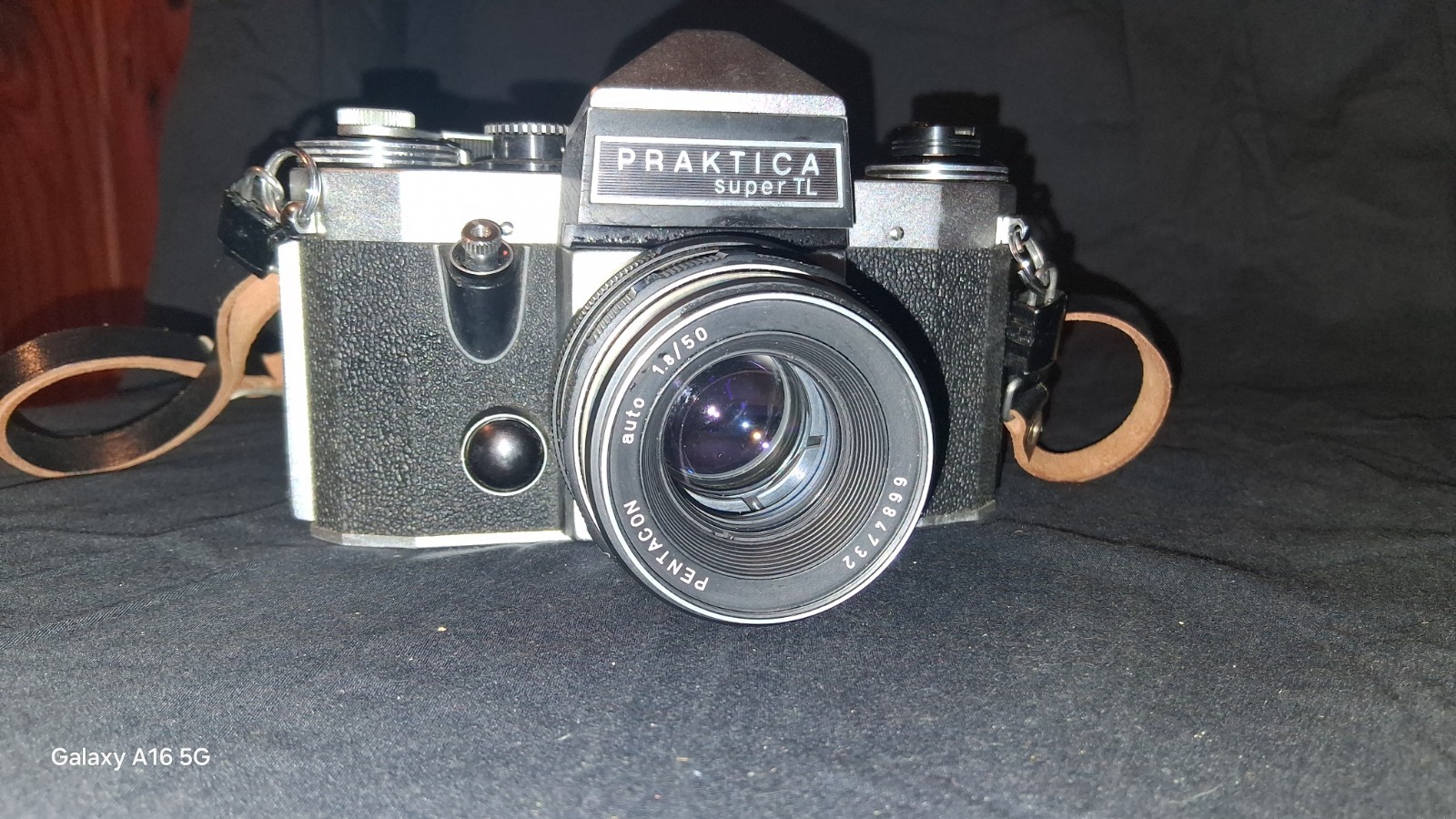
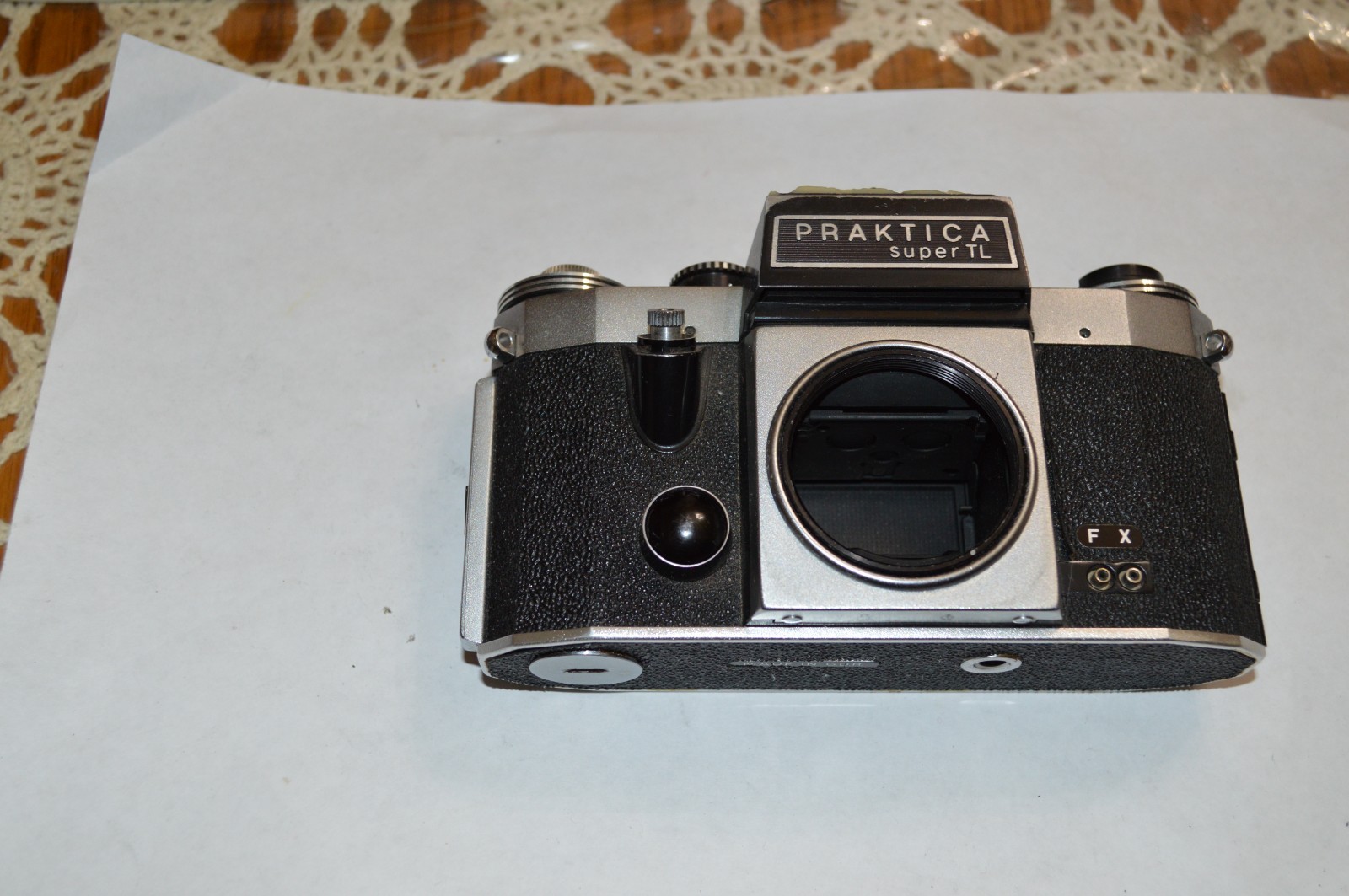
The Praktica Super TL is a 35mm single-lens reflex (SLR) camera produced by VEB Pentacon in Dresden, East Germany, from 1968 to 1976. Designed as an accessible entry-level SLR, it combines M42 screw-mount compatibility, through-the-lens (TTL) metering, and a vertically traveling cloth focal-plane shutter, making it a practical and reliable tool for amateur photographers during a pivotal era in 35mm photography.
Overview
Introduced in 1968, the Praktica Super TL was positioned as a mid-to-entry-level SLR within Praktica’s extensive lineup, bridging the gap between fully manual models and more advanced electronic cameras. It succeeded earlier models like the Praktica IV and Super TL2, offering improved ergonomics and a more refined metering system. Manufactured by VEB Pentacon, the state-owned conglomerate responsible for most East German camera production, the Super TL was part of a broader effort to expand export markets in Western Europe and North America during the Cold War. Despite its modest positioning, the Super TL featured advanced capabilities for its price point, including TTL open-aperture metering—a feature previously limited to higher-end models.
The camera was built around the universal M42 lens mount, ensuring compatibility with a vast array of lenses from manufacturers such as Carl Zeiss Jena, Meyer-Optik, Schneider-Kreuznach, and later third-party optics from Japan and the West. This flexibility, combined with its robust all-metal chassis and mechanical reliability, made the Super TL a favorite among students, hobbyists, and budget-conscious photographers. The TTL metering system used a cadmium sulfide (CdS) cell positioned behind the pentaprism, measuring light reflected off the focusing screen, enabling accurate exposure readings without stopping down the lens—a significant advantage over stop-down metering systems. The Super TL was available with a standard Prakticar 50mm f/1.8 or f/2.8 lens, though many were sold body-only.
Specifications
| Specification | Value |
| Type | 35mm Single-Lens Reflex (SLR) |
| Film Format | 35mm (135 film), 24x36mm frame size |
| Years Produced | 1968–1976 |
| Lens Mount | M42 screw mount (42mm diameter, 1mm pitch) |
| Shutter | Vertically traveling cloth focal-plane shutter; speeds from 1 sec to 1/1000 sec, plus B (Bulb) |
| Metering | Through-the-lens (TTL) CdS meter, center-weighted |
| Exposure Modes | Manual exposure only; stop-down metering via depth-of-field preview lever |
| Viewfinder | Fixed pentaprism with microprism collar and split-image rangefinder spot; 0.95x magnification (with 50mm lens at infinity); approx. 94% frame coverage |
| Dimensions | 140 mm (W) × 90 mm (H) × 47 mm (D); weight approx. 650 g (body only, without battery) |
Key Features
- TTL Open-Aperture Metering: Utilizes a CdS cell for accurate exposure readings without requiring lens stop-down, improving viewfinder brightness during composition.
- M42 Lens Compatibility: Supports a wide range of manual-focus lenses from numerous manufacturers, enhancing versatility and system expandability.
- Mechanical Shutter Operation: Fully functional without batteries, with only the light meter requiring power (1× 1.35V PX625 mercury battery or modern equivalent).
- Vertical Cloth Shutter: Offers high-speed performance up to 1/1000 sec and reduced shutter shock compared to horizontal designs.
- Depth-of-Field Preview: Integrated lever allows manual aperture stop-down for depth-of-field assessment, essential for precise focusing in critical applications.
Historical Context
The Praktica Super TL was released at a time when 35mm SLRs were becoming the dominant format for serious amateur photography. In the late 1960s, Japanese manufacturers such as Canon, Nikon, and Minolta were rapidly advancing electronic automation, but many European brands, particularly in Eastern Europe, focused on mechanical reliability and affordability. The Super TL entered a competitive market segment dominated by models like the Pentax Spotmatic and the Zeiss Ikon SL706, both of which also featured M42 mounts and TTL metering. However, the Super TL distinguished itself through its lower price point and solid build quality, appealing to cost-sensitive buyers without sacrificing core functionality.
Despite its utilitarian design, the Super TL reflected the engineering pragmatism of East German manufacturing. While it lacked the finish and refinement of Western counterparts, it offered dependable performance and repairability. It was widely exported under various brand names—including Revue, BelOMO, and Zenit—further expanding its reach. The model remained in production for eight years, a testament to its market acceptance and functional longevity. By the mid-1970s, however, the rise of electronic aperture-priority SLRs and the gradual decline of the M42 system led to its replacement by newer Praktica models with bayonet mounts, such as the B-series.
Collectibility & Value
Today, the Praktica Super TL is regarded as a solid, functional vintage SLR with modest collectible value. It is relatively common on the secondhand market, particularly in Europe, and typically sells for $50–$120 in working condition, depending on included accessories and lens. Cameras with original Prakticar lenses in good condition command slightly higher prices, especially if the lens coating is intact and the aperture blades are free of oil. Collectors value the Super TL more for its historical significance and usability than for rarity or investment potential.
When purchasing a Super TL, buyers should verify the functionality of the shutter across all speeds, check for mirror bounce or sluggish return, and inspect the light seals, which often degrade and require replacement to prevent light leaks. The CdS meter is a common point of failure; while it may still function with a modern battery adapter (e.g., Wein Cell or 1.5V alkaline with exposure compensation), sensitivity can diminish over time. The cloth shutter is generally durable but should be inspected for pinholes or tears, especially near the edges. Overall, the Super TL is an excellent candidate for restoration due to the availability of spare parts and a strong community of M42 enthusiasts.
Similar Cameras
- Pentax Spotmatic (1964–1976): Japanese counterpart with TTL metering, M42 mount, and similar mechanical design; generally more refined and higher value.
- Zeiss Ikon SL706 (1968–1971): West German M42 SLR with TTL metering and premium build; more expensive and less common.
- Praktica MTL 3 (1970s): Later East German SLR with improved metering and open-aperture support; direct successor in spirit.
- Yashica TL Electro (1977): Electronically controlled M42 camera with aperture-priority automation; represents the next evolution.
- Fujica ST705 (1974): High-end M42 model with advanced metering and build quality; competes in the upper tier of the format.
Repair & Maintenance
The Praktica Super TL requires a 1.35V PX625 mercury battery for its CdS light meter, though modern substitutes such as the Wein Cell (1.35V zinc-air) or voltage adapters using 1.5V alkaline batteries are commonly used. Users must adjust exposure by approximately +1/3 stop when using 1.5V batteries to compensate for overreading. The mechanical shutter operates independently of battery power, ensuring full functionality even with a dead or missing battery.
Common issues include stiff shutter speeds (often due to dried lubricants), sticky aperture blades on older lenses, and degraded light seals around the film chamber. The mirror mechanism is generally robust but may require cleaning or realignment if the viewfinder image appears obstructed. Repair parts are available through specialist vintage camera technicians and online forums dedicated to M42 systems. Due to its modular construction and lack of integrated electronics, the Super TL is considered moderately easy to service with basic tools and technical knowledge, making it a practical choice for photographers interested in maintaining and using vintage equipment.
eBay Listings


As an eBay Partner, we earn from qualifying purchases. This helps support our independent vintage technology research.
Related Models
- Praktica BX20 (1987–1993)
- Praktica IV (1959-1966)
- Praktica L (1969-1975)
- Praktica LTL (1970-1975)
- Praktica MTL3 (1978-1984)
- Alpa 6 (1948-1953)
- Agfa Agfaflex
- Agfa Ambiflex
- Agfa Easy
- Agfa Futura Af zoom