PRAKTICA MTL3
The Praktica MTL3 is a 35mm single-lens reflex (SLR) camera produced by VEB Pentacon in Dresden, East Germany, from 1978 to 1984. As the best-selling East German SLR of its era, the MTL3 combined robust mechanical construction with accessible light metering and a modern shutter system, making it a popular choice among amateur and enthusiast photographers in Eastern Europe and beyond.
Overview
The Praktica MTL3 was introduced as part of Praktica’s MTL series, which succeeded the earlier PLC and FMC lines. It was designed to offer a reliable, fully manual SLR platform with TTL (through-the-lens) metering, targeted at photographers seeking a durable and repairable camera without the complexity or cost of automatic exposure systems. The MTL3 built upon the foundation of the MTL5 and MTL5B, refining the design with improved ergonomics, a more intuitive metering interface, and a top shutter speed of 1/1000 second—uncommon among earlier Praktica models.
Manufactured at the VEB Pentacon factory, the MTL3 exemplifies the industrial design philosophy of East German engineering: functional, no-nonsense, and built to last. It features a fully mechanical focal-plane shutter with speeds from 1 second to 1/1000 second, plus Bulb mode, and uses a vertically traveling cloth shutter curtain. The camera retains the robust M42 screw mount (also known as the Praktica thread mount or Universal mount), ensuring compatibility with a vast array of lenses from Zeiss, Meyer, Schneider, and third-party manufacturers.
One of the MTL3’s defining features is its LED-based exposure metering system, visible in the pentaprism viewfinder. Two red LEDs—one for underexposure and one for overexposure—guide the user to correct exposure settings, replacing the more ambiguous match-needle system found in earlier models. This innovation significantly improved usability, especially for novice photographers, while maintaining the camera’s mechanical reliability.
The MTL3 was exported widely under various brand names, including Revue, BelOMO, and Soligor, and remained in production until 1984, when it was succeeded by the electronic MTL50 and later the BCA series. Despite the rise of electronic SLRs in the early 1980s, the MTL3 remained a staple in the Praktica lineup due to its simplicity, durability, and low cost.
Specifications
| Specification | Value |
| Type | 35mm manual focus SLR |
| Film Format | 35mm (135 cartridge) |
| Years Produced | 1978–1984 |
| Lens Mount | M42 screw mount (42mm diameter, 1mm thread pitch) |
| Shutter | Vertically traveling cloth focal-plane shutter; speeds 1s – 1/1000s in 1/3 EV increments, plus Bulb (B) |
| Metering | TTL full-aperture CdS metering with center-weighted sensitivity |
| Exposure Modes | Manual only; stop-down metering via AE lever |
| Viewfinder | Fixed pentaprism with split-image rangefinder, microprism collar, and matte focusing screen; LED exposure indicators (±) |
| Dimensions | 140 mm (W) × 90 mm (H) × 50 mm (D); weight: approx. 580 g (body only, no battery) |
Key Features
- LED Exposure Indication: Dual red LEDs in the viewfinder provide clear under/overexposure feedback, simplifying manual exposure settings.
- High Shutter Speed: 1/1000s top speed enables use of fast films in bright conditions and wider apertures.
- M42 Lens Compatibility: Supports hundreds of manual lenses from multiple manufacturers, including Carl Zeiss Jena, Meyer-Optik, and Pentax Takumar.
- Mechanical Reliability: Fully mechanical shutter operates without batteries; only the meter requires power.
- Stop-Down Metering: Accurate exposure measurement at any aperture via AE lever, essential for using non-automatic lenses.
Historical Context
The Praktica MTL3 was released during a transitional period in SLR development. While Japanese manufacturers like Canon, Nikon, and Pentax were rapidly introducing electronic and aperture-priority SLRs, East German camera makers focused on refining mechanical designs for reliability and affordability. The MTL3 filled a critical niche in the Eastern Bloc market, where access to Western electronics was limited and durability was paramount.
It competed directly with other M42-mount SLRs such as the Pentax K1000 (introduced in 1976), which shared similar mechanical simplicity and educational appeal. However, the MTL3 distinguished itself with its higher top shutter speed and modernized viewfinder display. Unlike the K1000’s match-needle system, the MTL3’s LED indicators were easier to interpret, particularly in low-light conditions.
The camera was also widely exported to Western Europe through third-party brands, often sold at lower price points than Japanese equivalents. Its rugged build and compatibility with high-quality Carl Zeiss Jena lenses made it a favorite among budget-conscious photographers and students. Despite its Eastern Bloc origins, the MTL3 earned a reputation for solid performance and repairability, with many units remaining functional decades after production ceased.
Collectibility & Value
Today, the Praktica MTL3 is a sought-after model among film photography enthusiasts and collectors of Cold War-era technology. While not rare, well-maintained examples in good working condition typically sell for $50–$120 USD, depending on included accessories and lens. Cameras with original Carl Zeiss Jena lenses (such as the 50mm f/1.8 or f/2.4 Pancolar) command higher prices, especially if the lens is in excellent optical condition.
When purchasing an MTL3, buyers should verify the functionality of the shutter at all speeds, check for mirror bounce or sluggish movement, and inspect the light seals—many are now degraded and may need replacement to prevent light leaks. The CdS meter should respond to light changes; failure is often due to aging cells or poor contact rather than circuit failure. The camera uses a single 1.35V PX625 mercury battery (now obsolete), though modern equivalents like WeinCell MRB625 or adapters for 1.5V SR625SW batteries can be used with minor exposure compensation.
Common issues include stiff shutter release buttons, worn shutter curtains, and oxidation on electrical contacts. However, due to the camera’s modular design and widespread availability of spare parts, most problems are repairable by experienced technicians or DIY hobbyists. The MTL3’s mechanical simplicity and lack of integrated electronics contribute to its longevity and appeal in the current film revival.
Similar Cameras
- Pentax K1000 – A mechanically identical-tier SLR with similar manual operation and M42/K-mount lens compatibility.
- Canon FTb – Offers manual exposure with a match-needle meter and robust build, though slightly earlier in design.
- Zenit EM – A Soviet-made M42 SLR, simpler and less refined, but similarly rugged and affordable.
- Praktica MTL5B – The immediate predecessor, with a match-needle meter and 1/500s top speed.
- Yashica FR-I – A Japanese M42 SLR with LED metering and comparable feature set.
Repair & Maintenance
The Praktica MTL3 requires a 1.35V mercury PX625 battery for its CdS meter (commonly replaced today with silver oxide SR625SW or zinc-air WeinCell). The meter circuit is simple and generally reliable, though contact corrosion is common in stored units. Shutter maintenance is straightforward due to the camera’s modular top plate and accessible shutter mechanism. Lubrication of the shutter curtains and speed gears is recommended every 5–10 years depending on use. The film advance lever and rewind crank are robust but may develop play over time. Light seals should be replaced during servicing to prevent fogging. Overall, the MTL3 is considered easy to repair with widely available tools and parts, making it an excellent candidate for restoration and continued use.
eBay Listings
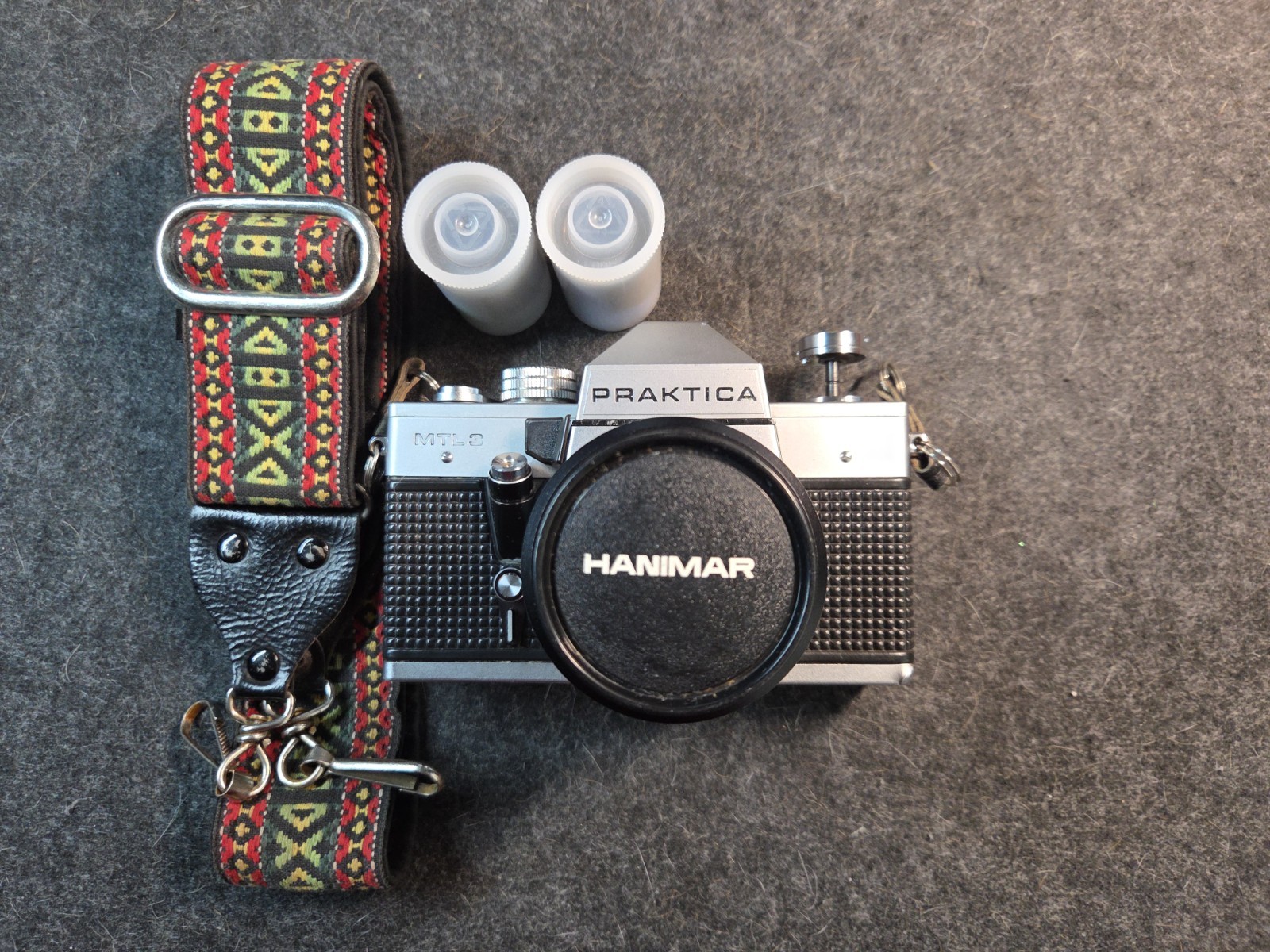
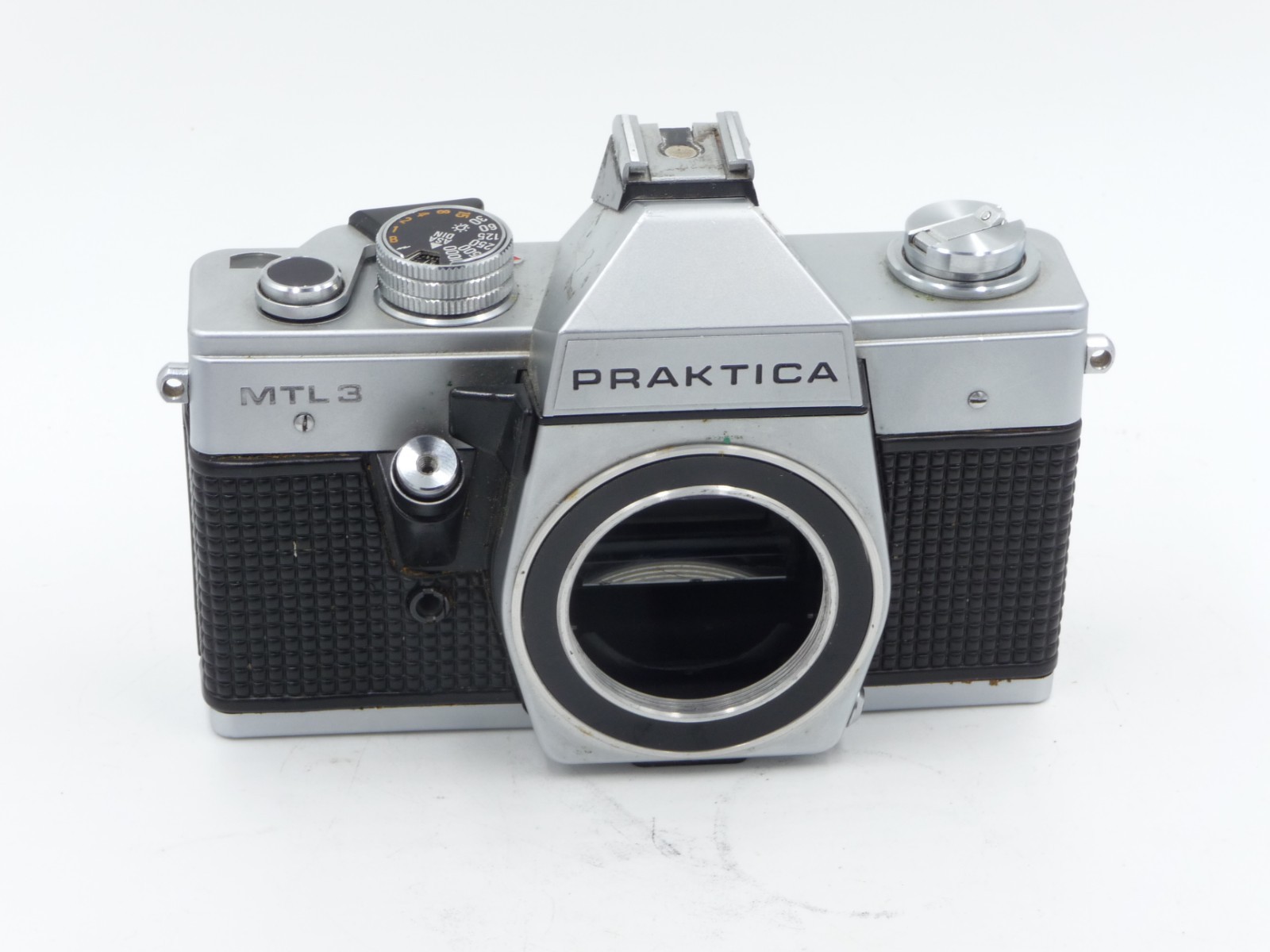
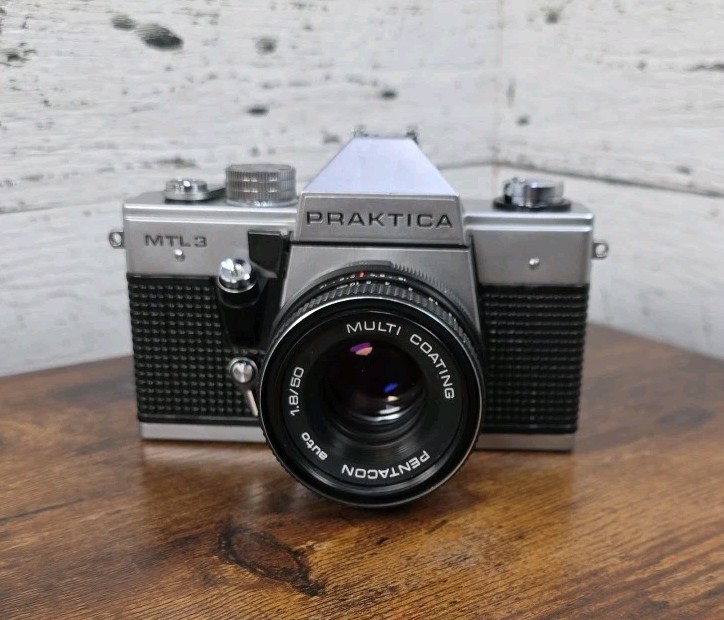

As an eBay Partner, we earn from qualifying purchases. This helps support our independent vintage technology research.
Related Models
- Praktica BX20 (1987–1993)
- Praktica IV (1959-1966)
- Praktica L (1969-1975)
- Praktica LTL (1970-1975)
- Praktica MTL5 (1983–1985)
- Alpa 6 (1948-1953)
- Agfa Agfaflex
- Agfa Ambiflex
- Agfa Easy
- Agfa Futura Af zoom