PRAKTICA LTL
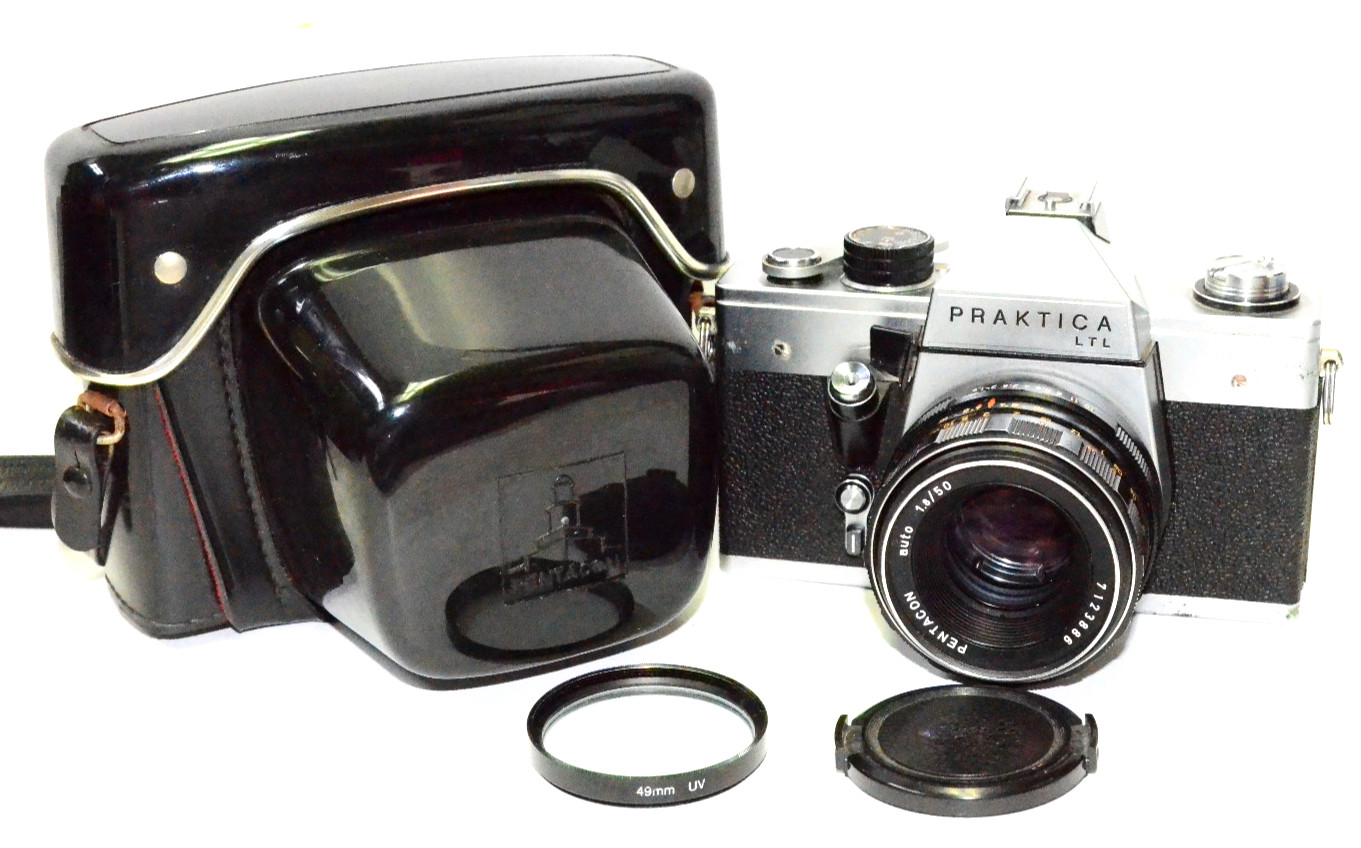
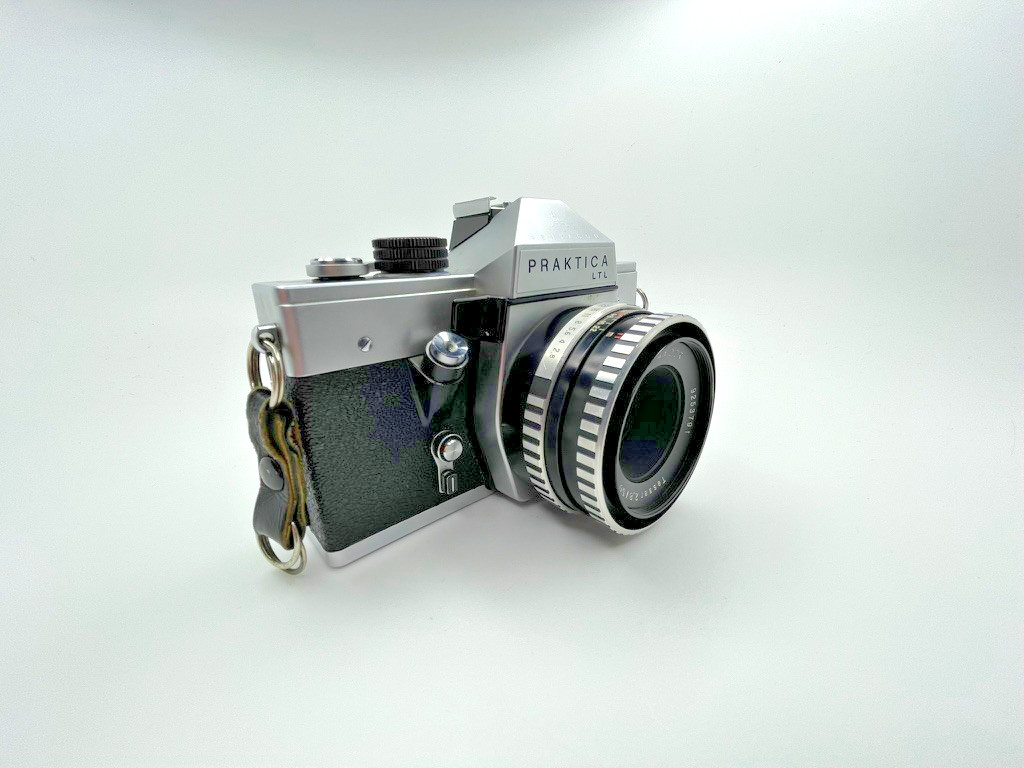
The Praktica LTL is a 35mm single-lens reflex (SLR) camera produced by VEB Pentacon in Dresden, East Germany, from 1970 to 1975. It was a significant model in the Praktica lineup, introducing through-the-lens (TTL) metering to the mid-range SLR market, making accurate exposure more accessible to amateur photographers.
Overview
The Praktica LTL was introduced as a successor to earlier Praktica models such as the PLC and PLC2, bridging the gap between fully manual SLRs and more advanced electronic cameras. Manufactured by VEB Pentacon—a state-owned conglomerate formed from the merger of several East German optical firms—the LTL was designed for the growing consumer SLR market in Europe during the early 1970s. It targeted amateur photographers seeking reliable performance, solid build quality, and modern exposure assistance without the premium price of Japanese or West German equivalents.
One of the LTL’s defining features was its built-in TTL (through-the-lens) center-weighted light meter, a notable advancement over previous Praktica models that relied on external or stop-down metering. The meter used a cadmium sulfide (CdS) cell positioned behind the pentaprism, measuring light reflected off the focusing screen. This allowed for more accurate exposure readings under varying lighting conditions and with different lenses, especially when using filters or macro extensions. The meter was coupled to the aperture ring via a mechanical linkage, enabling open-aperture metering with M42 lenses equipped with automatic diaphragm mechanisms.
The camera featured a robust all-metal chassis, leatherette covering, and a classic mechanical design typical of Eastern Bloc engineering—prioritizing durability over automation. It used the universal M42 screw mount, ensuring compatibility with a vast array of lenses from manufacturers such as Carl Zeiss Jena, Meyer-Optik, Schneider-Kreuznach, and numerous Japanese brands like Pentax and Fujica. This lens compatibility, combined with its metering capability, made the LTL a popular choice among budget-conscious photographers and travelers during its production run.
Specifications
| Specification | Value |
| Type | 35mm Single-Lens Reflex (SLR) |
| Film Format | 35mm (135 cartridge) |
| Years Produced | 1970–1975 |
| Lens Mount | M42 screw mount (Pentax thread) |
| Shutter | Focal-plane cloth shutter, speeds 1 sec to 1/1000 sec + B |
| Metering | TTL center-weighted CdS meter (open-aperture) |
| Exposure Modes | Manual only; stop-down metering via AE switch |
| Viewfinder | Fixed pentaprism with microprism collar and split-image rangefinder spot |
| Dimensions | Approx. 140 × 85 × 50 mm; Weight: ~650 g (body only) |
Key Features
- TTL Center-Weighted Metering: One of the first mid-range Prakticas with built-in through-the-lens exposure metering, improving exposure accuracy.
- M42 Lens Compatibility: Full support for M42 screw-mount lenses with automatic diaphragm coupling and open-aperture metering.
- Mechanical Shutter Operation: Fully mechanical shutter speeds from 1 second to 1/1000 second, requiring no battery for basic operation (only for meter).
- Stop-Down Metering Option: AE/stop-down switch allows metering with manual diaphragm lenses or when using filters with light loss.
- Reliable Build Quality: All-metal construction with durable mechanical components, typical of East German engineering standards.
Historical Context
The Praktica LTL was released at a pivotal time in SLR development. The early 1970s saw rapid advancements in exposure automation, with Japanese manufacturers like Nikon, Canon, and Pentax introducing aperture-priority and shutter-priority models. However, these cameras were often expensive and out of reach for many European consumers. The LTL filled a critical niche by offering TTL metering—a feature previously reserved for high-end models—at a competitive price point.
It competed directly with cameras such as the Pentax Spotmatic (introduced in 1964) and the Fujica ST705, both of which also featured M42 mounts and TTL metering. While the LTL lacked the global marketing presence of its Japanese rivals, it benefited from strong distribution in Eastern Europe, the UK, and parts of Africa and Asia through state export channels. In Western markets, it was often sold under alternative brand names such as "Revue TTL" or "Sears TLS," increasing its reach.
Despite its technical merits, the LTL was eventually overshadowed by the rise of electronic SLRs and the decline of the M42 mount in favor of bayonet systems. By 1975, Praktica shifted focus to newer models like the PLC3 and later the B-series, which incorporated more automation. Nevertheless, the LTL remains a milestone in Praktica’s evolution, marking the brand’s commitment to integrating advanced metering into mechanically robust platforms.
Collectibility & Value
Today, the Praktica LTL is regarded as a solid entry-level collectible for enthusiasts of vintage SLRs and Cold War-era optics. It is not particularly rare, with tens of thousands produced, but well-preserved examples with functional meters and clean viewfinders are increasingly sought after. Typical market value ranges from $50 to $120 USD, depending on condition, included accessories, and lens bundle.
When purchasing an LTL, collectors should verify the functionality of the light meter, which relies on a now-obsolete 1.35V PX625 mercury battery. While modern replacements (such as Wein Cell or adapter kits with 1.5V batteries) can be used, exposure accuracy may require compensation. Other common issues include stiff shutter speeds (especially at intermediate settings), cloudy or degraded focusing screens, and light seals that have deteriorated over time. The camera’s mechanical shutter is generally reliable but may require cleaning or lubrication after decades of inactivity.
Due to its rugged construction and widespread parts availability, the LTL is relatively easy to repair compared to fully electronic contemporaries. Its M42 mount also ensures continued relevance in the age of digital adaptation, making it a practical choice for photographers interested in using vintage lenses on modern mirrorless cameras.
Similar Cameras
- Pentax Spotmatic (1964–1976): The benchmark for M42 TTL SLRs; similar features with broader global recognition.
- Fujica ST705 (1971–1976): Japanese-made M42 SLR with TTL metering and high build quality.
- Praktica PLC2: Immediate predecessor to the LTL; lacks TTL metering but shares mechanical design.
- Topcon RE Super (1963–1971): Advanced Japanese SLR with TTL metering and high-quality lenses.
- Yashica TL Electro (1973–1976): Electronically controlled M42 SLR with aperture-priority automation.
Repair & Maintenance
The Praktica LTL requires a 1.35V PX625 mercury battery for its CdS light meter, though modern alternatives like the Wein Cell (zinc-air) or alkaline PX625 replacements with voltage adjustment can be used with exposure compensation. The mechanical shutter operates without batteries, allowing full manual functionality even with a dead or missing meter battery.
Common maintenance issues include sluggish shutter speeds, particularly at 1/30 and 1/60 sec, often due to dried lubricants on the rubber timing strip. A CLA (Clean, Lubricate, Adjust) service by a technician experienced in vintage SLRs is recommended for cameras stored for long periods. The film advance lever and rewind crank should operate smoothly, and the mirror should return without sticking.
Lens mount and shutter synchronization should be checked if flash photography is intended, as the X-sync speed is 1/60 sec. Light seals around the film door degrade over time and should be replaced to prevent light leaks. Overall, the LTL is a durable and repairable camera, emblematic of an era when mechanical reliability was paramount.
eBay Listings

As an eBay Partner, we earn from qualifying purchases. This helps support our independent vintage technology research.
Related Models
- Praktica BX20 (1987–1993)
- Praktica IV (1959-1966)
- Praktica L (1969-1975)
- Praktica MTL3 (1978-1984)
- Praktica MTL5 (1983–1985)
- Alpa 6 (1948-1953)
- Agfa Agfaflex
- Agfa Ambiflex
- Agfa Easy
- Agfa Futura Af zoom