PRAKTICA IV
The Praktica IV is a 35mm single-lens reflex (SLR) camera produced by VEB Pentacon Dresden in East Germany between 1959 and 1966. As an early model in the Praktica SLR lineage, it represents a transitional phase in post-war German camera engineering, combining mechanical reliability with the growing demand for interchangeable-lens 35mm systems.
Overview
Introduced in 1959, the Praktica IV succeeded earlier models such as the Praktica III and was part of a series of robust, fully mechanical SLRs developed by the East German manufacturer VEB Pentacon Dresden. The camera was designed for amateur and advanced amateur photographers seeking a durable, manually operated 35mm SLR with interchangeable lenses. It featured the now-iconic M42 screw mount, which would go on to become one of the most widely adopted lens standards of the 1960s and 1970s. The Praktica IV was marketed as a precision instrument with a focus on mechanical simplicity, rugged construction, and compatibility with a growing ecosystem of Prakticar and third-party M42 lenses.
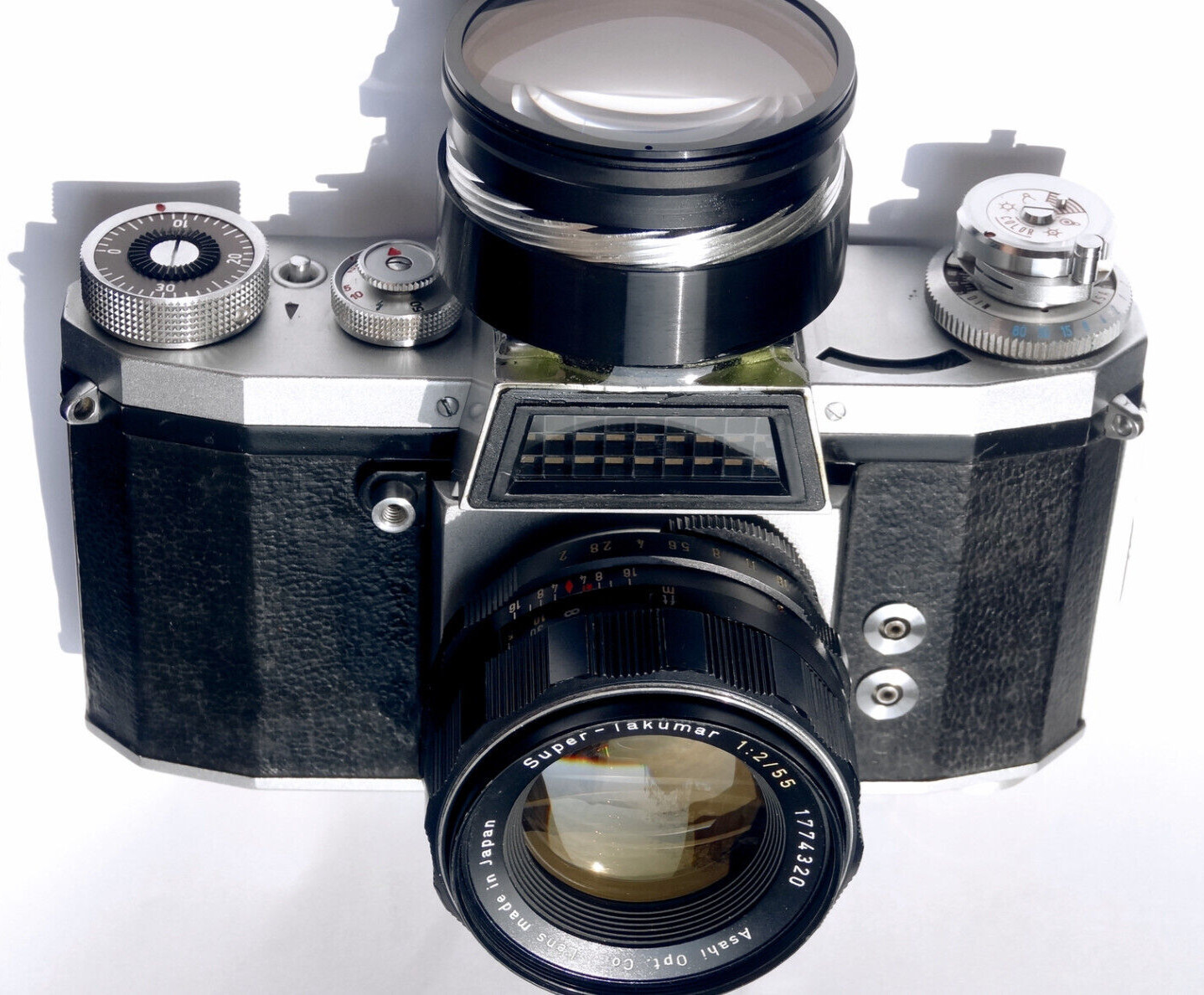
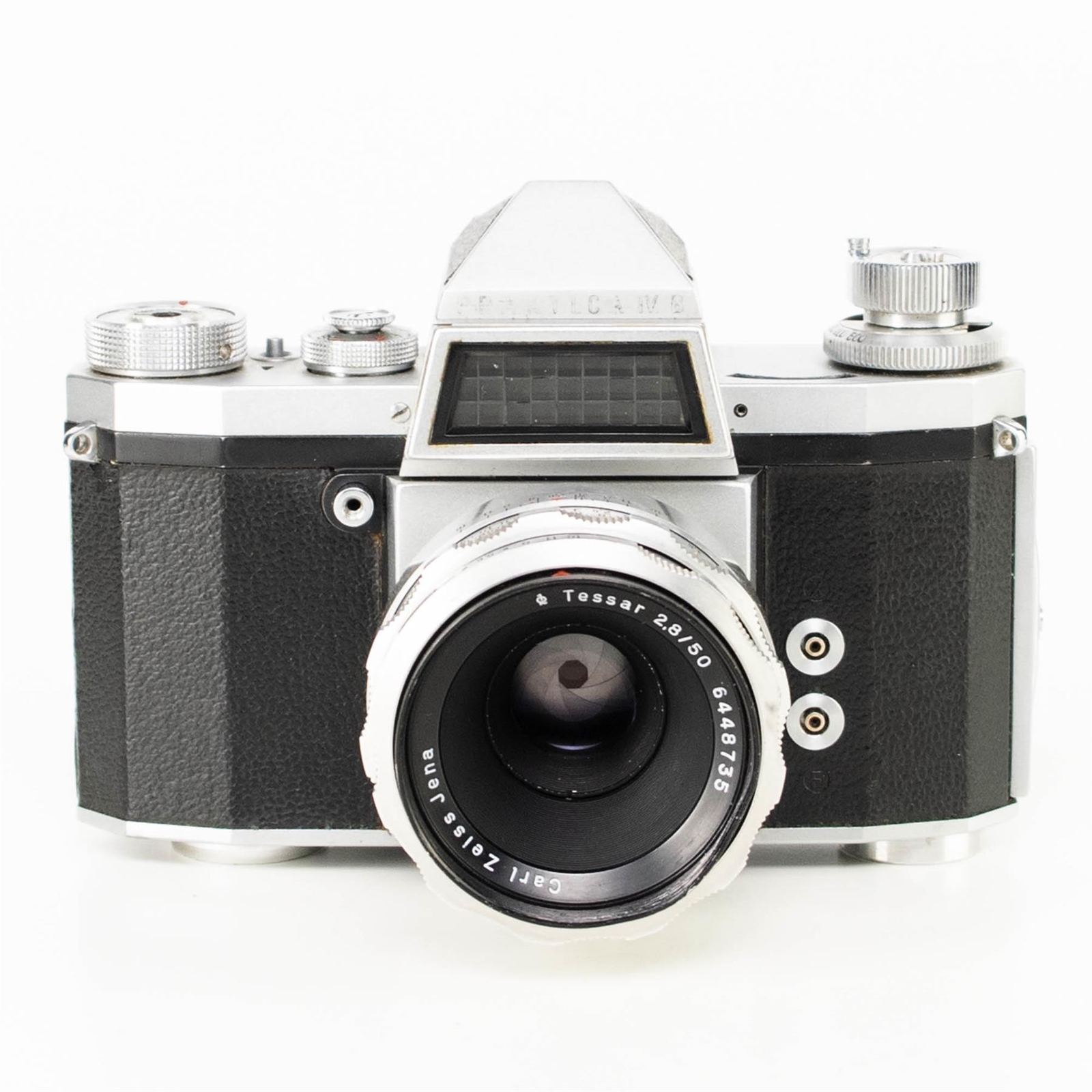
The Praktica IV retained the horizontal cloth focal-plane shutter design common to its predecessors but introduced minor refinements in shutter speed accuracy and viewfinder clarity. It lacked built-in light metering, requiring users to rely on external or handheld meters—a standard practice at the time. The camera’s top plate featured a large rewind crank, shutter speed dial, and film advance lever, all arranged in a functional, utilitarian layout typical of Eastern Bloc industrial design. Its body was constructed from pressed metal with leatherette covering, and it used a removable bottom plate for film loading—a design that simplified manufacturing and repair.
Within the Praktica lineup, the IV served as a bridge between the earlier, more rudimentary Praktica models and the later, more sophisticated variants like the Praktica FX and PLC series. It was succeeded by the Praktica V and ultimately paved the way for metered and electronic models in the late 1960s. Despite its lack of automation, the Praktica IV gained a reputation for reliability and was exported widely across Europe and into developing markets, contributing to the global proliferation of the M42 system.
Specifications
| Specification | Value |
| Type | 35mm Single-Lens Reflex (SLR) |
| Film Format | 35mm (135 cartridge) |
| Years Produced | 1959–1966 |
| Lens Mount | M42 × 1mm screw mount (Praktica thread) |
| Shutter | Horizontal-travel cloth focal-plane shutter; speeds 1–1/1000 sec, B, and X-sync at 1/30 sec |
| Metering | None (unmetered) |
| Exposure Modes | Manual only |
| Viewfinder | Fixed pentaprism eye-level viewfinder with ground-glass focusing screen |
| Dimensions | Approx. 145 × 90 × 55 mm; weight approx. 650 g (body only) |
Key Features
- M42 Lens Mount: One of the earliest adopters of the now-standard M42 screw mount, enabling compatibility with hundreds of lenses from Zeiss, Meyer, Schneider, and later Pentax and others.
- Mechanical Reliability: Fully mechanical operation with no batteries required, making it ideal for long-term use and field photography.
- High Shutter Speed: Capable of 1/1000 sec—among the fastest mechanical shutter speeds available at the time—useful for action and outdoor photography in bright light.
- X-Sync Flash Support: Equipped with PC sync terminals for both X and M flash synchronization, with X-sync set at 1/30 sec.
- Interchangeable Focusing Screens: Though rare in practice, the camera allowed for screen replacement, a feature appreciated by advanced users.
Historical Context
The Praktica IV was released during a period of rapid expansion in the 35mm SLR market. In the late 1950s, Japanese manufacturers like Asahi (later Pentax) were beginning to gain traction with models such as the Asahi Pentax AP, while European brands like Zeiss Ikon and Ihagee offered high-end alternatives. The Praktica IV positioned itself as a cost-effective, mechanically sound option from East Germany, leveraging the country’s strong optical and mechanical engineering heritage. Its timing coincided with the standardization of the M42 mount, which Praktica had helped pioneer since the late 1940s.
The camera was particularly popular in socialist bloc countries and developing nations due to its affordability and durability. It faced competition from the Kiev Automat (USSR), the Fujica Six (Japan), and later the Pentax Spotmatic. While it lacked the innovation of through-the-lens metering—introduced by the Topcon RE in 1963 and popularized by the Spotmatic in 1964—the Praktica IV remained in production until 1966, indicating strong market acceptance. Its unmetered design was not seen as a major drawback at the time, as many photographers were accustomed to using handheld meters.
Collectibility & Value
Today, the Praktica IV is considered a historically significant early M42 SLR, though it remains relatively affordable compared to contemporaneous Japanese or West German models. In good working condition, it typically sells for $75–$150 USD, with higher prices for examples with original lenses or rare accessories. Its collectibility stems more from its role in the evolution of the M42 system than from rarity—tens of thousands were produced, and many survive today.
When purchasing a Praktica IV, collectors should inspect the shutter for smooth operation across all speeds, particularly 1/1000 sec, where cloth shutters may show wear or uneven travel. The leatherette and foam light seals often degrade and should be replaced. The film advance mechanism and rewind crank should operate without binding. While the camera has no electronics, it is advisable to check the sync contacts and ensure the mirror movement is clean and free of oil. Because parts are no longer manufactured, repair relies on donor cameras or skilled technicians familiar with vintage East German mechanics.
Similar Cameras
- Pentax Spotmatic (1964) – Japanese-made M42 SLR with TTL metering, more advanced but later in release.
- Kiev Automat (1960s) – Soviet-built SLR with similar mechanical design but less consistent quality control.
- Zeiss Ikon Icarex 35 (1966) – West German M42 SLR with higher build quality and metering.
- Fujica Six (1958) – Japanese 35mm SLR with interchangeable lenses, though less standardized.
- Praktina FX (1952) – Earlier East German SLR with interchangeable backs, more complex but less portable.
Repair & Maintenance
The Praktica IV requires no batteries and operates entirely mechanically, making it highly reliable with proper maintenance. Common issues include stiff or sticky shutter curtains, worn foam light seals around the film chamber, and degraded leatherette. The cloth focal-plane shutter is sensitive to moisture and age; if speeds are inconsistent, professional cleaning or replacement may be necessary. The film advance lever and rewind mechanism can develop play over time and may require disassembly and lubrication. Due to the age of the model, spare parts are limited and often sourced from donor bodies. Repair difficulty is moderate to high for inexperienced users, as internal access requires careful disassembly of the top and back panels. It is recommended to service the camera every 10–15 years if used regularly.
eBay Listings


As an eBay Partner, we earn from qualifying purchases. This helps support our independent vintage technology research.
Related Models
- Praktica BX20 (1987–1993)
- Praktica L (1969-1975)
- Praktica LTL (1970-1975)
- Praktica MTL3 (1978-1984)
- Praktica MTL5 (1983–1985)
- Alpa 6 (1948-1953)
- Agfa Agfaflex
- Agfa Ambiflex
- Agfa Easy
- Agfa Futura Af zoom