POLAROID SX-70
The Polaroid SX-70 is a folding single-lens reflex (SLR) instant camera introduced in 1972, representing a groundbreaking fusion of optical precision, compact portability, and self-developing film technology. It was the first fully integrated instant SLR system, allowing users to capture, develop, and view photographs within minutes—all from a sleek, folding body.
Overview
Introduced by Polaroid Corporation in November 1972, the SX-70 marked a radical departure from previous instant cameras, which were largely boxy and utilitarian. Designed under the leadership of Dr. Edwin H. Land, the SX-70 was conceived as both a technical marvel and a design icon. It was the first instant camera to use integral film in a thin, credit-card-sized format that developed automatically without user intervention—no timing, no chemical pods to peel, and no need for external processing. The camera utilized a folding SLR optical system with a large, bright ground-glass viewfinder, offering accurate composition and focus for its time.
The SX-70 was initially targeted at amateur photographers and creative professionals seeking a portable, high-quality instant medium. It utilized newly developed SX-70 integral film, which contained all necessary reagents in a self-contained pod that spread developer across the image layer upon ejection. The camera’s folding design—collapsing to just 1.5 inches thick—made it highly portable while housing a precision 4-element 116mm f/8 glass lens (later upgraded in variants). Its fully manual exposure system relied on a built-in CdS light meter and an electronically controlled leaf shutter, making it one of the first consumer cameras to use solid-state electronics for exposure control.
The SX-70 cemented Polaroid’s reputation for innovation and influenced generations of instant and analog photographers. It spawned multiple variants—including the Sonar OneStep, Alpha, and Model 3—and laid the foundation for modern instant photography. Its combination of elegant design, mechanical sophistication, and artistic potential made it a favorite among artists like Ansel Adams and Andy Warhol, who praised its immediacy and tactile quality.
Specifications
| Specification | Value |
| Type | Folding Single-Lens Reflex (SLR) |
| Film Format | SX-70 integral instant film (80mm × 107mm image area) |
| Years Produced | 1972–1981 |
| Lens Mount | Fixed integrated 116mm f/8 glass lens (later models: 116mm f/8 4-element glass) |
| Shutter | Electronically controlled leaf shutter, 1/175 sec (flash sync), variable up to 10 seconds in manual mode |
| Aperture Range | Automatic or manual from f/8 to f/22 via aperture ring |
| Metering | Built-in CdS (Cadmium Sulfide) through-the-lens (TTL) metering |
| Exposure Modes | Manual exposure with aperture selection; automatic exposure via electronic shutter control |
| Viewfinder | Waist-level folding SLR viewfinder with Fresnel lens and split-image rangefinder (later models) |
| Focusing | Manual focus via folding bellows system with rangefinder patch (on later models) |
| Flash Support | Hot shoe for Polaroid flashbars (e.g., Flash 50, Flash 100); no built-in flash |
| Battery | 6V 5.6Ah battery pack integrated into each SX-70 film pack (no internal battery) |
| Dimensions | 132 × 87 × 48 mm (folded); 132 × 87 × 132 mm (unfolded) |
| Weight | Approximately 540 g (without film) |
Key Features
- Folding SLR Design: The collapsible body houses a true single-lens reflex optical system, allowing precise composition and focusing via a large ground-glass screen.
- Through-the-Lens (TTL) Metering: Utilizes a CdS sensor behind the lens for accurate exposure calculation, adjusting shutter speed automatically based on scene brightness.
- Self-Developing Integral Film: Uses SX-70 film with built-in developer pod; images develop in 9–15 minutes under normal conditions.
- Electronic Shutter Control: One of the first consumer cameras to use solid-state electronics for shutter timing, enabling precise exposure from 1/175 sec to 10 seconds.
- Manual and Automatic Exposure: Aperture selected manually (f/8–f/22), while shutter speed is either automatic (TTL) or manually set via exposure compensation dial.
Historical Context
The SX-70 was launched at a time when instant photography was still a novelty, dominated by Polaroid’s own earlier pack-film models like the Model 20. However, these systems required users to peel apart negatives and positives and were bulky. The SX-70 represented a paradigm shift: a compact, elegant camera using a new generation of integral film that developed automatically. Its development took over a decade and cost Polaroid more than $1.2 billion in today’s dollars, reflecting Dr. Land’s vision of merging art, science, and consumer design.
Upon release, the SX-70 faced skepticism due to its high initial price (equivalent to over $800 today) and early production issues, including unreliable film chemistry and inconsistent exposures. However, by the mid-1970s, Polaroid had refined both the camera mechanics and film formulation, leading to widespread acclaim. Competitors like Kodak attempted to enter the instant market but were blocked by Polaroid’s extensive patent portfolio. The SX-70 became a cultural icon, symbolizing immediacy and creative experimentation. Its influence extended into art, journalism, and personal photography, helping establish instant film as a legitimate medium.
Collectibility & Value
Today, the Polaroid SX-70 is highly collectible, with well-maintained models fetching $150–$400 depending on condition and variant. Early production units (especially first-series models with "Model 1" engraving) and rare prototypes can exceed $1,000 at auction. Collectors prize cameras with clean optics, smooth bellows (free of pinholes or mold), and responsive shutters. Functional accuracy—especially consistent shutter timing and meter response—is critical, as degraded CdS cells and dried lubricants are common in vintage units.
Common issues include stiff or seized focus mechanisms, light leaks from deteriorated bellows, and shutter failure due to corroded circuitry or capacitor degradation. The integrated battery in each film pack powers the camera, so a non-functional battery contact can render the camera unusable even if mechanically sound. When purchasing, buyers should verify that the film door closes securely, the mirror flips up cleanly, and the viewfinder is free of haze or fungus. Restored models with replaced bellows and cleaned electronics often command premium prices.
Similar Cameras
- Polaroid Sonar OneStep (1978) – An evolution of the SX-70 with added ultrasonic autofocus and simplified operation.
- Polaroid SX-70 Model 2 (1974) – Improved version with better film ejection and updated cosmetics.
- Kodak Instant Camera (1976) – Kodak’s short-lived pack-film competitor, quickly withdrawn due to patent litigation.
- Fuji Instax Wide series (1998–present) – Modern instant cameras using similar principles but with smaller film and electronic automation.
- Mamiya Press TL (1965) – Not instant, but a folding SLR with interchangeable backs, illustrating earlier portable SLR design.
Repair & Maintenance
The SX-70 relies on a 6V battery integrated into each SX-70 film pack, eliminating the need for internal batteries but requiring fresh film for operation. The most common failure points are the CdS light meter, which can drift or fail over time, and the electronic shutter circuit, which may suffer from capacitor leakage or contact corrosion. The folding bellows are prone to cracking or developing pinholes, leading to light leaks; replacement requires skilled reassembly. Focus rails can stiffen due to dried lubricants and should be cleaned and regreased with care to avoid damaging the precision-ground threads. Shutter timing should be tested with a phototachometer; deviations beyond ±30% indicate need for recalibration. Due to its complex mechanics and vintage electronics, repair is best handled by specialists in analog instant cameras. Regular use and storage in a dry, temperature-stable environment significantly extend the camera’s operational life.
eBay Listings
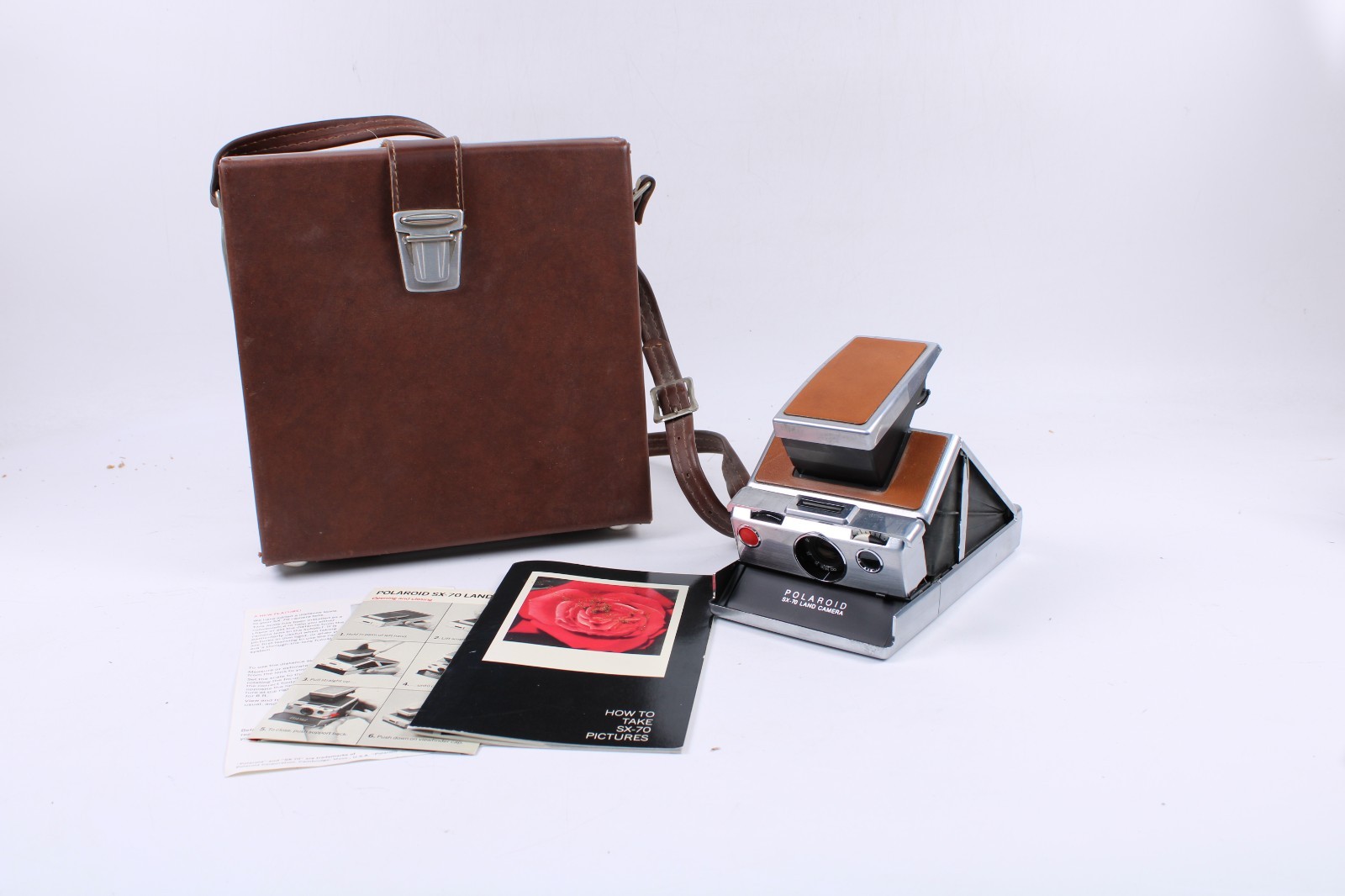
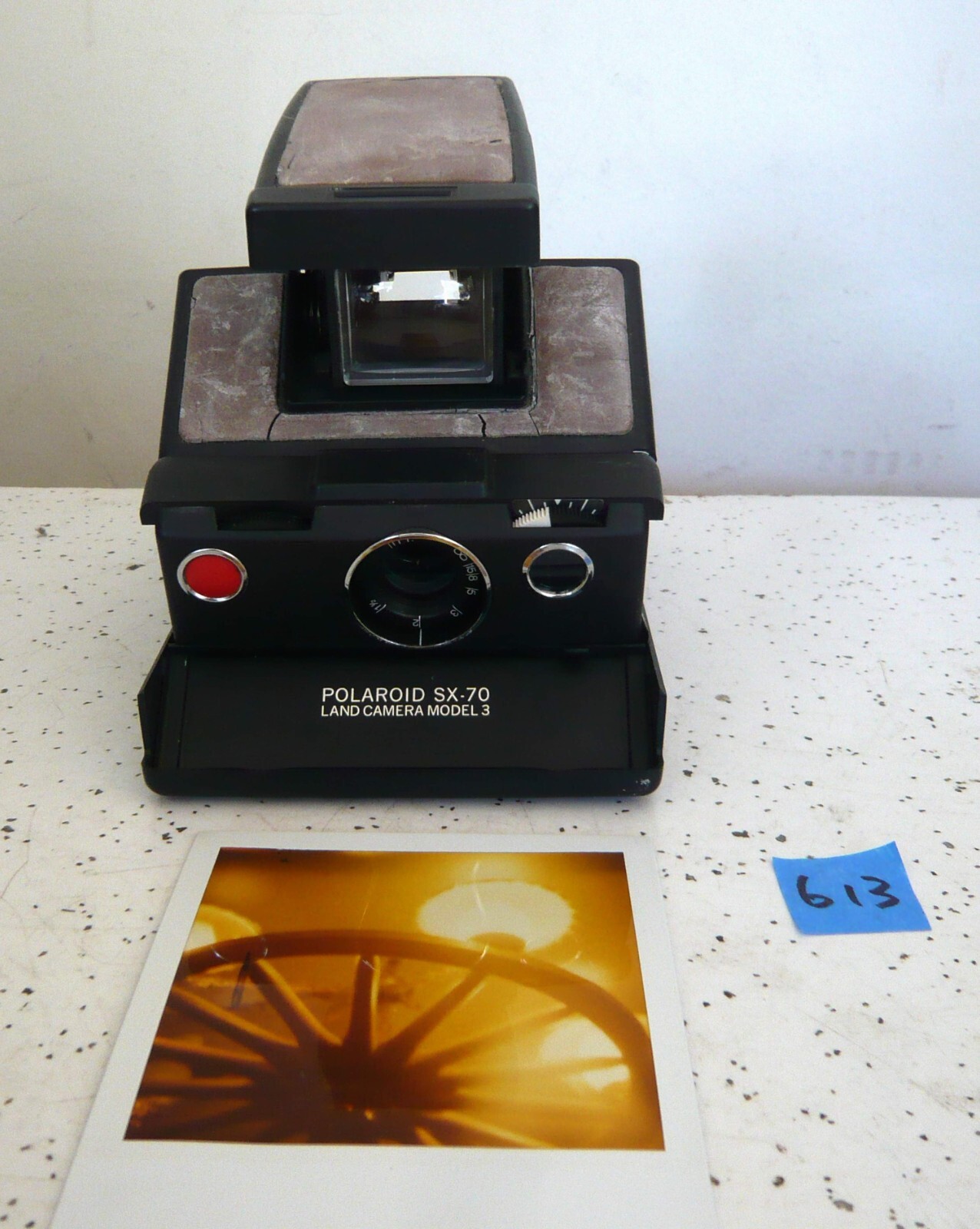


As an eBay Partner, we earn from qualifying purchases. This helps support our independent vintage technology research.
Related Models
- Polaroid 600 Land Camera (1981–1995)
- Polaroid Pronto (1976-1982)
- Polaroid SX-70 Sonar (1978-1981)