Pentax 67 (1969–1989): The Workhorse That Redefined Medium-Format Flexibility
A modular, no-compromise medium-format SLR that delivered studio-grade image quality with surprising agility—beloved by landscape shooters, portrait artists, and anyone who refused to settle for less than perfection.
Overview
The Pentax 67 wasn’t just another large-format camera—it was a declaration of intent. Born in 1969 as the Pentax 6x7 and reborn in 1989 with the streamlined "67" moniker (sometimes retroactively called the 67 Mark I), this beast of a camera offered a rare blend of modularity, optical excellence, and mechanical robustness that made it a favorite among working professionals and serious enthusiasts alike. At a time when medium-format systems were either studio-bound behemoths or limited in capability, the Pentax 67 carved out a niche as the go-anywhere, do-anything 6x7cm solution. It didn’t try to be small or fast—it aimed to be *right*. And for over two decades, it largely succeeded.
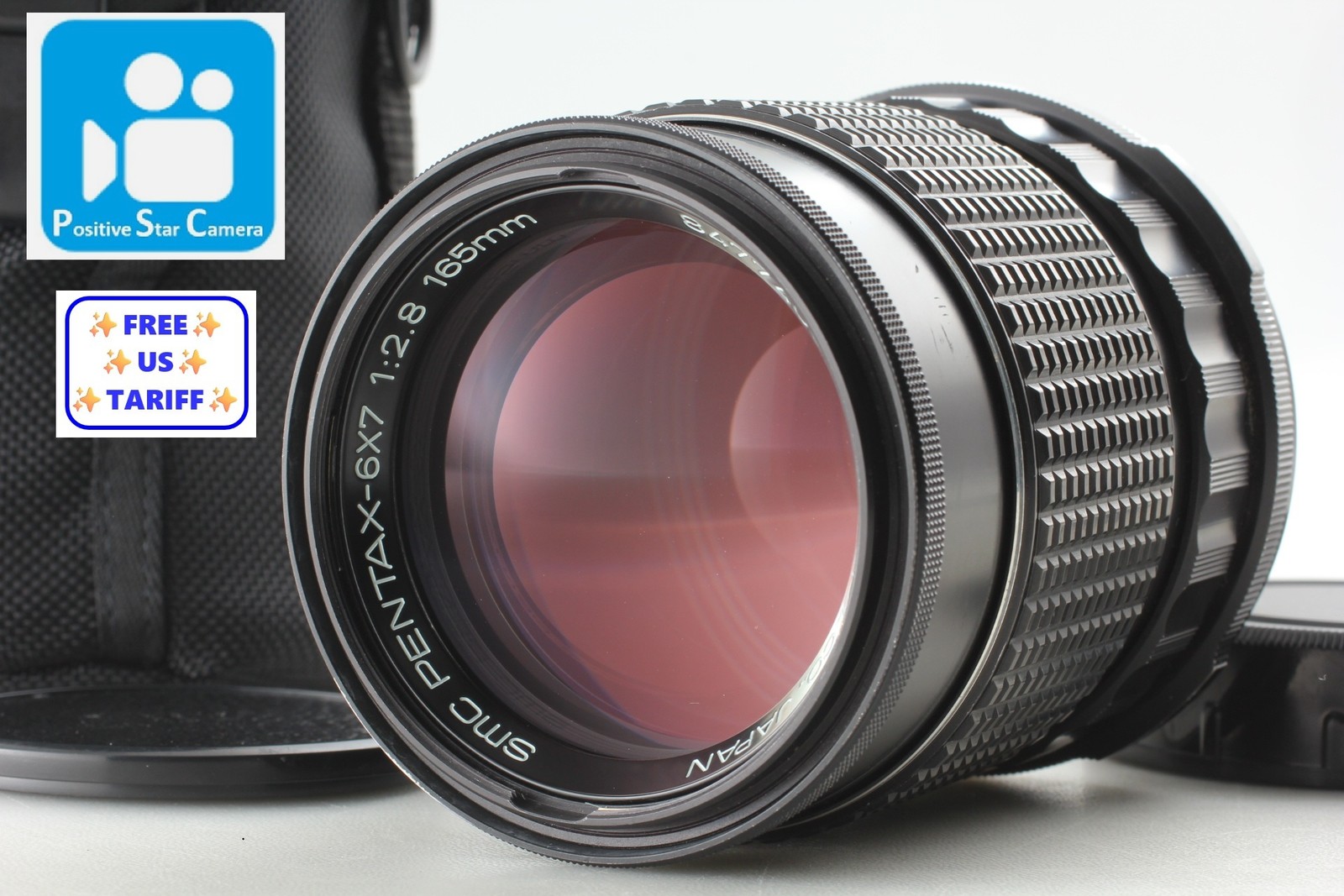
Photographers who used the Pentax 67 weren’t just capturing images—they were building them. The camera’s 6x7cm negative (measuring approximately 56 x 67 mm) delivered stunning resolution, incredible dynamic range, and a three-dimensional depth that 35mm could only dream of. Its modular design meant you could swap film backs mid-roll using the dark slide system—a godsend for wedding shooters or anyone juggling color and black-and-white film. Paired with the legendary SMC Pentax 67 lenses—like the f/2.8 105mm or the f/4.5 300mm—it produced images with a clarity and tonal smoothness that still hold up against modern digital backs. This was the camera you took when the shot mattered.
Specifications
| Film Format | 6x7 cm on 120/220 roll film |
| Lens Mount | Pentax 67 screw mount |
| Shutter Speeds | 1 - 1/1000 second, Bulb |
| Shutter Type | Vertical-travel focal-plane shutter |
| Flash Sync Speed | 1/30 second |
| Viewfinder | Interchangeable pentaprism and waist-level finders |
| Viewfinder Coverage | 95% |
| Viewfinder Magnification | 0.85x (pentaprism) |
| Focusing Screen | Interchangeable |
| Metering | TTL open-aperture center-weighted average metering |
| Exposure Modes | Manual |
| Aperture Priority | No |
| Battery | 4x SR44 or 1x 6V 4SR44 |
| Battery Life | Approx. 50 rolls (with 4SR44) |
| Dimensions | 157 x 115 x 110 mm |
| Weight | 1350 g (body only) |
| Accessory Compatibility | Motor drive, interchangeable film backs, polar sync flash |
Key Features
- Interchangeable Film Backs with Dark Slide: This wasn’t just a gimmick—it was a game-changer. The ability to swap 120 and 220 film backs mid-roll (using the dark slide to protect exposed frames) gave photographers unprecedented flexibility. Imagine switching from Portra 400 to Tri-X 400 between songs at a live concert or during a wedding ceremony. No other system in its class made this so seamless.
- TTL Open-Aperture Metering: While some medium-format cameras forced you to stop down to meter (a dim, fiddly process), the Pentax 67 let you compose and focus at full aperture, then meter through the lens while the lens stayed wide open. The metering system used center-weighted averaging and gave stop-down auto-exposure confirmation—meaning you could verify exposure accuracy before firing. This was a huge leap in usability for a manual-only system.
- Vertical-Travel Focal-Plane Shutter: Unlike horizontal shutters that could cause distortion with fast-moving subjects, the vertical-travel design allowed for a faster 1/1000 sec top speed and more consistent flash sync across the frame. Yes, flash sync was limited to 1/30 sec, but that was standard for the format—and the vertical shutter minimized rolling distortion with fast lenses.
- Interchangeable Viewfinders and Focusing Screens: Whether you preferred the eye-level precision of the pentaprism (0.85x magnification, 95% coverage) or the quiet intimacy of the waist-level finder, the 67 let you choose. And with multiple focusing screens available—including grid and microprism options—you could tailor the camera to your shooting style.
Historical Context
The Pentax 67 didn’t emerge in a vacuum. In 1969, when it debuted as the Pentax 6x7, the medium-format world was dominated by technical cameras and modular systems like the Mamiya RB67 and Bronica GS-1. These were capable tools, but many were heavy, slow, and designed primarily for studio use. The Pentax 6x7 stood out by offering SLR convenience with near-RB67 levels of modularity—without the rotating back or the 5.5-pound weight penalty.
By 1989, when the updated Pentax 67 arrived, the market had shifted. Autofocus 35mm cameras like the Canon EOS 650 were gaining ground, and digital was on the horizon. Yet Pentax doubled down on analog excellence. The 1989 revision brought improved ergonomics, better rubber grips, and updated metering electronics—without sacrificing the mechanical reliability that made the original a legend. It wasn’t trying to be trendy; it was trying to be *better*. And it succeeded. The 67 became a favorite among landscape photographers who valued its wide-angle lens options (like the 45mm f/4.5) and its ability to handle rugged conditions. It was also a staple in portrait studios, where its shallow depth of field at 6x7cm created a buttery, dreamlike separation that medium format is famous for.
The Pentax 67’s legacy was cemented by its successor, the Pentax 67 II (1990–2009), which added a redesigned mirror damping system to reduce vibration and improved battery efficiency. But the 1989 67 remains the sweet spot for many collectors—a refined version of a proven design, built like a tank, and optically unmatched in its price range.
Collectibility & Value
Today, the Pentax 67 is considered uncommon but not rare—thousands were made, but many have succumbed to aging light seals, shutter fatigue, or simple neglect. On the used market in 2025, a fully functional Pentax 67 body in good condition typically sells for $800–$1,800 USD, with prices spiking for kits that include the prism finder, multiple backs, or sought-after lenses like the 105mm f/2.8. The value reflects both its build quality and its enduring relevance in the film renaissance.
However, buyers should be cautious. Light seals degrade over time and must be replaced to prevent light leaks—this is standard maintenance, not a flaw. More concerning are shutter timing inaccuracies, especially at high speeds (1/500 and 1/1000 sec), which can result in underexposed frames. Some units also suffer from mirror bounce, which causes vibration and softness at shutter speeds around 1/30 to 1/125 sec—best mitigated with mirror lock-up or a tripod. Always test the camera with film before committing, or buy from a reputable technician who has serviced it.
That said, when a Pentax 67 is properly maintained, it’s a revelation. It’s heavy (1350g body-only), yes—but that weight translates to stability, balance, and a tactile sense of permanence. It’s not a camera for the casual shooter. It’s for the one who wants to slow down, compose deliberately, and produce images that feel *crafted*. In an age of digital abundance, the Pentax 67 is a reminder that sometimes, the best photos are the ones you earn.
eBay Listings
![New Seal[Exc+5] Pentax 6x7 67 TTL Early Film Camera SMC 6x7](https://i.ebayimg.com/images/g/QrcAAeSww7FpxIY3/s-l1600.jpg)
![Meter Works!! [NEAR MINT] Pentax 6x7 67 TTL Non-MLU Camera](https://i.ebayimg.com/images/g/gX0AAeSwgaVpbfTm/s-l1600.jpg)
As an eBay Partner, we earn from qualifying purchases. This helps support our independent vintage technology research.
Related Models
- Pentax K1000 (1976-1997)
- Pentax KM (1975-1977)
- Pentax KX (1975-1977)
- Pentax LX (1980-2001)
- Pentax ME-F (1981–1984)
- Alpa 6 (1948-1953)
- Agfa Agfaflex
- Agfa Ambiflex
- Agfa Easy
- Agfa Futura Af zoom