OLYMPUS OM-4
The Olympus OM-4 is a professional-grade 35mm film SLR camera introduced in 1983 as the pinnacle of Olympus’s OM series. It combines advanced metering technology, rugged mechanical construction, and precision optics compatibility, making it a favorite among photojournalists, landscape photographers, and serious enthusiasts.
Overview
The OM-4 was developed as the successor to the highly respected OM-3, representing the peak of Olympus’s manual-focus SLR engineering. Released during a transitional period in photography—when automation was rapidly advancing but professional photographers still valued mechanical reliability—the OM-4 struck a balance between cutting-edge electronics and robust analog design. It was positioned as a flagship model for working professionals and advanced amateurs who demanded the highest accuracy in exposure metering and the durability to perform under extreme conditions.
One of the OM-4’s defining characteristics is its integration of multi-spot metering, a groundbreaking feature at the time. This system allowed photographers to take multiple spot readings within the frame and calculate an optimal exposure based on highlights and shadows—an essential tool for demanding genres like landscape and studio photography. The camera retained the compact, lightweight design language of the OM series, originally conceived by Yoshihisa Maitani, with a magnesium alloy chassis and titanium shutter blades. Despite its small size, the OM-4 was engineered for long-term reliability, with weather sealing and a shutter rated for 300,000 cycles.
The OM-4 was updated in 1987 as the OM-4Ti (Titanium), which featured a titanium top and bottom plate, improved viewfinder displays, and enhanced durability. Production of the OM-4 series continued until 2002, making it one of the longest-produced professional film SLRs in history. It remained in use even as autofocus systems gained dominance, a testament to its precision and build quality. The OM-4 cemented Olympus’s reputation for creating technically sophisticated, compact, and reliable manual cameras that competed directly with Nikon’s F3 and Canon’s New F-1.
Specifications
| Specification | Value |
| Type | 35mm Manual Focus SLR |
| Film Format | 35mm (135) |
| Years Produced | 1983–2002 (OM-4), 1987–2002 (OM-4Ti) |
| Lens Mount | Olympus OM Bayonet Mount |
| Shutter | Vertical-travel, metal-blade focal-plane shutter; speeds 1–1/2000 sec (mechanical), 1–1/2000 sec + B (electronic), with flash sync at 1/60 sec |
| Metering | TTL full-aperture multi-spot and center-weighted average metering; 1° spot metering with optional readings across the frame |
| Exposure Modes | Aperture-priority auto exposure, manual exposure |
| Viewfinder | Interchangeable focusing screens; fixed pentaprism with 97% coverage and 0.92x magnification; displays shutter speed, exposure warning, and metering mode |
| Dimensions | 136 × 86 × 50 mm (5.35 × 3.39 × 1.97 in); weight approx. 570 g (1.26 lb) body only |
Key Features
- Multi-spot TTL metering system: Capable of storing up to eight spot readings and calculating an average exposure, with visual display in the viewfinder and on the top LCD.
- Aperture-priority and manual exposure modes: Offers full control with electronic shutter timing and manual override.
- Dual display system: Features both a top-mounted LCD panel and in-viewfinder LED readouts for shutter speed and exposure status.
- Interchangeable focusing screens: Allows customization for different shooting needs (e.g., split-image, microprism, grid).
- High durability: Shutter rated for 300,000 cycles; weather-resistant construction with O-ring seals; titanium-reinforced version (OM-4Ti) for enhanced strength.
Historical Context
The Olympus OM-4 was launched in 1983 at a time when the camera industry was shifting toward automation and autofocus technology. While brands like Minolta and Canon were developing autofocus SLRs (the Minolta Maxxum 7000 would arrive in 1985), Olympus chose to refine its manual-focus system for professionals who valued precision and reliability over automation. The OM-4 was designed as a tool for photographers who needed exacting exposure control, particularly in high-contrast environments where matrix metering systems of the era often failed.
It competed directly with the Nikon F3HP and Canon New F-1, both of which were also professional manual SLRs with advanced metering. However, the OM-4 distinguished itself with its compact size—nearly 30% smaller than the Nikon F3—while offering superior spot metering capabilities. Its multi-spot system was unmatched in the SLR market, giving it a niche among landscape and fine art photographers. The 1987 release of the OM-4Ti further solidified its status, with titanium construction and a "Ti" engraving that became a mark of prestige. Despite the rise of autofocus, the OM-4 remained in production for nearly two decades, supported by a loyal user base and Olympus’s commitment to the OM system.
Collectibility & Value
Today, the Olympus OM-4 and OM-4Ti are highly sought after by film photography enthusiasts and collectors. The OM-4Ti, in particular, commands premium prices due to its limited production, titanium build, and status as the final evolution of the OM line. In good working condition, an OM-4 typically sells for $400–$600, while a well-maintained OM-4Ti can fetch $700–$1,000 or more, especially with original accessories or rare black finishes.
When purchasing an OM-4, it is crucial to verify the functionality of the metering system, as the silicon photodiode sensor can degrade over time, leading to inaccurate readings. Battery compartment corrosion from expired mercury PX625 batteries (now obsolete) is a common issue; many users adapt to modern 1.35V or 1.4V alternatives with exposure compensation. Shutter reliability is generally excellent, but older units should be tested for consistency across all speeds. Collectors should also check for originality, including the leather covering, viewfinder clarity, and presence of the accessory shoe cover.
Similar Cameras
- Nikon F3HP
- Canon New F-1
- Pentax LX
- Minolta X-1 (XE)
- Leica R4 (professional variant)
Repair & Maintenance
The OM-4 uses two 1.5V SR44 or one 3V DL1/3N lithium battery (with adapter) to power its metering and electronic shutter functions. Due to the original design reliance on 1.35V mercury PX625 cells, using modern 1.5V substitutes requires exposure compensation of -1/3 stop for accurate metering, or the use of Wein Cell zinc-air batteries (1.35V). The camera’s electronics are robust but sensitive to battery leakage; corroded contacts are a common repair issue.
Shutter and aperture timing can drift over decades of use and may require professional calibration. The mirror mechanism and film advance are mechanical and generally durable, but lubrication of internal components may be needed after prolonged storage. Repair parts are still available through specialty shops and Olympus legacy service centers, though full servicing requires expertise in vintage SLR systems. Given its complexity and professional build, the OM-4 is not recommended for novice DIY repairs. Regular cleaning, light lubrication, and periodic calibration ensure long-term reliability.
eBay Listings
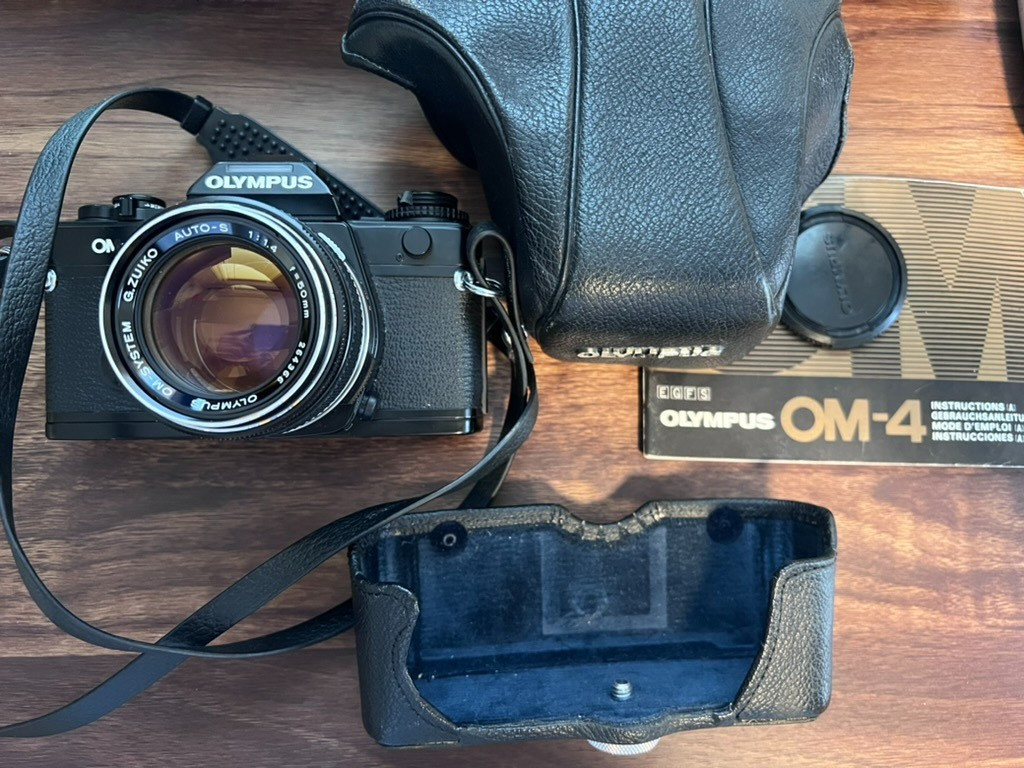


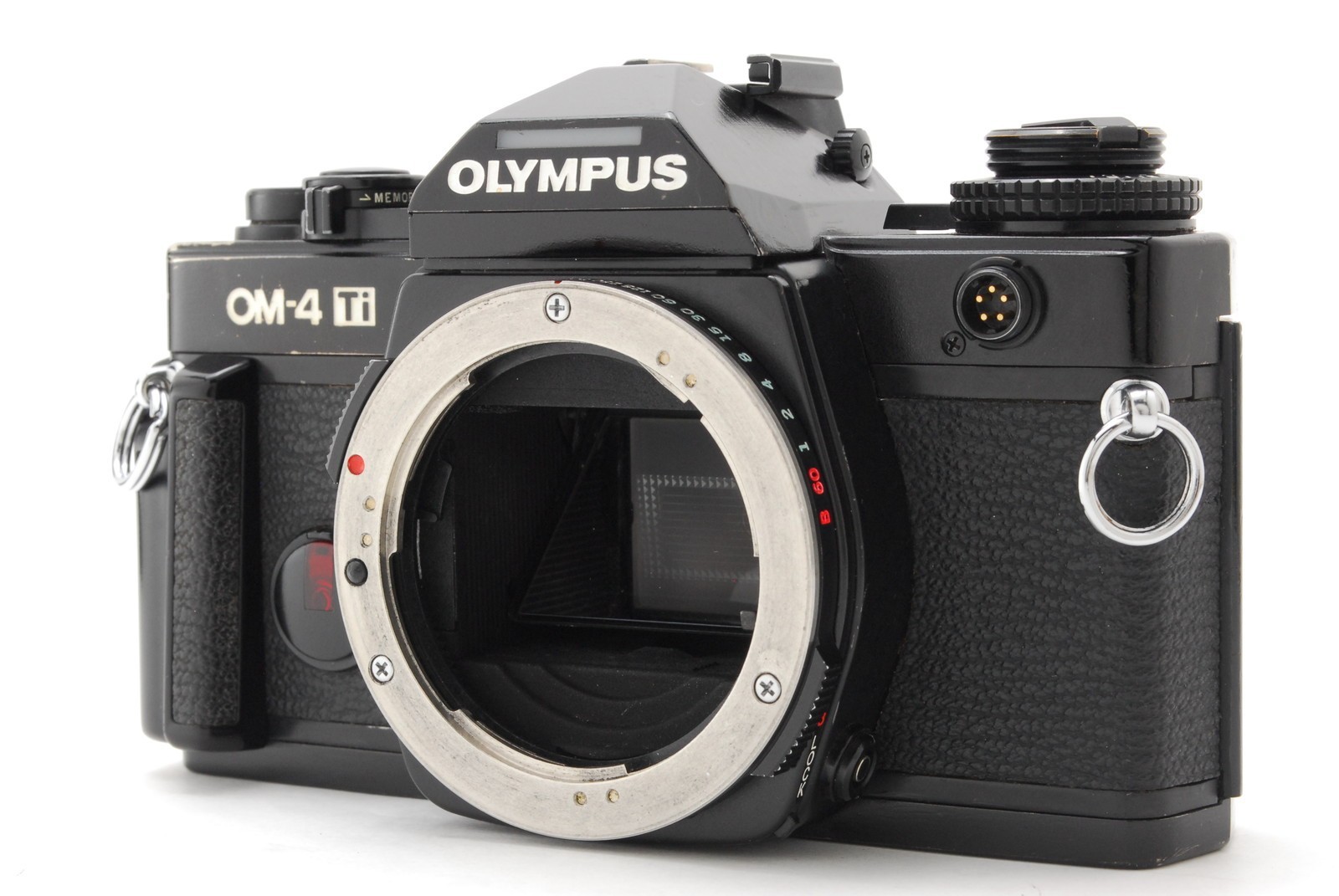
As an eBay Partner, we earn from qualifying purchases. This helps support our independent vintage technology research.
Related Models
- Olympus OM-1 (1972-1988)
- Olympus OM-10 (1979-1987)
- Olympus OM-1n (1979-1988)
- Olympus OM-2 SP (1984-1988)
- Olympus OM-2 (1975-1987)
- Alpa 6 (1948-1953)
- Agfa Agfaflex
- Agfa Ambiflex
- Agfa Easy
- Agfa Futura Af zoom