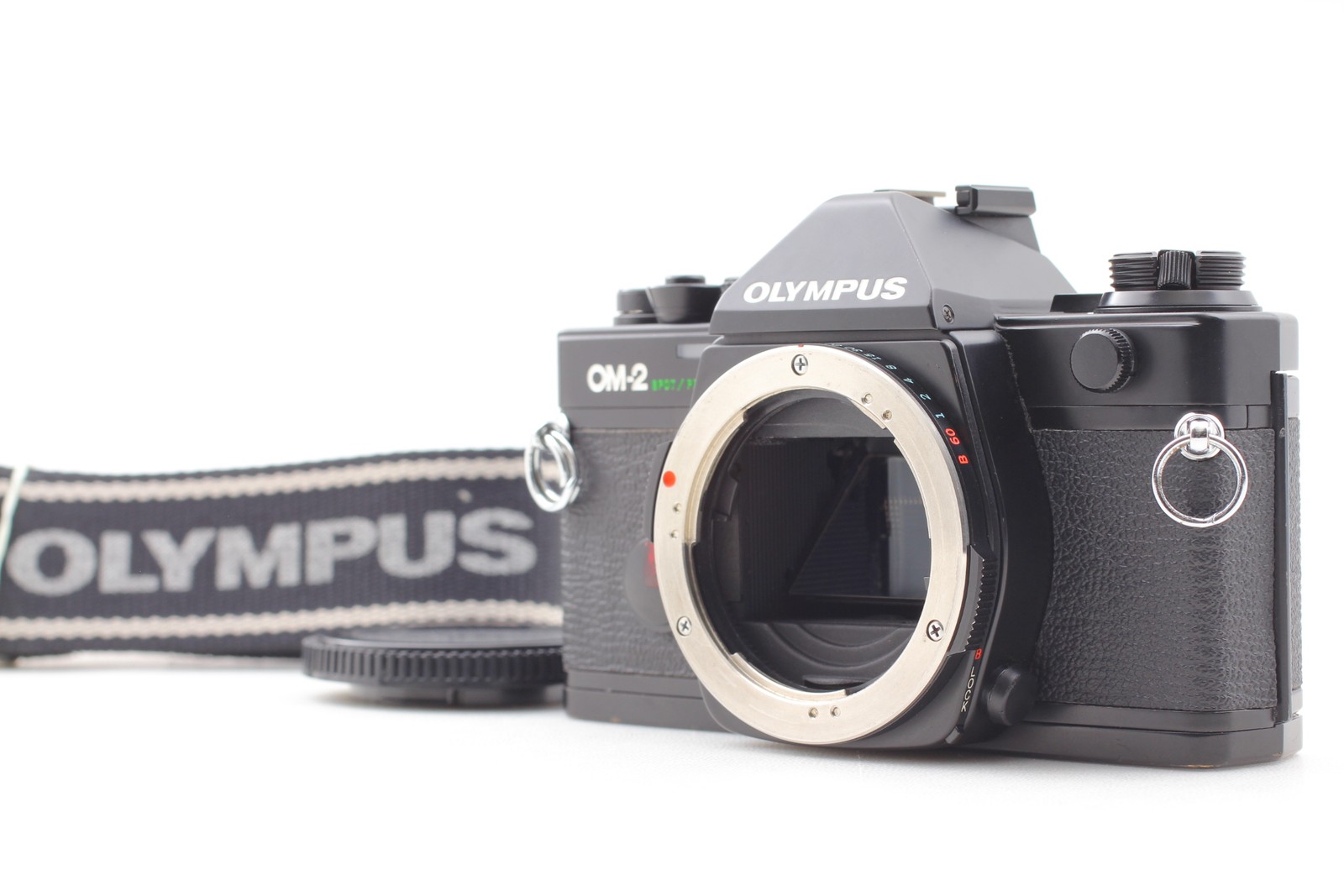
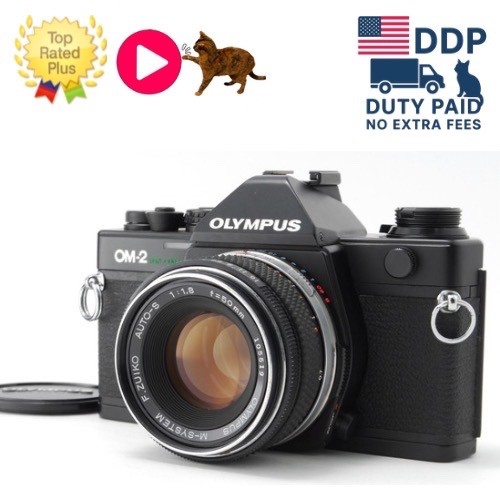
OLYMPUS OM-2 SP
The Olympus OM-2 SP is a 35mm film single-lens reflex (SLR) camera introduced in 1984 as an upgraded variant of the OM-2, featuring center-weighted average and spot metering capabilities. It represents the final evolution of Olympus’ professional OM-series manual focus SLRs before the transition toward autofocus systems.
Overview
Released between 1984 and 1988, the OM-2 SP (often referred to as the OM-2S in North America) was designed for advanced amateur and professional photographers seeking precise exposure control in a compact, rugged body. It built directly upon the foundation of the OM-2 by integrating a spot metering function into the already sophisticated TTL (through-the-lens) metering system, a feature previously available only on higher-end models like the OM-3 and OM-4. The SP designation stands for "Spot Metering," highlighting its primary upgrade. This addition allowed users to take meter readings from a small 2.5% area at the center of the frame, enabling accurate exposure in high-contrast lighting conditions or when photographing backlit subjects.
Positioned as a premium manual-focus SLR, the OM-2 SP retained the compact, magnesium-alloy chassis that defined the OM series since its debut in 1972. Despite being mechanically similar to the OM-2, the SP featured refined electronics, improved metering circuitry, and a more durable shutter mechanism rated for 300,000 actuations. It was marketed as a reliable, lightweight alternative to bulkier professional SLRs from Nikon and Canon, appealing to photojournalists, travel photographers, and enthusiasts who valued portability without sacrificing control. The OM-2 SP bridged the gap between the mid-tier OM-2 and the flagship OM-4, offering many of the latter’s exposure capabilities at a lower price point.
Specifications
| Specification | Value |
| Type | 35mm manual focus SLR |
| Film Format | 35mm (135 film) |
| Years Produced | 1984–1988 |
| Lens Mount | Olympus OM bayonet mount |
| Shutter | Vertical-travel focal-plane shutter; speeds from 1 sec to 1/1000 sec, plus B (bulb); flash sync at 1/60 sec |
| Metering | TTL silicon blue (SiBl) cell with center-weighted average and selectable spot metering (2.5% at center) |
| Exposure Modes | Aperture-priority autoexposure and manual mode |
| Viewfinder | Fixed pentaprism with 97% coverage and 0.92x magnification; interchangeable focusing screens |
| Dimensions | 136 × 83 × 50 mm (5.35 × 3.27 × 1.97 in); ~540 g (body only, batteries excluded) |
| Power Source | Two 1.55V SR44 or equivalent silver-oxide batteries (used for metering and exposure control) |
| Flash Sync | PC terminal and hot shoe; X-sync at 1/60 sec |
| Self-Timer | Mechanical self-timer with 6–12 second delay |
| Multiple Exposure Capability | Yes, via dedicated lever |
| Depth-of-Field Preview | Yes, via dedicated button |
Key Features
- Selectable Spot and Center-Weighted Metering: The OM-2 SP introduced a switchable metering mode, allowing users to choose between center-weighted average and precise 2.5% spot metering—ideal for difficult lighting.
- Aperture-Priority and Manual Exposure: Offers full creative control with automatic shutter speed selection in aperture-priority mode or fully manual control with LED guidance in the viewfinder.
- Interchangeable Focusing Screens: Supports a range of optional focusing screens (e.g., split-image, microprism, grid) tailored to specific shooting needs.
- Durable Shutter Mechanism: Rated for 300,000 cycles, significantly more robust than earlier OM-2 models.
- Compact Professional Build: Lightweight magnesium alloy body with weather-resistant seals, maintaining the OM series’ reputation for portability and durability.
Historical Context
The OM-2 SP was released during a transitional period in the SLR market, as manufacturers began shifting focus toward autofocus and electronic integration. Olympus, having established the OM system as a benchmark for compact, high-performance manual SLRs, sought to extend the life of its manual-focus lineup by refining existing models. The SP addressed a key limitation of the original OM-2—its lack of spot metering—by incorporating technology developed for the OM-4. This move allowed Olympus to offer a near-professional tool without the premium price of the titanium-shuttered OM-4.
Competitors at the time included the Nikon FM2n, Canon AE-1 Program, and Pentax ME Super. While Nikon and Canon emphasized ruggedness and automation respectively, Olympus differentiated itself with miniaturization and ergonomic design. The OM-2 SP was particularly well-regarded in Europe and Japan, where its compact size and precise metering made it popular among street and documentary photographers. Though overshadowed by the OM-4 and later the OM-1n, the SP earned a loyal following for its balance of features, reliability, and handling.
Collectibility & Value
Today, the Olympus OM-2 SP is considered a desirable collectible among film photography enthusiasts, particularly those favoring compact, meter-accurate SLRs. Its relative rarity—especially outside Japan—and functional advantages over the base OM-2 contribute to stronger market demand. In good working condition, prices typically range from $250 to $400 USD, with higher values for units with clean viewfinders, responsive shutters, and original accessories.
When purchasing an OM-2 SP, collectors should verify the functionality of the metering system, as aging SiBl cells and corroded battery compartments are common issues. Battery leakage is a frequent problem due to the use of silver-oxide cells, which can damage the meter circuitry if not replaced promptly. Additionally, the shutter mechanism, while durable, may require CLA (clean, lubricate, adjust) servicing after decades of use. A properly maintained OM-2 SP with spot metering intact is a prized addition to any OM system setup.
Similar Cameras
- Nikon FM2n – Rugged manual-focus SLR with excellent build quality and shutter reliability; lacks spot metering in base model.
- Canon A-1 – Advanced aperture-priority and manual SLR with comprehensive metering options, including partial metering.
- Pentax LX – Professional-grade modular SLR with interchangeable finders and precise spot metering.
- Minolta X-700 – Popular aperture-priority SLR with TTL metering, though less rugged and lacking spot mode.
- Olympus OM-4 – Flagship OM-series camera with titanium shutter and built-in spot metering; more advanced but significantly more expensive.
Repair & Maintenance
The OM-2 SP operates on two 1.55V SR44 (or equivalent) silver-oxide batteries, which power the TTL metering system and exposure computation. Battery leakage is the most common issue, often damaging the battery contacts and nearby circuitry—prompt replacement and regular inspection are essential. The shutter is fully mechanical at 1/60 sec and slower but relies on batteries for speeds above that threshold and for meter operation.
Common problems include sticky shutter curtains (especially at intermediate speeds), degraded light seals, and dim or inaccurate meter readings due to aging SiBl cells. While the camera is repairable by experienced technicians familiar with OM-series electronics, parts availability can be limited. Regular CLA servicing every 5–10 years is recommended for consistent performance. The interchangeable focusing screens and lens compatibility with over 60 OM-mount lenses enhance long-term usability, making the OM-2 SP a sustainable choice for film photographers.
eBay Listings


As an eBay Partner, we earn from qualifying purchases. This helps support our independent vintage technology research.
Related Models
- Olympus OM-1 (1972-1988)
- Olympus OM-10 (1979-1987)
- Olympus OM-1n (1979-1988)
- Olympus OM-2 (1975-1987)
- Olympus OM-20 (1983–1986)
- Alpa 6 (1948-1953)
- Agfa Agfaflex
- Agfa Ambiflex
- Agfa Easy
- Agfa Futura Af zoom