NIKON NIKKOREX 35
The Nikon Nikkorex 35 is a budget 35mm single-lens reflex (SLR) camera introduced by Nikon in 1960 as an entry-level alternative to its high-end F-series professional SLRs. Featuring a fixed 48mm f/2.8 Color-Skopal Anastigmat lens and a leaf shutter with built-in selenium light meter, the Nikkorex 35 was designed to bring SLR functionality to amateur photographers at an accessible price point.
Overview
Released in 1960, the Nikkorex 35 represented Nikon’s strategic move into the growing consumer SLR market during a period of rapid expansion in 35mm photography. While Nikon had already established a strong reputation among professionals with the Nikon F (introduced in 1959), the Nikkorex 35 targeted budget-conscious enthusiasts who desired SLR capabilities—such as through-the-lens viewing and interchangeable film backs—without the complexity and cost of a system camera. Manufactured by Mamiya under contract, the Nikkorex 35 shared its core design with the Mamiya Sekor 35 and other rebadged variants, reflecting a common industry practice of the era to leverage existing platforms for brand-specific models.
The camera featured a fixed lens and leaf shutter system, diverging from the focal-plane shutters used in Nikon’s flagship models. This design simplified construction and reduced manufacturing costs, though it limited maximum shutter speed and precluded the use of interchangeable lenses. Despite these compromises, the Nikkorex 35 offered a fully coupled selenium-cell exposure meter, visible in the viewfinder, which automatically adjusted aperture based on lighting conditions—a notable convenience for novice users. The camera was marketed in North America through Willoughby’s, a New York-based retailer, which influenced the “Nikkorex” branding as a more consumer-friendly alternative to the technical “Nikon” name.
Positioned at the lower end of Nikon’s early SLR lineup, the Nikkorex 35 stood in stark contrast to the modular, precision-engineered Nikon F. It lacked interchangeable lenses, had no flash synchronization beyond X-sync at 1/40 sec, and used a simpler mechanical design. However, it played a crucial role in expanding Nikon’s market presence beyond professional circles. Production ceased in 1962 after a short two-year run, likely due to limited consumer demand and the rapid advancement of SLR technology, including the emergence of aperture-priority and through-the-lens metering systems.
Specifications
| Specification | Value |
| Type | Single-Lens Reflex (SLR) |
| Film Format | 35mm (135 cartridge) |
| Years Produced | 1960–1962 |
| Lens Mount | Fixed integrated lens (non-interchangeable) |
| Shutter | Leaf shutter, speeds 1/40 sec (flash sync), 1/100, 1/200, 1/400, 1/500 sec |
| Aperture Range | f/2.8 to f/22 |
| Metering | Coupled selenium-cell light meter (center-weighted) |
| Exposure Modes | Manual with automatic aperture selection via meter |
| Viewfinder | Fixed pentaprism SLR viewfinder with central split-image rangefinder spot |
| Focusing | Manual focus via helicoid lens barrel |
| Flash Sync | X-sync at 1/40 sec via PC terminal |
| Film Advance | Knurled lever (one stroke per frame) |
| Frame Counter | Manual reset (counts up) |
| Battery | None (selenium meter is self-powered) |
| Dimensions | Approx. 140mm (W) × 90mm (H) × 60mm (D) |
| Weight | Approx. 680g (with lens and body) |
Key Features
- Fixed 48mm f/2.8 Color-Skopal Anastigmat lens – A high-quality, multi-coated lens for its class, providing sharp imaging and smooth bokeh.
- Built-in selenium light meter – Fully coupled to the aperture mechanism, allowing real-time exposure feedback without batteries.
- Leaf shutter with speeds up to 1/500 sec – Unusual for an SLR of this era, enabling faster shutter speeds than many contemporary focal-plane shutters.
- Split-image focusing screen – Integrated into the ground-glass viewfinder for precise manual focusing.
- Compact SLR design – Smaller and lighter than modular system SLRs, making it more portable for casual use.
Historical Context
The Nikkorex 35 was introduced at a pivotal moment in photographic history—the dawn of the SLR revolution. In the late 1950s and early 1960s, SLRs began displacing rangefinders as the preferred format for serious amateurs and professionals, driven by advantages such as through-the-lens composition and parallax-free framing. Nikon, having just launched the Nikon F to critical acclaim, sought to capitalize on this trend across multiple market segments. The Nikkorex 35 was part of a broader strategy to offer Nikon-branded optics and build quality at lower price points, even if it meant outsourcing production and simplifying design.
Competitors included the Zeiss Ikon Contaflex series, the Kodak Retina Reflex, and the Wirgin Edixa SLRs—all fixed-lens or limited-interchangeability models with leaf shutters. While these cameras offered similar functionality, the Nikkorex 35 distinguished itself with its high-quality Skopal lens and direct linkage to the Nikon brand name, albeit through a retail partnership. Despite these advantages, the camera received limited marketing and distribution, contributing to its short production run. By 1962, the industry was shifting toward more advanced metering systems and interchangeable lenses, making fixed-lens SLRs like the Nikkorex 35 technologically obsolete within just a few years.
Collectibility & Value
Today, the Nikon Nikkorex 35 is a niche collectible, valued more for its historical significance and unique position in Nikon’s lineage than for practical use. Fewer than 20,000 units are believed to have been produced, making it relatively rare compared to mass-market SLRs of the era. In excellent working condition, with a clear viewfinder, responsive shutter, and functional meter, the Nikkorex 35 typically sells for $250–$400 USD. However, models with degraded selenium cells, cloudy prisms, or stiff focusing mechanisms may sell for significantly less.
Collectors should inspect the selenium meter for signs of deterioration—common after six decades—as the cell can corrode and leak, damaging the surrounding housing. The shutter mechanism, while robust, may require cleaning or lubrication if the camera has been stored improperly. The lens coating is generally durable, but haze or fungus can occur if the front element has been exposed to moisture. Because the camera lacks a removable lens, internal cleaning is difficult without disassembly. Despite these challenges, well-preserved examples are prized as curiosities—a rare non-F-series Nikon SLR and a testament to the brand’s early foray into consumer photography.
Similar Cameras
- Mamiya Sekor 35 – The original model upon which the Nikkorex 35 was based; nearly identical in design and function.
- Zeiss Ikon Contaflex Super B – A German-built fixed-lens SLR with a high-quality Tessar lens and leaf shutter.
- Kodak Retina Reflex III – Part of Kodak’s premium 35mm SLR line, featuring interchangeable lenses and a coupled meter.
- Wirgin Edixa-Matra – A budget German SLR with a similar leaf shutter and selenium meter setup.
- Fujica Six – Though a medium format camera, Fujica’s SLR design philosophy and retail branding approach paralleled the Nikkorex strategy.
Repair & Maintenance
The Nikkorex 35 requires no batteries, as its selenium light meter generates its own power from ambient light. However, aged selenium cells often degrade, losing sensitivity or producing inaccurate readings. In severe cases, the cell may delaminate or corrode, potentially damaging the meter coupling mechanism. Shutter maintenance is critical: the Copal-MK leaf shutter is precise but sensitive to dried lubricants, especially if the camera has been stored for decades. Common issues include sticking blades at 1/500 sec or inconsistent flash sync at 1/40 sec. Cleaning and lubrication by a technician experienced with leaf shutters are recommended for non-functional units.
The focusing helicoid is generally robust but may become stiff due to dried grease. Lens separation is not uncommon and should be avoided unless necessary, as re-cementing requires optical alignment. The viewfinder prism may develop internal haze or fungus, though this is less common due to the sealed design. Regular use, storage in a dry environment, and periodic inspection are the best ways to preserve functionality. Due to its rarity and limited service parts, the Nikkorex 35 is best treated as a display or occasional-use camera rather than a daily shooter.
eBay Listings

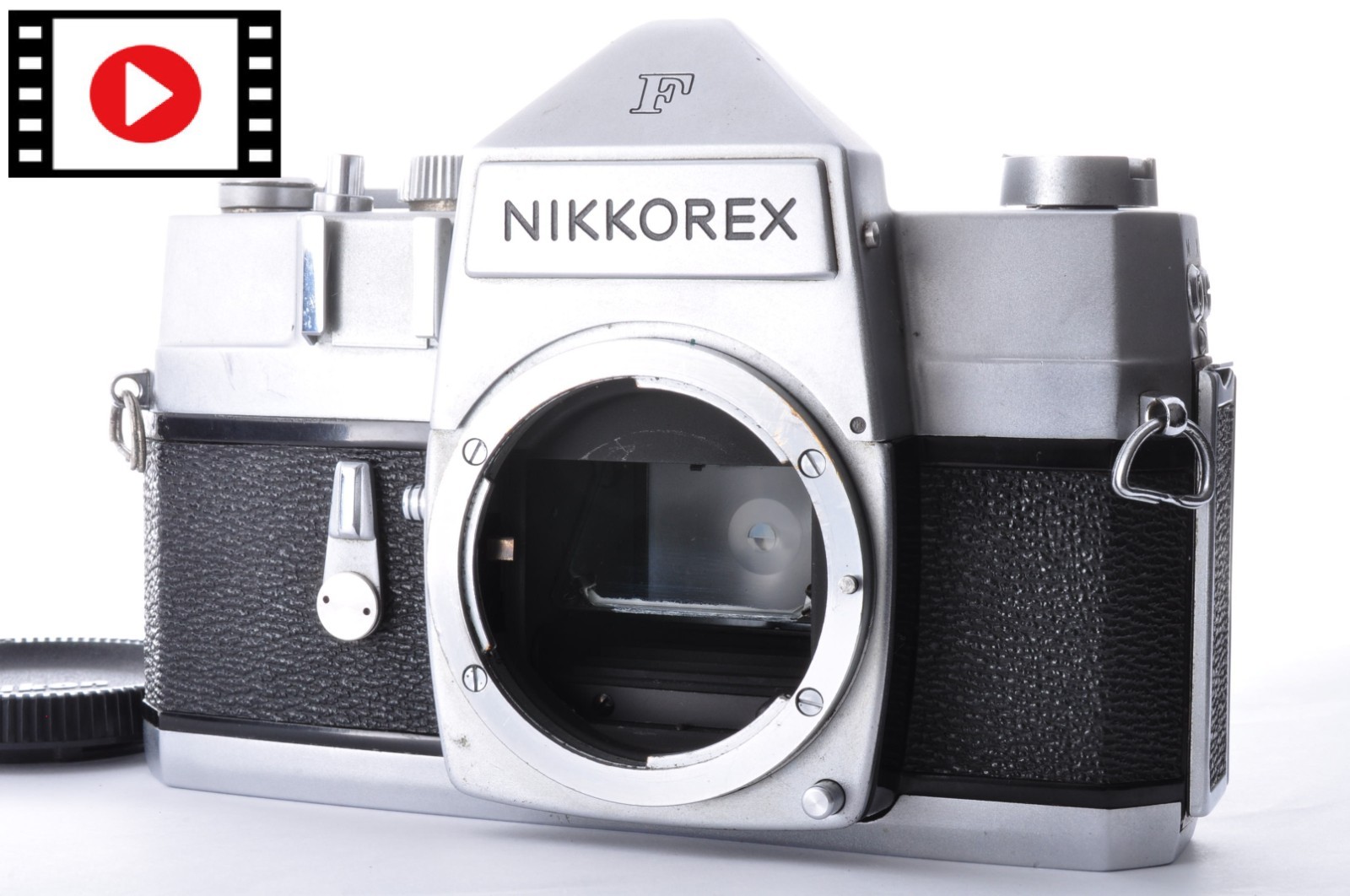


As an eBay Partner, we earn from qualifying purchases. This helps support our independent vintage technology research.
Related Models
- Nikon F-301 (1985-1990)
- Nikon F-401 (1987-1989)
- Nikon F-501 (1986-1986–1989)
- Nikon F (1959-1973)
- Nikon F100 (1999-2006)
- Alpa 6 (1948-1953)
- Agfa Agfaflex
- Agfa Ambiflex
- Agfa Easy
- Agfa Futura Af zoom