NIKON F-501
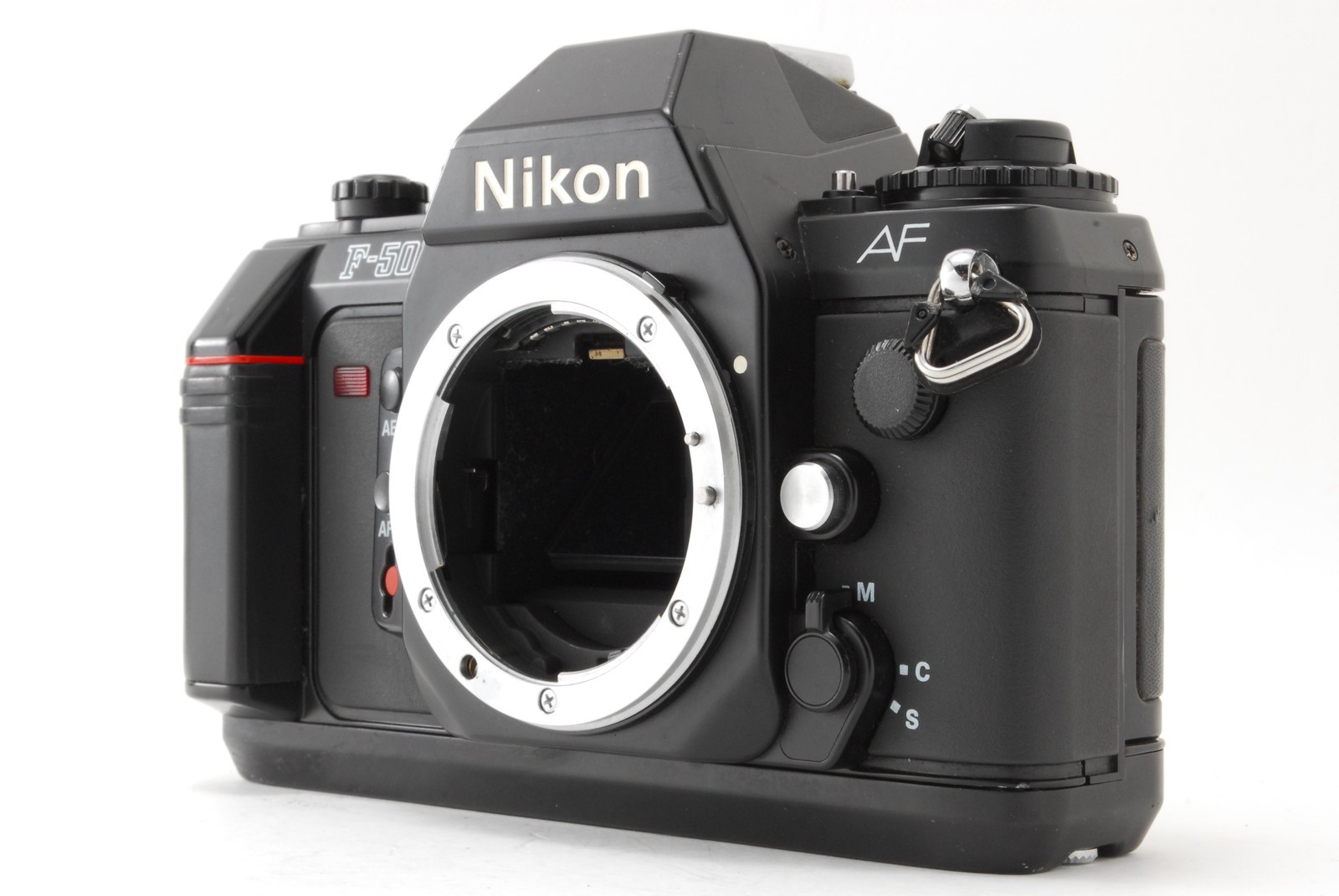
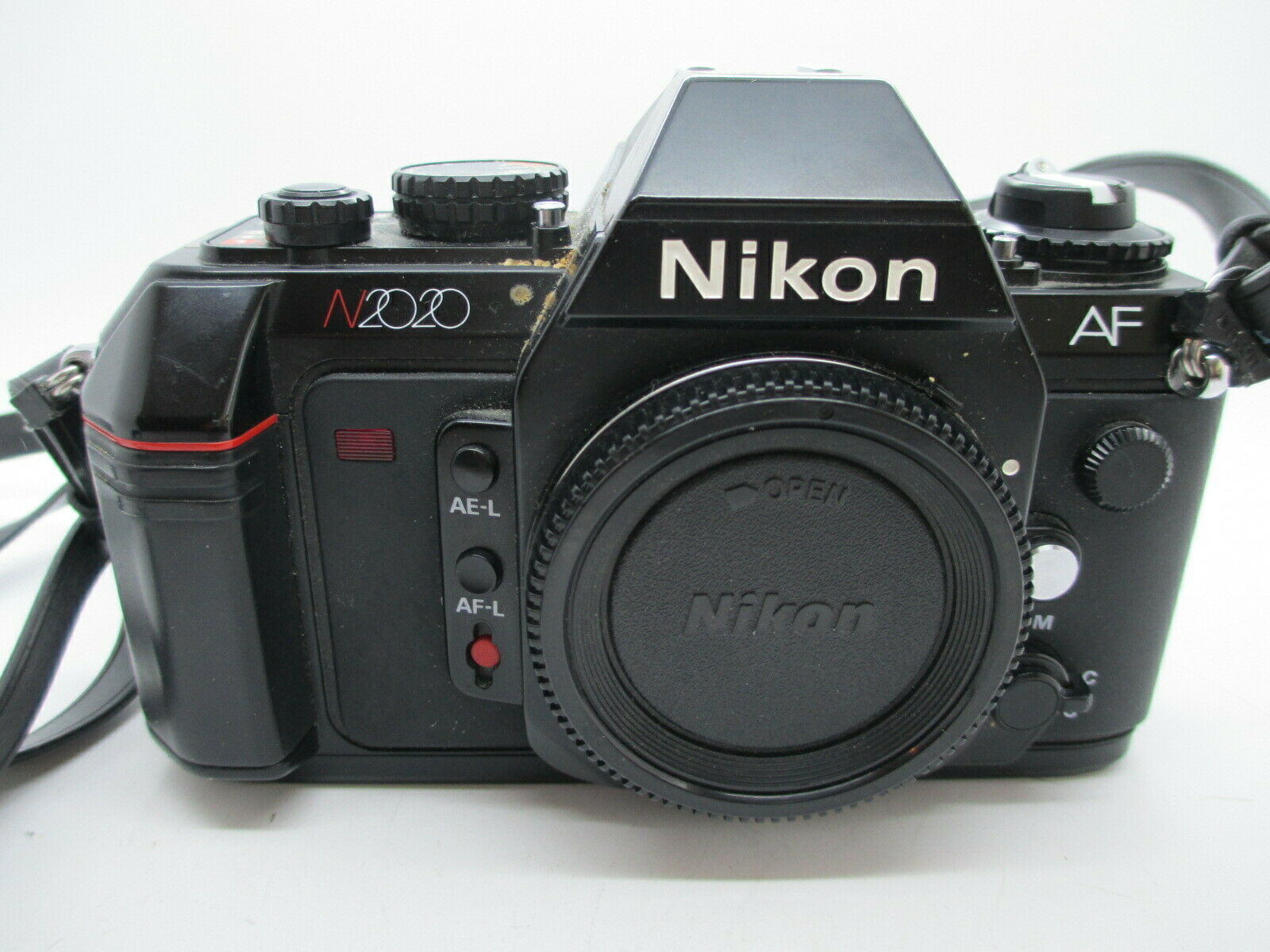
The Nikon F-501, known as the N2020 in North America, was Nikon’s first 35mm single-lens reflex (SLR) camera to feature an integrated autofocus (AF) motor within the camera body. Released in 1986, it marked a pivotal shift for Nikon into the era of autofocus photography, positioning the company to compete with the rapidly advancing Japanese SLR market.
Overview
The Nikon F-501 was introduced in February 1986 as Nikon’s flagship consumer-level autofocus SLR, representing the company’s first serious foray into integrated autofocus technology. At a time when Canon had already launched its fully electronic EF-mount EOS system with the EOS 650, Nikon opted for a more conservative approach by retaining its trusted Nikon F-mount while incorporating an in-body AF motor—a design philosophy that would define its AF SLR lineage for decades. Marketed as a technologically advanced yet accessible option for amateur and enthusiast photographers, the F-501 combined modern electronics with mechanical reliability, offering a bridge between manual focus traditions and the emerging autofocus era.
Targeted at advanced amateurs and photo enthusiasts, the F-501 was positioned below the professional F3 and the later F-801 (released concurrently as a more advanced sibling). It featured a compact polycarbonate and die-cast aluminum chassis, a large eye-level pentaprism viewfinder, and a vertical-travel focal-plane shutter. The camera’s design emphasized ease of use, with a simplified control layout and extensive automation, including programmed autoexposure, aperture-priority, shutter-priority, and manual modes. Its integration of a TTL 60/40 center-weighted light meter and a four-segment focus assist system made it one of the more sophisticated amateur SLRs of its time.
Historically, the F-501 is significant as the origin point of Nikon’s in-body autofocus system, which would evolve through models like the N6006, F-801, F90, and eventually into the modern Nikon F-series DSLRs. Unlike Canon’s clean-break EF-mount system, Nikon’s decision to maintain backward compatibility with its vast array of F-mount lenses—albeit with limited autofocus functionality on non-AF-S lenses—proved a strategic advantage in retaining its user base. The F-501 thus laid the groundwork for Nikon’s long-term approach to autofocus: incremental innovation while preserving lens ecosystem continuity.
Specifications
| Specification | Value |
| Type | 35mm Single-Lens Reflex (SLR) |
| Film Format | 35mm (135 film) |
| Years Produced | 1986–1989 |
| Lens Mount | Nikon F-mount (with AF coupling lever and electrical contacts) |
| Shutter | Vertical-travel, focal-plane shutter; speeds from 1/2000 s (X-sync) to 4 s, plus Bulb; flash sync at 1/60 s |
| Metering | TTL 60/40 center-weighted metering with silicon photodiode sensor |
| Exposure Modes | Programmed Auto, Aperture-Priority Auto, Shutter-Priority Auto, Manual, and Flash Auto (with compatible speedlights) |
| Viewfinder | Fixed eye-level pentaprism with 0.85x magnification, 94% frame coverage |
| Dimensions | 142 mm × 93 mm × 60 mm (5.6 × 3.7 × 2.4 in); approx. 570 g (20.1 oz) with battery |
Key Features
- First Nikon SLR with in-body autofocus motor, enabling automatic focusing with newly introduced Nikon AF lenses (e.g., AF Nikkor 35–70mm f/2.8D).
- Four exposure modes: Program, Aperture-Priority, Shutter-Priority, and Manual, offering flexibility for both beginners and advanced users.
- Integrated TTL flash metering with compatible Nikon Speedlights (e.g., SB-24, SB-26), supporting balanced fill-flash in Program mode.
- Vertical-travel metal-blade shutter with speeds up to 1/2000 s and flash sync at 1/60 s (mechanically controlled at slower speeds).
- Focus confirmation and exposure indicators in the viewfinder, including LED arrows and shutter speed/aperture readouts.
Historical Context
The mid-1980s marked a turning point in SLR design, driven by the rise of microprocessor-controlled cameras and autofocus technology. Canon’s 1985 launch of the EOS 650 with a fully electronic lens mount and in-lens AF motors posed a direct challenge to Nikon’s F-mount ecosystem. Rather than abandoning its proven lens mount, Nikon chose a transitional strategy: retrofitting autofocus capability into the existing F-mount via an in-body motor. The F-501 was the result—a technologically competent, albeit conservative, response to the autofocus revolution.
Despite its innovation, the F-501 faced criticism for its limited autofocus performance compared to Canon’s more responsive systems. Its screw-drive AF was relatively slow and noisy, and early AF lenses were bulky and expensive. Nevertheless, the camera was well-received in the market for its build quality, ergonomic design, and compatibility with Nikon’s extensive manual-focus lens library. It sold strongly in Japan, North America, and Europe, helping Nikon maintain its market share during a period of rapid technological change. The concurrent release of the more advanced F-801 (N8008) allowed Nikon to segment its offerings, with the F-501 serving as the entry point into Nikon’s new AF system.
Collectibility & Value
Today, the Nikon F-501 is regarded as a historically significant model among Nikon collectors, particularly as the brand’s first autofocus SLR. While not as rare or sought-after as professional F-series models, it holds nostalgic value for photographers who transitioned from manual to autofocus systems in the late 1980s. In the used market, working examples typically sell for $50–$120 USD, depending on condition, included accessories, and lens bundle.
When purchasing an F-501, collectors should verify that the autofocus mechanism functions smoothly, as the internal AF motor and gear train are prone to wear or lubricant degradation after decades of disuse. Common issues include sluggish or non-responsive autofocus, shutter timing inaccuracies, and light seal deterioration. The camera uses a single 6V 4LR44 or PX28 battery to power its electronics and shutter control—these are still available but can be expensive. Replacement light seals and a CLA (clean, lubricate, adjust) service are recommended for long-term reliability. Lenses such as the AF 35–70mm f/2.8 or AF 70–210mm f/4 are desirable companions, though they too may exhibit focus creep or aperture inaccuracies if not maintained.
Similar Cameras
- Canon EOS 650 (1987) – First Canon EOS camera with in-lens autofocus and EF mount.
- Minolta Maxxum 7000 (1985) – Industry’s first integrated autofocus SLR, setting the benchmark for AF performance.
- Pentax SFX/SF1 (1987) – Pentax’s first AF SLR with TTL flash and through-the-lens focus detection.
- Olympus OM-2000 (1988) – Late-entry autofocus OM-series model with compact design and TTL metering.
- Yashica FX-3 Super 2000 (1986) – Budget-friendly AF SLR with aperture-priority and manual modes.
Repair & Maintenance
The Nikon F-501 is powered by a single 6V 4LR44 (or equivalent PX28) battery, which supplies power to the shutter, metering, autofocus system, and viewfinder display. Battery life is moderate, typically lasting 20–30 rolls under normal use. As with many late-1980s electronic SLRs, the primary maintenance concerns are degraded light seals, sticky shutter curtains, and failing capacitors in the circuitry. The autofocus motor, while robust, can suffer from dried lubricants causing grinding or hesitation—especially if the camera has been stored for years without use.
Repair difficulty is moderate; while the camera is not overly complex, disassembly requires precision and familiarity with Nikon’s internal layout. Replacement parts such as focus screens, seals, and batteries are available through specialty retailers and online marketplaces. Due to its historical significance and relative simplicity compared to later models, the F-501 is a viable candidate for restoration by experienced technicians or dedicated hobbyists. Regular use and storage in a dry, temperature-stable environment are recommended to preserve functionality.
eBay Listings


As an eBay Partner, we earn from qualifying purchases. This helps support our independent vintage technology research.
Service Manuals & Schematics
- Manual (1986) — archive.org
- Manual (2022) — archive.org
Related Models
- Nikon F-301 (1985-1990)
- Nikon F-401 (1987-1989)
- Nikon F (1959-1973)
- Nikon F100 (1999-2006)
- Nikon F2 (1971–1980)
- Alpa 6 (1948-1953)
- Agfa Agfaflex
- Agfa Ambiflex
- Agfa Easy
- Agfa Futura Af zoom