MINOLTA TC-1
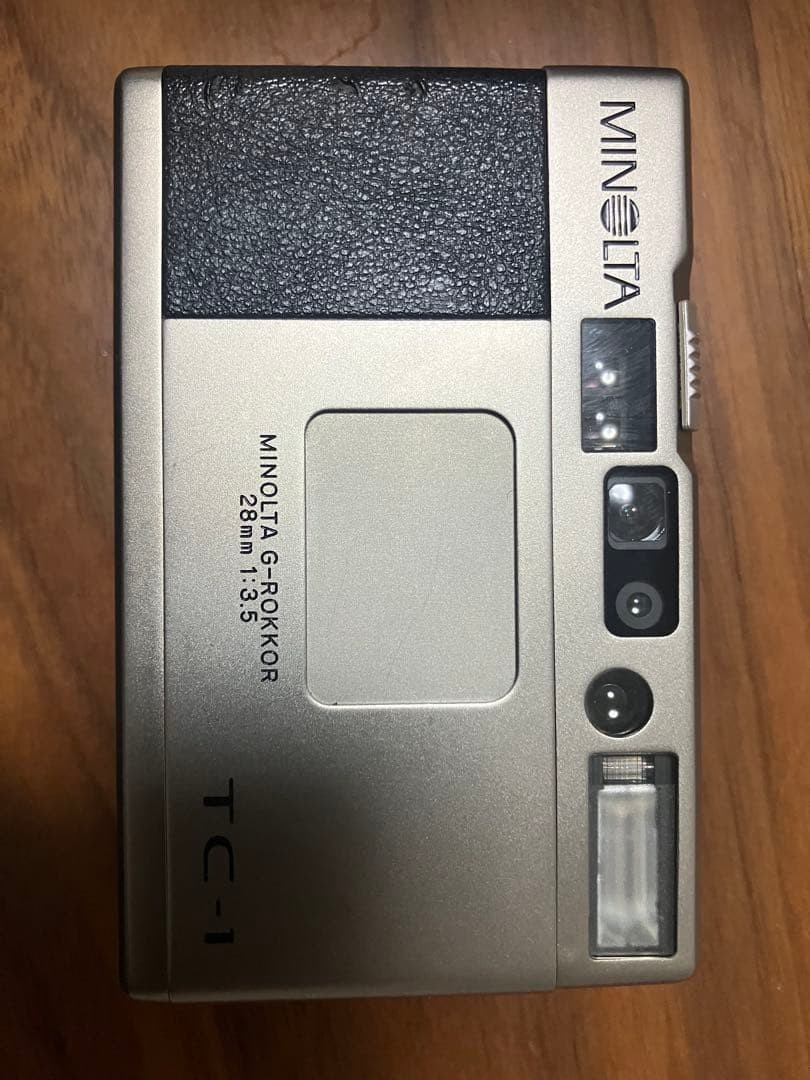
The Minolta TC-1 is a premium 35mm compact film camera released in 1996, representing the pinnacle of Minolta’s compact camera engineering. Designed for photographers seeking exceptional optical quality in an ultra-portability-focused body, the TC-1 combines a sharp 28mm f/3.5 G-Rokkor lens with a robust titanium construction, making it a benchmark in the premium compact segment.
Overview
The Minolta TC-1 was introduced in 1996 as the flagship model in Minolta’s line of high-end compact 35mm cameras, succeeding earlier models like the Minolta CLE and the unpopular Minolta TC-1 prototype from the 1980s. Marketed toward discerning amateur and professional photographers who valued discreet, high-quality imaging tools, the TC-1 stood out for its exceptional lens performance and precision engineering. It was developed during a period when Japanese manufacturers were pushing the limits of miniaturization without sacrificing optical quality, competing directly with offerings from Leica, Contax, and Olympus.
Measuring just 107 × 62 × 31 mm and weighing approximately 265 grams (including battery and film), the TC-1 is one of the smallest full-frame 35mm cameras ever produced with a fixed, high-performance lens. Its construction features a full titanium body with a scratch-resistant black finish, contributing to both durability and a premium tactile experience. The camera’s design prioritizes simplicity and elegance, with minimal external controls and a motorized lens cover that retracts automatically upon powering on.
The TC-1 was part of Minolta’s “G-Rokkor” series, a designation reserved for their highest-grade optics. It was intended not only as a technical showcase but also as a statement of Minolta’s commitment to optical excellence in the face of growing competition from electronic and emerging digital systems. Despite its short production run (1996–2002) and limited global distribution—primarily in Japan and select European markets—the TC-1 has gained a cult following among film photographers and collectors for its combination of compactness, build quality, and lens performance.
Specifications
| Specification | Value |
| Type | Fixed-lens compact camera |
| Film Format | 35mm (135) |
| Years Produced | 1996–2002 |
| Lens Mount | Fixed 28mm f/3.5 G-Rokkor lens (no interchangeable mount) |
| Shutter | Electronic leaf shutter, 16 sec to 1/500 sec, plus Bulb mode |
| Metering | TTL 6-segment honeycomb-pattern silicon photodiode metering |
| Exposure Modes | Program AE only (with manual override via exposure compensation) |
| Viewfinder | Optical direct-vision viewfinder with parallax correction marks and LED indicators |
| Dimensions | 107 × 62 × 31 mm; weight: 265 g (with battery) |
Key Features
- 28mm f/3.5 G-Rokkor Lens: A 5-element, 4-group aspherical lens design delivering outstanding sharpness, contrast, and minimal distortion—widely regarded as one of the finest fixed lenses in any compact 35mm camera.
- Titanium Body Construction: Full titanium chassis and outer shell provide durability, corrosion resistance, and a lightweight yet premium feel.
- Advanced TTL Metering: Six-segment honeycomb-pattern metering system ensures accurate exposure in complex lighting conditions.
- Compact Form Factor: Among the smallest 35mm cameras ever made with a 28mm wide-angle lens, enabling exceptional portability.
- Motorized Lens Cover and Film Transport: Fully automatic operation with motorized film advance, rewind, and lens barrier system for ease of use.
Historical Context
The TC-1 was released at a transitional moment in photographic history, as the film market began to feel the pressure from early digital point-and-shoots. Despite this, high-end compact film cameras remained desirable for their superior image quality and mechanical refinement. Minolta developed the TC-1 to compete with the Contax T2/T3 and Leica Minilux, targeting professionals and enthusiasts who wanted a discreet, high-performance camera for travel, street photography, and documentary work.
Unlike many compact cameras of the era that prioritized cost-cutting and mass appeal, the TC-1 was engineered without compromise. Its G-Rokkor lens was designed to resolve fine detail on 35mm film, with an aspherical element to correct spherical aberration and maintain edge-to-edge sharpness. The camera’s program AE system was sophisticated for its time, adjusting shutter speed and aperture seamlessly while allowing exposure compensation in 1/3-stop increments from -2 to +1.7 EV.
Despite its technical merits, the TC-1 had limited commercial success due to its high price (approximately ¥120,000 in Japan at launch), restricted availability, and Minolta’s waning focus on premium film products in favor of autofocus SLRs and early digital development. Nevertheless, it remains a symbol of Minolta’s optical prowess and is often cited as one of the last great Japanese film compacts before the digital takeover.
Collectibility & Value
Today, the Minolta TC-1 is highly sought after by film photography enthusiasts and collectors, particularly those interested in premium compact cameras. Due to its limited production numbers (estimated under 20,000 units) and titanium construction, well-preserved examples in working condition command high prices—typically ranging from $800 to $1,500 USD depending on condition, functionality, and included accessories such as the original case or strap.
When purchasing a TC-1, it is crucial to verify that the motorized lens cover operates smoothly and seals properly, as misalignment can lead to light leaks or mechanical failure. Common issues include worn drive gears for the lens barrier, aging capacitors on the circuit board, and shutter timing inaccuracies due to electronic degradation. The camera uses a single CR123A lithium battery (3V), which powers all functions including metering and film transport; however, some units may experience difficulty with modern battery tolerances, requiring voltage regulation modifications.
Because the TC-1 lacks user-serviceable parts and relies on tightly integrated electronics, repair is challenging and often requires specialist technicians familiar with Minolta’s G-series compacts. As a result, non-working ("for parts") units are common on the secondary market but have limited utility. Collectors should prioritize cameras with clean viewfinders, intact titanium finish, and confirmed operational status.
Similar Cameras
- Contax T2 (1990–1999): 35mm compact with 38mm f/2.8 Tessar lens, titanium body, and advanced autofocus; direct competitor in the premium compact segment.
- Contax T3 (2001–2005): Successor to the T2 with improved 35mm f/2.8 Planar lens and updated electronics; often compared to the TC-1 for optical quality.
- Leica Minilux Zoom (1996–2002): 35mm compact with 35–70mm zoom lens and Leica branding; larger but similarly targeted at luxury market.
- Olympus XA4 (1981–1985): Compact rangefinder-style camera with 28mm f/3.5 lens; manual focus and aperture control, much more affordable.
- Ricoh GR1 (1996–2001): 35mm fixed-lens compact with 28mm f/2.8 lens; renowned for sharpness and pocketability, though less luxurious in build.
Repair & Maintenance
The Minolta TC-1 uses a single CR123A 3V lithium battery to power its electronic shutter, TTL metering system, motorized lens cover, and automatic film transport. Battery life is approximately 20 rolls of film under normal use. Due to the camera’s sealed design and reliance on proprietary components, battery replacement should be performed carefully to avoid damaging internal contacts.
Common maintenance issues include sluggish or failed lens barrier operation, often caused by worn plastic drive gears or dried lubricants. Shutter malfunctions and inaccurate exposure readings may stem from aging capacitors or sensor degradation. Cleaning the film pressure plate and rails is recommended to prevent film scratches, and periodic inspection of the light seals is essential to avoid fogging.
Repair is considered difficult due to the TC-1’s tightly integrated construction and lack of available spare parts. Only experienced technicians with access to Minolta service manuals and specialized tools should attempt disassembly. As a result, functional units are significantly more valuable than non-working ones. Regular use and proper storage in a dry, temperature-controlled environment are the best ways to preserve the TC-1’s longevity.
eBay Listings


As an eBay Partner, we earn from qualifying purchases. This helps support our independent vintage technology research.