MAMIYA 7
The Mamiya 7 is a compact, hand-held medium format rangefinder camera introduced in 1995, designed for professional photographers and serious enthusiasts seeking high image quality in a portable 6x7cm format. Featuring interchangeable lenses with built-in leaf shutters, coupled rangefinder focusing, and through-the-lens metering, the Mamiya 7 combines precision optics with mechanical reliability in a folding body that remains one of the most portable 6x7 systems ever produced.
Overview
Released in 1995, the Mamiya 7 was developed as a successor to the Mamiya 6 and represented a significant evolution in medium format rangefinder design. While the Mamiya 6 (produced from 1989–1995) offered a 6x6cm format with interchangeable lenses and a folding body, the Mamiya 7 expanded the system to the larger 6x7cm negative size—traditionally reserved for bulkier SLRs or technical cameras—while maintaining a remarkably compact and lightweight profile. This made the Mamiya 7 a unique hybrid: a field camera with studio-grade image quality.
The camera was targeted at landscape, architectural, and portrait photographers who required the resolution and tonal range of 6x7 film but desired greater portability and quieter operation than typical SLR systems like the Mamiya RZ67 or Bronica SQ-A. Its rangefinder design eliminated mirror slap, enabling sharp handheld shooting at slower shutter speeds. The Mamiya 7 also introduced a modular lens system where each lens contained its own leaf shutter and aperture mechanism, allowing flash synchronization at all shutter speeds up to 1/500 sec—a major advantage over focal-plane shutter medium format cameras.
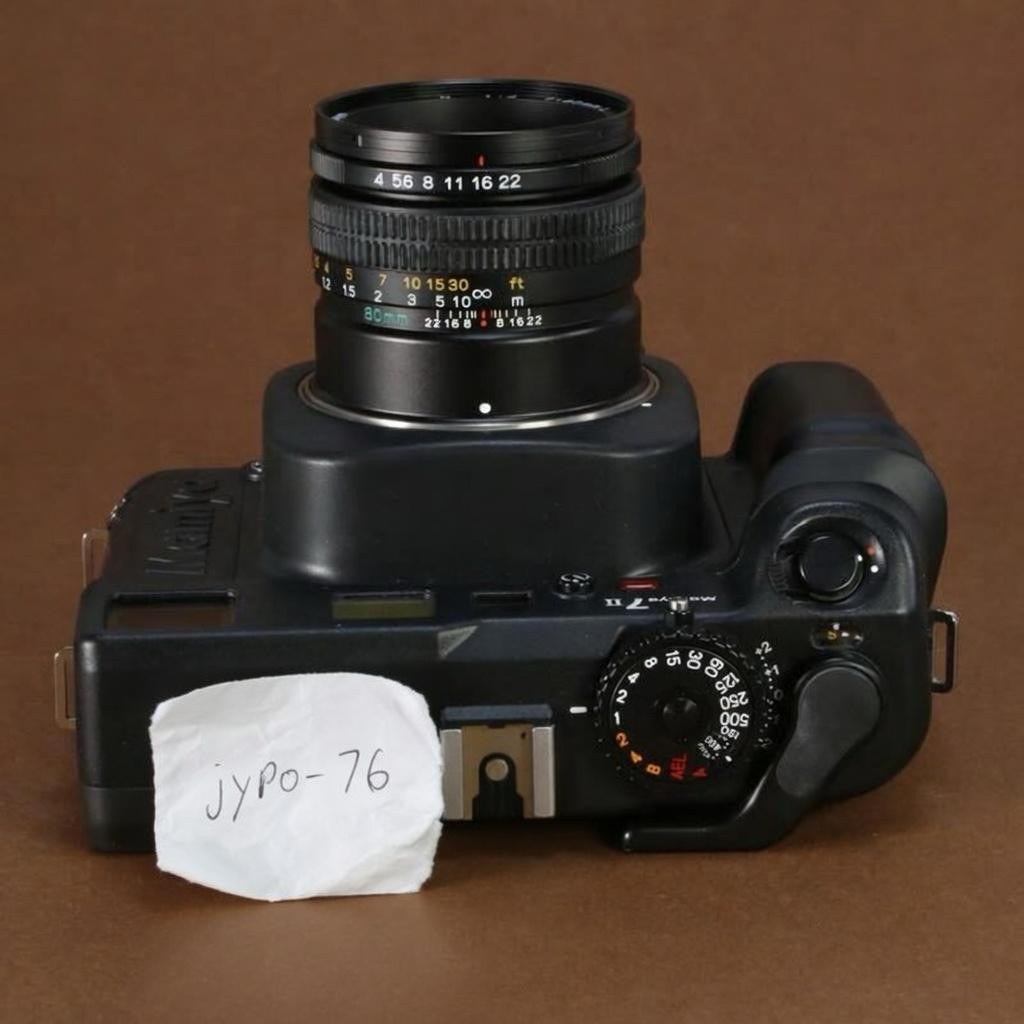
Positioned at the high end of Mamiya’s rangefinder lineup, the Mamiya 7 was produced until 2014, with minimal changes throughout its production run. A slightly updated version, the Mamiya 7II, was introduced in 1999, featuring improved viewfinder brightness, a redesigned film advance lever, and enhanced ergonomics. Despite its long production span, total units produced remain relatively low, contributing to its status as a sought-after collector’s item.
Specifications
| Specification | Value |
| Type | Rangefinder |
| Film Format | 6x7cm (120/220 roll film) |
| Years Produced | 1995–2014 |
| Lens Mount | Mamiya 7 interchangeable lens mount |
| Shutter | Leaf shutter in lenses; 8–1/500 sec, plus B; flash sync at all speeds |
| Metering | TTL full-aperture center-weighted averaging metering |
| Exposure Modes | Manual exposure only (shutter priority available via external meter coupling) |
| Viewfinder | Interchangeable optical viewfinders (0.8x, 0.7x); brightline framelines for each lens |
| Dimensions | 148 × 95 × 105 mm (folded); weight: ~750 g (body only) |
Key Features
- 6x7cm negative size in a compact rangefinder body: Delivers superior resolution and shallow depth of field while remaining significantly smaller than SLR-based 6x7 systems.
- Interchangeable lenses with built-in leaf shutters: Enables flash sync at all speeds up to 1/500 sec and reduces vibration.
- Coupled rangefinder with brightline framelines: Accurate manual focusing with automatic frame indication based on mounted lens.
- Folding body design: Collapses for portability; extends via a locking bellows system for shooting.
- TTL metering with full-aperture operation: Allows viewing and focusing at maximum aperture while metering at stopping down via lens-body linkage.
Historical Context
The Mamiya 7 was launched at a transitional moment in photography, as digital imaging began to emerge but film remained dominant in professional workflows. Medium format film was still the standard for high-end commercial, fashion, and landscape work, yet most 6x7 systems were tripod-dependent SLRs with limited mobility. Mamiya’s decision to build a 6x7 rangefinder addressed a niche demand for a high-resolution, hand-holdable system with minimal mechanical noise and excellent lens performance.
Competitors in the rangefinder space were limited. The only direct analog was the Fujifilm GA645 and later GF670, but these were fixed-lens systems lacking the modularity of the Mamiya 7. In the broader medium format market, the Mamiya 7 competed indirectly with the Hasselblad 500 series, Bronica SQ-A, and Contax 645—though these were all SLRs with larger form factors. The Mamiya 7’s closest spiritual predecessor was the Mamiya Press series of press cameras, but the 7 modernized that legacy with precision engineering and advanced optics.
Market reception was strong among professionals who valued image quality and discretion. The camera gained a following among photojournalists, street photographers, and landscape shooters, including notable users like Steve McCurry and Alec Soth. Its quiet operation, lack of mirror slap, and excellent lens sharpness made it ideal for candid and environmental portraiture.
Collectibility & Value
Today, the Mamiya 7 is highly collectible, with used bodies typically fetching $1,200–$2,000 USD depending on condition, and complete sets with multiple lenses commanding $4,000 or more. The Mamiya 7II commands a slight premium due to its ergonomic improvements. Rarity, coupled with enduring demand from film photographers in the 2020s resurgence, has kept prices stable and often rising.
When purchasing a used Mamiya 7, buyers should inspect the rangefinder alignment (critical for sharp focus), shutter accuracy across all lenses, and the integrity of the folding mechanism and light seals. Common issues include misaligned framelines, shutter timing drift (especially in older lenses), and light leaks from degraded seals. Because each lens contains its own shutter and aperture mechanism, servicing is complex and best handled by specialized technicians. Battery compatibility is also a consideration: the camera uses a single 6V 4LR44 battery (or equivalent 4SR44) for metering, which is still available but increasingly harder to source.
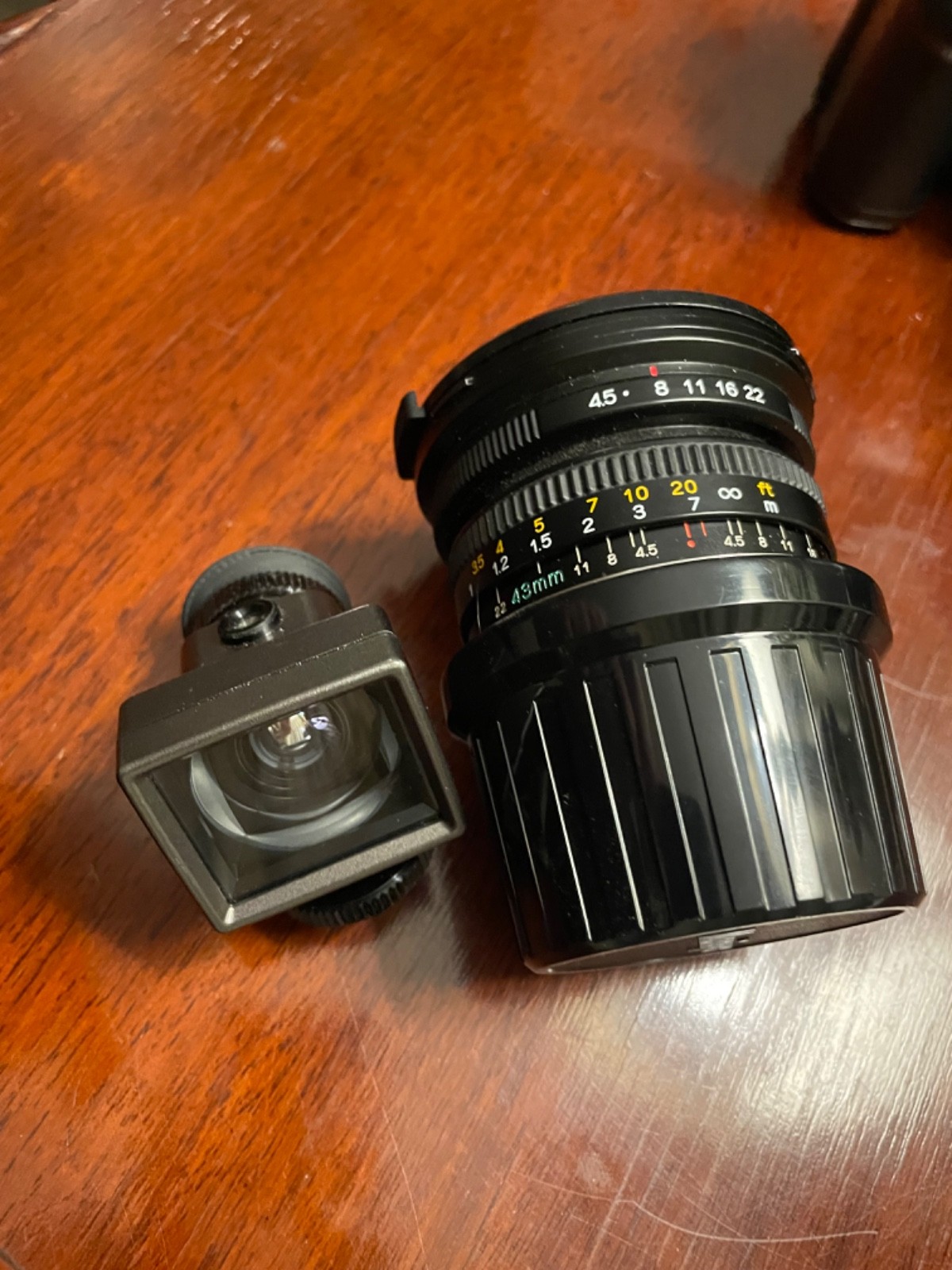
Despite its age, the Mamiya 7 remains a functional and relevant tool for film photographers. Its lenses are renowned for their sharpness, color rendition, and minimal distortion, particularly the 43mm f/4.5 (ultra-wide), 65mm f/4 (standard), and 150mm f/4.5 (portrait). The 210mm f/8, while slow, offers exceptional reach in a compact telephoto design.
Similar Cameras
- Hasselblad XPan (35mm panoramic, but shares rangefinder ethos and professional build)
- Fujifilm GF670 (fixed-lens 6x7 rangefinder, compact but non-interchangeable)
- Leica M6 with 50mm f/1.4 (35mm rangefinder; smaller format but similar handling philosophy)
- Contax 645 (medium format SLR with interchangeable lenses and TTL metering, larger and heavier)
- Bronica RF645 (rangefinder 6x4.5cm system; smaller negative but modular design)
Repair & Maintenance
The Mamiya 7 uses a 6V 4LR44 battery (or 4SR44 silver oxide equivalent) to power its TTL metering system; the camera functions mechanically without a battery, but metering is disabled. Common maintenance issues include worn light seals (which should be replaced every 5–10 years), misaligned rangefinder mechanisms due to impact or wear, and shutter timing inconsistencies in older lenses. Each lens must be individually calibrated for accurate exposure and flash sync.
Repair difficulty is considered high due to the complexity of the leaf shutter lenses and the precision required for rangefinder alignment. Few technicians outside of Japan or specialized medium format shops are equipped to service the system fully. Users are advised to purchase from reputable dealers who have tested shutter and aperture functions. Regular cleaning, proper storage, and periodic CLA (clean, lubricate, adjust) servicing by qualified technicians are recommended to preserve functionality and value.
eBay Listings


As an eBay Partner, we earn from qualifying purchases. This helps support our independent vintage technology research.