Mamiya 16 (1959)
A pocket-sized all-metal subminiature that turned 16mm film into a serious amateur format.
Overview
The Mamiya 16 weighs 13 ounces and measures just 4.5 x 3 x 1.5 inches. It's a real subminiature built around 16mm film, and it makes a 10 x 14mm negative that needs enlarging but rewards careful shooting. The all-metal body follows the design of Mamiya's larger cameras of the period, scaled down without getting flimsy. Owners describe it as heavy for its size.
The original Mamiya 16 came out in 1959. It was meant to give amateur photographers a cheap way into the 16mm format, which was gaining traction in Japan in the late 1950s. 16mm film had existed for decades, but this was when the Japanese camera industry went after it as a new market niche. The camera was aimed at beginners: a scale-focusing body with a fixed lens and manual controls that needed no battery.
The lens is a fixed Mamiya-Sekor 25mm f/2.8. It's fast enough for the format and gives surprisingly decent image quality given the size and simplicity of the design High-Fidelity (July 1969, p.25). The original model uses a Seikosha-L shutter with speeds from 1/25 to 1/200 second plus bulb, and focusing is by scale from 3.5 feet to infinity. There's no built-in meter on this first version, so you set everything by hand and the camera stays battery-free. The tiny waist-level viewfinder with a frame on top is workable but dim, and eyeglass wearers will find it difficult to use.
Key Features
Fixed Mamiya-Sekor 25mm f/2.8 Lens
Every model in the Mamiya 16 family has the same fixed 25mm Mamiya-Sekor f/2.8 lens. The optics stayed constant from the original manual model through the Super, Automatic, Deluxe, II, and Auto variants. For a subminiature, f/2.8 is reasonably fast. The lens is fixed, so there's nothing to swap and nothing to align, and it produces 10 x 14mm negatives with image quality collectors consistently call surprisingly decent. It also keeps the camera compact. There's no protruding barrel and no collapsible mechanism, just a clean front face that slips into a pocket.
10 x 14mm Negative on 16mm Film
The Mamiya 16 exposes a 10 x 14mm negative on 16mm film, loaded in special cartridges that go in from the bottom of the camera. That's smaller than half-frame 35mm, so enlargements need more magnification and grain becomes a factor. The format's appeal was portability and economy, not ultimate image quality, and the frame size made sense for the beginner market Mamiya was targeting. Film is wound by a knob from left to right, a simple mechanical transport. The bottom-loading cartridge is a bit fiddly compared to modern drop-in loading.
Seikosha-L Shutter, 1/25 to 1/200 Plus Bulb
The original Mamiya 16 uses a Seikosha-L shutter with speeds from 1/25 to 1/200 second plus bulb. That's a modest range, but adequate for the outdoor and daylight shooting most beginners would attempt. The shutter is mechanical and needs no battery, so there's less to go wrong decades later. Later models expanded the range. The Super offers 1/15 to 1/500, the Deluxe extends to 1/10 on the slow end with 1/200 top speed plus bulb, and the Auto provides 1/30 to 1/500. The top speed of 1/500 on the Super and Auto is unusually high for a camera this small, which helps with action shots and bright light.
Scale Focusing from 3.5 Feet to Infinity
Focusing on the original Mamiya 16 is by scale. You estimate the distance, set it on the lens barrel, and shoot. The range runs from 3.5 feet to infinity, which covers most snapshot situations. There's no rangefinder and no focusing aid of any kind, just your own judgment, so it rewards practice and a good eye for distance. The Super model focuses from 3 feet (0.9 meters) to infinity, a slightly closer minimum that helps a bit with close-up work.
The Automatic's Built-In Meter
The Mamiya 16 Automatic, introduced in 1960, added a meter built into the top plate, a significant step up from the original's no-meter design. You set the aperture to match the meter reading, and the programmed shutter from 1/25 to 1/200 handles the rest. The aperture is controlled automatically, which simplifies exposure considerably for beginners. That level of automation was something few subminiature competitors offered at the time. The tradeoff, as with all metered cameras from this era, is that the meter is often dead by now.
All-Metal Construction
Every source on the Mamiya 16 says the same thing: it's a heavy, all-metal camera built in the Mamiya manner of the time. There's no plastic anywhere in the body. The design is essentially a small version of Mamiya's larger cameras, with the same look and construction scaled down to subminiature size. The Super model has a two-tone grey/silver body that looks different from the original's more conventional finish. The all-metal construction is a major reason these cameras have survived in collectible condition.
Historical Context
The late 1950s were a turning point for 16mm film in Japan. The format had been around for decades, but only then did it begin to be taken seriously for amateur photography. The Japanese camera industry turned to it in hopes of opening a new market niche, and Mamiya was among the first to respond. The Mamiya 16 was aimed at the beginner market, sold as an inexpensive way into photography without the cost and complexity of full-frame 35mm equipment.
The camera faced real competition from the start. Sources name the Minolta 16, the Yashica-16, the Konica Pocket, and the Ricoh 16 as direct rivals in the subminiature space. Despite the crowded field, the Mamiya 16 series sold well and was popular with the public. The various models - Super, Automatic, Deluxe, II, and Auto - extended the family over more than a decade. The Auto was the most advanced of the series, with an automatic exposure system that reads the light and sets both aperture and shutter speed.
Production dates for the full series remain unclear. The original Mamiya 16 was introduced in 1959 and reportedly produced until 1963, while the broader series may have continued until 1973. One source claims the entire series began in 1949, but that appears to be an error. The late-1950s timing fits the documented history of the 16mm amateur format in Japan far better.
Collectibility & Value
Collectors of subminiature cameras have taken to the Mamiya 16 and its variants for their small size and all-metal build. Current market values hover around $200 for a single model depending on condition, with the broader range falling between roughly $150 and $300. The specific model, condition, and whether the meter works all factor into pricing.
Know the common issues before buying. The light seals tend to disintegrate. The foam was never meant to last half a century, and it hasn't. Replacement is straightforward for anyone comfortable with basic camera repair. The film wind mechanism is another known trouble spot, with a common issue affecting smooth transport. On the Automatic, assume the meter is dead until proven otherwise, since these selenium cells rarely survive in working condition. The cameras are repairable, but Mamiya no longer makes parts, so repairs depend on donor cameras and skilled technicians.
For what it's worth, the manual models offer the most reliable path to actual shooting today. No meter means no dead meter to worry about, and the mechanical shutter and aperture controls are simple enough to be serviced. The viewfinder remains dim and challenging for eyeglass wearers — that's a design limitation you'll live with, not a flaw you can fix. But if you can work around it, the Mamiya 16 delivers image quality that's surprisingly decent for a camera small enough to disappear into a shirt pocket.
eBay Listings

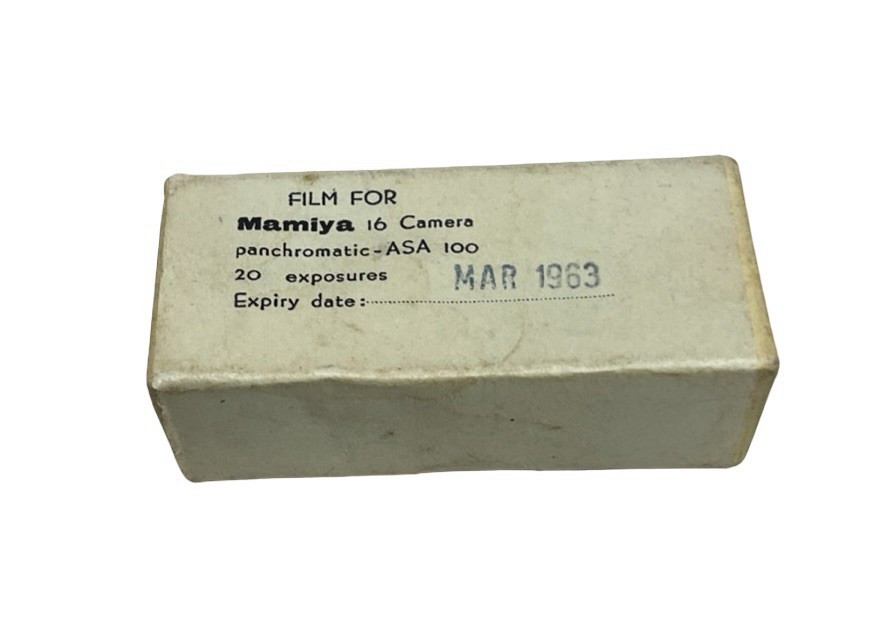

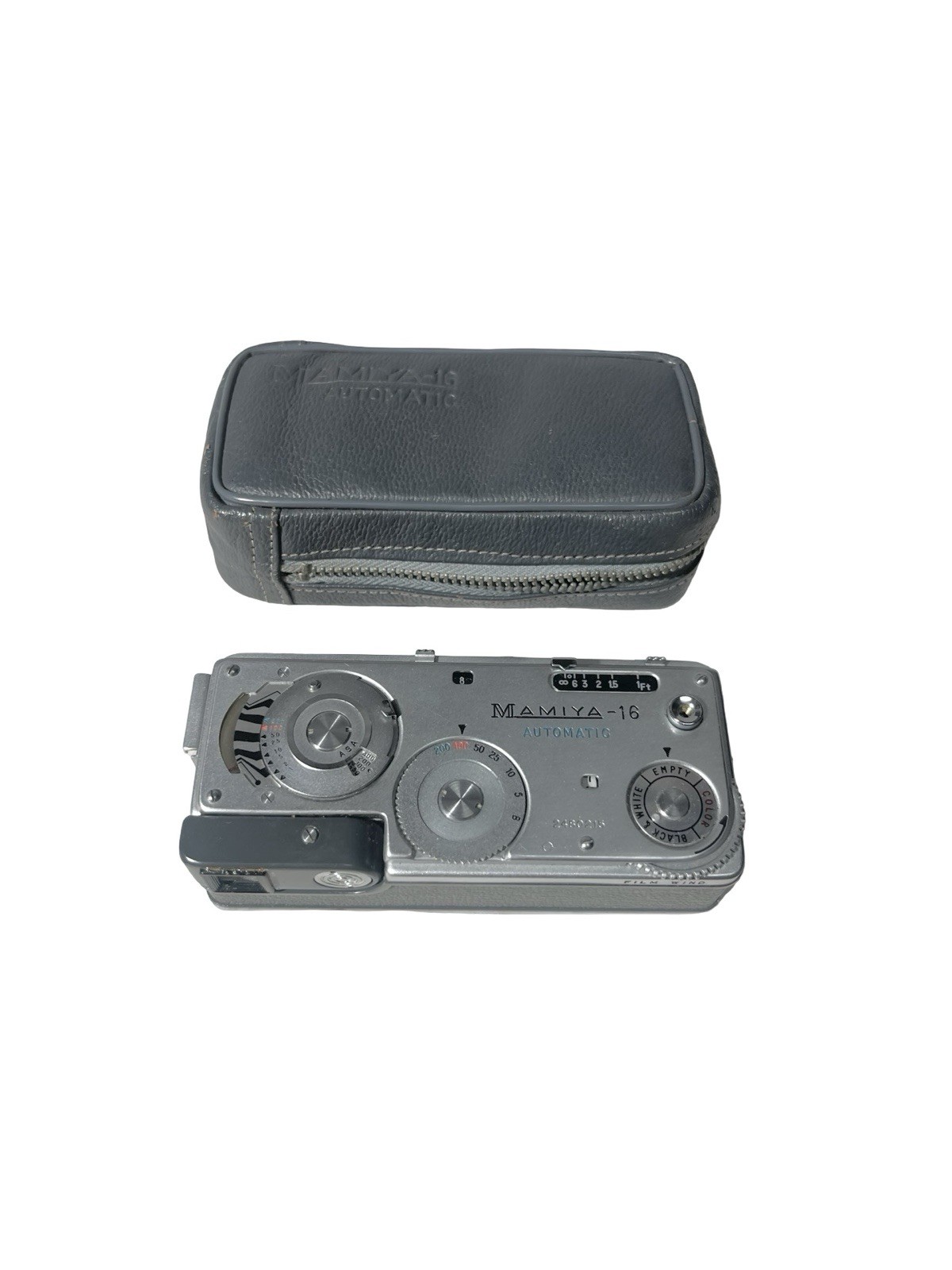
As an eBay Partner, we earn from qualifying purchases. This helps support our independent vintage technology research.