Leica M9 (2009–2012)
At 593 grams, it balances in the hand like a precision instrument—no excess, no apology.
Overview
The Leica M9 arrived in September 2009, marking a watershed moment for digital photography: it was the first digital Leica M with a full-frame sensor. Built around a 35.8 x 23.9 mm CCD sensor—effectively the same dimensions as 35mm film—it delivered a digital experience that felt true to the M-series legacy, not a compromise. Owners report a camera stripped to its essentials: no video, no autofocus, no cluttered menus. What remains is a tool for deliberate photography, where every frame demands attention. The all-metal construction reinforces that ethos, with steel-gray or black lacquer finishes that age with character. It wasn’t designed to compete on specs with mainstream DSLRs but to serve a niche that valued image quality, discretion, and mechanical integrity over megapixels and automation.
Despite its minimalist interface—a single menu system accessed via a recessed button—operation is intuitive for those familiar with rangefinders. The 0.68x viewfinder offers a bright, clear window with framelines that automatically adjust based on the mounted lens (though detailed viewfinder specs beyond magnification are not documented). Shutter response is immediate, driven by a metal electronic shutter with speeds from 1/4000s to 32s. While sources suggest a minimum shutter speed of 4 seconds (dpreview), the official range includes 32s exposures, useful for low-light work when paired with fast lenses. The absence of an anti-aliasing filter contributes to the M9’s signature sharpness, particularly with Leica’s M-mount glass. File formats are limited to DNG (RAW) and JPEG, a nod to purists who value archival flexibility without proprietary compression.
Contemporary reviews noted its strengths immediately: image quality at base ISO is often described as film-like, with smooth tonal transitions and rich color rendition. The 18.5-megapixel Kodak CCD sensor captures detail with a clarity that still holds up, especially in good light. However, performance degrades noticeably above ISO 800, with noise becoming intrusive by ISO 1600 and largely unusable at 2500. This limitation wasn’t unexpected—the sensor technology of the time prioritized dynamic range and color fidelity over high-sensitivity performance—but it does define the camera’s practical use. It’s a daylight and wide-aperture performer, not a low-light specialist.
The M9 launched into a market where the Canon EOS 5D Mark II was redefining expectations for full-frame digital imaging, especially with its video capabilities. Yet the M9 wasn’t aiming for the same audience. It appealed to rangefinder loyalists, street photographers, and those who valued discretion and handling over versatility. Its compact size—138 x 80 x 37mm—made it less obtrusive than any DSLR, and the quiet shutter allowed for candid work. The 2.5" TFT LCD with 230,000 pixels is modest by modern standards, but sufficient for image review and basic navigation. Storage is via SD card, though some users report compatibility issues with certain brands, leading to recording failures—a known pain point documented in field reports.
Specifications
| Manufacturer | Leica Camera AG |
| Product type | full-frame digital rangefinder camera |
| Image sensor | Full-frame CCD sensor |
| Sensor dimensions | 35.8 x 23.9 mm |
| Resolution | 18.5 megapixels |
| ISO range | 80-2500 |
| Storage media | SD card |
| File format | DNG (RAW) and JPEG |
| Dimensions (WHD) | 138 x 80 x 37mm / 5.5 x 3.15 x 1.5" |
| Weight | 593g (20.9oz) with battery and card, no lens |
| Viewfinder magnification | 0.68x |
| Shutter type | Metal electronic |
| Shutter speed range | 1/4000s to 32s |
| Flash sync speed | 1/180s |
| LCD screen | 2.5" TFT LCD, 230,000 pixels |
| Body colors | Steel-gray lacquer, black lacquer |
| Power | Dedicated rechargeable battery |
| Battery | Leica BLI-312 |
| Exposure modes | Aperture priority, Manual |
| Construction | All-metal |
Key Features
18.5-Megapixel Full-Frame CCD Sensor with No AA Filter
The heart of the M9 is its full-frame CCD sensor, which captures images without the use of an anti-aliasing filter. This design choice maximizes sharpness and resolution, delivering a level of detail that many users describe as “crisp to the point of revelation” when paired with high-quality M lenses. The sensor’s Bayer color filtration produces natural color rendition, particularly strong in skin tones and organic hues. Because it lacks an optical low-pass filter, moiré can occur with fine repeating patterns, but this is rare in typical use. The sensor size—35.8 x 23.9 mm—matches the 24x36mm film frame, ensuring compatibility with the full range of M-mount lenses without crop factors or vignetting (when used with appropriate optics).
All-Metal Body with Rangefinder Precision
Constructed entirely of metal, the M9 feels dense and durable in the hand, with a weight distribution that balances well with most M lenses. The steel-gray or black lacquer finish resists fingerprints and develops a subtle patina over time. As a rangefinder camera, it relies on manual focusing via a superimposed image in the viewfinder, a system that demands skill but rewards with speed and accuracy once mastered. The 0.68x magnification viewfinder is bright and clear, with framelines that appear based on the lens’s focal length. While the absence of a preselector lever (omitted on the M-E variant) might frustrate some, experienced users often find it unnecessary, preferring to let the camera detect the lens automatically.
Metal Electronic Shutter with 1/4000s Speed
The metal electronic shutter offers a range from 1/4000s to 32s, enabling both fast-action capture and long exposures without the need for an external timer. The 1/4000s maximum speed is useful when shooting with fast lenses in bright light, while the 32s minimum allows for night photography with a tripod. Flash sync occurs at 1/180s, a limitation shared with many high-speed shutters of the era. The shutter is notably quiet compared to SLRs, contributing to the M9’s stealthy operation—ideal for street and documentary work. Shutter actuation is crisp and responsive, with minimal lag between press and capture.
Aperture Priority and Manual Exposure Modes
The M9 offers aperture priority and manual exposure modes, reflecting its philosophy of user control. There is no program mode or shutter priority, reinforcing the idea that the photographer should dictate exposure. In aperture priority, the camera selects the shutter speed based on the chosen aperture and measured light. In manual mode, both aperture and shutter speed are set by the user, with exposure feedback provided in the viewfinder. The single menu system, while minimal, handles ISO, white balance, and file format settings without overwhelming the user.
Collectibility & Value
Originally priced at $6,999 at launch in September 2009 (Adorama), the M9 occupied a premium position in the market, where Leica’s pricing reflects brand value and craftsmanship more than feature parity with competitors. By 2014, used examples were trading around $2,250, reflecting early concerns about reliability and the rise of newer digital rangefinders. However, recent years have seen a resurgence in interest, with some sources suggesting used prices of at least $4,500 as of 2013 (Blogarithms), though current market conditions may vary. The M-E, introduced in September 2012 at $5,500, shares the same core specifications but omits the USB port and viewfinder preselector lever—changes that many experienced users consider non-essential.
A significant factor in the M9’s collectibility is its known reliability issue: sensor corrosion. Over time, a chemical reaction between the sensor cover glass and internal components can cause visible marks on images, often appearing as dark streaks or spots. An estimated 180,000 units were affected (Morten Albek), and Leica eventually offered a repair program. However, as of 2024, customers can no longer obtain replacement sensors (Macfilos), and third-party repair—such as replacing the sensor with corrosion-resistant glass—starts at $999 (Kolari). This has made working, uncorroded examples increasingly valuable. Collectors now prioritize cameras with clean sensors and low shutter counts, knowing that future repairs may be costly or impossible.
eBay Listings


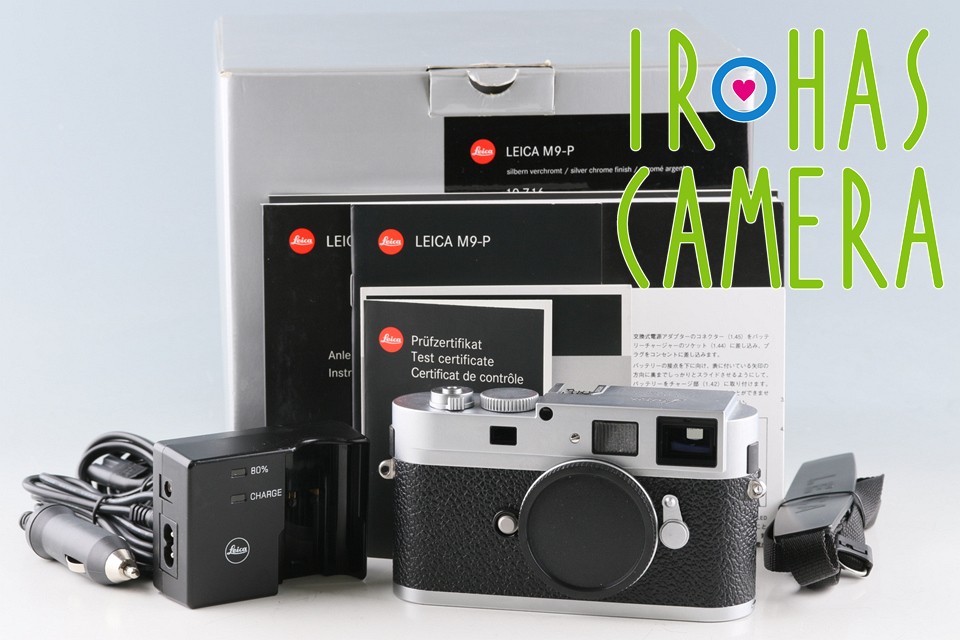
As an eBay Partner, we earn from qualifying purchases. This helps support our independent vintage technology research.