LEICA M4-P
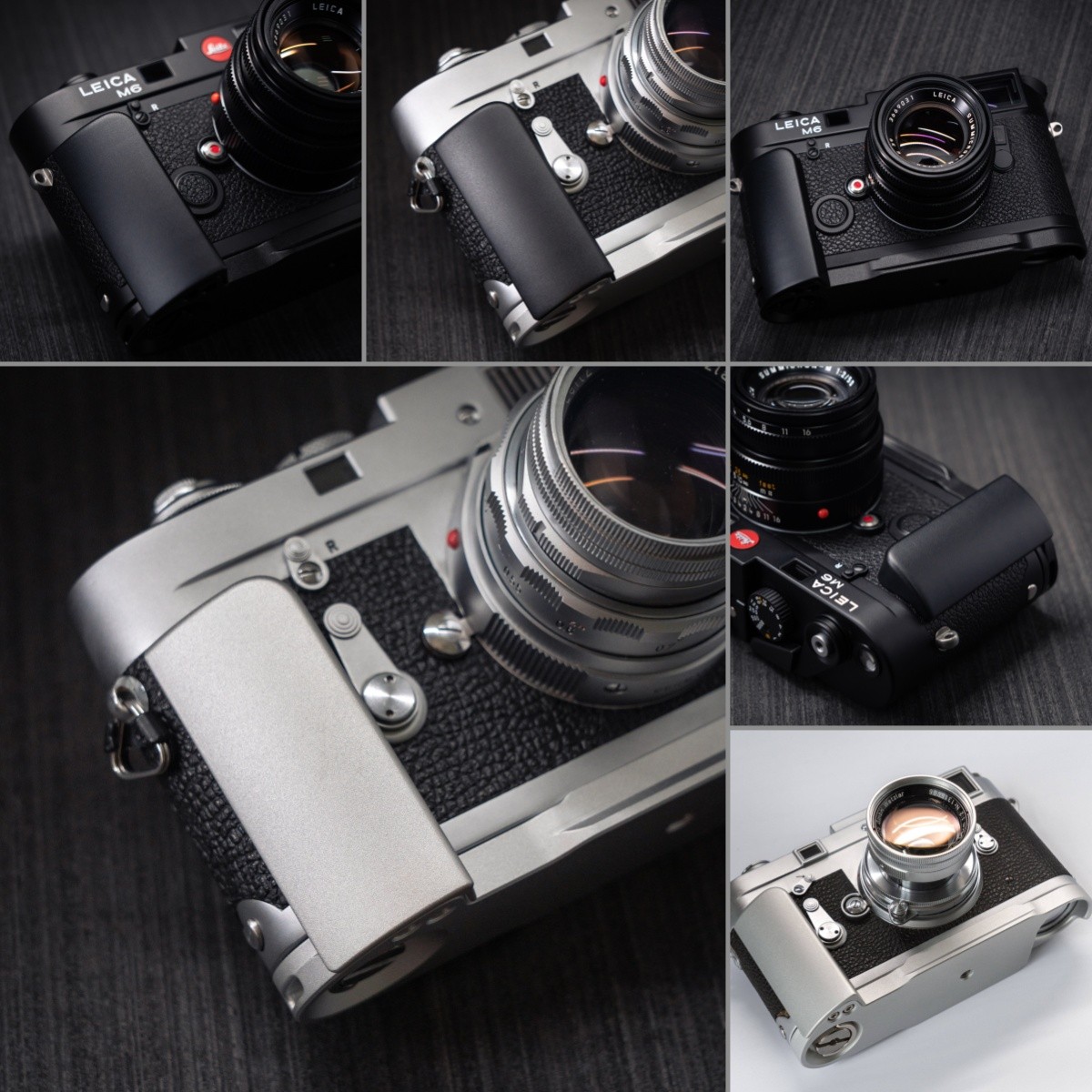
The Leica M4-P is a mechanical 35mm rangefinder camera produced by Leica Camera AG from 1980 to 1986. A refined and simplified successor to the M4 and M4-2, the M4-P was engineered for durability, precision, and long-term reliability, featuring a six-position viewfinder with framelines for 28/90mm, 35/135mm, and 50/75mm focal lengths.
Overview
Introduced in 1980, the Leica M4-P was developed as a no-frills, robust alternative to the increasingly complex M-series models that incorporated built-in light meters and electronic components. Positioned as a professional-grade tool camera, the M4-P catered primarily to photojournalists, documentary photographers, and military or government users who required a reliable, all-mechanical system in harsh conditions. The "P" in M4-P stands for Präzision (Precision) or Perfection, reflecting its focus on mechanical accuracy and simplified design. Unlike its predecessors, the M4-P omitted the built-in light meter, reverting to a completely mechanical operation similar to the original M3, but with the benefit of updated viewfinder optics and framelines.
The M4-P was manufactured at Leica’s factory in Solms, West Germany, during a transitional period for the company as it balanced traditional craftsmanship with emerging electronic technologies. While the M5 and later M6 introduced metering systems, the M4-P represented a deliberate step back toward mechanical purity. It shared the same compact body design as the M4, with a slightly reduced top plate thickness and a simplified rewind knob without the automatic frame counter reset. Its rugged chrome or black chrome body (the latter often referred to as "black paint" or "PVD coating") was designed for longevity, with a reputation for withstanding extreme use. The camera was also supplied to various NATO military units and intelligence agencies, enhancing its legacy as a field-tested instrument.
Specifications
| Specification | Value |
| Type | Rangefinder |
| Film Format | 35mm |
| Years Produced | 1980–1986 |
| Lens Mount | Leica M bayonet |
| Shutter | Horizontal-travel, cloth focal-plane shutter; speeds from 1 sec to 1/1000 sec, plus B |
| Metering | None (unmetered) |
| Exposure Modes | Manual only |
| Viewfinder | Optical rangefinder with 6-position frameline selector (28/90, 35/135, 50/75mm) |
| Dimensions | 138 × 80 × 39 mm; weight approx. 570 g (body only, chrome) |
Key Features
- Six-Frameline Viewfinder: Automatically selects appropriate framelines via lens cam; supports 28, 35, 50, 75, 90, and 135mm lenses with automatic parallax correction.
- All-Mechanical Operation: No batteries required; fully functional shutter and film advance system independent of electronics.
- Durable Construction: Chrome or black chrome brass body with reinforced film pressure plate and improved film transport mechanism.
- Simplified Top Plate: Eliminates light meter circuitry and associated windows, resulting in a cleaner, more robust top deck.
- Military and Government Use: Widely adopted by NATO forces and intelligence agencies due to reliability and resistance to environmental stress.
Historical Context
The Leica M4-P emerged during a period of technological divergence within Leica’s product line. While the M5 (1971) and the upcoming M6 (1984) embraced through-the-lens metering and electronic integration, the M4-P represented a conservative engineering philosophy focused on mechanical reliability. Its development was influenced by feedback from professional users—particularly in journalism and military photography—who valued simplicity and durability over automation. The omission of a light meter reduced production complexity and eliminated a common point of failure, making the M4-P ideal for long-term deployment in remote or hostile environments.
Competitors at the time included the Nikon FM2 (1982), a similarly robust mechanical SLR, and the Canon F-1 (1971), both favored by professionals for their durability. However, the M4-P occupied a unique niche as one of the last unmetered M-series cameras produced by Leica, bridging the gap between the classic M3/M2 era and the modern M6/M7 generation. It was not marketed aggressively to consumers, contributing to its relatively low production numbers—estimated at around 20,000 units—and its cult status among collectors.
Collectibility & Value
Today, the Leica M4-P is highly sought after by collectors, military equipment enthusiasts, and rangefinder purists. Its rarity, especially in black chrome, significantly affects value, with mint-condition black models commanding premiums over chrome versions. As of 2024, a well-maintained M4-P in chrome typically sells for $3,500–$5,000, while black chrome variants can exceed $7,000 depending on provenance and condition. Original boxes, manuals, and documentation—particularly military-issued examples—add substantial value.
When purchasing an M4-P, buyers should inspect the shutter for consistency across all speeds, check the rangefinder alignment (critical for accurate focusing), and verify the smoothness of the film advance and rewind mechanisms. Common issues include shutter curtain deterioration (especially in humid environments), worn shutter speed gears, and oxidation on the rangefinder prism. Because the camera lacks electronics, repair challenges are primarily mechanical, but sourcing original spare parts can be difficult due to age and limited production. Professional CLA (clean, lubricate, adjust) services from Leica-authorized technicians or experienced independents are recommended before regular use.
Similar Cameras
- Leica M3 (1954–1966) – The benchmark 35mm rangefinder with 50/90/135 framelines; revered for its build and focusing precision.
- Nikon FM2 (1982–2001) – Mechanical SLR with titanium shutter; favored for durability and manual control.
- Canon F-1 (1971–1981) – Professional-grade SLR with modular design and extensive system support.
- Leica M2 (1958–1967) – Simpler viewfinder (35/50/90mm) but legendary reliability and ease of use.
- FED 2 (USSR, 1955–1996) – Soviet rangefinder inspired by the Leica II; budget alternative with mechanical simplicity.
Repair & Maintenance
The Leica M4-P requires no batteries, operating entirely mechanically. This makes it exceptionally reliable but also demands regular maintenance to ensure optimal performance. The cloth focal-plane shutter is susceptible to wear, particularly at the extreme speeds (1/1000 and 1 sec), and should be checked for accuracy using a shutter tester. Common failure points include the slow-speed governor and the shutter cocking mechanism. The film advance lever can develop play over time due to wear in the gear train, affecting frame spacing.
Rangefinder calibration is critical and should be performed by a specialist using collimated optical equipment. The viewfinder optics, while robust, may suffer from internal haze or fungus if stored improperly. Cleaning should be done with care to avoid damaging the frameline illumination system (fiber-optic and natural light-based). Given the camera’s age, finding original replacement parts—such as the rewind knob, baseplate, or shutter curtains—can be challenging, though third-party suppliers and restoration specialists offer limited support. Regular use, proper storage in dry conditions, and periodic CLA every 5–7 years are essential for preserving functionality and value.
eBay Listings



As an eBay Partner, we earn from qualifying purchases. This helps support our independent vintage technology research.
Related Models
- Leica IIIf (1950–1957)
- Leica IIIg (1957-1960)
- Leica M1 (1959–1964)
- Leica M2 (1958-1967)
- Leica M3 (1954-1966)
- Agfa Optima Sensor 1535
- Argus Argus A
- Argus Argus Autronic (1960)
- Argus Argus C-44R
- Argus Argus C