LEICA M4-2
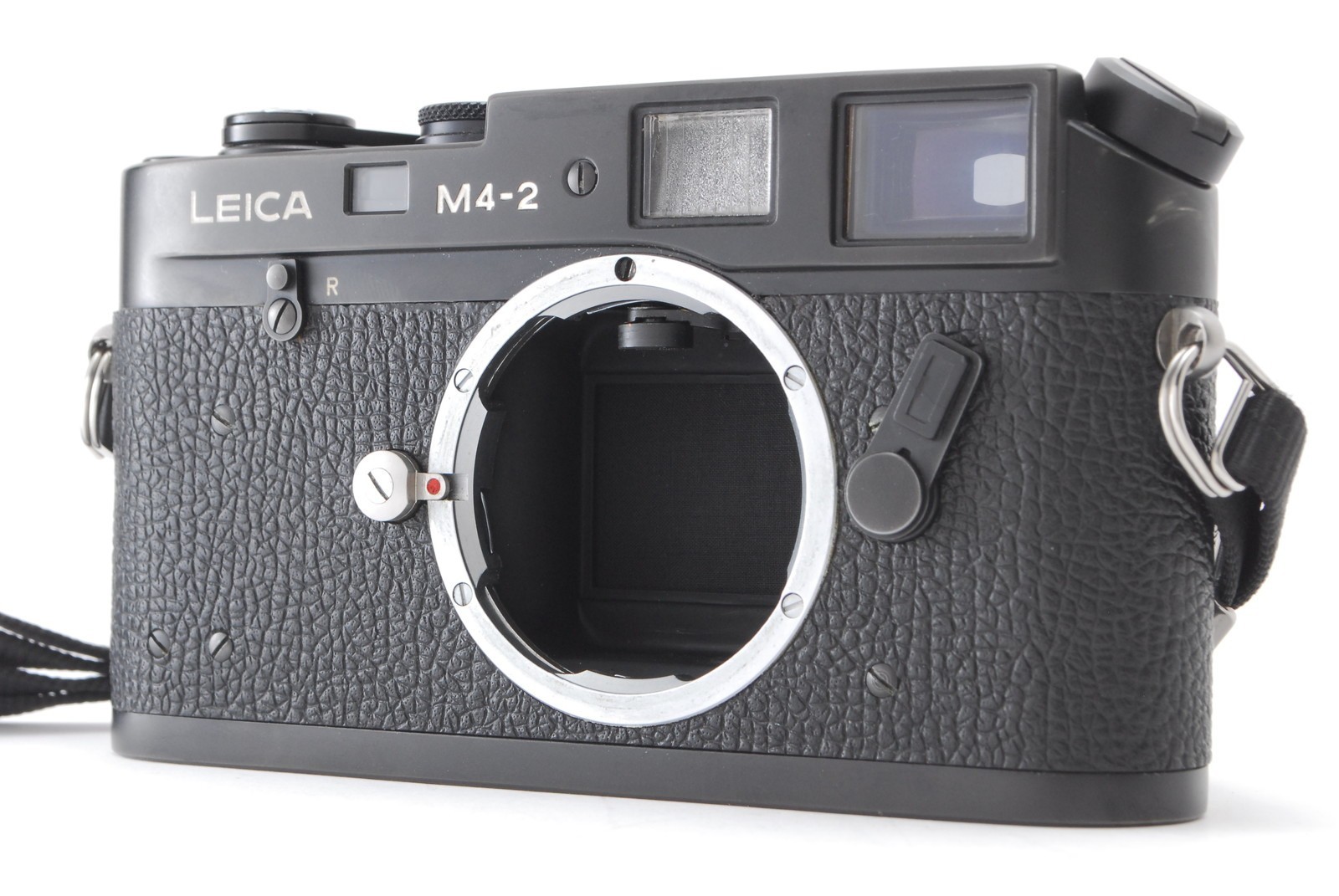
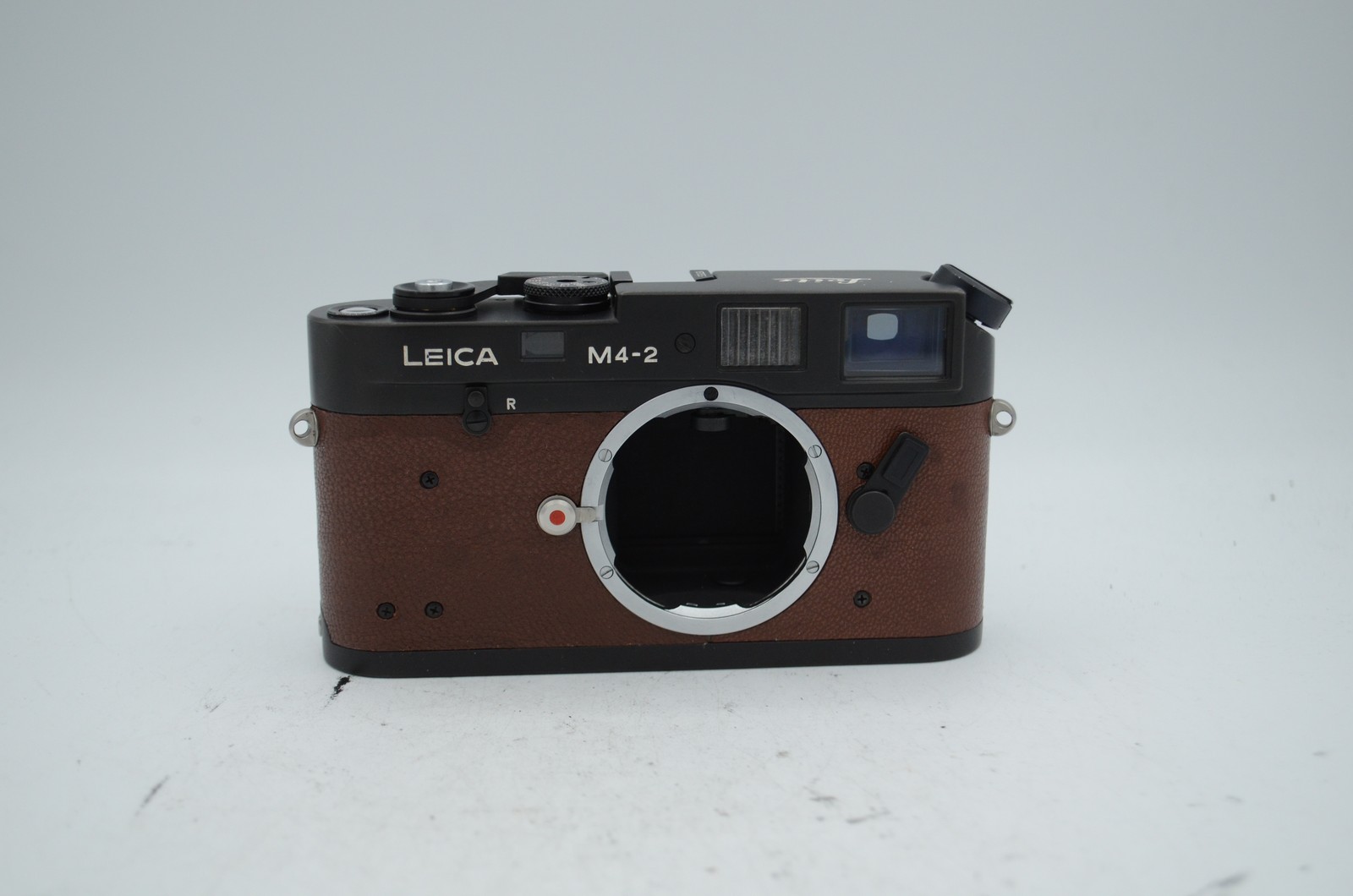
The Leica M4-2 is a 35mm rangefinder camera produced by Leica in Midland, Ontario, Canada, from 1977 to 1981. Designed as a transitional model between the M4 and the later M4-P, the M4-2 refined the mechanical reliability and build quality of its predecessor while maintaining the classic Leica M-series rangefinder design principles.
Overview
The Leica M4-2 was introduced in 1977 as a successor to the original M4, which had been in production since 1967. Unlike the German-made M4, the M4-2 was manufactured entirely at Leica’s Canadian facility in Midland, Ontario, a move that reflected the company’s efforts to reduce production costs while maintaining quality control. Despite being built outside Germany, the M4-2 retained the core engineering and precision associated with Leica rangefinders. It was designed for professional and advanced amateur photographers seeking a durable, compact, and reliable 35mm camera with manual exposure control and Leica’s renowned 0.72x magnification viewfinder.
The M4-2 served as a bridge model between the classic M4 and the more refined M4-P introduced in 1980. It incorporated several subtle but important improvements over the M4, including a reinforced film advance mechanism, improved shutter durability, and a redesigned film pressure plate to enhance film flatness. While it lacked the built-in light meter of the later M-series models (such as the M6), the M4-2 preserved the fully mechanical operation that made earlier M cameras popular in low-light and high-reliability environments. Available in both chrome and black finishes, the M4-2 maintained the minimalist aesthetic and ergonomic design that defined the M-series lineage.
Specifications
| Specification | Value |
| Type | Rangefinder |
| Film Format | 35mm (135 cartridge) |
| Years Produced | 1977–1981 |
| Lens Mount | Leica M-mount (27.8mm flange focal distance) |
| Shutter | Horizontal-travel, cloth focal-plane shutter; speeds 1–1/1000 sec, B, X-sync at 1/50 sec |
| Metering | None (manual exposure only) |
| Exposure Modes | Manual (shutter speed and aperture set manually) |
| Viewfinder | Combined optical rangefinder with 0.72x magnification; automatic parallax compensation; framelines for 35mm, 50mm, and 90mm lenses |
| Dimensions | 138 × 78 × 37 mm; approx. 580 g (body only) |
Key Features
- Fully mechanical operation: No battery required for shutter function, enabling reliable performance in extreme conditions.
- Canadian production with German engineering: Manufactured in Midland, Ontario, under strict quality standards derived from German design.
- Reinforced film transport: Upgraded winding mechanism and pressure plate for improved film flatness and reduced frame spacing variation.
- 0.72x brightline viewfinder: Accurate framelines with automatic parallax correction; compatible with 35mm, 50mm, and 90mm M-mount lenses.
- X-sync at 1/50 sec: Flash synchronization optimized for common electronic flash units of the era.
Historical Context
The Leica M4-2 was developed during a period of transition for Leica Camera AG. Facing rising production costs in Germany and increasing competition from Japanese manufacturers like Canon, Nikon, and Minolta, Leica sought to maintain its reputation for precision while optimizing manufacturing efficiency. The Midland, Canada, factory—established in the 1950s for export-market production—became the sole production site for the M4-2, allowing Leica to leverage lower labor costs without fully compromising on build quality.
Compared to its contemporaries, the M4-2 stood out for its mechanical simplicity and robust construction. While Japanese SLRs were rapidly adopting through-the-lens (TTL) metering, auto-exposure, and motorized film advance, the M4-2 adhered to the minimalist philosophy of the rangefinder tradition. It competed not directly with SLRs, but with other high-end rangefinders such as the Canon rangefinder series (e.g., Canonet QL17 GIII) and niche offerings from Cosina. However, its primary market remained photojournalists, street photographers, and Leica loyalists who valued discretion, compactness, and mechanical reliability over automation.
The M4-2 was succeeded by the M4-P in 1980, which further refined the design with a more durable top cover and improved corrosion resistance. Though the M4-2 was only in production for about four years, it played a critical role in sustaining Leica’s rangefinder line during a financially challenging period.
Collectibility & Value
Today, the Leica M4-2 is regarded as a collectible transitional model, appreciated for its mechanical integrity and historical significance. While not as highly sought after as the German-made M3 or the later M6, the M4-2 offers excellent value for photographers and collectors seeking a durable, fully mechanical M-series camera at a more accessible price point. In recent years, market values have ranged from $1,200 to $2,000 USD depending on condition, finish (chrome vs. black), and service history.
When purchasing an M4-2, collectors should inspect the shutter for consistency across all speeds, check for smooth film advance and accurate frame spacing, and verify that the rangefinder alignment is intact. Common issues include light leaks due to deteriorated film door seals, worn shutter curtains, and occasional misalignment of the framelines. Because the camera requires no battery for operation, functionality is often preserved in well-maintained examples. However, due to its age, a professional CLA (clean, lubricate, adjust) service is recommended before regular use. Original boxes, manuals, and accessories can increase value, particularly for black-finish models, which are slightly rarer than chrome.
Similar Cameras
- Leica M4 (1967–1975) – Direct predecessor with nearly identical specifications but German manufacture.
- Leica M4-P (1980–2003) – Successor model with enhanced durability and longer production run.
- Canonet QL17 GIII (1972–1982) – Popular fixed-lens rangefinder with built-in meter, targeting advanced amateurs.
- FED 5 (USSR, 1970s–1980s) – Soviet-era rangefinder inspired by pre-war Leica designs.
- Cosina Voigtländer Bessa R (1999–2006) – Modern mechanical rangefinder reviving the M-series ethos.
Repair & Maintenance
The Leica M4-2 requires no batteries for shutter operation, making it fully functional even without power sources. This mechanical independence enhances long-term reliability but does not eliminate the need for periodic maintenance. The cloth focal-plane shutter is susceptible to wear, especially at higher speeds, and should be checked for uniform exposure across the frame. Common service requirements include replacement of the shutter curtains, lubrication of the winding mechanism, and adjustment of the rangefinder optics.
Due to its Canadian origin, some early spare parts differ slightly from German-made M4 components, though most are interchangeable. Professional repair should be conducted by a technician experienced with Leica M-series cameras. Regular users are advised to have the camera serviced every 5–7 years or after 10,000 actuations. The film pressure plate and door seals should be inspected for wear to prevent film flatness issues and light leaks. When stored, the camera should be kept in a dry, temperature-stable environment with the shutter uncocked to preserve spring tension.
eBay Listings


As an eBay Partner, we earn from qualifying purchases. This helps support our independent vintage technology research.
Related Models
- Leica IIIf (1950–1957)
- Leica IIIg (1957-1960)
- Leica M1 (1959–1964)
- Leica M2 (1958-1967)
- Leica M3 (1954-1966)
- Agfa Optima Sensor 1535
- Argus Argus A
- Argus Argus Autronic (1960)
- Argus Argus C-44R
- Argus Argus C