LEICA M3
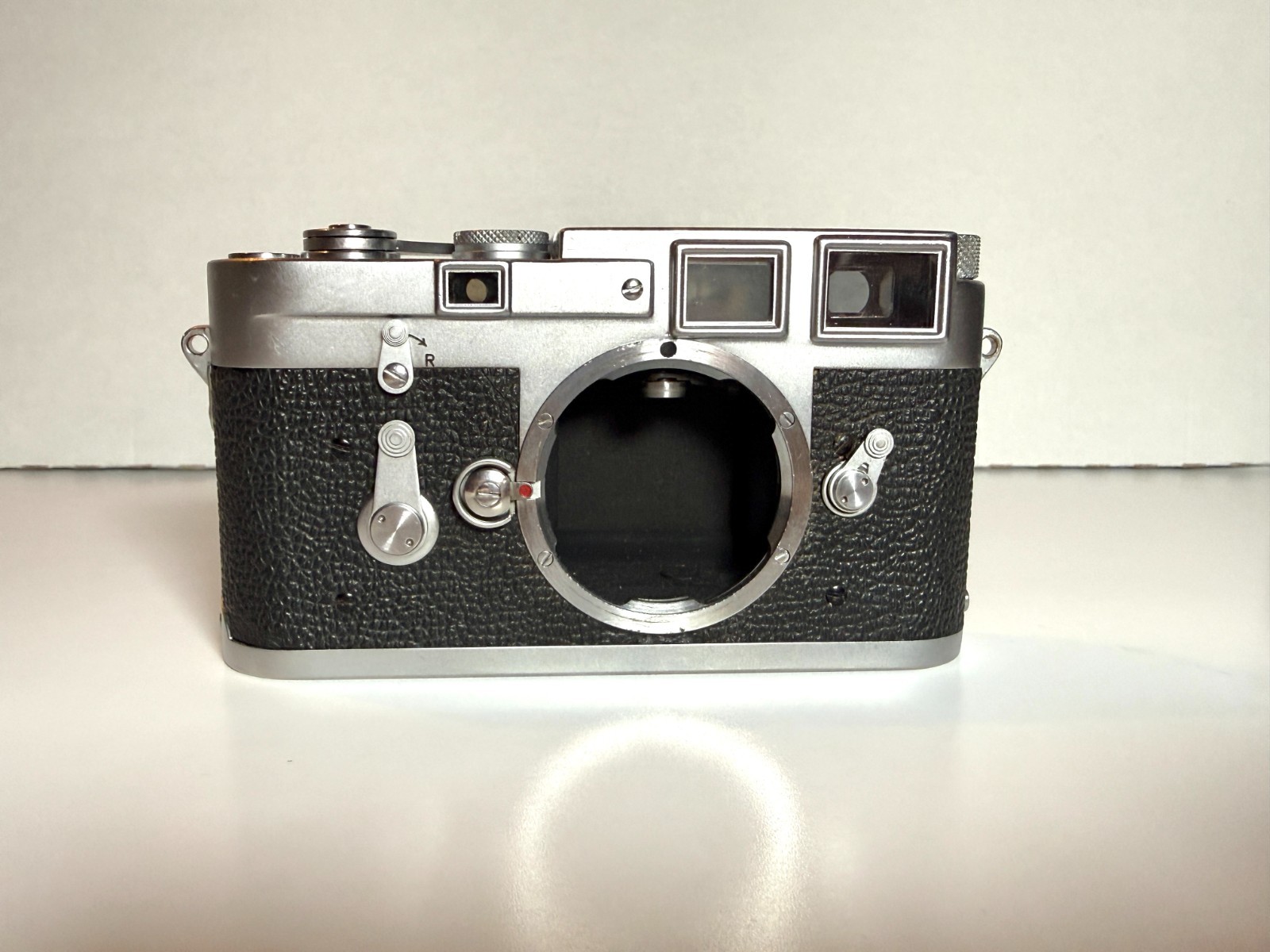
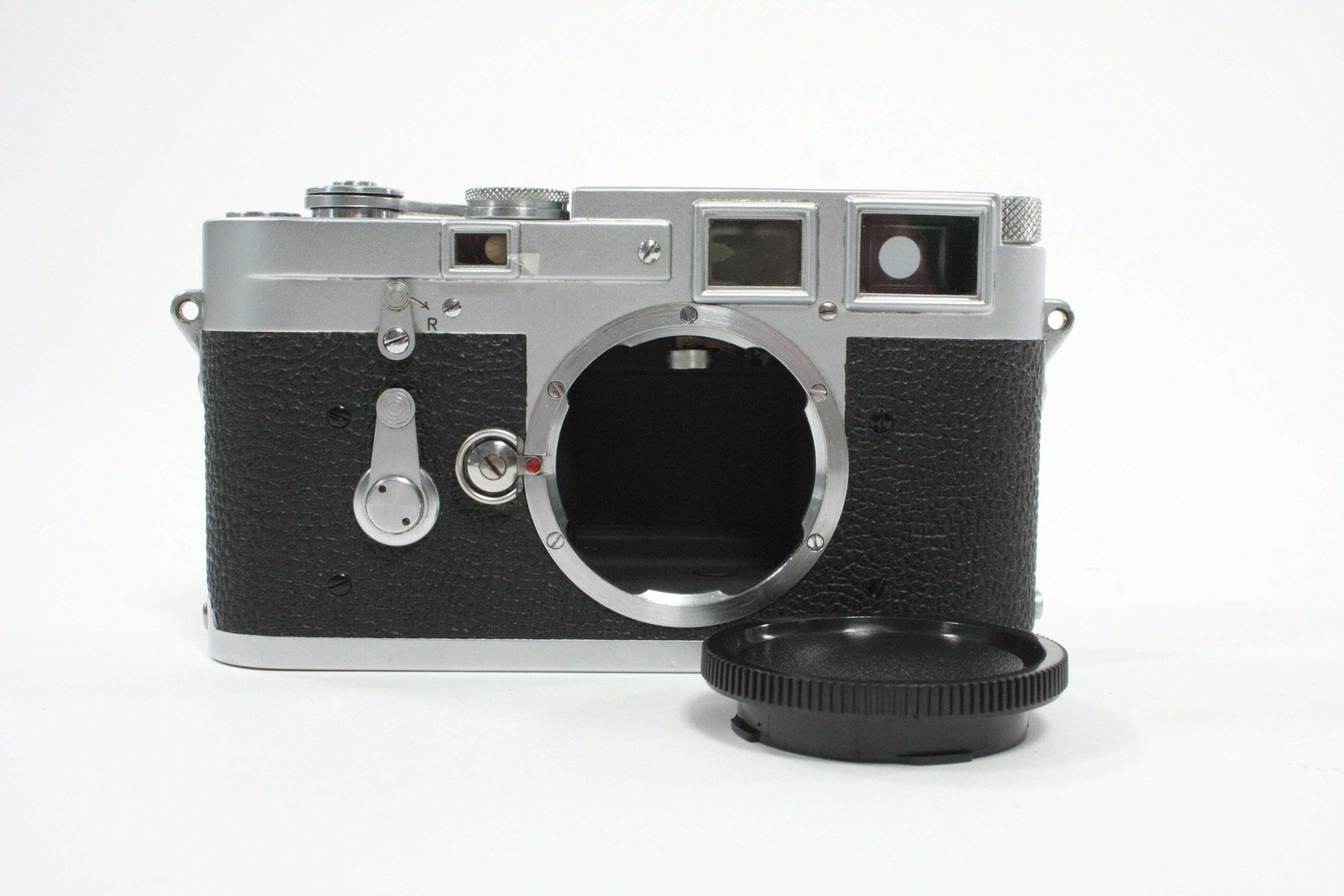
The Leica M3 is a landmark 35mm rangefinder camera introduced by Ernst Leitz GmbH in 1954, marking the debut of the M-mount system that would define Leica’s rangefinder lineage for decades. Widely regarded as one of the most influential cameras in photographic history, the M3 combined precision engineering, intuitive design, and advanced optics to set a new standard for professional 35mm photography.
Overview
The Leica M3 was developed as a direct response to the growing demand for a more advanced, user-friendly alternative to screw-mount Leica rangefinders like the Leica III series. Released in April 1954 at photokina, the M3 represented a radical departure from previous models, introducing the proprietary M-mount—a bayonet lens system that allowed faster, more secure lens changes and improved flange focal distance accuracy. This innovation laid the foundation for all subsequent Leica M-series cameras.
Targeted primarily at professional photographers and serious enthusiasts, the M3 was engineered for reliability, precision, and optical excellence. Its most notable feature was the large, bright 0.91x viewfinder with integrated rangefinder coupling, which provided exceptional clarity and accurate focusing, particularly with fast lenses. Unlike earlier Leica models, the viewfinder automatically framed the scene based on the focal length of the attached lens via a mechanical coupling system—eliminating the need for manual frameline selection. The M3 also introduced a combined viewfinder and rangefinder (RF/VF) system, where the two functions were optically merged into a single window, significantly improving usability.
The M3 played a pivotal role in cementing Leica’s reputation for building the finest 35mm rangefinder cameras in the world. It was produced in two major variants: the early model with a chrome rewind knob and recessed baseplate screw (Type 1), and the later model with a black rewind knob and protruding screw (Type 2), the latter aligning with contemporary M2 and M4 designs. Over its 12-year production run, approximately 225,000 units were manufactured, making it one of the most widely produced Leica M models of its era. The M3’s influence extended well beyond its production years, serving as the blueprint for future M-series developments and remaining a benchmark for mechanical rangefinder design.
Specifications
| Specification | Value |
| Type | Rangefinder |
| Film Format | 35mm (135 film) |
| Years Produced | 1954–1966 |
| Lens Mount | Leica M-mount (bayonet) |
| Shutter | Focal-plane cloth shutter, speeds 1–1/1000 sec, B, and X-sync at 1/50 sec |
| Metering | None (unmetered) |
| Exposure Modes | Manual only |
| Viewfinder | Combined optical viewfinder and rangefinder with 0.91x magnification; automatic frameline selection for 50mm, 90mm, and 135mm lenses |
| Dimensions | 140 × 79 × 40 mm; weight ~675 g (body only) |
Key Features
- First camera with Leica M-mount: Introduced the bayonet lens system, enabling faster lens changes and improved mechanical alignment over the older M39 screw mount.
- 0.91x brightline viewfinder: One of the largest and clearest viewfinders of its time, with automatic frameline selection based on lens focal length via mechanical coupling.
- Integrated RF/VF system: Combined rangefinder and viewfinder in a single window, improving usability and accuracy.
- High-speed focal-plane shutter: Capable of 1/1000 sec—the fastest among 35mm rangefinders at the time—achieved through a dual-curtain cloth shutter with precise timing.
- Advanced film transport: 38-tooth film advance lever enabling smooth, rapid winding with a built-in film counter that automatically resets when the back is opened.
Historical Context
The Leica M3 was launched at a time when 35mm photography was rapidly gaining acceptance in both photojournalism and fine art. Competitors such as Contax and Nikon offered rangefinders with robust build quality, but they were often larger and less refined. The M3 distinguished itself by prioritizing ergonomics, optical precision, and mechanical reliability. Its release coincided with the rise of street and documentary photography, where compact size, quiet operation, and fast handling were essential—qualities the M3 delivered in abundance.
Photographers such as Henri Cartier-Bresson, though famously loyal to the III series, eventually acknowledged the M3’s superiority in viewfinder clarity and ease of use. The camera was particularly praised for its ability to pair seamlessly with Leica’s Summicron 50mm f/2 and Elmarit 90mm f/2.8 lenses, offering unmatched image quality for the era. The M3’s success prompted Leica to discontinue the screw-mount line for professional models, solidifying the M-mount as the company’s standard. It also influenced competing designs, including the Canon P and later the Nikon S-series, though none matched the M3’s integration of features.
Collectibility & Value
Today, the Leica M3 is one of the most sought-after vintage cameras among collectors and working photographers alike. Well-maintained examples in good working condition typically sell for $4,000–$7,000 USD, with early Type 1 models and those in exceptional condition fetching upwards of $10,000 at auction. Serial numbers below 800,000 are generally considered early production and may carry a premium, especially if accompanied by original accessories such as the case, strap, or instruction manual.
When purchasing an M3, collectors should inspect the shutter accuracy across all speeds, the smoothness of the film advance, and the clarity of the rangefinder patch. Common issues include stiff or sticky shutter curtains, misaligned framelines, and worn rangefinder cams that fail to couple properly with lenses. The camera’s lack of a built-in light meter is not a drawback for purists but may deter casual users. Professional CLA (clean, lubricate, adjust) servicing by a qualified Leica technician is highly recommended before regular use, as improper handling can damage the intricate internal mechanisms. Despite its age, the M3 remains remarkably serviceable due to the availability of parts and skilled repair specialists worldwide.
Similar Cameras
- Nikon S3 (1958–1962): High-end rangefinder with bright viewfinder and screw-mount compatibility; favored by photojournalists.
- Canon P / Canon 7 (1961): Compact rangefinder with coupled metering (Canon 7) and Leica-thread mount; strong optical performance.
- Contax G2 (1994): Later autofocus rangefinder with electronic exposure and high-quality Zeiss lenses.
- FED 2 / Zorki 4 (Soviet clones): Affordable screw-mount rangefinders inspired by pre-war Leica designs.
- Leica M2 (1958): Successor with 0.72x viewfinder, aimed at wider-angle users; lacked 90mm/135mm framelines of the M3.
Repair & Maintenance
The Leica M3 requires no batteries, operating entirely mechanically—a key factor in its longevity and reliability. Shutter operation, film advance, and rangefinder coupling are all driven by precision springs and levers. The most common maintenance issues involve the cloth shutter, which may develop uneven speeds or "flagging" (incomplete opening) due to dried lubricants or fabric degradation. The rangefinder mechanism can also drift out of alignment ("collimation"), requiring optical recalibration. The film advance gear and rewind knob are prone to wear over decades of use, and the leather baseplate may deteriorate. Repairs should be performed by technicians experienced with Leica M-series mechanics, as improper disassembly can damage the delicate viewfinder and rangefinder assemblies. With proper care, an M3 can remain functional for generations, a testament to its enduring design.
eBay Listings


As an eBay Partner, we earn from qualifying purchases. This helps support our independent vintage technology research.
Related Models
- Leica IIIf (1950–1957)
- Leica IIIg (1957-1960)
- Leica M1 (1959–1964)
- Leica M2 (1958-1967)
- Leica M4-2 (1977–1981)
- Agfa Optima Sensor 1535
- Argus Argus A
- Argus Argus Autronic (1960)
- Argus Argus C-44R
- Argus Argus C