Leica M11-P (2023)
At $9,195, it arrives not with a shout, but the quiet weight of inevitability.
Overview
The Leica M11-P is a digital rangefinder camera introduced by Leica Camera AG in October 2023. Positioned within the M-System and the M11 family, it represents a refined evolution rather than a reinvention—carrying forward the minimalist ethos of its predecessors while embedding modern computational depth beneath its austere shell. It weighs approximately 530 grams in black finish with battery, though some sources list the weight with battery as high as 640 grams—a discrepancy that remains unresolved and likely stems from differing measurement standards. Its dimensions are consistently documented as 139 x 80 x 38 mm, making it only marginally bulkier than earlier M-series models, yet housing a full-frame BSI CMOS sensor measuring 36 x 24 mm. This sensor delivers 60 megapixels of resolution, enabling image dimensions of 9528 x 6328 pixels in JPEG output. Despite its high resolution, the M11-P maintains a continuous shooting speed of 4.5 frames per second—adequate for deliberate photography, but not built for rapid bursts. The Maestro III processor handles image data and power management, contributing to reportedly improved battery efficiency over prior models, though the exact battery life remains undocumented. Power comes from an 1,800 mAh cell, charged and tethered via USB-C, a now-standard interface that finally brings the M-series into functional alignment with contemporary workflows.
Specifications
| Manufacturer | Leica Camera AG |
| Product type | Rangefinder Camera |
| Resolution | 60 megapixels |
| Continuous shooting speed | 4.5 FPS |
| ISO range | ISO 64 - 51,200 |
| Viewfinder magnification | 0.73x |
| Card slots | 1 |
| Color options | Silver and Black |
| Sensor | Full-frame BSI CMOS sensor |
| Sensor size | Full frame (36 x 24 mm) |
| Processor | Maestro III |
| Image resolution | 9528 x 6328 JPEG |
| Internal storage | 256 gigs |
| Shutter type | Electronically controlled focal plane shutter and electronically controlled lens shutter |
| Exposure mode | Aperture-priority mode (A): automatic shutter speed control with manual aperture selection |
| Interfaces | USB Charging & Tethering: Yes via USB-C |
| Battery Capacity | 1,800 mAh |
| Weight | Black: approx. 530 g/455 g (with/without battery) |
| Dimensions | 139 x 80 x 38 mm (5.47 x 3.15 x 1.5″) |
| Orientation sensor | Yes |
| Operating conditions | 0°C to +40°C |
| Available colors | Black or Silver Chrome |
Key Features
256 GB Internal Storage
, the M11-P includes 256 gigabytes of built-in flash storage. This allows photographers to shoot without inserting a card, a feature particularly useful for travel or street photography where card failure or loss is a concern. The camera supports dual use—internal storage and a single card slot—enabling overflow recording or file separation. For long-term users of the M-system, this addition marks a significant shift toward self-contained reliability, reducing dependency on external media while maintaining compatibility with existing workflows.
Full-Frame BSI CMOS Sensor
The heart of the M11-P is its full-frame BSI CMOS sensor, . Backside illumination improves light gathering efficiency, particularly at higher ISOs, contributing to its usable range of ISO 64 to 51,200. The 60-megapixel resolution demands high-quality lenses and steady hands, but delivers exceptional detail when paired with Leica’s M-mount optics. The pixel pitch is reportedly 3.76 μm, balancing resolution with dynamic range. While some fringe sources claim a CCD sensor, the consensus among authoritative outlets—including Leica’s own technical specifications and dpreview—confirms the use of a BSI CMOS design.
Aperture-Priority Exposure Mode
The M11-P as a selectable exposure setting), allowing automatic shutter speed selection while the user manually controls the lens aperture. This is a , offering greater flexibility in dynamic lighting conditions without sacrificing the camera’s deliberate, tactile character. It coexists with full manual mode, preserving the purist experience while extending accessibility to those who value partial automation.
Content Authenticity Initiative Metadata
Embedded in the firmware is support for the Content Authenticity Initiative (CAI), a system that records cryptographic metadata about each image’s origin and editing history. This feature appeals to photojournalists and institutions concerned with image provenance, anchoring the M11-P in contemporary debates about digital trust. While invisible during shooting, the metadata can be verified post-capture using compatible software, adding a layer of integrity without altering the photographic process.
6-Bit Lens Encoding Sensor
The camera includes a sensor that reads 6-bit codes embedded in compatible Leica M lenses, enabling automatic recognition of lens type and metadata tagging. This allows the camera to apply optimized processing based on the attached lens, such as correcting for vignetting or chromatic aberration. While , its inclusion in the M11-P ensures continuity with the ecosystem of modern Leica lenses, though legacy manual lenses remain fully functional without electronic communication.
Historical Context
The Leica M11-P was announced in October 2023 as part of the M11 family within the broader M-System. Leica Camera AG described the release as “another milestone in the history of photography,” emphasizing refinement, durability, and authenticity. It —designed for users who prioritize understatement and operational silence. Unlike flashier contemporaries, the M11-P advances the philosophy that the camera should disappear into the act of seeing.
eBay Listings
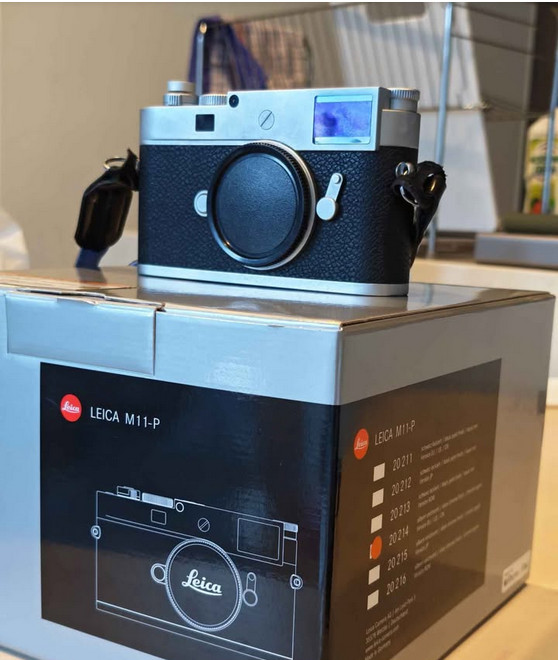

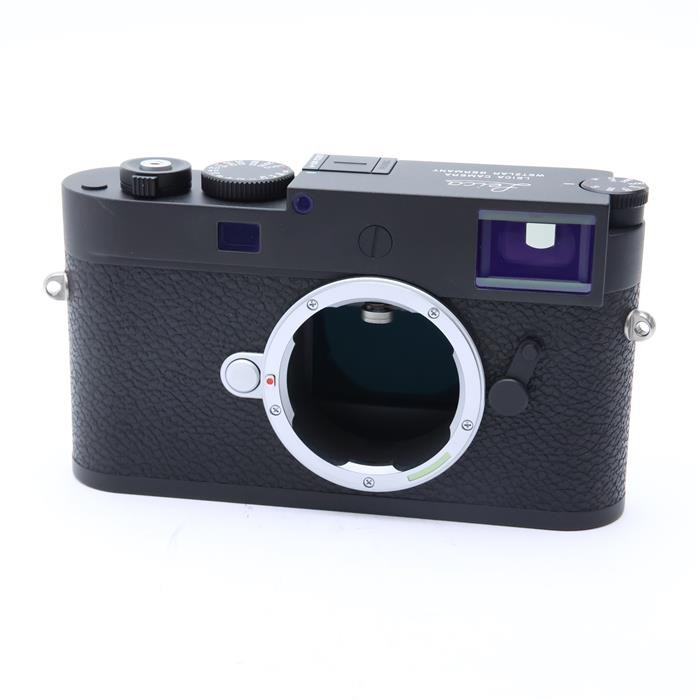

As an eBay Partner, we earn from qualifying purchases. This helps support our independent vintage technology research.
Related Models
- Leica M-Monochrom
- Leica M10
- Leica M11 Monochrom
- Leica Leica M7 (2002-2018)
- Leica IIIf (1950–1957)
- Agfa Optima Sensor 1535
- Argus Argus A
- Argus Argus Autronic (1960)
- Argus V-100 (1958)
- Balda Baldamatic II