LeCoultre Compass (1937–early 1940s)
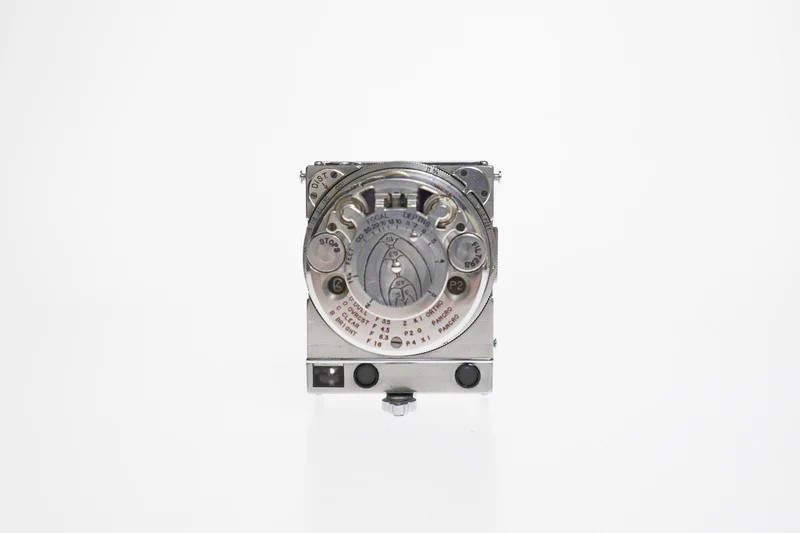
A rare ultra-compact 35mm camera designed by Noel Pemberton Billing and made by Jaeger LeCoultre in Switzerland.
Overview
The Jaeger-LeCoultre Compass Camera is a miniature camera built in Switzerland starting in 1937. Sources conflict on the image medium. Some say 35mm film, others say 24x36mm glass plates. Noel Pemberton Billing designed it. Jaeger LeCoultre & Cie. of Sentier, Switzerland, made it under contract for Compass Cameras Limited of London. The series was limited to 4,000 units, and production stopped during World War II and never restarted. Variants include the Mk I, KII, Compass II, and Model 11. It is described as one of the most unusual and rare compact photographic devices of its era, and collectors go after it.
Specifications
| Film Format | 35mm |
| Lens | 35mm f/3.5 Tessar-formula lens |
| Focusing | Rangefinder and ground glass focusing |
| Tripod | Pocket tripod included, extends to 9 or 12 inches |
Design
Noel Pemberton Billing designed the Compass Camera as an ultra-compact unit, and the Swiss watchmaker Jaeger LeCoultre built it. It has a lens cover with a depth of field scale. It was engineered as a precision miniature photographic device, which reflects the maker's horological expertise.
Context
Only 4,000 units of the Compass Camera were made across all variants, including the Mk I and KII models. Production began in 1937 and ran until the early 1940s, when World War II ended it. The small run and the unusual design keep it rare and wanted by collectors.
Market
A Jaeger-LeCoultre Compass Camera from 1937 sold at auction in Austria in 2023 for $3,700. A LeCoultre Compass Camera Deluxe outfit was listed at Leitz Auction with a starting price of €3,400. A parts lot of the camera, described as new old stock, was priced at C$642.58.
eBay Listings

As an eBay Partner, we earn from qualifying purchases. This helps support our independent vintage technology research.