KONICA AUTO S3
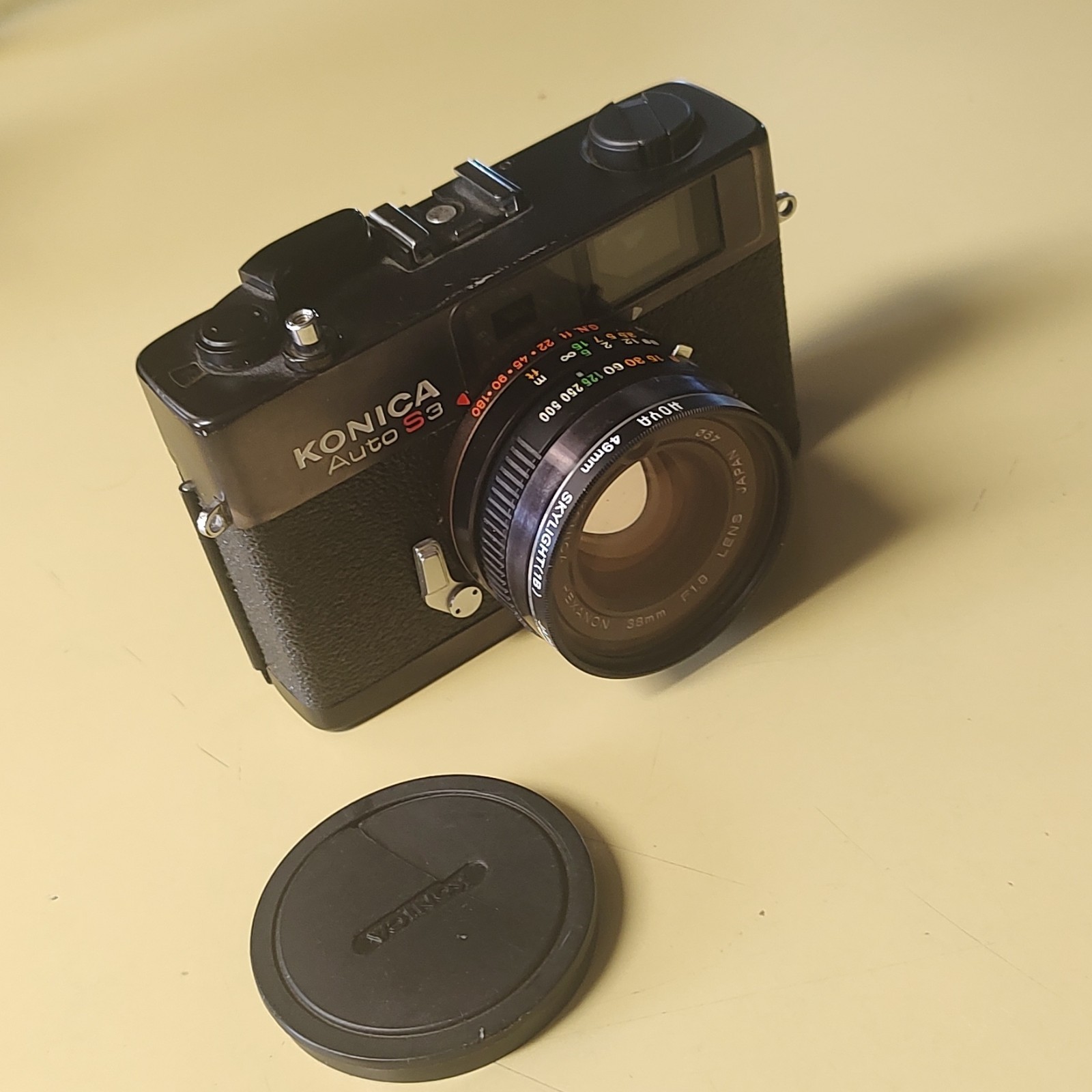
The Konica Auto S3 is a compact 35mm rangefinder camera produced by Konica from 1969 to 1973, representing the final evolution of the company's highly regarded Auto S series. It features a fast 47mm f/1.9 Hexanon lens and a fully automatic exposure system, offering advanced metering and ease of use for amateur and enthusiast photographers during the late 1960s and early 1970s.
Overview
The Konica Auto S3 was introduced in 1969 as a direct successor to the Auto S2, incorporating refinements in both design and functionality that reflected Konica’s commitment to precision engineering and user-friendly operation. Positioned as a premium compact rangefinder, the Auto S3 targeted amateur photographers seeking high image quality with minimal manual intervention. It was part of Konica’s long lineage of rangefinder cameras that began in the 1950s with models like the Konica I and evolved through the Auto S series into the early 1970s.
The Auto S3 distinguished itself with its fast 47mm f/1.9 Hexanon lens—a relatively fast standard lens, though not the fastest available on production rangefinders at the time—making it particularly well-suited for low-light photography and shallow depth-of-field effects. The camera featured an aperture-priority automatic exposure system with a built-in CdS light meter that controlled the shutter speed based on the selected aperture, but required manual film advance and shutter cocking. This aperture-priority autoexposure system was advanced for its era and contributed to the camera’s reputation for reliability and ease of use.
Compared to its predecessor, the Auto S2, the S3 introduced several key improvements: a redesigned viewfinder with brighter framelines and improved parallax compensation, a more refined film advance mechanism with a shorter throw, and a revised shutter design that enhanced durability. The camera retained the compact, all-metal body with a leatherette covering, top-mounted shutter speed dial, and integrated rewind crank. Despite the growing popularity of SLRs in the late 1960s, Konica continued to refine its rangefinder line, seeing a niche market for compact, high-quality cameras that offered superior portability and quiet operation.
Specifications
| Specification | Value |
| Type | Rangefinder |
| Film Format | 35mm (135 cartridge) |
| Years Produced | 1968–1972 |
| Lens Mount | Fixed Hexanon 47mm f/1.9 (non-interchangeable) |
| Shutter | Vertical-travel, metal-blade focal-plane shutter; speeds 1–1/500 sec + B |
| Metering | Off-the-film (OTF) CdS metering, center-weighted, measured post-exposure |
| Exposure Modes | Aperture-priority automatic exposure; manual override via shutter speed selection |
| Viewfinder | Combined optical viewfinder and rangefinder patch with parallax correction; framelines for 47mm |
| Dimensions | 138 × 75 × 45 mm; ~540 g (body only, no battery) |
Key Features
- 47mm f/1.9 Hexanon lens: One of the fastest standard lenses on any production rangefinder, ideal for low-light shooting and selective focus.
- Aperture-priority autoexposure: Select aperture on lens, and camera automatically sets shutter speed (1–1/500 sec) via CdS meter.
- TTL metering: Through-the-lens, center-weighted CdS metering for accurate exposure in varied lighting.
- Compact metal body: Durable construction with smooth film advance and quiet shutter operation.
- Improved viewfinder: Brighter framelines and enhanced parallax compensation compared to earlier Auto S models.
Historical Context
The Konica Auto S3 was released at a transitional moment in camera history. By 1969, single-lens reflex (SLR) cameras were rapidly gaining dominance in the enthusiast and professional markets, thanks to their through-the-lens viewing and interchangeable lens systems. However, rangefinders still held appeal for photographers who valued compactness, quiet operation, and superior wide-angle performance. Konica, having established a strong reputation with its Auto S and Konica I/II/III series, aimed to refine its rangefinder offerings rather than pivot immediately to SLRs.
The Auto S3 competed with other premium rangefinders such as the Canon Canonet QL17 G-III and the Minolta Hi-Matic series. Unlike many of its competitors, the Auto S3 offered a faster maximum aperture (f/1.9 vs. the more common f/1.7–f/2.0), giving it a distinct advantage in dim lighting. It also featured more precise build quality and a smoother shutter mechanism than many contemporary point-and-shoot rangefinders. Despite its technical merits, the Auto S3 had a relatively short production run, ending in 1973 as Konica shifted focus toward SLR development, culminating in the successful Konica FS and FT series.
Market reception was favorable among users who appreciated its blend of automation and optical quality. Reviews at the time praised its sharp lens, reliable metering, and compact form. However, the rise of SLRs and the eventual decline of rangefinder demand meant the Auto S3 became one of the last high-end fixed-lens rangefinders Konica would produce.
Collectibility & Value
Today, the Konica Auto S3 is regarded as a cult classic among rangefinder enthusiasts and vintage camera collectors. Its combination of a fast Hexanon lens, solid build quality, and elegant design makes it a sought-after model, particularly in fully functional condition. Working units in good condition typically sell for $150–$250, with exceptional mint examples reaching up to $350.
Rarity is moderate—while not exceptionally scarce, working specimens are increasingly difficult to find due to age-related issues such as shutter degradation, light seal deterioration, and CdS meter failure. When purchasing an Auto S3, collectors should verify the functionality of the shutter across all speeds, check for haze or fungus in the lens, and ensure the meter responds to light (original mercury battery compatibility requires modification for modern PX625 alternatives). The camera uses a single 1.35V mercury battery (now obsolete), so many users retrofit with zinc-air replacements or adapters.
Common issues include sticky shutter curtains (especially at 1/500 sec), worn film advance levers, and misaligned rangefinder mechanisms. Due to the precision required in rangefinder calibration, repairs should be handled by technicians experienced with Konica’s optical systems. Despite these challenges, the Auto S3 remains a rewarding camera to use and own, offering a tangible connection to Konica’s legacy of optical excellence.
Similar Cameras
- Canon Canonet QL17 G-III – Comparable aperture-priority rangefinder with 40mm f/1.7 lens; slightly more compact and mass-market oriented.
- Minolta Hi-Matic 9 – Features 45mm f/2 Rokkor lens and aperture-priority AE; known for robust build and excellent metering.
- Yashica Electro 35 GSN – 45mm f/1.7 lens, fully electronic shutter; popular for its reliability and bright lens.
- Fujica ST705 – Later model (1977) with 45mm f/1.9 Fujinon, but shares similar design philosophy and target audience.
- Leica CL – Higher-end M-mount rangefinder with interchangeable lenses; more expensive but shares compact form and premium build.
Repair & Maintenance
The Konica Auto S3 uses a 1.35V mercury PX625 battery, now discontinued. Modern replacements include WeinCell zinc-air or alkaline PX625 batteries, though voltage differences may affect meter accuracy. Some users install voltage-regulating adapters for consistent performance. Shutter maintenance is critical—given the age, cloth curtains may degrade, especially at high speeds. Lubricants can dry out, leading to inconsistent shutter timing. The CdS meter is prone to failure due to aging components or corrosion; recalibration may be necessary. Rangefinder alignment should be checked periodically, as impacts can throw the focusing patch out of calibration. Regular use, proper storage, and light seal replacement every 10–15 years are recommended for long-term preservation.
eBay Listings


As an eBay Partner, we earn from qualifying purchases. This helps support our independent vintage technology research.
Related Models
- Konica Auto S2 (1965-1970)
- Konica Hexar RF (1999-2003)
- Agfa Optima Sensor 1535
- Argus Argus A
- Argus Argus Autronic (1960)
- Argus Argus C-44R
- Argus Argus C
- Argus Argus C2
- Argus Argus C3 (1939-1966)
- Argus Argus C44R