Kodak Retina IIIS (1958–1960)
A non-folding 35mm rangefinder camera with interchangeable lenses and a coupled selenium meter, produced by Eastman Kodak Company from 1958 to 1960.
Overview
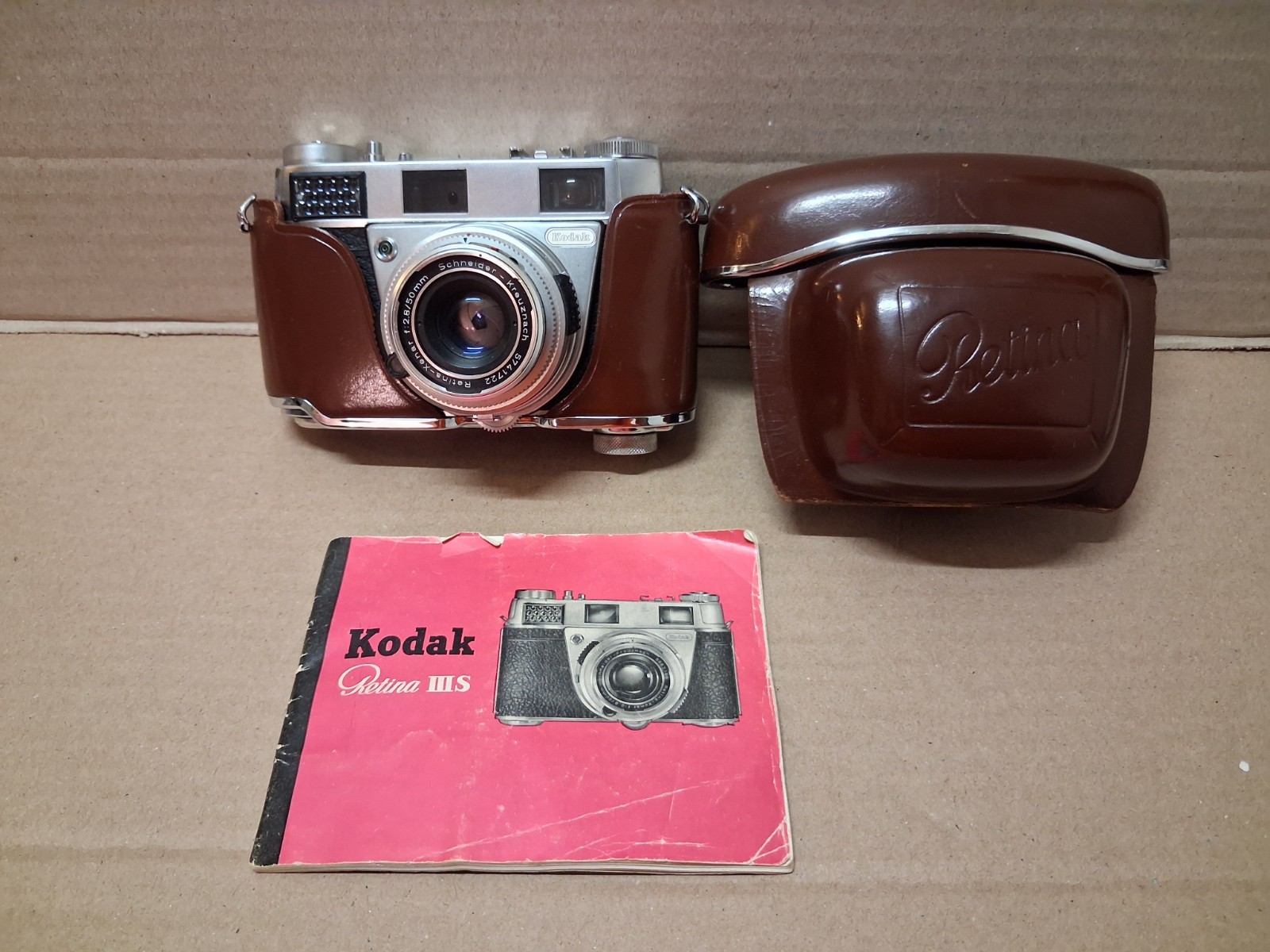
The Kodak Retina IIIS is a leaf shutter 35mm rangefinder made by the Eastman Kodak Company between 1958 and 1960. It was sold as a low-priced rangefinder with interchangeable lenses, part of the non-folding Retina rangefinder line. Approximately 45,000 were produced. The shutter is a behind-the-lens Compur, and the lens mount takes Schneider and Rodenstock lenses from 28mm to 200mm. The cross-coupled selenium meter is tied to the outdated LVS (Light Value System). LVS couples aperture and shutter speed for equivalent exposure unless you lock it.
Specifications
| Production years | produced 1958-1960 |
| Total produced | about 45,000 Retina IIIS were produced |
| Weight | weighing in at a not so petite 1 3/4 lbs with the 50/2.8 lens |
| Shutter | behind the lens Compur shutter with electronic flash sync at all speeds from 1 to 1/500 |
| Lens lineup | Schneider and Rodenstock lenses from 28mm to 200 |
| Minimum aperture | All IIIS lenses have a f/22 minimum aperture |
| Viewfinder frameline combinations | 35/50, 35/85, and 35/135 |
| Frameline behavior | The 35mm frameline appears alone, and remains visible as other lenses are mounted. The 50, 85, and 135 lenses are automatically added to the 35 frame, one at a time. |
| 200mm lens | The 200/4.5 also brings up the 135 frameline, at the infinity setting with no coupled RF or parallax compensation. |
| 28mm lens | you do need an accessory 28 finder for the 28 lens |
| Film counter | manually set by 1st pushing down on that little button besides the film counter, and then moving the nearby chromed button on the back side of the top plate in the direction indicated by the arrow. Each push resets counter 3 frames at a time. ... The frame counter shows how many exposures are left on the roll, counting DOWN to 1. It then LOCKS, forcing you to stop and either reload the film, or re-set the film counter to get that extra shot on the roll. |
| Meter | cross coupled selenium meter |
| ISO setting | IF the meter is still working and reasonably accurate, change the film speed by 1st pushing down on the button atop the ASA dial, and then turning the aperture control wheel on the bottom of the lens mount. |
| LVS system | unfortunate[ly], they are connected to the outdated and awkward LVS exposure system. With LVS, when you change an f/stop, you automatically change the shutter speed to keep the same equivalent exposure. |
| LVS lock | Turn LVS lock to change f/stops -- the shutter speed will stay the same. |
| Lens mount release | Lens mount release |
Design
The Retina IIIS has a behind-the-lens Compur shutter and a cross-coupled selenium meter. The lens mount takes interchangeable Schneider and Rodenstock lenses from 28mm to 200mm, all with a minimum aperture of f/22. The viewfinder shows framelines for 35/50, 35/85, and 35/135 combinations. The 35mm frameline is always visible, and the others are added automatically depending on the mounted lens. The 200mm lens brings up the 135 frameline at infinity, with no coupled rangefinder and no parallax compensation. The 28mm lens needs an accessory finder. The film counter is reset manually with two buttons on the top plate. It counts down to 1, then locks until reset. The LVS system links aperture and shutter speed changes unless the LVS lock is engaged.
Market
Approximately 45,000 Retina IIIS cameras were produced between 1958 and 1960, which makes it a relatively rare model. The LVS exposure system works, but it is considered outdated and awkward by modern standards. The selenium meter may no longer be reliable in surviving units. The accessory finder needed for the 28mm lens and the locking film counter are the other operational quirks. All of this affects collector interest and value.
eBay Listings


As an eBay Partner, we earn from qualifying purchases. This helps support our independent vintage technology research.