KODAK RETINA IIA
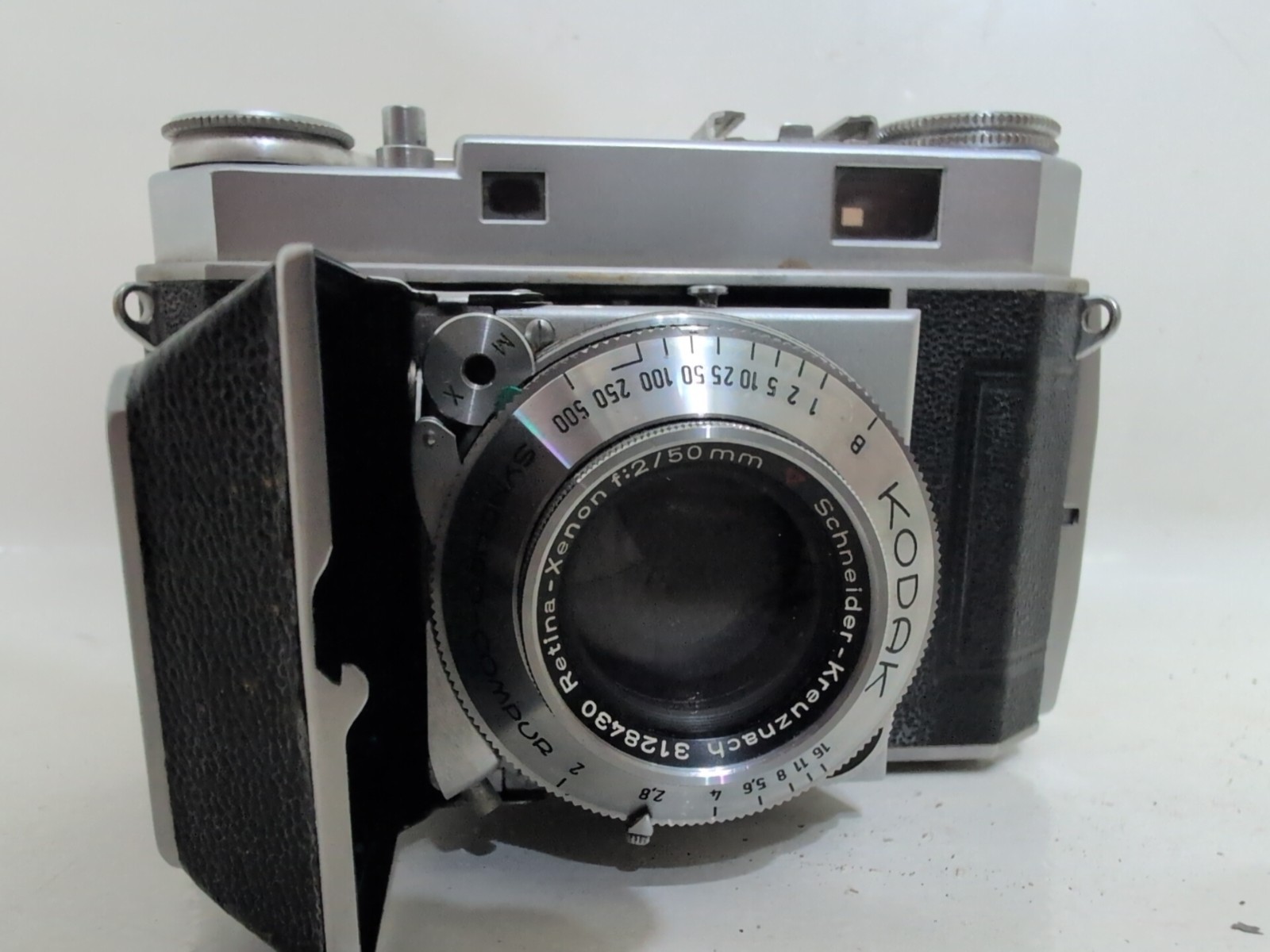
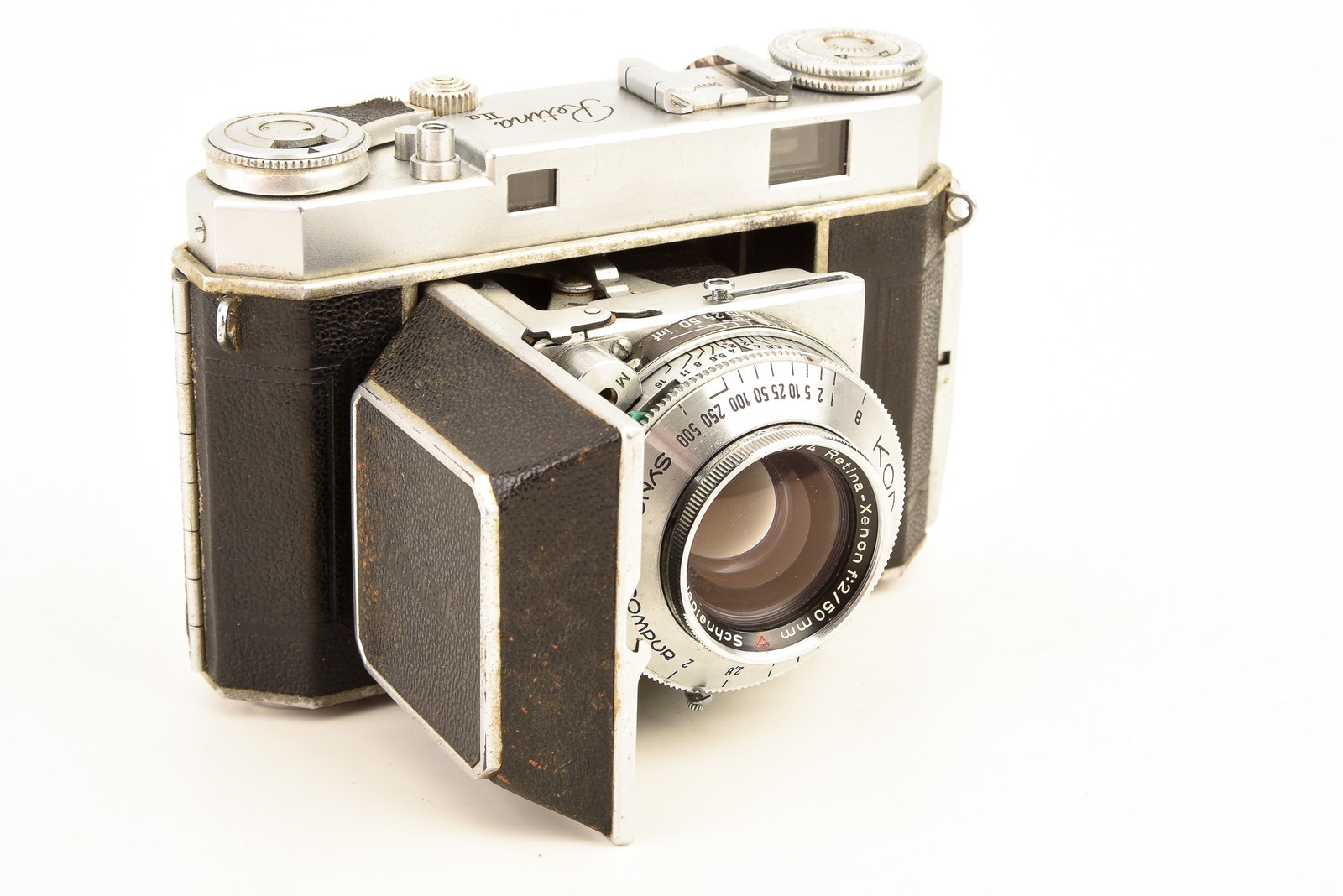
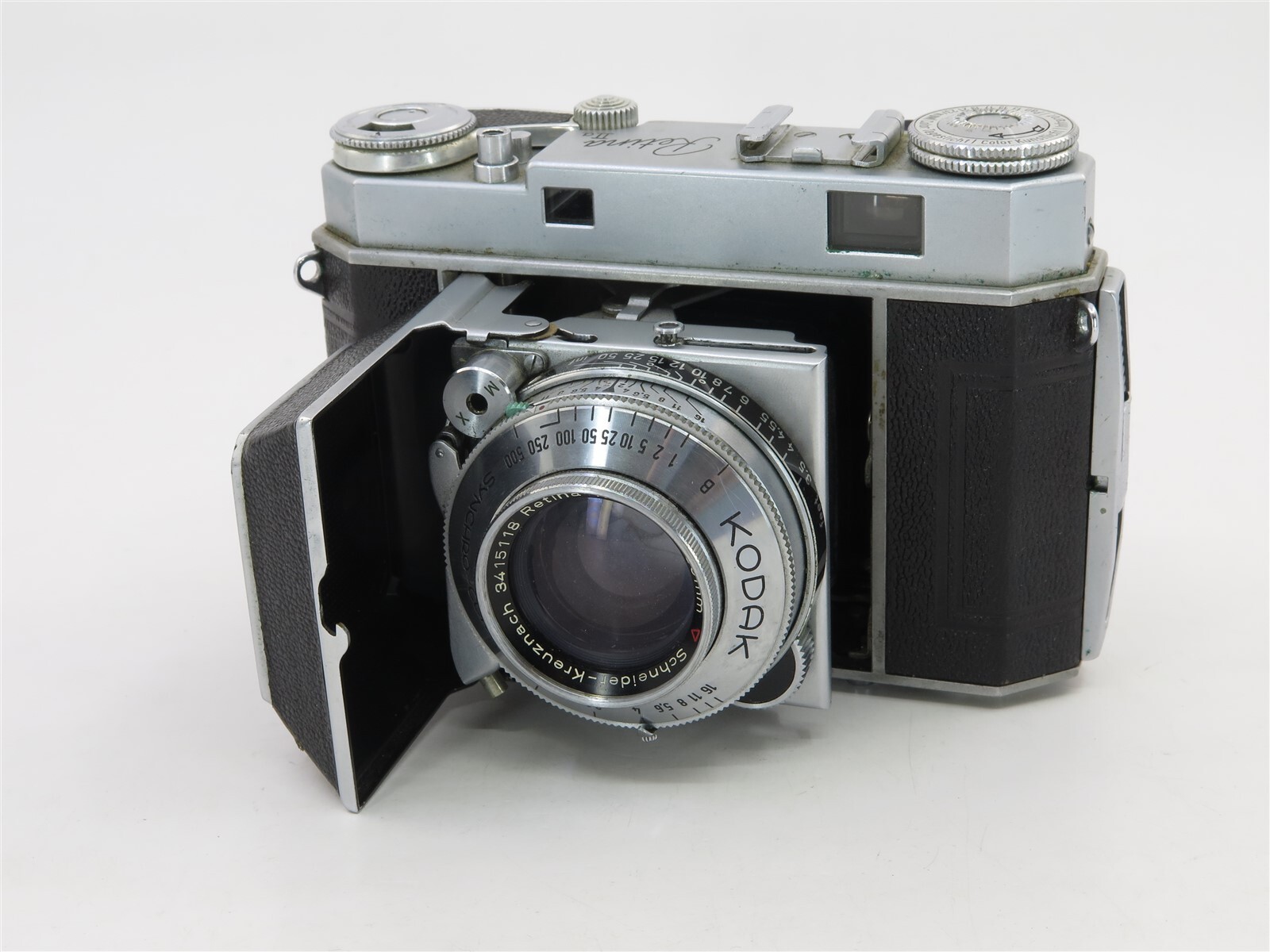
The Kodak Retina IIa is a 35mm rangefinder camera produced by Kodak AG in Stuttgart, West Germany, from 1954 to 1960. As an updated version of the Retina II, it introduced significant improvements in rangefinder accuracy and mechanical reliability, solidifying its place as a premium compact 35mm camera for advanced amateur and professional photographers.
Overview
The Retina IIa was part of the second generation of Kodak’s highly regarded Retina series, which began in 1934 with the original Retina I. Manufactured at the Kodak factory in Stuttgart (formerly Nagel Werk), the IIa represented a refinement of the successful Retina II platform, incorporating user feedback and engineering advancements. It was positioned as a high-end compact rangefinder, competing with German-made Leica and Contax models, offering solid build quality and ease of use at a relatively accessible price point.
The camera was designed for photographers seeking precision optics, reliable mechanical performance, and a compact form factor. It featured a coupled rangefinder for accurate focusing, a high-quality interchangeable lens system, and a robust all-metal body. The Retina IIa was marketed primarily in North America and Western Europe, where it gained a loyal following among photojournalists and serious amateurs. It was part of Kodak’s strategy to capture a share of the growing 35mm market by offering German-engineered cameras under the trusted Kodak brand.
One of the most notable aspects of the Retina IIa was its lens compatibility. It used the Kodak 44mm bayonet mount, allowing users to interchange lenses between models in the Retina II and III series. The standard lens was the Kodak Ektanon 50mm f/2, not the Ektar 50mm f/2.8. Optional lenses included the 35mm f/4 Ektar and the 85mm f/4 Ektar. The 85mm f/2 Ektar was not available for the Retina IIa., providing versatility for wide-angle and portrait photography. The camera’s compact folding design, combined with its high optical performance, made it a favorite among travelers and documentary photographers.
Specifications
| Specification | Value |
| Type | Rangefinder |
| Film Format | 35mm (135 cartridge) |
| Years Produced | 1954–1960 |
| Lens Mount | Kodak 44mm bayonet |
| Shutter | Compur-Rapid shutter, B, 1–1/500 sec |
| Aperture Range | f/2.8 to f/16 (varies by lens) |
| Metering | None (uncoupled selenium meter available as accessory) |
| Exposure Modes | Manual only |
| Viewfinder | Combined optical viewfinder and coincident-image rangefinder |
| Focusing | Coupled rangefinder, helical focus |
| Flash Sync | PC terminal and M/X switch; sync at all speeds |
| Film Advance | Lever wind (single stroke), frame counter automatic |
| Frame Size | 24 x 36 mm |
| Frames per Roll | 36 (standard 135 roll) |
| Dimensions | 105 x 65 x 40 mm (closed) |
| Weight | Approx. 640 g (with standard lens) |
Key Features
- Improved Coupled Rangefinder: The IIa featured a larger, brighter, and more accurate coincident-image rangefinder compared to earlier models, enabling precise manual focusing.
- Interchangeable Lenses via 44mm Bayonet Mount: Supported a range of high-quality Ektar lenses, including 35mm, 50mm, and 85mm focal lengths.
- Compur-Rapid Shutter with Full Speed Range: Offers shutter speeds from 1 second to 1/500 second plus Bulb, providing flexibility in various lighting conditions.
- Compact Folding Design: Lens and viewfinder retract into the body for portability, protected by a hinged front cover.
- Flash Synchronization with M/X Switching: Allowed compatibility with both flashbulbs (M-sync) and electronic flash (X-sync), with dedicated PC terminal.
Historical Context
The Retina IIa was introduced in 1951 during a period of rapid growth in the 35mm photography market. Following World War II, there was increasing demand for compact, high-quality cameras that combined portability with professional-grade performance. Kodak, having acquired the Nagel camera company in 1931, leveraged German optical engineering to produce cameras that rivaled Leica and Zeiss in quality while maintaining Kodak’s reputation for reliability and user-friendliness.
The Retina IIa was a successor to earlier Retina models and competed in a market increasingly influenced by Leica and Contax, but it was not a direct response to the Leica IIIc or Contax III, which predated it., offering comparable optical performance with a more compact form factor and lower price. Unlike Leica’s screw-mount system, the Kodak 44mm bayonet allowed for faster, more secure lens changes. The inclusion of a coupled rangefinder—now improved with better alignment and visibility—gave it a significant edge over simpler viewfinder cameras. Despite lacking built-in metering (a feature that wouldn’t become common until the late 1950s), the IIa was praised for its mechanical precision and optical quality.
Market reception was positive, particularly in the United States, where Kodak’s distribution network ensured wide availability. However, by the mid-1950s, the rise of SLRs and Kodak’s own shift in focus toward consumer photography began to marginalize the Retina line. The IIa was succeeded in 1954 by the Retina IIc, which added a built-in light meter and further refinements, marking the end of the IIa’s short but influential production run.
Collectibility & Value
Today, the Kodak Retina IIa is a sought-after collector’s item, valued for its historical significance, German craftsmanship, and optical excellence. In excellent working condition, prices typically range from $200 to $400, depending on lens and condition., depending on lens configuration and provenance. Models equipped with the 85mm f/2 Ektar lens command a premium due to their rarity and portrait capabilities.
Collectors should inspect the rangefinder alignment carefully, as misalignment is a common issue in vintage rangefinders and can be costly to repair. The selenium light meter, if present as an accessory, often suffers from degraded output and is primarily of cosmetic value. Other potential issues include stiff or frozen shutters, light leaks from deteriorated seals, and fungus or haze in the lens. Because the camera uses no batteries for operation, it remains fully functional even without electronic components.
The Retina IIa’s relatively short production run—just three years—adds to its rarity. Its status as a transitional model between the pre-war Retinas and the more advanced IIc and IIIS models gives it a unique place in photographic history.
Similar Cameras
- Leica IIIc – German-made screw-mount rangefinder with similar build quality and professional targeting.
- Contax III – Precision-engineered rangefinder with a built-in selenium meter, known for its robust construction.
- Canon VT – Japanese rangefinder with 50mm f/1.8 lens option, offering excellent optics and Leica compatibility.
- Nikon S2 – High-quality Japanese rangefinder with bright viewfinder and interchangeable lenses.
- Zeiss Ikon Ikoflex IIa – Though a TLR, it shared the same era and target market for advanced amateur photographers.
Repair & Maintenance
The Retina IIa requires no batteries for operation, relying entirely on mechanical shutter and manual controls. This makes it highly reliable with proper maintenance. However, common issues include shutter blade lubrication drying out, leading to inconsistent speeds or sticking at 1/500 sec. A full CLA (Clean, Lubricate, Adjust) by a technician experienced with vintage German shutters is recommended for non-working examples.
Rangefinder calibration is critical and should be checked regularly; misalignment renders accurate focusing difficult. The lens mount and focusing helix may require cleaning and lubrication if stiff. Original leather cases and accessories, while desirable, are often cracked or worn due to age. Replacement parts are scarce, so preservation of original components is essential. With proper care, the Retina IIa remains a fully functional and historically significant camera over 70 years after its introduction.
eBay Listings

As an eBay Partner, we earn from qualifying purchases. This helps support our independent vintage technology research.
Related Models
- Kodak Retina Automatic III (1960–1963)
- Kodak Retina II (1949-1956)
- Kodak Retina IIc (1954–1957)
- Kodak Retina IIIc (1954-1957)
- Agfa Optima Sensor 1535
- Argus Argus A
- Argus Argus Autronic (1960)
- Argus Argus C-44R
- Argus Argus C
- Argus Argus C2