KODAK RETINA IC
The Kodak Retina Ic is a compact 35mm rangefinder camera produced by Kodak AG in Stuttgart, West Germany, from 1957 to 1958. It is a refined variant of the Retina IIIc series, distinguished by its interchangeable front lens elements, offering photographers limited but practical optical flexibility in a streamlined body.
Overview
The Kodak Retina Ic was introduced as part of the final generation of Retina rangefinders, representing Kodak’s effort to maintain competitiveness in the high-end compact 35mm camera market during the late 1950s. It was positioned as a premium compact camera aimed at advanced amateur photographers and professionals seeking a portable yet capable tool for everyday photography. Built at the Kodak factory in Stuttgart, the Retina Ic shares much of its mechanical foundation with the Retina IIIc but features a simplified design that omits the IIIc’s coupled rangefinder patch and flash synchronization, streamlining production and reducing cost while retaining core optical capabilities.
The Retina Ic’s most notable feature is its interchangeable front lens element system, which allows users to switch between different focal lengths by replacing the front optical group of the lens assembly. This system was designed to offer a compromise between full lens interchangeability and compactness, enabling photographers to use 35mm, 50mm, or 85mm equivalents without carrying multiple complete lenses. The camera retains the high-quality Schneider-Kreuznach Xenar 45mm f/2.8 triplet lens as its standard configuration, mounted in a Compur-Rapid shutter assembly. Despite its relatively short production run, the Retina Ic exemplifies the engineering sophistication of German camera design under Kodak ownership and serves as a bridge between the fully featured IIIc models and the more simplified Retina IIIC/IIIc successors.
Specifications
| Specification | Value |
| Type | Rangefinder |
| Film Format | 35mm (135 cartridge) |
| Years Produced | 1957–1958 |
| Lens Mount | Interchangeable front element system (Schneider-Kreuznach Retina thread) |
| Shutter | Compur-Rapid leaf shutter, speeds 1–1/500 sec + B |
| Aperture Range | f/2.8 to f/22 |
| Metering | None (uncoupled selenium meter available on some variants) |
| Exposure Modes | Manual only |
| Viewfinder | Optical viewfinder with brightline frames (50mm and 85mm) |
| Focusing | Manual via rangefinder patch (uncoupled) |
| Flash Sync | No |
| Battery | None required (selenium meter, if present, is self-powered) |
| Dimensions | Approx. 140 × 75 × 55 mm; Weight: ~680 g (with lens) |
Key Features
- Interchangeable Front Lens Elements: Allows use of 35mm, 45mm, and 85mm front groups on the same lens mount, providing focal length versatility without full lens replacement.
- High-Quality Schneider-Kreuznach Xenar 45mm f/2.8 Lens: A four-element Tessar-type lens known for sharpness, contrast, and minimal aberration.
- Precision Compur-Rapid Leaf Shutter: Offers shutter speeds from 1 second to 1/500 second, enabling handheld shooting in varied lighting conditions.
- Compact Rangefinder Design: Combines rangefinder focusing with a lightweight aluminum body, making it suitable for travel and street photography.
- Dual Viewfinder Framelines: Brightline viewfinder displays framelines for both 50mm and 85mm focal lengths, aiding composition with different front elements.
Historical Context
The Retina Ic was released during a transitional period in 35mm camera development, as Japanese manufacturers like Nikon, Canon, and Minolta began gaining prominence with SLR designs. Kodak, having established a strong reputation for quality through its German-made Retina line, sought to offer a more affordable alternative to the flagship Retina IIIc without sacrificing optical performance. By removing the coupled rangefinder and flash sync—features present on the IIIc—the Ic was priced lower while retaining the core mechanical reliability and lens interchangeability that defined the series.
Despite its advanced features, the Retina Ic had a short production life, likely due to limited market demand for rangefinders with partial lens interchangeability at a time when fully interchangeable lens systems and SLRs were becoming the norm. It competed with models like the Leica M3 (introduced in 1954) and the Contax G2 (later), though it lacked the full lens mount flexibility of those systems. Nevertheless, the Ic was well-regarded for its build quality and optical performance, particularly among photographers who valued portability and the sharpness of the Xenar lens.
Collectibility & Value
The Kodak Retina Ic is a rare and sought-after model among vintage camera collectors, primarily due to its short production run (approximately 12,000 units estimated) and unique interchangeable front element system. In excellent working condition, with all original accessories and multiple front elements, the Retina Ic can command prices between $800 and $1,500 USD on the collector market. Cameras with the original case, manuals, and rare 35mm or 85mm front elements are particularly valuable.
When purchasing a Retina Ic, collectors should inspect the shutter operation across all speeds, as the Compur-Rapid shutter is prone to sticking or oil drying over time. The selenium light meter (if present) is often non-functional due to age-related degradation, but this does not significantly affect usability since the camera lacks exposure coupling. Lens condition is critical—look for absence of haze, fungus, or separation, especially in the front elements. The interchangeable mount threads should be clean and undamaged to ensure proper alignment and focus accuracy. Given its age, a professional CLA (clean, lubricate, adjust) is recommended before regular use.
Similar Cameras
- Leica M3 (1954–1966) – Full-frame rangefinder with interchangeable lenses via M-mount; superior build and optics but significantly more expensive.
- Contax IIa (1950–1961) – German-engineered rangefinder with interchangeable lenses and robust mechanical design; direct competitor in the pre-SLR era.
- Canon VT (1956–1961) – Rangefinder with interchangeable lenses and bright viewfinder; targeted at advanced amateurs.
- Nikon S2 (1954–1958) – High-quality rangefinder with Nikon’s legendary optics; favored by photojournalists.
- Retina IIIC (1954–1957) – Immediate predecessor with coupled rangefinder and flash sync; more advanced but less compact than the Ic.
Repair & Maintenance
The Retina Ic requires no batteries for basic operation, as the optional selenium meter is self-powered and uncoupled from the exposure system. The Compur-Rapid shutter is the most maintenance-intensive component; common issues include slow shutter speeds, sticky blades, or complete failure due to dried lubricants. A full CLA by a technician experienced with vintage leaf shutters is essential for reliable performance. The interchangeable front element system must be carefully aligned during reassembly to maintain focus accuracy, as misalignment can lead to soft images. The leather covering and viewfinder prism are also prone to deterioration; replacement leather and cleaned optics can significantly improve usability and appearance. Due to the scarcity of parts, repair should be approached conservatively, prioritizing preservation and functionality.
eBay Listings
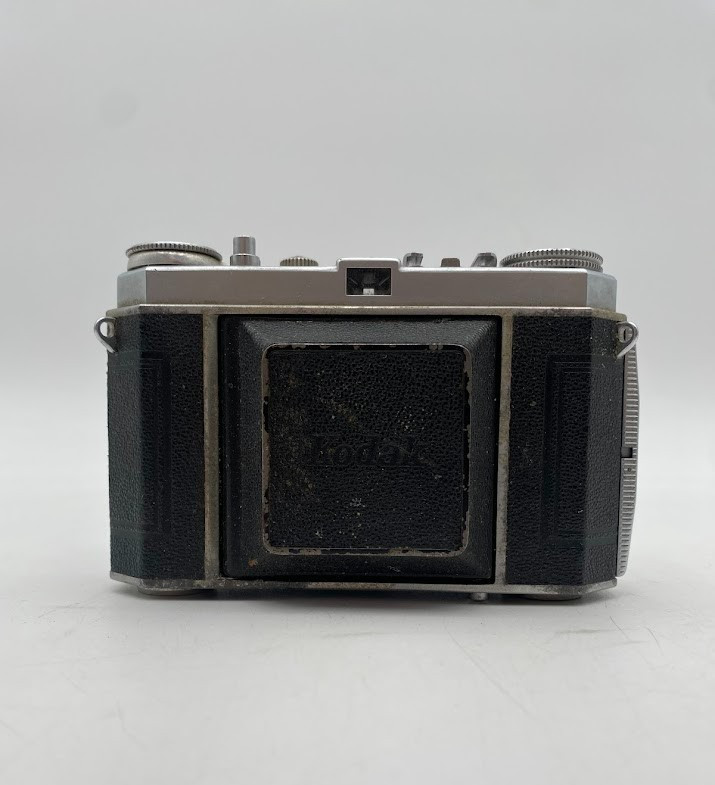

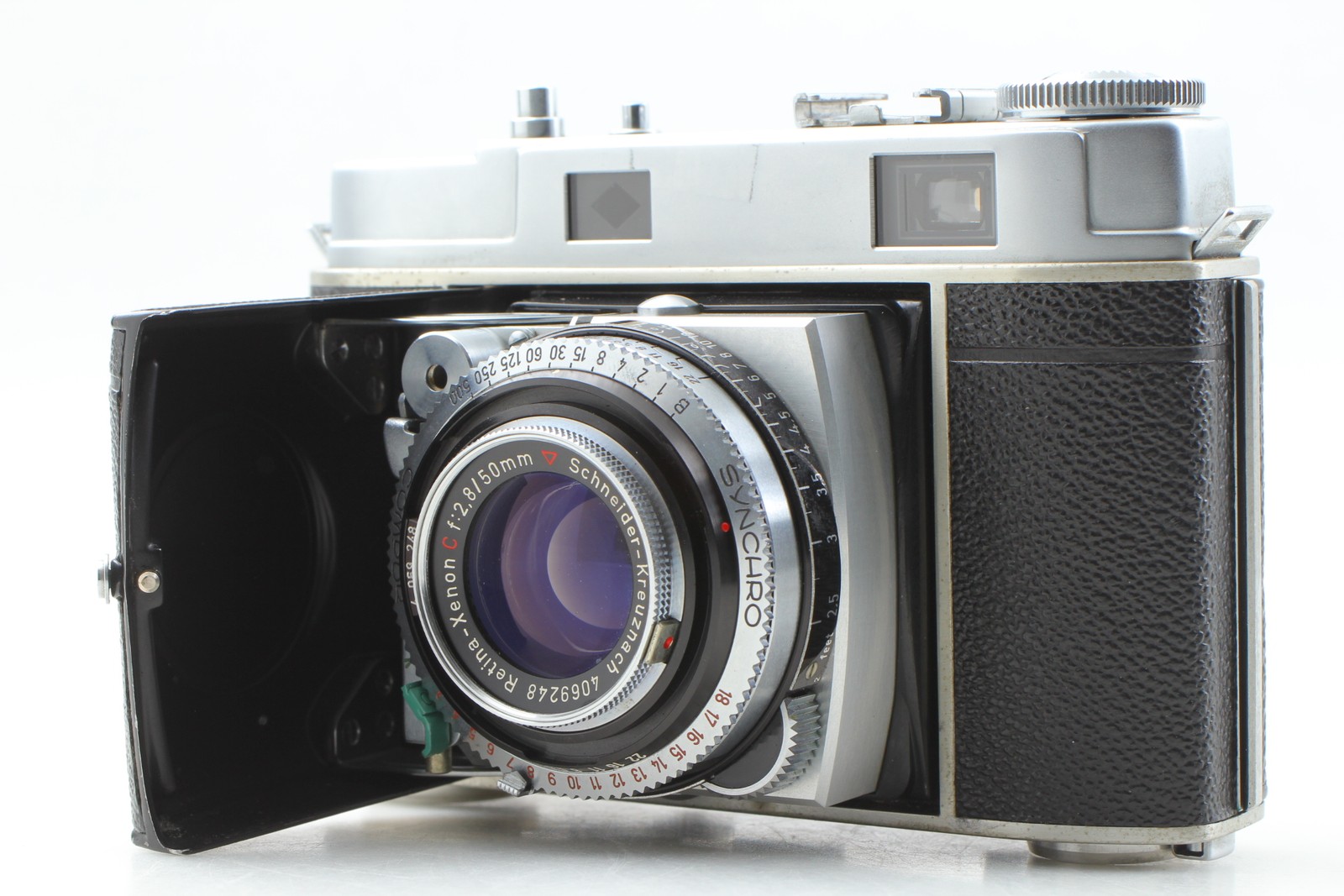

As an eBay Partner, we earn from qualifying purchases. This helps support our independent vintage technology research.
Related Models
- Kodak Instamatic 100 (1963-1966)
- Kodak Instamatic 104 (1963-1971)
- Kodak Instamatic 814 (1968-1970)
- Kodak Retina Automatic I (1960-1963)
- Kodak Retina Automatic II (1960-1963)
- Agfa Agfamatic 100
- Agfa Agfamatic 1000 pocket sensor
- Agfa Agfamatic 108
- Agfa Agfamatic 126
- Agfa Agfamatic 200