IHAGEE EXA 1B
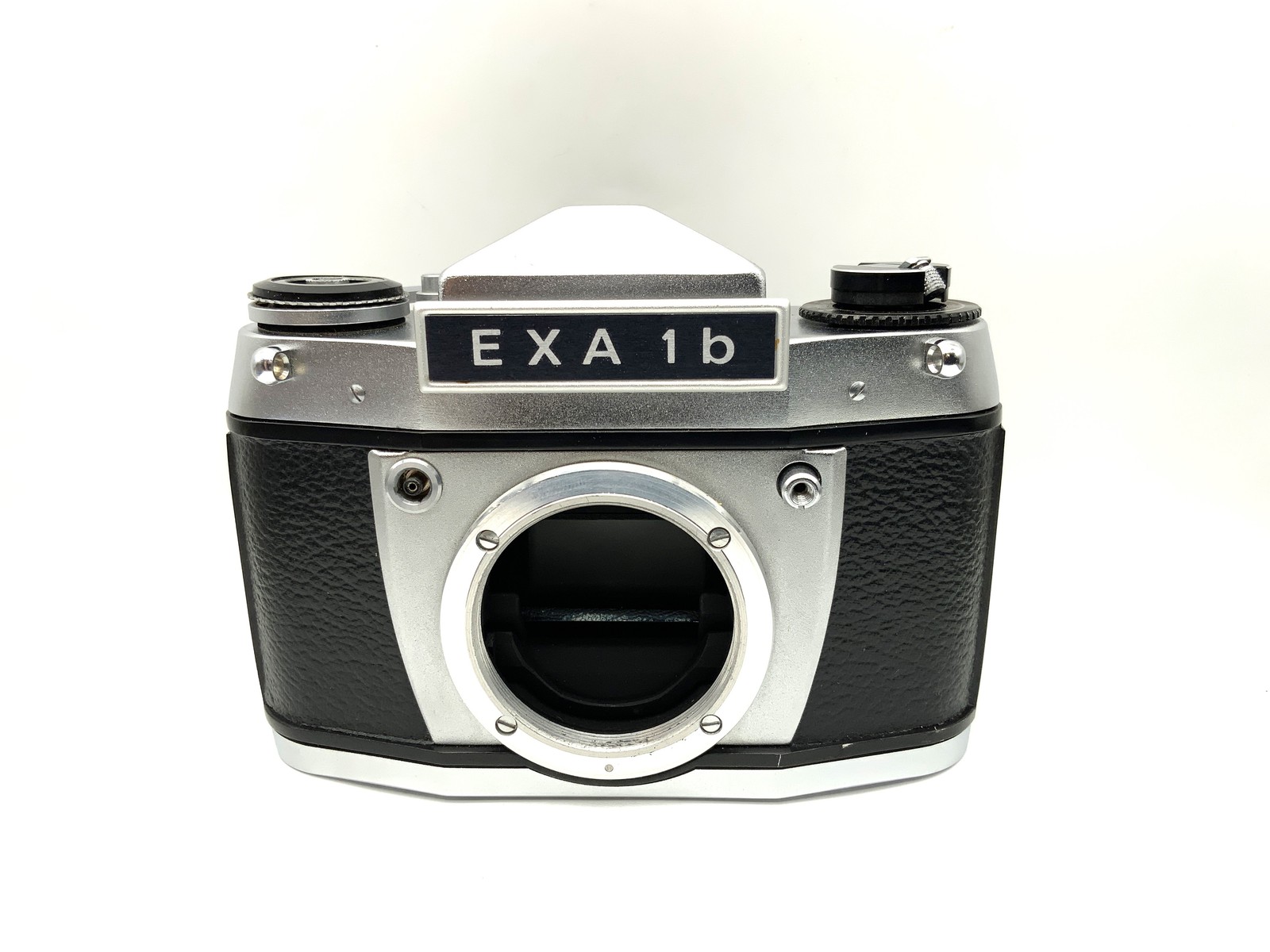
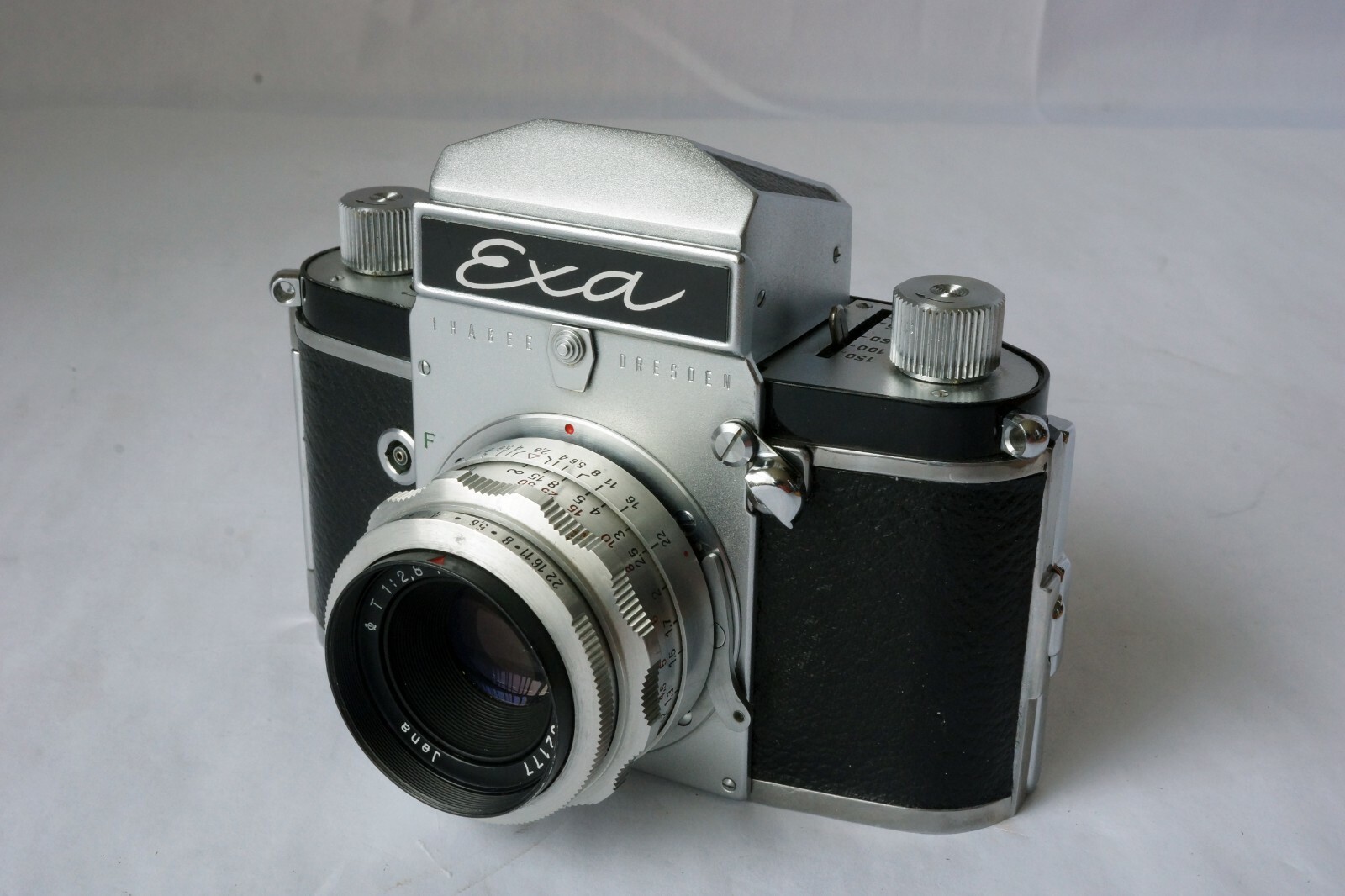
The Ihagee Exa 1b is a 35mm single-lens reflex (SLR) camera produced in East Germany under the Ihagee brand by KW (Kamera-Werkstätten) after the reunification of German camera manufacturing under the Pentacon umbrella. A late evolution of the Pentacon Exa line, the Exa 1b represents one of the final iterations of a long-running series of compact, fixed-pentaprism SLRs designed for amateur and enthusiast photographers seeking reliable mechanical operation and compatibility with the robust M42 screw-mount lens system.
Overview
The Ihagee Exa 1b was introduced in 1977 as a successor to the Pentacon 2 and earlier Exa models, continuing a lineage that originated with the original KW Exakta series in the 1930s. Manufactured at the VEB Pentacon Dresden facility in East Germany, the Exa 1b was part of a broader effort to modernize and standardize SLR production under the Pentacon brand while retaining the mechanical simplicity and durability that characterized earlier models. It was marketed primarily in Eastern Bloc countries and Western Europe as an affordable, fully mechanical SLR with through-the-lens (TTL) metering and a compact, lightweight chassis.
Targeted at amateur photographers and students, the Exa 1b emphasized reliability and ease of use over advanced automation. It featured a vertically traveling, focal-plane cloth shutter, a fixed pentaprism housing, and a flip-up rewind crank—design elements shared with its predecessors but refined for improved ergonomics and metering accuracy. Unlike earlier Exa models, the Exa 1b incorporated a CdS (Cadmium Sulfide) TTL full-aperture metering system with a match-needle display in the viewfinder, allowing for more intuitive exposure settings. The camera lacked aperture-priority or shutter-priority automation; instead, it required manual exposure adjustment based on the meter reading.
As one of the last Ihagee-branded cameras produced before the decline of East German camera manufacturing in the mid-1980s, the Exa 1b holds historical significance as a bridge between the classic mechanical SLRs of the 1950s–60s and the electronic models that followed. It maintained compatibility with the vast ecosystem of M42 lenses, including those from Carl Zeiss Jena, Meyer-Optik, and Schneider-Kreuznach, enhancing its appeal among budget-conscious photographers seeking high-quality optics.
Specifications
| Specification | Value |
| Type | 35mm Single-Lens Reflex (SLR) |
| Film Format | 35mm (135 cartridge) |
| Years Produced | 1977–1985 |
| Lens Mount | M42 × 1mm screw mount (Pentax Universal) |
| Shutter | Vertically traveling cloth focal-plane shutter; speeds 1 sec to 1/1000 sec, plus B (bulb) |
| Metering | TTL CdS metering at full aperture with stop-down activation |
| Exposure Modes | Manual only; meter-assisted exposure |
| Viewfinder | Fixed pentaprism with central split-image rangefinder, microprism collar, and match-needle exposure indicator |
| Dimensions | 138 × 82 × 50 mm; weight approximately 580 g (body only) |
Key Features
- TTL Full-Aperture Metering: Utilizes a CdS cell for accurate exposure readings without requiring lens stop-down, improving viewfinder brightness during composition.
- Match-Needle Exposure System: A needle in the viewfinder indicates under/overexposure; user adjusts aperture or shutter speed until the needle centers relative to a fixed marker.
- M42 Lens Compatibility: Supports the widely available M42 screw-mount lens system, including pre-set and automatic diaphragm lenses.
- Mechanical Shutter Operation: Fully functional without batteries; meter requires a single PX625 (1.35V mercury) or equivalent modern substitute (e.g., Wein Cell or adapter with 1.5V zinc-air).
- Compact, Lightweight Body: One of the smallest full-frame 35mm SLRs of its era, with a die-cast aluminum chassis and textured polymer grip.
Historical Context
The Ihagee Exa 1b emerged during a period of consolidation in East German optics, following the merger of several pre-war camera manufacturers into VEB Pentacon Dresden. The original Ihagee company, famed for the Exakta series in the 1930s–50s, had been absorbed into this state-owned conglomerate by the 1960s. The "Ihagee" name was retained as a brand for export models, particularly in Western markets where the name carried historical prestige.
The Exa 1b was developed as a cost-effective successor to the Pentacon 2 and earlier Exa 500/501 models, incorporating incremental improvements in metering and ergonomics. It competed with other budget mechanical SLRs such as the Soviet Zenit-TTL, Hungarian Gamma-Rex, and early Chinese models like the Seagull DF. However, by the late 1970s, Japanese manufacturers such as Pentax, Minolta, and Canon were rapidly advancing electronic SLR technology, introducing aperture-priority and TTL off-the-film (OTF) metering systems that outperformed the Exa 1b’s simpler design.
Despite its technical limitations, the Exa 1b found a niche among photographers in Eastern Europe and developing markets due to its rugged construction, ease of repair, and compatibility with high-quality East German optics. Production continued until 1985, when declining demand and the obsolescence of mechanical SLRs in the face of autofocus and electronic automation led to the discontinuation of the line.
Collectibility & Value
Today, the Ihagee Exa 1b is a modestly collectible camera, valued more for its historical significance and mechanical charm than for practical use. In good working condition, it typically sells for $50–$120 USD on the secondary market, with higher prices for examples accompanied by original lenses (such as the Carl Zeiss Jena Pancolar 50mm f/1.8) or in mint, boxed condition.
Collectors should inspect several key areas when purchasing: the shutter’s accuracy across all speeds (especially 1/1000 sec, which can stick if the mechanism is dry), the functionality of the CdS meter (which often fails due to aging cells or corroded contacts), and the condition of the light seals, which commonly degrade and cause light leaks. The flip-up rewind knob is prone to breakage, and the self-timer mechanism, while present, is delicate and frequently non-operational in surviving units.
Due to its fully mechanical shutter, the Exa 1b remains usable with modern film, though the reliance on obsolete mercury batteries for accurate metering presents a challenge. Enthusiasts often use zinc-air replacements (e.g., Wein Cell) or modify the meter circuit to accommodate 1.5V batteries, though this requires minor technical skill.
Similar Cameras
- Pentacon 2 – Direct predecessor with similar design but less refined metering.
- Zenit-TTL – Soviet SLR with TTL metering and M42 mount; heavier and less refined.
- Praktica Super TL/TL 3 – West German M42 SLRs with more advanced metering and build quality.
- Fujica ST705 – Japanese M42 camera with aperture-priority automation and superior ergonomics.
- Yashica Electro AX – Late M42 model with full auto-exposure, representing the pinnacle of the mount’s evolution.
Repair & Maintenance
The Ihagee Exa 1b requires a PX625 (1.35V) mercury battery for meter operation; modern alternatives include the Wein Cell (1.35V zinc-air) or hearing aid batteries with voltage regulation. The mechanical shutter operates without power. Common issues include sluggish shutter speeds due to dried lubricants, sticky mirror movement, and degraded CdS cells. The self-timer and film advance linkage are prone to wear. Repair is feasible for experienced technicians familiar with M42-era SLRs, though spare parts are limited. Regular cleaning, lubrication, and light seal replacement are recommended for long-term preservation.
eBay Listings


As an eBay Partner, we earn from qualifying purchases. This helps support our independent vintage technology research.
Related Models
- Ihagee Exa 1a (1964-1977)
- Ihagee Exa 1c (1985–1987)
- Ihagee Exa 500 (1966–1969)
- Ihagee Exa I (1963-1964)
- Ihagee Exa II (1960-1963)
- Alpa 6 (1948-1953)
- Agfa Agfaflex
- Agfa Ambiflex
- Agfa Easy
- Agfa Futura Af zoom