HASSELBLAD 903SWC
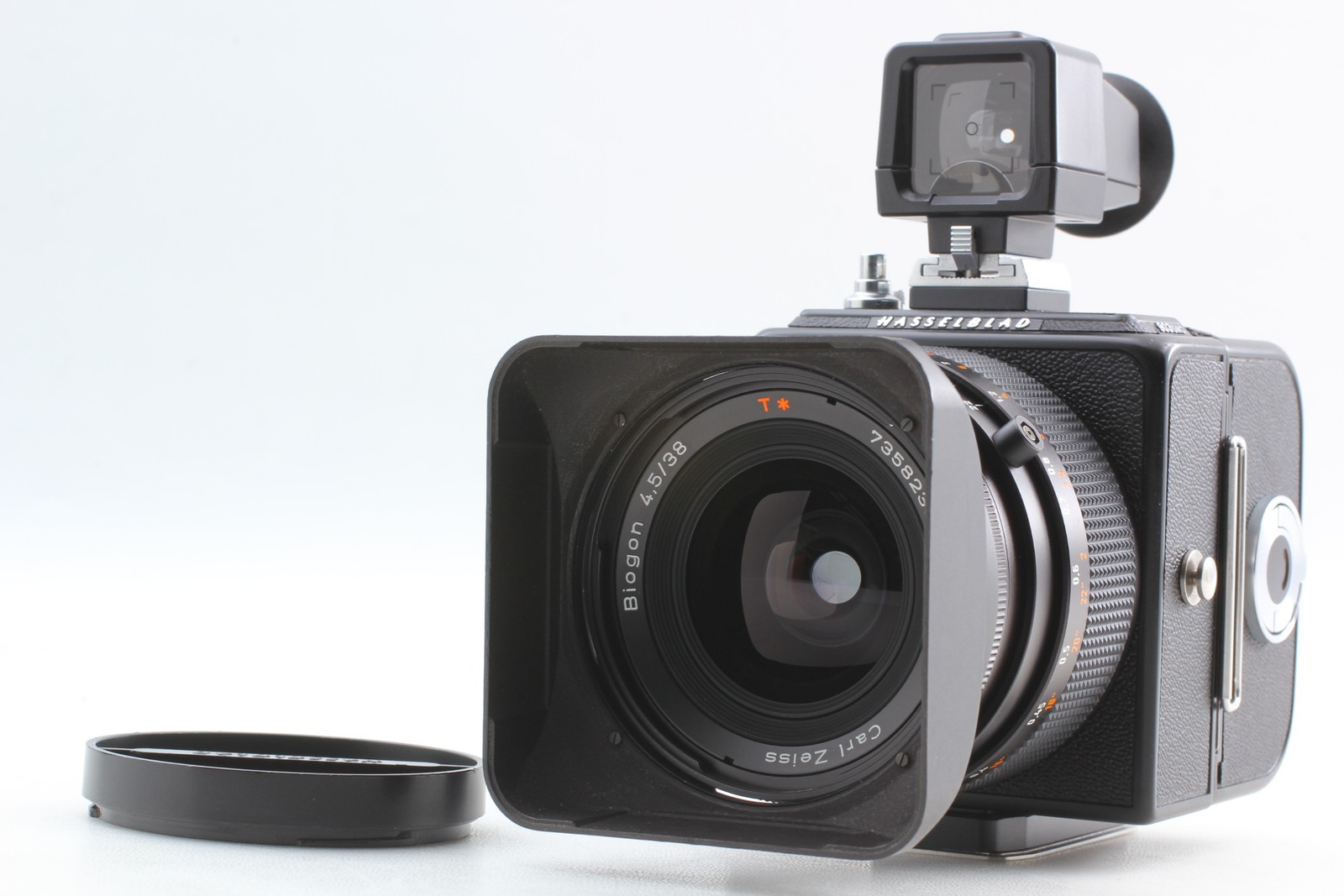
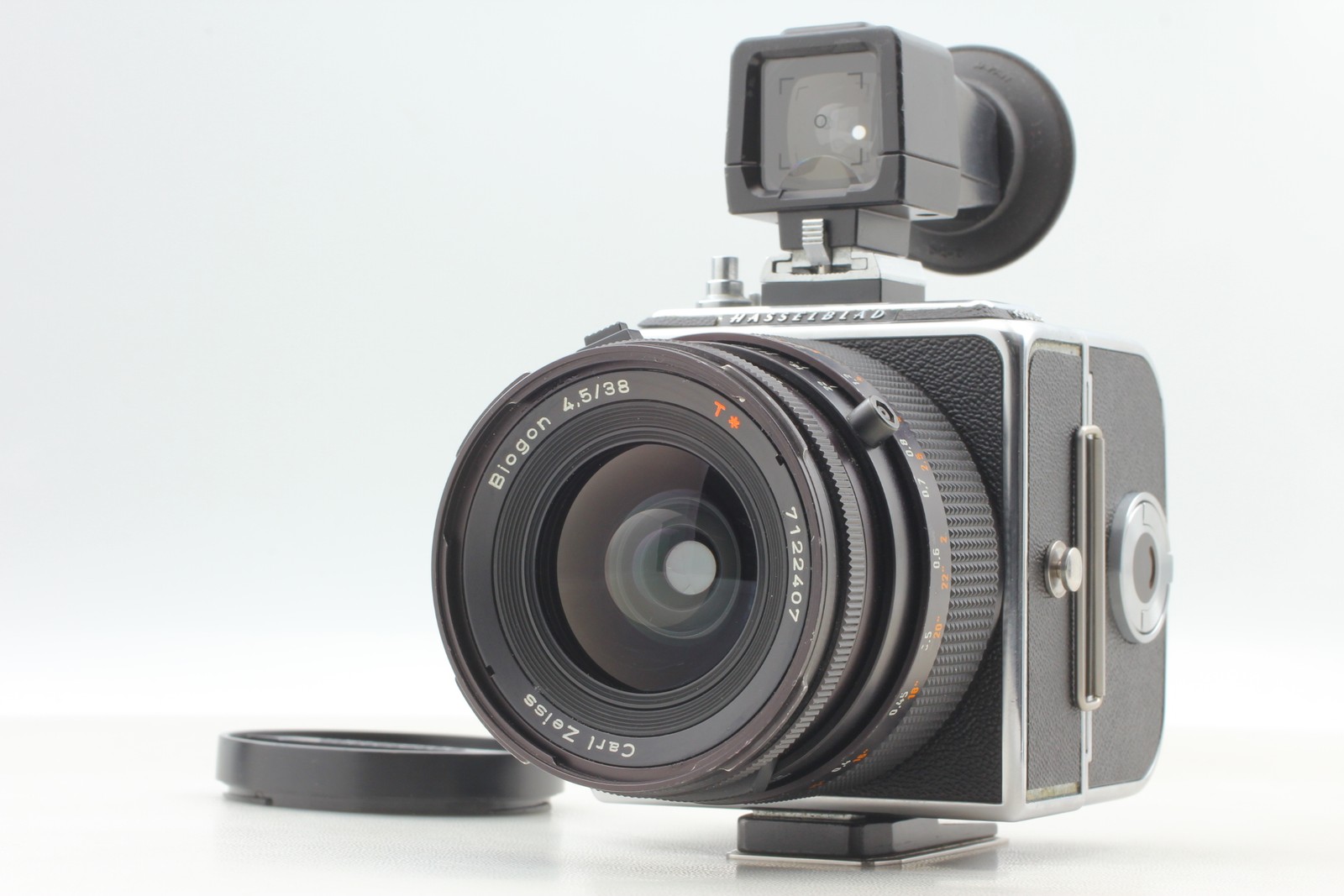
The Hasselblad 903SWC is a fixed-lens, medium-format camera designed for architectural, landscape, and scientific photography, featuring a non-reflex (mirrorless) body and an integrated Carl Zeiss 38mm f/4.5 Biogon lens. Engineered to eliminate parallax and mirror slap, the 903SWC delivers exceptional image quality with a wide-angle perspective in the 6x6cm format, making it a specialized tool for precision photography.
Overview
Introduced in 1988 as a successor to the earlier 240SE and 240SE4 models, the Hasselblad 903SWC was developed to meet the demands of professional photographers requiring a distortion-free, ultra-wide field of view in medium format. Unlike traditional Hasselblad V-system cameras, the 903SWC does not employ a reflex mirror or interchangeable lenses; instead, it features a permanently mounted Carl Zeiss 38mm f/4.5 Biogon lens, optically optimized for the 6x6cm negative. This mirrorless design eliminates mirror-induced vibration and allows for a more compact, lightweight body while enabling close focusing to 0.6 meters.
The 903SWC was positioned as a niche instrument within Hasselblad’s lineup, targeting architectural photographers, industrial imaging specialists, and fine art practitioners who required the highest optical fidelity in a wide-angle configuration. Its fixed-lens construction and absence of a through-the-lens viewing system distinguish it from the modular V-series cameras, emphasizing its role as a specialized alternative rather than a general-purpose medium format solution. The camera uses standard V-system film magazines (70-series), enabling compatibility with existing Hasselblad accessories and film backs, a critical feature for professionals already invested in the ecosystem.
Despite its limited production run and specialized application, the 903SWC earned a reputation for optical excellence and mechanical robustness. It was manufactured in Sweden at Hasselblad’s Gothenburg facility and remained in production until 2001, with minimal design changes over its 13-year lifespan. Its successor, the Xpan-based wide-angle systems and later digital solutions, never fully replicated the 903SWC’s unique combination of fixed ultra-wide optics and square-format film capture.
Specifications
| Specification | Value |
| Type | Fixed-lens mirrorless medium format camera |
| Film Format | 6x6cm (120/220 roll film) |
| Years Produced | 1988–2001 |
| Lens Mount | Integrated (non-removable) |
| Shutter | Leaf shutter in lens; 1 sec to 1/500 sec, plus B |
| Aperture Range | f/4.5 to f/22 |
| Metering | None (requires external meter) |
| Exposure Modes | Manual only |
| Viewfinder | Built-in reversed Galilean optical viewfinder (2.8x magnification), optional sports finders |
| Focus | Manual focus, helicoid adjustment (0.6m to ∞) |
| Flash Sync | PC terminal, X-sync at all speeds (1/500 sec max) |
| Battery | 4× LR44 or equivalent (for shutter operation) |
| Dimensions | 120 mm (W) × 95 mm (H) × 110 mm (D) |
| Weight | Approx. 800 g (body only, without film back) |
Key Features
- Carl Zeiss 38mm f/4.5 Biogon lens: A symmetrical wide-angle design with minimal distortion and excellent corner-to-corner sharpness, optimized for 6x6cm format.
- Mirrorless construction: Eliminates mirror slap and vibration, enabling sharper images at slow shutter speeds and facilitating use in vibration-sensitive environments.
- Compatibility with Hasselblad V-system film magazines: Accepts 70-series film backs (e.g., 75, 70, 220), allowing seamless integration with existing systems.
- Leaf shutter with flash sync at all speeds: Enables full flash synchronization up to 1/500 sec, a significant advantage for outdoor fill-flash and studio work.
- Close focusing to 0.6 meters: Unusual for a wide-angle medium format lens, allowing near-macro capabilities with minimal distortion.
Historical Context
The 903SWC was developed during a period when Hasselblad sought to expand its V-system into specialized photographic niches. While the 500-series cameras dominated professional portrait and studio markets, the 903SWC addressed a gap in wide-angle applications where mirror slap and lens availability were limiting factors. Competitors such as the Mamiya 7 (introduced in 1995) offered portable 6x7cm rangefinder systems with wide lenses, but none matched the 903SWC’s combination of ultra-wide 38mm perspective and mirrorless stability in the 6x6cm format.
The camera was not a commercial blockbuster, due in part to its high price, lack of built-in metering, and specialized use case. However, it found loyal users among architectural photographers who valued its rectilinear accuracy and compatibility with tilt-shift film backs (via third-party adapters). The 903SWC also saw use in scientific and technical imaging, where its consistent optical performance and lack of moving mirrors were critical. Compared to contemporaries like the Bronica SQ-A (with 50mm WA lens) or the Rolleiflex 6008 with wide-angle options, the 903SWC offered superior wide-angle coverage and mechanical simplicity.
Collectibility & Value
Today, the Hasselblad 903SWC is a sought-after collector’s item, particularly among medium format enthusiasts and Hasselblad completists. Units in excellent condition with original case, viewfinder, and documentation typically sell for $2,500–$4,000 on the secondary market, with pristine examples exceeding $4,500. Its rarity—estimated production of fewer than 5,000 units—contributes to its premium status.
When purchasing a 903SWC, buyers should inspect the shutter operation across all speeds, as the leaf shutter relies on battery-powered timing; weak batteries or corroded contacts can cause inconsistent exposure. The helicoid focus mechanism should operate smoothly without wobble, and the lens elements must be free of haze, fungus, or separation. Because the camera lacks metering, functionality is primarily mechanical and electronic (shutter timing), making it relatively durable if maintained. However, replacement parts are scarce, and Hasselblad no longer services the model, making working condition a key value determinant.
Similar Cameras
- Mamiya 7 43mm f/4.5 L Lens – Rangefinder with excellent wide-angle lens, 6x7cm format.
- Bronica GN67 with 50mm f/4.5 Lens – SLR system with limited wide-angle capability, 6x7cm.
- Rolleiflex 6008 with Distagon 50mm f/4 – Modular SLR with TTL metering, interchangeable lenses.
- Contax 645 with 35mm f/3.5 Lens – Later medium format SLR with autofocus, 6x4.5cm.
- Hasselblad 240SE (predecessor) – Earlier fixed-lens SWC model with similar design philosophy.
Repair & Maintenance
The 903SWC uses four LR44 (or PX76) batteries to power the electronic shutter timing circuit. Battery corrosion in the compartment is a common issue, especially in older units stored in humid environments; cleaning the contacts is often necessary. The shutter mechanism, while robust, can develop timing inaccuracies over time and may require professional calibration. Due to the integrated lens and lack of TTL metering, repair options are limited to specialized technicians familiar with Hasselblad’s leaf shutter systems. Routine maintenance includes cleaning the film rails, checking dark slide operation, and verifying light seals on the film magazine. Given the camera’s age and discontinuation, preventive care is essential for long-term usability.
eBay Listings


As an eBay Partner, we earn from qualifying purchases. This helps support our independent vintage technology research.
Service Manuals, Schematics & Catalogs
- Service Manual — elektrotanya.com
- Catalog — archive.org
- Catalog — archive.org
- Catalog — archive.org