HASSELBLAD 2000FCW
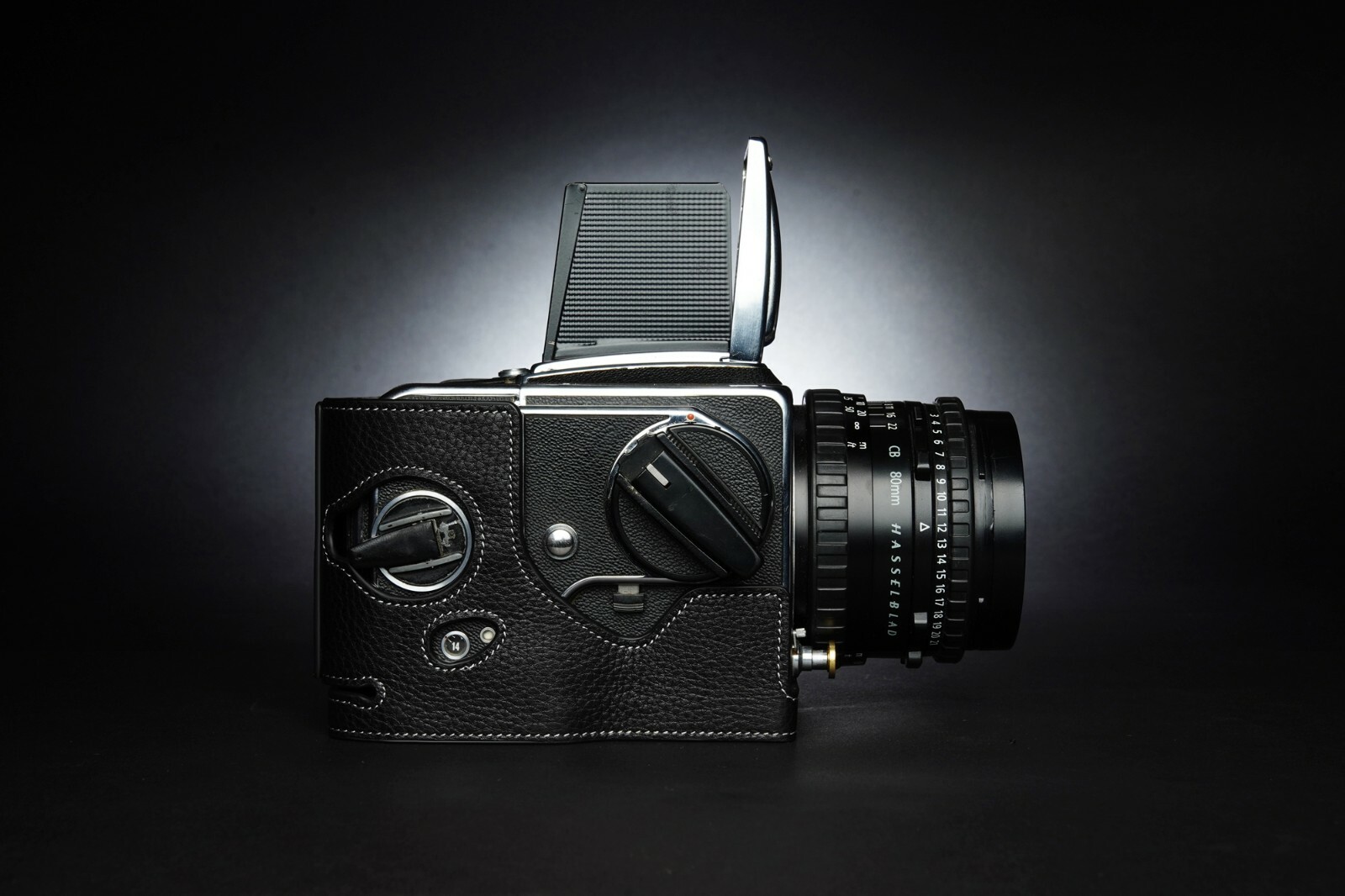
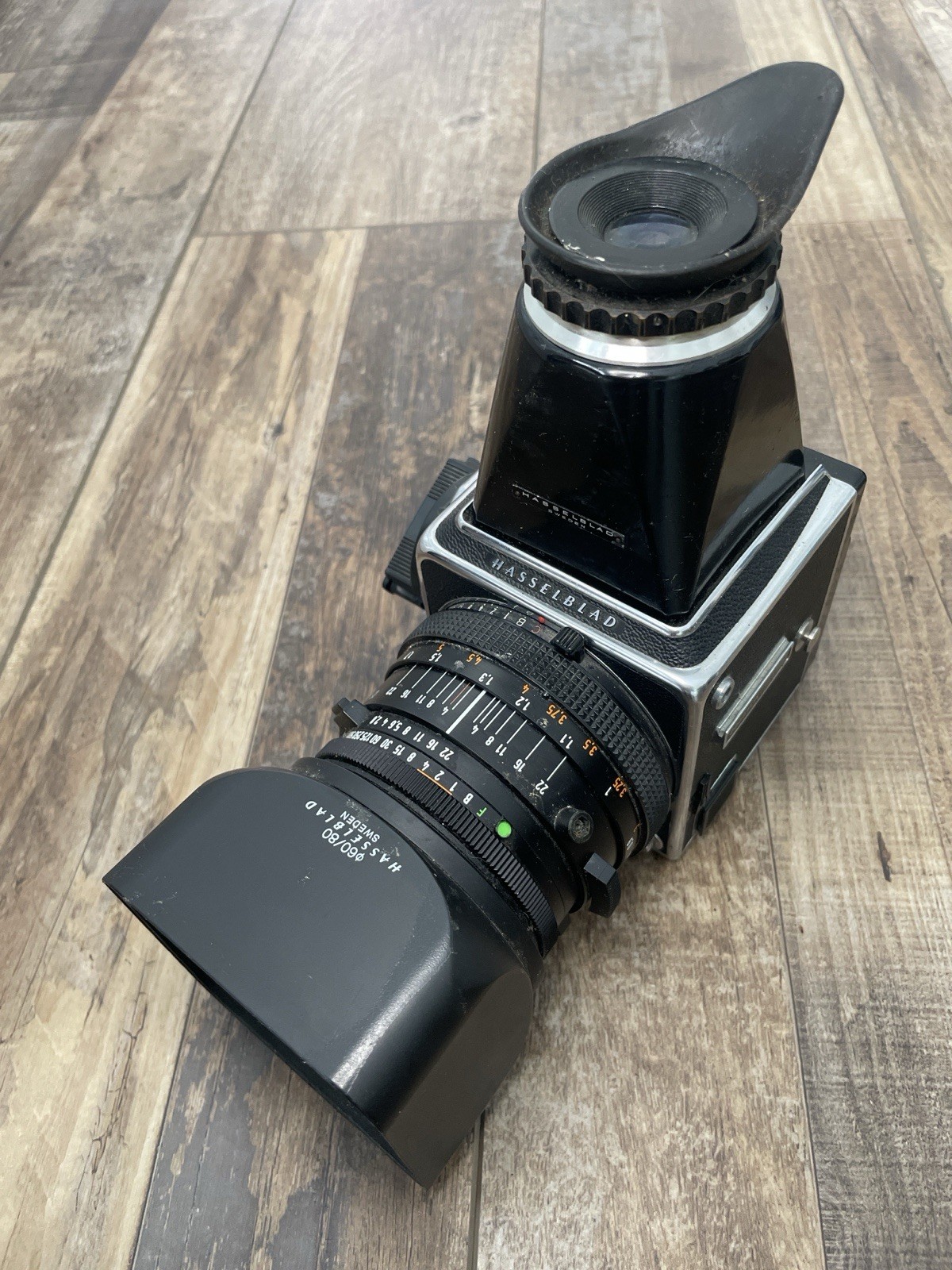
The Hasselblad 2000FCW is a medium format single-lens reflex (SLR) camera introduced in 1984 as an evolution of the 2000FC model, distinguished primarily by the addition of a motorized film advance winder. Designed for professional and advanced amateur photographers, the 2000FCW delivers the signature 6x6cm image quality of the Hasselblad V-system with improved handling through automated film transport.
Overview
The Hasselblad 2000FCW was introduced in 1984 as part of the 2000-series, a line of simplified, more compact, and electronically controlled variants of the classic 500-series V-system cameras. Positioned as a modernized alternative to the mechanical 500C/M, the 2000FCW combined the modular design and interchangeable components of the V-system with contemporary electronic shutter control and motorized film advance. It was manufactured until 1988, when it was succeeded by the 2000FC/M, which featured a redesigned body and updated electronics.
The 2000FCW was aimed at professional photographers who required the image quality of 120 roll film in 6x6cm format but desired faster workflow through motorized film winding. It retained full compatibility with the extensive range of Carl Zeiss C- and CF-mount lenses, viewfinders, film magazines, and accessories developed for the Hasselblad V-system, ensuring integration into existing professional setups. The "W" in its name explicitly denotes the inclusion of the built-in winder coupling, enabling connection to the HK-11W motor drive, which advanced the film and cocked the shutter automatically after each exposure.
Despite its electronic nature, the 2000FCW maintained the core principles of the Hasselblad system: precision engineering, modular construction, and high image fidelity. It featured an electronically timed leaf shutter in the lens (rather than a focal-plane shutter), allowing flash synchronization at all shutter speeds up to 1/1000 second. Unlike earlier mechanical models, the 2000FCW required battery power for all shutter operations, making it fully dependent on its internal power source.
Specifications
| Specification | Value |
| Type | Medium format SLR |
| Film Format | 6x6cm (120 roll film) |
| Years Produced | 1984–1988 |
| Lens Mount | Hasselblad C/CF Mount (for lenses with integral leaf shutters) |
| Shutter | Electronic leaf shutter in lenses; speeds from 1 second to 1/1000 second, plus Bulb (B) |
| Metering | TTL center-weighted metering via focusing screen (requires metered prism) |
| Exposure Modes | Manual exposure only |
| Viewfinder | Interchangeable (waist-level, prism, AE metered prism) |
| Dimensions | Approx. 105 x 102 x 205 mm (body only); weight approx. 850 g (body only, without film magazine or finder) |
Key Features
- Integrated winder coupling: Enables use of the HK-11W motor drive for automatic film advance at 1.5 frames per second, significantly increasing shooting speed compared to manual winding.
- Electronic leaf shutter lenses: Shutter speeds controlled electronically via the camera body, allowing precise exposure control and flash sync at all speeds.
- Full V-system compatibility: Accepts all C- and CF-mount lenses, film magazines (100, 101, 103, 104, 105, 106, 107, 108, 109, 110), and viewfinders, ensuring seamless integration with existing Hasselblad gear.
- Modular design: Like all V-system cameras, the 2000FCW allows complete reconfiguration—swap lenses, finders, and film backs mid-roll.
- TTL metering capability: When used with a metered prism (e.g., FK-11 or FK-12), the camera provides through-the-lens, center-weighted exposure metering.
Historical Context
The 2000FCW was released during a transitional period in the history of medium format photography. In the early 1980s, professionals increasingly demanded faster, more automated systems to keep pace with the demands of commercial, fashion, and photojournalism work. While the classic 500C/M remained popular for its reliability and mechanical simplicity, its manual cocking mechanism limited shooting speed. Hasselblad responded with the 2000-series, introduced in 1979 with the 2000FC, which replaced mechanical shutter control with electronic timing and introduced a lighter, more compact body.
The 2000FCW, released in 1984, was a direct answer to user demand for motorized film advance. Competitors such as Bronica (SQ-A, ETRSi) and Mamiya (RB67, RZ67) were offering increasingly sophisticated medium format SLRs with built-in metering and motorized options. The HK-11W motor drive gave the 2000FCW a competitive edge in speed, allowing it to function in environments where rapid shooting was essential. However, the 2000FCW did not achieve the same long-term popularity as the 500-series, partly due to its reliance on batteries and the perception that electronic systems were less reliable in field conditions.
Despite this, the 2000FCW was well-regarded among studio photographers and those already invested in the V-system. Its release underscored Hasselblad’s commitment to modernizing its platform without abandoning the modular philosophy that defined its brand.
Collectibility & Value
Today, the Hasselblad 2000FCW is a niche collectible, valued more for its historical role in the evolution of the V-system than for widespread practical use. It is less common than the 500C/M or 503CW, and complete systems with the HK-11W motor drive command a premium among collectors of electronic-era Hasselblads. As of 2024, a well-maintained 2000FCW body typically sells for $400–$700, with the HK-11W adding $200–$400 depending on condition.
When purchasing a 2000FCW, buyers should verify the functionality of the electronic shutter across all speeds, as capacitor degradation and circuit failures are common after decades of storage. The camera uses a 6V 4SR44 or PX28 battery to power the shutter electronics—these are still available but can be expensive. A non-working battery compartment or corroded contacts are frequent issues. Additionally, the winder coupling mechanism should be inspected for wear, as misalignment can prevent proper engagement with the HK-11W.
Because the 2000FCW lacks a mechanical backup shutter, it is entirely inoperable without power, making battery reliability critical. Collectors often seek examples with original packaging, manuals, and accessories to ensure completeness. While not as iconic as the 500-series, the 2000FCW represents an important step in Hasselblad’s transition toward electronic automation.
Similar Cameras
- Bronica SQ-Ai (1984–1990): 6x6cm SLR with interchangeable film backs, TTL metering, and available motor drive; more affordable alternative to Hasselblad.
- Mamiya RB67 Pro SD (1982–1999): Rotating back medium format SLR with manual operation but high modularity; favored for studio work.
- Pentax 6x7 MLU (1989–2009): Large format SLR offering 6x7cm negatives; manual focus with built-in metering prism.
- Contax 645 (1999–2009): Later-generation 6x4.5cm SLR with autofocus and electronic integration; direct competitor to modernized Hasselblads.
- Bronica ETRSi (1984–1992): Compact 6x4.5cm SLR with TTL metering, interchangeable backs, and motorized film advance; popular among portrait photographers.
Repair & Maintenance
The Hasselblad 2000FCW requires a 6V 4SR44 or PX28 battery to operate the electronic shutter. Battery compartment corrosion is a common issue due to leakage from expired batteries; regular inspection and cleaning are recommended. The camera’s electronics, particularly the timing circuits and capacitors, are prone to failure after prolonged disuse. Shutter speeds should be tested with a calibrated meter or oscilloscope to ensure accuracy.
The HK-11W motor drive attaches via a mechanical coupling on the right side of the body and requires its own 6V battery (4SR44). Misalignment between the drive and camera can cause incomplete film advance or shutter cocking. Lubrication of the film transport mechanism should be performed by a qualified technician, as over-greasing can attract dust and degrade performance.
Due to its electronic complexity and discontinued status, repair parts are limited. However, specialized Hasselblad technicians and restoration shops continue to service these cameras, particularly in Europe and North America. Routine maintenance includes cleaning the mirror box, checking film pressure plate alignment, and verifying electrical contacts between the body, lens, and magazine.
eBay Listings


As an eBay Partner, we earn from qualifying purchases. This helps support our independent vintage technology research.
Service Manuals, Schematics & Catalogs
Related Models
- Hasselblad 2000FC (1977–1988)
- Hasselblad 2003FCW (1988-1994)
- Hasselblad 500C/M (1970-1994)
- Hasselblad 500C (1957-1970)
- Hasselblad 500EL/M (1971-1982)
- Alpa 6 (1948-1953)
- Agfa Agfaflex
- Agfa Ambiflex
- Agfa Easy
- Agfa Futura Af zoom