FUJICA ST605N
Born in the golden era of analog photography, the Fujica ST605N arrived in 1978 as Fujifilm’s refined answer to the growing demand for dependable, no-frills 35mm SLRs. A manual-focus workhorse built for learners and film enthusiasts, it polished the rough edges of its predecessor with a more responsive light meter and a sturdier shutter—while staying true to the core philosophy of simplicity. Paired with Fujica’s X-mount system and a lineage of sharp Fujinon glass, the ST605N carved out a quiet but solid reputation among photographers who valued control over automation.
Overview
The late 1970s were a battleground for entry-level SLRs, and Fujifilm stepped in with the ST605N as a smarter, more reliable evolution of the original ST605. Though aimed at beginners and students, it didn’t skimp on fundamentals. Built around a vertical-travel focal-plane shutter and a fixed pentaprism, the camera delivers a bright, clear view with about 93% frame coverage—enough to compose with confidence. Its TTL open-aperture metering uses a silicon photodiode (SPD) sensor, a step up from older CdS cells, offering faster response and better performance in dim light. In practice, metering is stop-down: you press a button to stop the lens to the shooting aperture and get a reading, a small ritual familiar to manual shooters.
While it shares mechanical DNA with higher-end Fujica models like the ST705 and ST801, the ST605N strips away the extras. No aperture-priority mode. No motor drive compatibility—none existed for Fujica’s X-mount. But that’s part of its charm: it’s a camera built for learning, not luxury. It runs on pure manual exposure, putting full control in your hands. And with Fujica’s X-mount lenses—especially the snappy 50mm Fujinons—it becomes a capable tool for thoughtful, deliberate photography.
Launched in 1978, the ST605N was Fujifilm’s quiet push into a crowded market. Pentax, Minolta, and Canon were dominating with their own beginner-friendly SLRs, but Fujifilm wasn’t chasing headlines. Instead, they focused on reliability and compatibility, expanding their X-mount system introduced in 1973. By the time the ST605N was discontinued around 1982, Fujifilm was shifting focus—soon to unveil autofocus with the Fujica AX in 1983. But for a few years, the ST605N stood as a steady, unpretentious gateway into serious photography.
Specifications
| Specification | Value |
| Type | 35mm Manual Focus SLR |
| Film Format | 35mm (135 cartridge) |
| Years Produced | 1978–1981 |
| Lens Mount | Fujica X-mount (also known as Fujinon X-mount) |
| Shutter | Vertical-travel focal-plane shutter, speeds from 1 sec to 1/1000 sec, plus B (Bulb) |
| Metering | TTL center-weighted metering via silicon photodiode (SPD), stop-down measurement |
| Exposure Modes | Manual exposure only; no aperture priority or shutter priority |
| Viewfinder | Fixed pentaprism with microprism collar and split-image rangefinder spot; approximately 93% coverage |
| Dimensions | 140 mm (W) × 90 mm (H) × 48 mm (D); weight approx. 535 g (body only, without battery) |
Key Features
- Improved TTL Metering: Silicon photodiode sensor replaces older CdS cells—faster, more accurate, especially in low light.
- Stop-Down Metering System: Works seamlessly with both automatic (A) and manual (M) X-mount lenses, using a meter lock button to preview and measure.
- Copper-Clad PCB Shutter Control: Boosts electrical reliability, reducing glitches and timing errors common in earlier models.
- Self-Timer Lever: Mechanical self-timer built right into the front of the body—simple, tactile, and always ready.
- Hot Shoe and PC Sync Terminal: Fully compatible with modern flashes and studio strobes, making it a solid choice for mixed lighting setups.
Historical Context
The late '70s saw SLRs shed their elite status and enter the mainstream. The ST605N arrived right in the thick of it—a time when Pentax’s K1000, Canon’s FTb, and Minolta’s SRT series were defining what a student camera should be. Fujifilm, already a giant in film and optics, used the Fujica brand to stake its claim in hardware. The ST605N wasn’t revolutionary, but it was thoughtful. It fixed known issues in the ST605—especially inconsistent metering and shutter reliability—without overcomplicating the design.
While rivals flirted with aperture-priority automation at this price point, Fujifilm kept the ST605N fully manual. A deliberate choice. It kept costs down, mechanics simpler, and the learning curve honest. For photography students and hobbyists who wanted to master exposure, that was a feature, not a flaw. But the X-mount remained a closed ecosystem. Unlike Pentax’s K-mount or Minolta’s MC/MD, it never attracted strong third-party lens support. That isolation limited the camera’s long-term appeal, even as its build and metering earned quiet respect.
Collectibility & Value
Today, the ST605N flies under the radar—but not for long. It’s a sleeper hit among vintage SLR fans: affordable, functional, and refreshingly straightforward. It’s not rare, but fully operational units are getting harder to find. Aging shutters, dried light seals, and corroded battery compartments are common. When shopping, test every shutter speed, check the mirror for smooth bounce, and verify the meter’s response—especially since the original 1.35V PX625 mercury battery is obsolete. Most now use SR44 or PX76 alkaline cells, which run hotter; consider a voltage adapter or meter recalibration for accuracy.
On the used market (2023–2024), prices range from $40 to $80, depending on condition and whether it comes with a lens. Models paired with original Fujinon glass—like the 50mm f/1.8 or f/2.0—command more interest. Clean the focusing screen and mirror when possible, and replace the light seals to avoid light leaks. With care, the ST605N isn’t just a collectible—it’s a working film camera that still earns its keep.
Similar Cameras
- Pentax K1000 – The quintessential student SLR, fully manual, with M42 and later K-mount options.
- Canon FTb – Offers similar manual controls with Canon’s FD lens mount and robust build quality.
- Minolta SRT-101 – Renowned for its Color Meter II TTL system and high-quality Rokkor lenses.
- Nikon FM – A more advanced, compact manual SLR with excellent metering and Nikon F-mount versatility.
- Yashica FX-3 – Budget-friendly SLR with Copal Square shutter and reliable CdS metering.
Repair & Maintenance
The ST605N runs its meter on a single 1.5V SR44 or PX76 battery—modern stand-ins for the discontinued 1.35V mercury PX625. That voltage mismatch can throw off meter readings, so enthusiasts often use step-down adapters or recalibrate the circuit. The shutter itself is mechanically driven but timed electronically, meaning aging capacitors or degraded circuitry can cause inaccuracies, especially at slower speeds.
Routine care includes cleaning the mirror and focusing screen, replacing crumbling light seals, and lubricating the film advance and rewind gears—especially on cameras pulled from long-term storage. While OEM parts are scarce, the ST605N’s modular design makes it moderately repairable. Skilled techs can often source components from donor bodies or fabricate fixes. If you’re tackling it yourself, track down the service manual first—those diagrams are gold.
eBay Listings

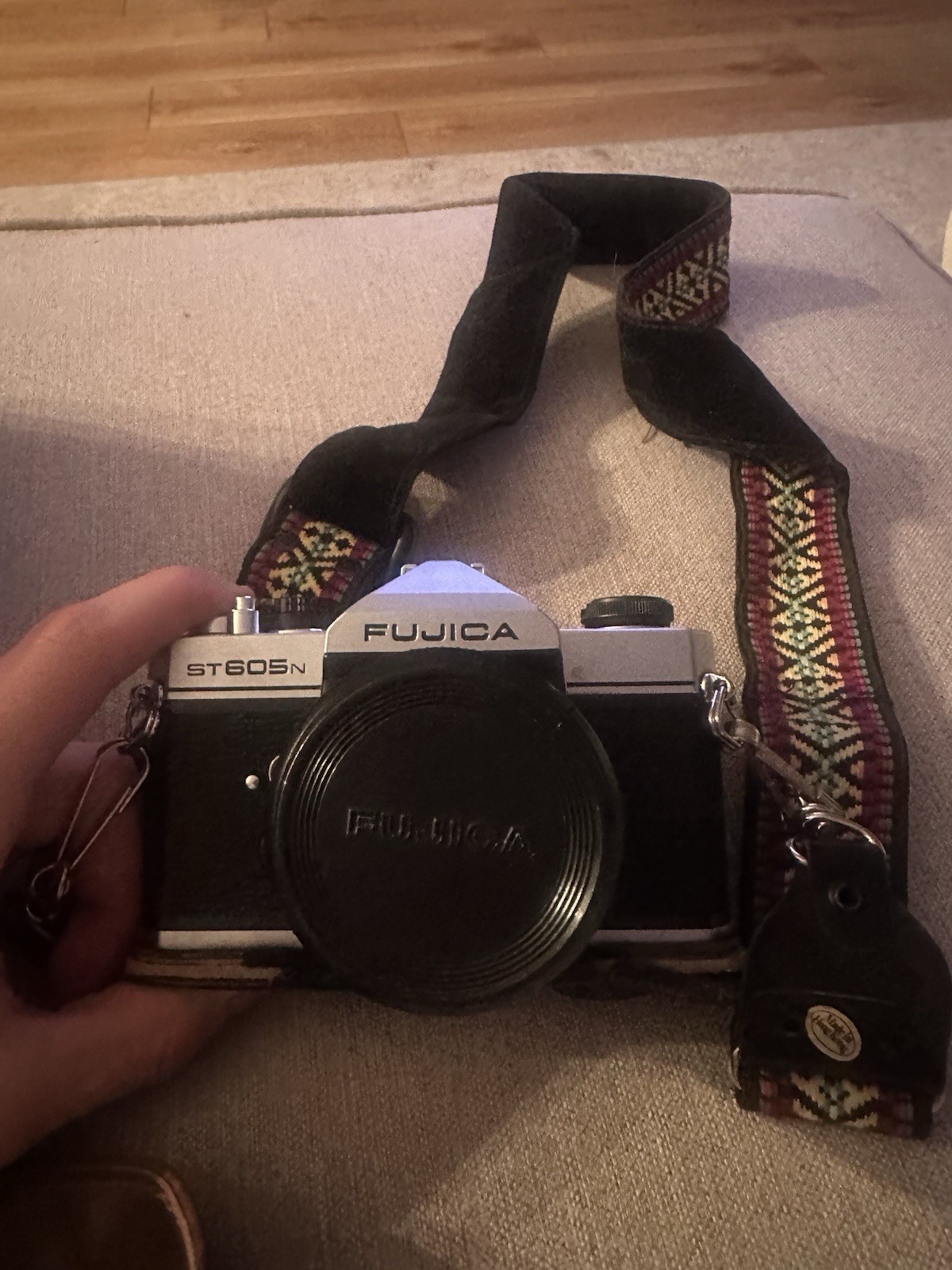

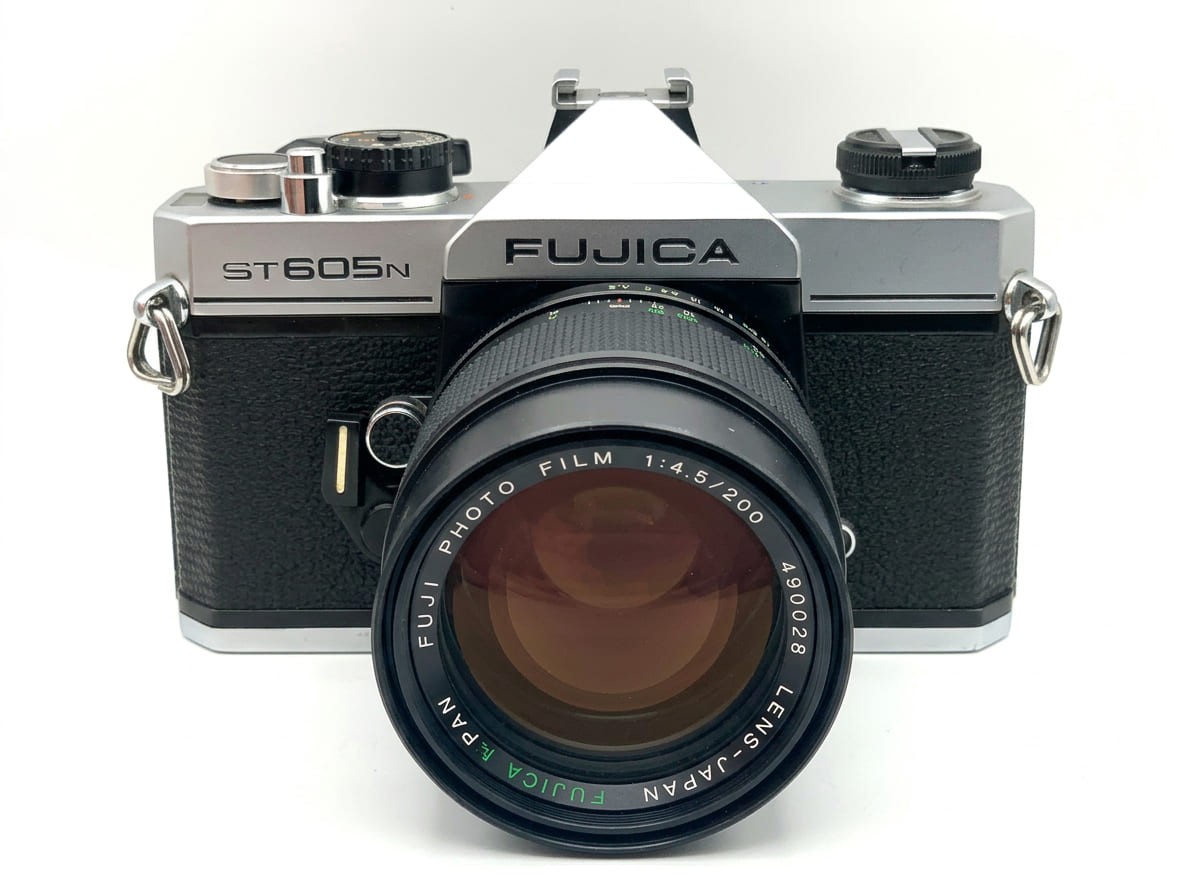
As an eBay Partner, we earn from qualifying purchases. This helps support our independent vintage technology research.
Service Manuals, Schematics & Catalogs
- Catalog (1966) — archive.org
Related Models
- Fujica AX-3 (1980-1985)
- Fujica AX-5 (1980-1985)
- Fujica ST605 (1976-1980)
- Fujica ST701 (1971-1975)
- Fujica ST801 (1973-1978)
- Alpa 6 (1948-1953)
- Agfa Agfaflex
- Agfa Ambiflex
- Agfa Easy
- Agfa Futura Af zoom