Fujica Single-8 (1965)
Fujifilm's answer to Kodak's Super 8. Same instant loading, but the pressure plate is built into the camera instead of the cartridge.
Overview
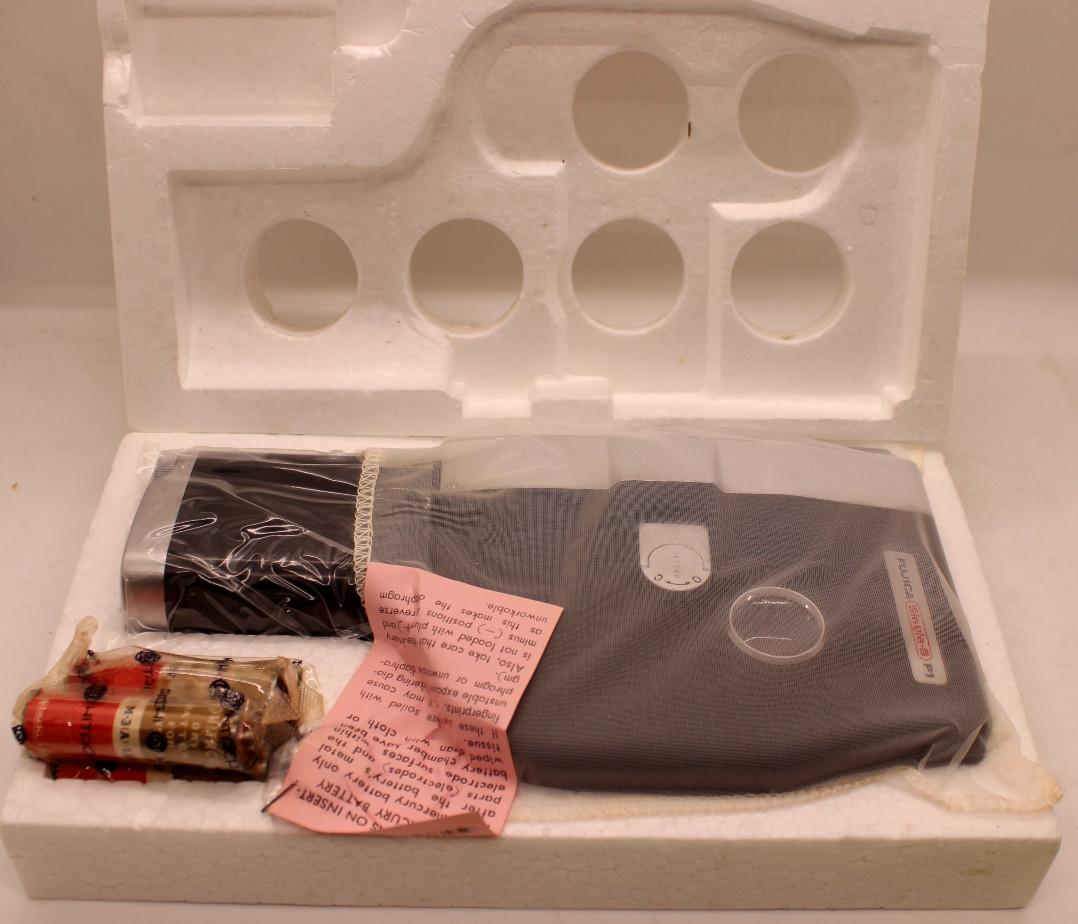
The Fujica Single-8 is an instant load movie camera. The name covers both the film format and the first camera Fujifilm built for it. The P1, the first model in the line, entered production in January 1965 and was marketed from April 1965. Fuji/Fujifilm made it in Japan. Collectors treat the P1 as one of the first Single-8 cameras, and Fujifilm introduced the format itself in 1965 as a direct alternative to Kodak's Super 8.
The Single-8 approach differs from the cartridge-as-mechanical-reference school in where the film gets held flat. The P1 carries a built-in pressure plate. Period material describes it as a vital component that keeps the film perfectly flat during exposure, and Fujica claimed it was unique among instant load movie cameras at the time of release. Contemporary advertising for the Fujica instant load Single-8 pitched the camera as fitting into a pocket and loading by simply dropping in the cartridge, with push-button electric power and an electric eye setting exposure automatically, HiFI-Stereo (October 1966, p.62). The result is quick loading without giving up film flatness.
The P1 was pitched at amateurs. Sources describe it as relatively cheap and simple to use compared with other Single-8 bodies. It runs on 4 x AA cells plus a PX14 button cell for the light meter. The lens is a non-interchangeable Fujinon 11,5mm f/1.8, according to resale listings. The focal length value is not confirmed in the manufacturer-side documentation, so treat it as reportage rather than gospel. Finish is black.
Key Features
Built-In Pressure Plate
The defining feature of the Single-8 system is that the pressure plate lives in the camera, not in the plastic cartridge. That arrangement keeps the film flat at the gate during exposure, and Fujica marketed it as unique among instant load cameras when the P1 launched. For anyone who has watched a cartridge-based 8mm system drift out of registration, this is the detail that matters — it's an engineering decision, not a marketing one.
Instant Load Single-8 Cartridges
The camera was designed around Single-8 film cartridges, which is what makes the drop-in loading possible. The format was Fujifilm's 1965 answer to Kodak's Super 8, and the cartridge system is the shared idea between the two. The difference is what's inside the cartridge versus what's inside the camera.
Non-Interchangeable Fujinon Lens
The P1's lens is fixed, a non-interchangeable Fujinon 11,5mm f/1.8 per resale listings. That fits the camera's amateur brief: one lens, one job, nothing to decide before you shoot. The fixed mount also keeps the body simple and the price down.
In-Camera Fades
One of the format's editing advantages is the ability to fade one shot into the next without doing it in post-production. That's a Single-8 system trait rather than a P1-only trick.
Historical Context
Fujifilm developed Single-8 in 1965 explicitly as an alternative to Kodak's Super 8, and the P1 was one of the first cameras to carry the format. The pitch was instant loading for amateurs, with the mechanical precision of a camera-mounted pressure plate. Konica made its Sakura colour film available for the format as well, and many Single-8 cameras carried stickers inside the film compartment recommending Sakura (Cherry Blossom) film.
Production end dates are murky. One dealer source states the P1 was produced from 1965 to 1977, but other references give only the 1965 introduction with no end date. Treat the 1977 figure as a single-source claim. The P1 is the camera that launched Fuji's answer to Super 8, and Fuji's 1960s Single-8 cine cameras were later cited as the inspiration for the Instax Mini EVO Cinema.
Collectibility & Value
P1s turn up regularly, often as untested units in eBay listings. Condition varies wildly and the word "untested" appears a lot. A dealer listing for a P1 in excellent, barely-used condition with a scratch-free lens was priced at €79.95 and in stock. Another Kamerastore listing shows a sold-out example at €0,00, which is a data artifact rather than a price. Collectiblend maintains a P1 price guide with dated sales going back to 2003, though no values were captured in the research.
Accessories surface alongside the cameras: P1 hand straps, a vintage cased screw-in metal lens hood with a 21.5mm thread listed for the P1/P2 group, and the Fujica Single-8 Film Splicer. There is no documented information on common failures, repairs, or parts availability for the P1 specifically, so buyers should assume the usual risks of a sixty-year-old mechanical camera and inspect accordingly.
eBay Listings


As an eBay Partner, we earn from qualifying purchases. This helps support our independent vintage technology research.