FUJI GW690
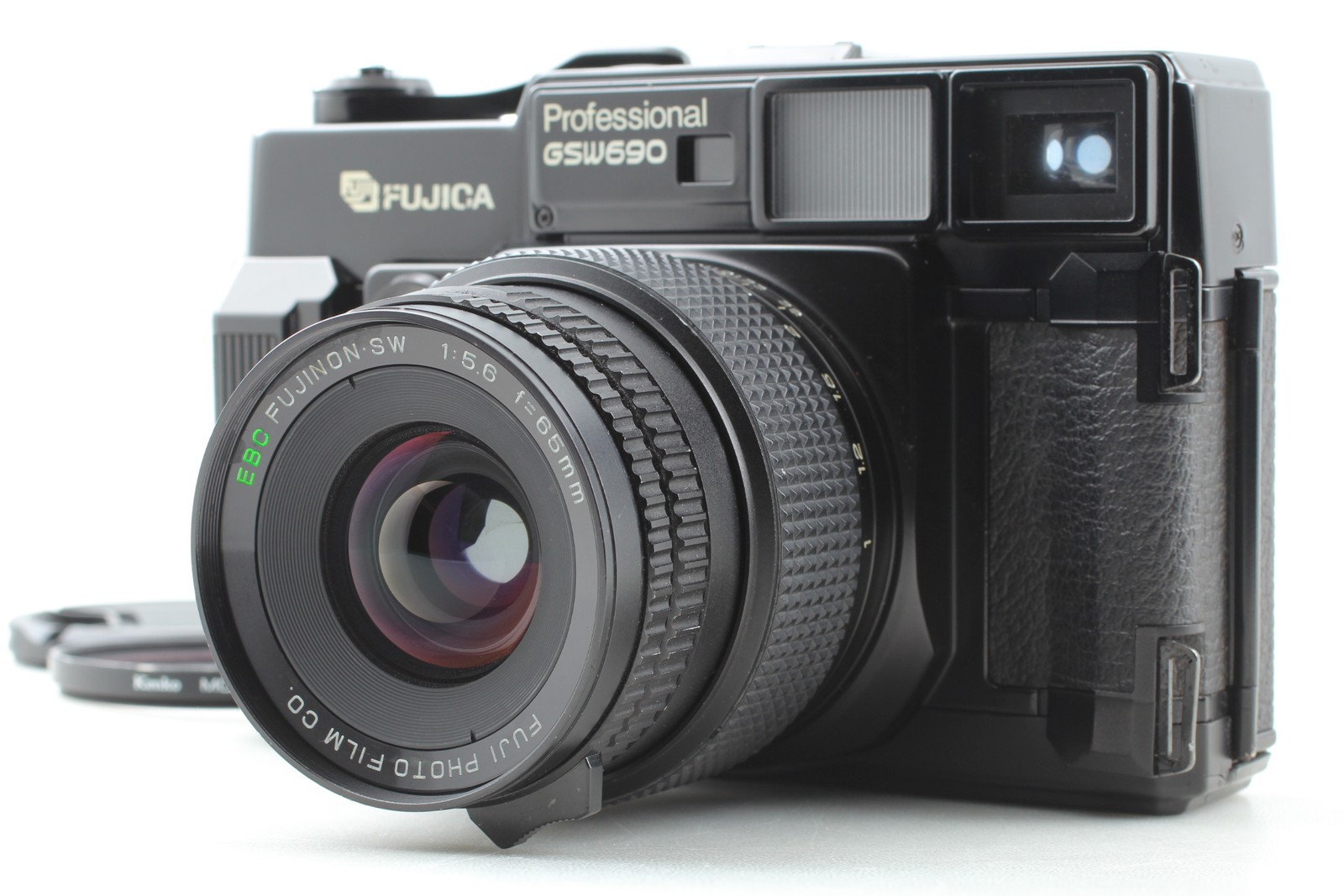
The Fuji GW690 is a fixed-lens, rangefinder medium format camera produced by Fujifilm from 1978 to 1984. Nicknamed the "Texas Leica" for its large size and precise German-inspired engineering, it delivers high-resolution 6×9 cm negatives on 120 roll film and is celebrated for its sharp EBC Fujinon 90mm f/3.5 lens and robust build quality.
Overview
Introduced in 1978, the Fuji GW690 was part of Fujifilm’s high-end GSW series of medium format rangefinders, which included the GW670, GW690, and later the GW690 III. Designed for professional photographers and serious enthusiasts, the GW690 filled a niche for a portable yet powerful medium format camera capable of producing large-format detail with the convenience of roll film. Unlike medium format SLRs of the era—such as the Bronica or Mamiya systems—the GW690 utilized a compact rangefinder design with a fixed lens, emphasizing portability and optical precision.
The camera was positioned as a premium alternative to bulky SLR systems, offering a 6×9 cm negative size—the largest commonly available in hand-held roll film cameras—while maintaining a relatively compact body. Its primary market included press photographers, documentary shooters, and landscape photographers who required high image quality without the bulk of larger systems. The GW690’s fixed 90mm f/3.5 EBC Fujinon lens was optimized for sharpness and contrast, benefiting from Fujifilm’s expertise in optical coatings and lens design.
The GW690 was succeeded by the GW690 II and GW690 III, which added features like built-in light meters and improved viewfinder coverage. However, the original GW690 remains prized for its mechanical simplicity, all-metal construction, and lack of dependency on batteries for operation. Its legacy endures among film photographers who value its combination of large negative size, rangefinder handling, and optical excellence.
Specifications
| Specification | Value |
| Type | Rangefinder |
| Film Format | 6x9 cm on 120 roll film (8 exposures per roll) |
| Years Produced | 1978–1984 |
| Lens Mount | Fixed EBC Fujinon 90mm f/3.5 lens (non-interchangeable) |
| Shutter | Copal Square-S leaf shutter, speeds 1 sec to 1/500 sec, plus B |
| Aperture Range | f/3.5 to f/22 |
| Metering | None (unmetered) |
| Exposure Modes | Manual only (shutter speed and aperture set manually) |
| Viewfinder | Optical rangefinder with 0.7× magnification, parallax-corrected framelines |
| Focusing | Manual via rangefinder patch, minimum focus 1.2 m |
| Flash Sync | X-sync at all speeds via PC terminal and hot shoe |
| Film Advance | Dual-knob wind (top and base), frame counter automatic reset on back opening |
| Battery | None required |
| Dimensions | 155 mm (W) × 100 mm (H) × 75 mm (D) |
| Weight | Approx. 950 g (body only) |
Key Features
- Fixed EBC Fujinon 90mm f/3.5 lens: Coated for high contrast and color fidelity, delivering exceptional sharpness across the 6×9 cm frame.
- 6×9 cm negative size: Produces large, detailed negatives ideal for high-quality enlargements and professional use.
- Mechanical leaf shutter: Enables flash sync at all speeds, including 1/500 sec, a significant advantage over focal-plane shutter systems.
- Dual film advance knobs: Ensures smooth, even winding and reduces film plane misalignment risk.
- Battery-free operation: Full mechanical functionality ensures reliability without dependence on electronics or batteries.
Historical Context
The Fuji GW690 was released during a transitional period in photography, when medium format systems were increasingly challenged by the convenience of 35mm SLRs. However, demand remained strong among professionals who required the superior resolution and tonal range of medium format film. Fujifilm, already known for its film and optical technologies, leveraged its expertise to enter the premium camera market with the GSW series. The GW690 stood out by offering a rare combination: a large 6×9 cm format in a rangefinder body, a configuration nearly unheard of outside of vintage folding cameras.
Its closest competitors included the Mamiya Press series and the Bronica ETR, though these were modular SLRs with interchangeable lenses and bulkier designs. The GW690 instead competed conceptually with high-end fixed-lens rangefinders like the Hasselblad XPan (though 35mm) and the earlier Rolleiflex SL66, albeit with a different form factor. While not as modular, the GW690 offered superior portability and a quieter shutter—advantages in street and documentary photography. Despite its high price and niche appeal, the GW690 gained a loyal following, particularly in Japan and among Western photographers seeking a "stealth" medium format option.
Collectibility & Value
Today, the Fuji GW690 is a sought-after collector’s item, particularly among medium format film enthusiasts. Its value ranges from $600 to $1,200 USD depending on condition, shutter functionality, and lens clarity. Fully operational units with clean glass and accurate shutter speeds command premium prices, especially when accompanied by original cases and accessories. Because it lacks a built-in meter, the GW690 is less dependent on aging electronics, making well-maintained examples more reliable than later metered variants.
When purchasing a GW690, buyers should inspect the shutter at all speeds using a timer or oscilloscope if possible, as leaf shutters can suffer from sticking or inconsistent timing after decades of use. The rangefinder alignment is also critical—misalignment can hinder accurate focusing. Additionally, check for haze, fungus, or scratches on the front and rear lens elements. The camera’s leatherette and film pressure plate may degrade over time and should be assessed for integrity. Despite its age, the GW690’s mechanical simplicity and robust construction mean that, with proper servicing, it can remain functional for decades.
Similar Cameras
- Mamiya Press Super 23 – Interchangeable lens press camera with 6×9 capability, popular in journalism.
- Bronica ETR-S – 6×4.5 SLR with interchangeable lenses and film backs, more modular but smaller format.
- Rolleiflex 6008 Integral – Medium format SLR with autofocus and metering, significantly larger and electronic.
- Hasselblad 500C/M – Modular system camera with 6×6 cm format, iconic but not rangefinder.
- Fuji GW690 III – Direct successor with built-in meter, improved viewfinder, and minor ergonomic updates.
Repair & Maintenance
The Fuji GW690 requires no batteries, relying entirely on mechanical operation, which enhances long-term reliability. The Copal Square-S leaf shutter is serviceable by experienced technicians but can be sensitive to lubricant hardening over time, especially if the camera has been stored improperly. Regular use helps prevent shutter issues. The dual film advance system should be checked for smooth operation, as grit or dried lubricant in the winding gears can cause resistance. Rangefinder calibration is critical and should be performed by a specialist if the focusing patch appears misaligned. Due to its fixed lens, the GW690 cannot be adapted for lens replacement, so lens cleanliness and optical integrity are paramount. General maintenance includes periodic CLA (clean, lubricate, adjust) services every 5–10 years, depending on usage.
eBay Listings



As an eBay Partner, we earn from qualifying purchases. This helps support our independent vintage technology research.
Service Manuals, Schematics & Catalogs
- Catalog (1982) — archive.org
Related Models
- Fuji Fujifilm TX-1
- Fuji GA645 (1995-2002)
- Agfa Optima Sensor 1535
- Argus Argus A
- Argus Argus Autronic (1960)
- Argus V-100 (1958)
- Balda Baldamatic II
- Balda Baldessa Ib (1958-)
- Argus Argus A2
- Argus C-33