FUJI GS645
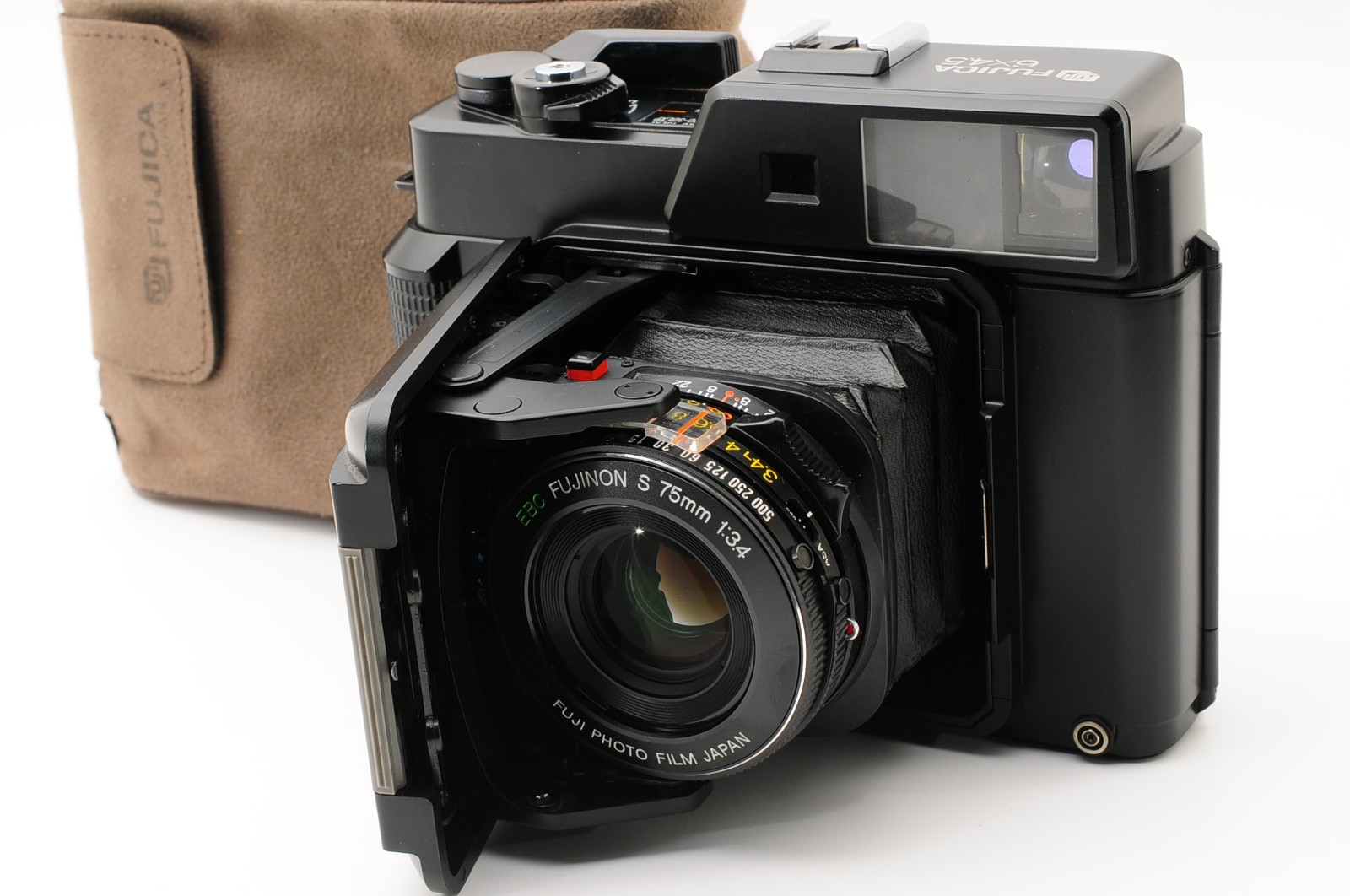
The Fuji GS645 is a folding medium format camera produced by Fuji Photo Film Co., Ltd. between 1983 and 1990. Designed as a portable, high-quality 6×4.5cm system camera, it combines a fixed Fujinon-G 75mm f/3.4 lens with a leaf shutter and manual exposure controls, targeting amateur and professional photographers seeking a compact yet capable medium format solution.
Overview
The Fuji GS645 was introduced in 1983 as part of Fuji’s effort to expand its presence in the medium format market with a line of user-friendly, folding cameras. Unlike traditional medium format SLRs such as the Mamiya RB67 or Bronica SQ series, the GS645 adopted a compact, collapsible body design reminiscent of vintage rangefinders, making it significantly more portable while still delivering the image quality of 120 roll film. It was positioned as a premium alternative to fixed-lens TLRs and entry-level SLRs, appealing to street photographers, travelers, and photojournalists who required high-resolution negatives without the bulk of larger systems.
The GS645 features a rigid folding design with a built-in bellows system. When collapsed, the camera fits into a dedicated leather case, reducing its depth to approximately 2 inches. Upon extension, the lens standard locks into place, ensuring accurate focus alignment. The camera uses a focal-plane shutter in conjunction with a leaf shutter in the lens, enabling flash synchronization at all shutter speeds—a rare and valuable feature for studio and on-location flash work. The GS645 was succeeded by the GS645S and GS645W, which offered wider and longer focal length variants, respectively.
One of the defining aspects of the GS645 is its hybrid construction: a die-cast metal chassis with leatherette covering and high-quality mechanical controls. The viewfinder system includes both a waist-level finder and an optional eye-level prism (Finder-G), allowing flexible composition. Despite lacking interchangeable lenses, the GS645 supports a range of accessories, including close-up lenses, filters, and tripod mounts, enhancing its versatility.
Specifications
| Specification | Value |
| Type | Folding medium format camera |
| Film Format | 6×4.5 cm on 120 roll film (15 exposures per roll) |
| Years Produced | 1983–1990 |
| Lens Mount | Fixed Fujinon-G 75mm f/3.4 lens (non-interchangeable) |
| Shutter | Dual shutter system: Focal-plane shutter (1–1/500 sec, B) and Copal No. 0 leaf shutter (1–1/500 sec, B); flash sync at all speeds via leaf shutter |
| Aperture Range | f/3.4 to f/22 |
| Metering | None (manual exposure only) |
| Exposure Modes | Manual only; no automatic exposure or aperture priority |
| Viewfinder | Built-in pop-up waist-level finder; optional eye-level pentaprism (Finder-G) |
| Focusing | Manual focus via helicoid lens barrel; minimum focus distance 0.8 m |
| Film Advance | Manual knob wind; frame counter automatic reset upon back opening |
| Flash Sync | PC terminal with X-sync; flash sync at all speeds (via leaf shutter) |
| Tripod Mount | 1/4"-20 thread on aluminum baseplate |
| Dimensions (extended) | 155 × 95 × 110 mm |
| Weight | Approx. 740 g (without film or accessories) |
| Battery | None (fully mechanical operation) |
Key Features
- Dual Shutter System: Combines a focal-plane shutter and a leaf shutter, enabling flash synchronization at all speeds—a rare capability in medium format folding cameras.
- Compact Folding Design: Collapses into a pocketable form factor while maintaining a rigid, stable platform when extended.
- High-Quality Fixed Lens: The Fujinon-G 75mm f/3.4 is a 6-element, 4-group lens renowned for sharpness, contrast, and minimal distortion.
- Fully Mechanical Operation: No batteries required; all shutter speeds and film advance functions are mechanical.
- Interchangeable Viewfinders: Supports both waist-level and eye-level pentaprism finders for flexible shooting positions.
Historical Context
The Fuji GS645 was released during a transitional period in photography, as 35mm SLRs gained popularity and medium format became increasingly specialized. Fuji aimed to carve a niche by offering a compact, high-performance medium format option that bridged the gap between portability and image quality. At the time, few manufacturers offered folding medium format cameras with such advanced shutter capabilities. Competitors like the Mamiya Press series were press-oriented and bulkier, while TLRs such as the Rolleiflex 2.8F lacked the GS645’s shutter flexibility and collapsible design.
The GS645 found favor among documentary photographers and travelers who valued the 6×4.5 negative size for cropping flexibility and fine detail. Its lack of built-in metering was a deliberate design choice to maintain mechanical reliability and reduce complexity—similar to contemporaries like the Kiev 88 or older Hasselblad models. However, this also meant users needed external metering tools, limiting appeal for casual shooters. Despite its niche positioning, the GS645 earned a reputation for build quality and optical performance, becoming a cult favorite among medium format enthusiasts.
Collectibility & Value
Today, the Fuji GS645 is considered a collectible medium format camera, particularly among analog photographers seeking compact film systems. Units in excellent working condition typically sell for $400–$700 on the secondary market, with prices increasing for sets that include the original case, lens hood, and Finder-G prism. Rarity is moderate—while not extremely scarce, functional examples with clean bellows and smooth shutter operation are becoming harder to find due to age-related wear.
When purchasing a GS645, collectors should inspect several critical components: the bellows for pinholes or tears, the shutter blades for oil or sticking (especially at high speeds), and the focusing mechanism for smooth travel. The folding lock should engage securely to prevent accidental collapse during use. Because the camera is fully mechanical, it does not suffer from electronic failures, but aged lubricants can cause shutter timing inaccuracies. Professional CLA (clean, lubricate, adjust) services are recommended for heavily used units. The Fujinon lens is generally well-preserved, but haze or fungus may occur in humid storage environments.
Similar Cameras
- Mamiya Press Super 23 – A modular press camera with interchangeable lenses and film backs, offering 6×4.5 and 6×6 formats.
- Bronica RF645 – A rangefinder-style medium format camera with interchangeable lenses, though larger and heavier than the GS645.
- Rolleiflex 6006/6008 – SLR-based medium format systems with TTL metering and auto-exposure, but significantly less portable.
- Kiev 88 CM – A budget-friendly, modular SLR with 6×6 capability, though mechanically less refined.
- Fuji GW670/GW690 series – Larger format folding cameras from Fuji with fixed lenses, targeting similar users but in 6×7 and 6×9 formats.
Repair & Maintenance
The Fuji GS645 requires no batteries and operates entirely mechanically, contributing to its long-term reliability. However, due to its age, common maintenance issues include stiff or inaccurate shutter speeds, particularly if the focal-plane or leaf shutter has dried lubricants. The Copal leaf shutter is serviceable but requires specialized tools and expertise. The bellows are prone to deterioration—pinholes or cracks will require replacement or professional repair. The folding linkage and locking mechanism should be checked for wear to ensure the lens standard remains stable during exposure. Regular use, proper storage in dry conditions, and periodic CLA servicing every 5–10 years are recommended to maintain optimal performance. Replacement parts are limited but available through specialty camera repair shops and Japanese refurbishers.
eBay Listings



As an eBay Partner, we earn from qualifying purchases. This helps support our independent vintage technology research.
Service Manuals, Schematics & Catalogs
- Catalog (1982) — archive.org