DACORA DIGNA
Meet the Dacora Digna—a compact, no-nonsense 6×6 medium format camera that quietly earned its place in postwar German photography. Built between 1954 and 1959, this unassuming box-style shooter wasn’t trying to outshine the Rolleiflex or win design awards. Instead, it delivered something just as valuable: sharp 120 film images with mechanical reliability, all wrapped in a body that felt solid without breaking the bank. For amateur photographers craving medium format quality without the complexity, the Digna was a breath of fresh air.
Overview
When Dacora launched the Digna in 1954, they weren’t reinventing the wheel—they were refining it. Positioned between the toy-like box cameras and the bulky twin-lens reflexes, the Digna offered a sweet spot: a rigid bakelite-and-metal chassis, a fixed high-performance lens, and a fully mechanical shutter, all tuned for real-world usability. It produced twelve crisp 6×6 cm negatives per roll of 120 film, with image quality that punched above its price point. This was medium format made approachable.
Dacora, better known for its subminiature Dacora 35 series, used the Digna to stake a claim in the growing 120 film market. At a time when German manufacturers like Wirgin, Adox, and Rollei were pushing compact alternatives to TLR dominance, the Digna stood out for its simplicity and build integrity. It wasn’t as compact as a Kodak 620 model, nor as advanced as a rangefinder, but it didn’t need to be. Three iterations followed—Digna, Digna II, and Digna III—each refining the formula with subtle mechanical and cosmetic tweaks. The result? A dependable, mid-tier workhorse that found its way into homes, schools, and photo clubs across Europe.
Specifications
| Specification | Value |
| Type | Viewfinder camera |
| Film Format | 120 film |
| Years Produced | 1954–1959 |
| Lens Mount | Fixed lens (non-interchangeable) |
| Shutter | Derval Compur-type leaf shutter, speeds: B, 1–1/300 sec |
| Aperture Range | f/3.5 to f/16 |
| Lens | 75mm f/3.5 Dacora Anastigmat (3 elements in 3 groups) |
| Focus | Scale focus (1.5m to ∞) |
| Metering | None (uncoupled) |
| Exposure Modes | Manual only |
| Viewfinder | Optical direct-vision viewfinder with parallax correction marks |
| Film Advance | Manual knob wind with red window for frame numbering |
| Flash Sync | PC sync terminal (X-sync at all speeds) |
| Dimensions | Approx. 120 mm (H) × 95 mm (W) × 70 mm (D) |
| Weight | Approx. 580 g (without film) |
Key Features
- 75mm f/3.5 Anastigmat lens: A triplet-based optical design that delivered impressive sharpness and contrast for its era—capable of producing enlargements that still hold up today.
- Precision leaf shutter: A Derval unit offering speeds from 1 second to 1/300 sec, plus Bulb mode, giving solid control in daylight and low light alike.
- Parallax-corrected viewfinder: Frame lines shift slightly for close-ups, helping you compose accurately even at minimum focus distance.
- PC flash sync: A rare touch for a budget-friendly medium format camera, opening the door to early electronic flash.
- Red window frame counter: Classic 120 film operation—watch the numbers advance through the back to avoid overlapping frames.
Historical Context
The mid-1950s saw photography explode into the mainstream. As economies recovered and leisure time grew, families wanted better pictures—without the hassle. The 120 film format struck the perfect balance: larger negatives than 35mm, easier handling than sheet film, and rich detail that could be enlarged. While the Rolleiflex reigned supreme among pros, a new wave of compact viewfinder cameras like the Digna brought medium format within reach of everyday users.
Dacora pitched the Digna as a “precision box camera,” a clever label that captured its essence: simple, rugged, and optically sound. It went head-to-head with models like the Wirgin Edinex, Adox Adrette, and early Zeiss Ikon Ikontas. Unlike those folding designs, the Digna’s rigid body improved lens alignment and durability, though it added a bit of bulk. It lacked rangefinder focusing and interchangeable lenses, but it also avoided their cost and complexity. For students, hobbyists, and family photographers, it was the ideal compromise.
Though it never reached the fame of Rollei or Kodak, the Digna earned respect in its day. Contemporary reviews praised its sharp lens and consistent shutter performance. By 1959, however, the tide was turning. 35mm cameras were getting better and cheaper, and Dacora shifted focus back to subminiature systems and accessories. The Digna quietly exited production, leaving behind a modest but loyal legacy.
Collectibility & Value
Today, the Dacora Digna is a quiet gem for collectors who appreciate understated German engineering. It’s not rare, but finding one in working order takes patience. Decades of storage have taken their toll—shutters gum up, lenses fog, and red windows crack. When fully functional, though, the Digna delivers a satisfying mechanical experience and surprisingly modern image quality.
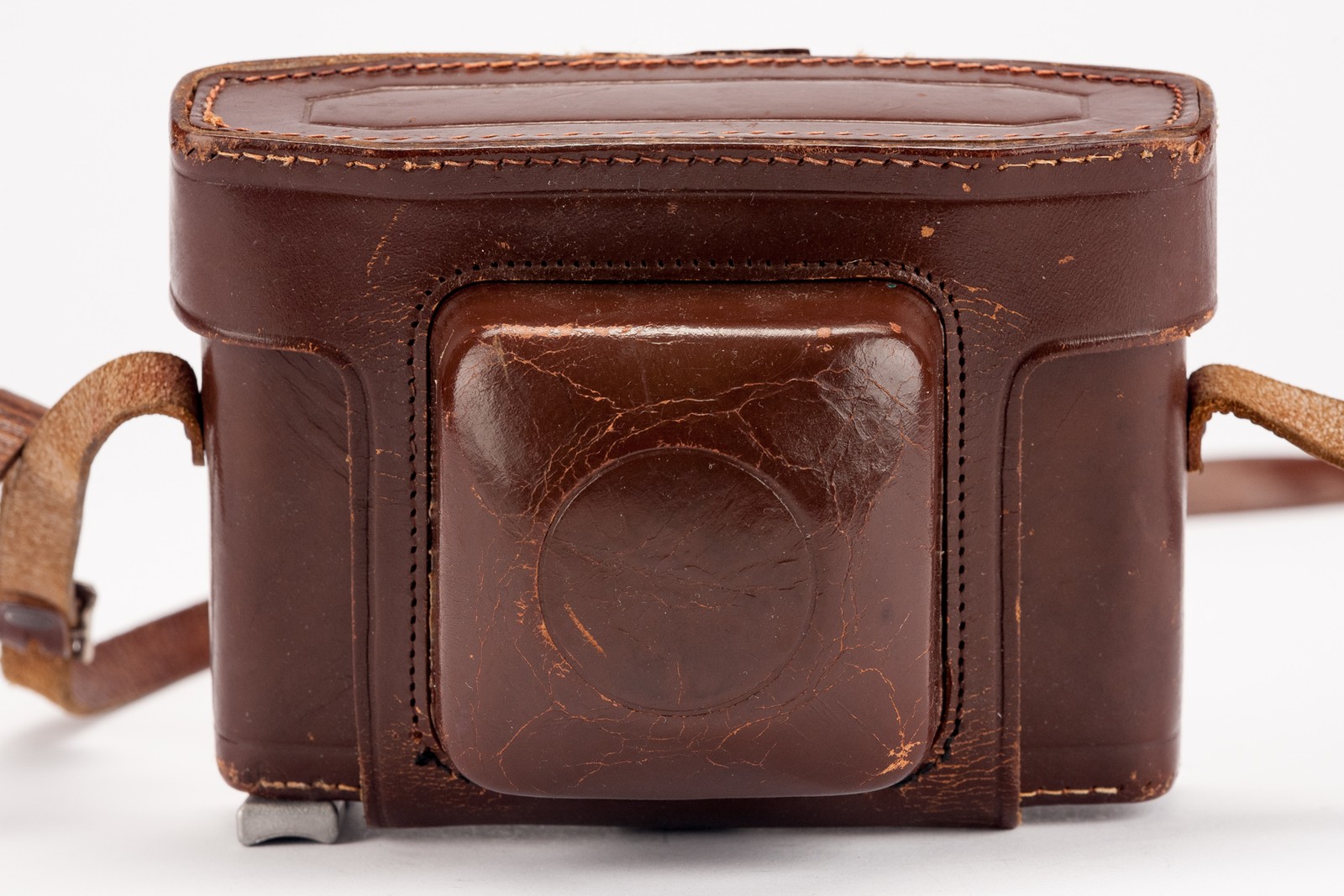
On the secondary market, prices range from $120 to $250 USD, depending on condition. Clean glass, a crisp shutter, and smooth film advance push values toward the top end. Original cases and manuals add charm and provenance. Before buying, test every shutter speed—especially 1/300 sec and Bulb—with a light meter or smartphone app. The Derval shutter is robust but prone to oil drying over time. Check the red window for cracks, ensure the film knob turns freely, and scrutinize the lens for haze, fungus, or separation—common issues in humid climates.
Restoration is possible, but parts are scarce. The shutter can often be cleaned and re-timed by a skilled technician, and the film path is straightforward to service. But remember: the lens is fixed. If the glass is damaged beyond cleaning, the camera’s photographic life may be over. Still, for those who value craftsmanship over convenience, the Digna is worth the effort.
Similar Cameras
- Wirgin Edinex 66 – A contemporary German 6×6 viewfinder camera with similar specs and build quality.
- Adox Adrette III – Compact 120 viewfinder camera with scale focus and Compur shutter.
- Kodak Brownie Starflash – American 620 film camera (smaller format) but comparable in target market and simplicity.
- Zeiss Ikon Ikonta 520/5 – Folding 120 camera with 75mm lens, aimed at a similar user base but with more advanced features.
- Rollei 4×4 – Later Rollei-designed 127 film camera, though smaller format, shares the compact medium format philosophy.
Repair & Maintenance
Entirely mechanical and battery-free, the Digna is built to last—with care. The Derval shutter is the heart of the system. If speeds drift or the mechanism sticks, a full clean and re-lubrication with watch-grade oil can restore precision. Pay special attention to the shutter cloth; degradation at high speeds is common. The film advance should turn smoothly—binding may signal dirt in the spool chamber, easily cleared with careful disassembly. The viewfinder is fixed and not user-serviceable, but it rarely fails. With no electronics or metering, maintenance stays refreshingly simple. Keep it dry, use it regularly, and store it in stable conditions—the Digna rewards owners who treat it right.
eBay Listings


As an eBay Partner, we earn from qualifying purchases. This helps support our independent vintage technology research.