Contax G1 (1994–1996): The First Autofocus Rangefinder That Dared to Merge Leica Soul with Silicon Brains
The Contax G1 wasn’t just a camera—it was a manifesto in magnesium alloy, proving that autofocus and rangefinder elegance could coexist without compromise.
Overview
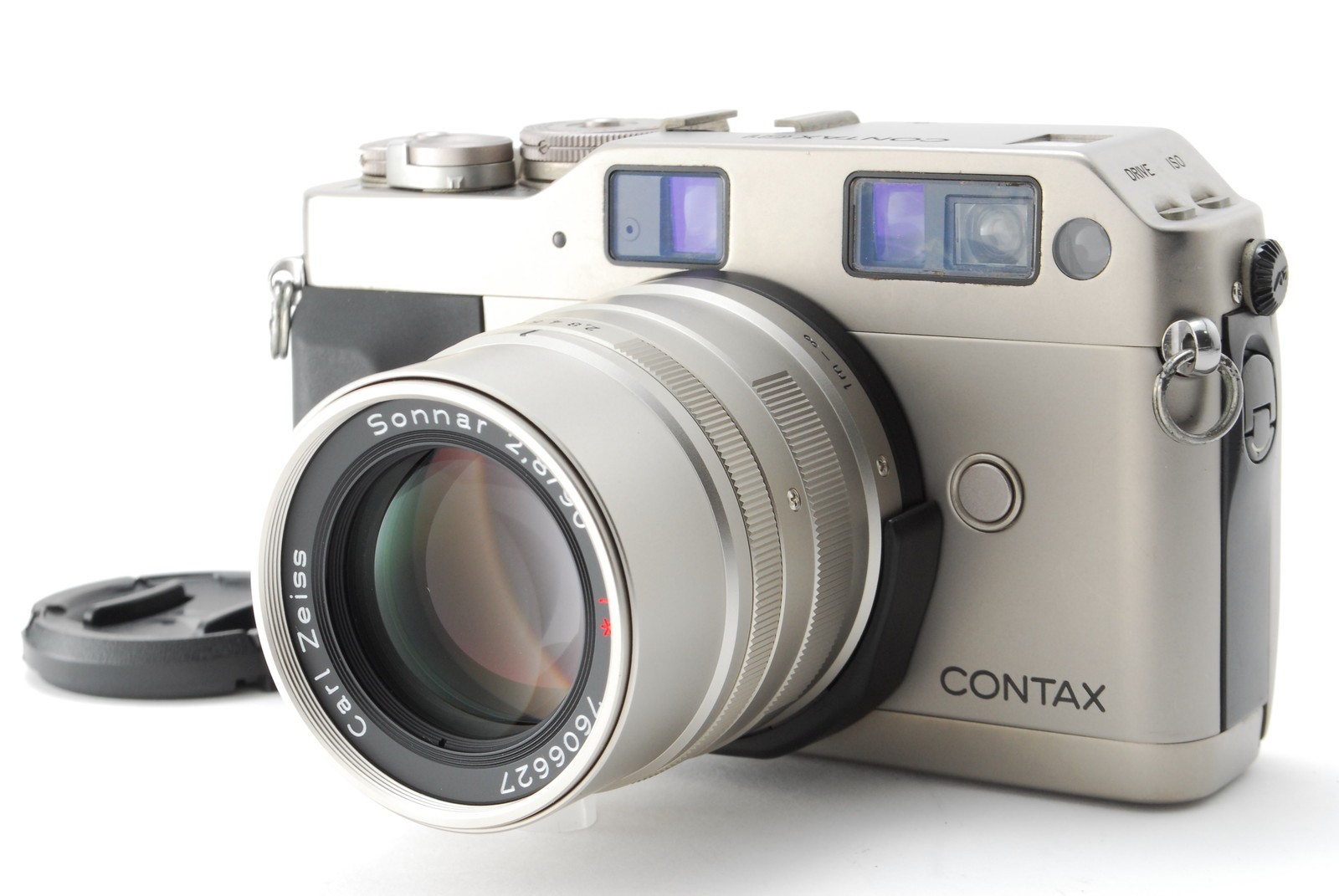
The Contax G1 burst onto the scene in 1994 like a rogue wave in a sea of mechanical purism. At a time when rangefinder photography was the sacred domain of manual focus and tactile precision—ruled unchallenged by the Leica M6—Kyocera’s Contax division dropped a technological bombshell: a full-frame 35mm rangefinder with interchangeable lenses and, yes, autofocus. Not just any autofocus, either, but a sophisticated contrast-detection system built into the lens itself. This wasn’t a gimmick slapped onto a classic form; it was a ground-up reimagining of what a rangefinder could be. And it worked—surprisingly well, even by today’s standards, if you can find one in working order.
Targeted squarely at the high-end enthusiast and professional market, the G1 was a statement piece. Priced at $1,295 at launch—equivalent to nearly $2,600 today—it wasn’t for the faint of wallet. But for those who craved the compositional advantages of a rangefinder (quiet shutter, near-zero viewfinder blackout, superior low-light performance) yet bristled at the limitations of manual focus in fast-paced environments, the G1 was a revelation. Photojournalists, street shooters, and studio pros who needed speed without sacrificing image quality flocked to it. It wasn’t just a camera; it was a bridge between eras—a hybrid that respected tradition while embracing the future.
Specifications
| film_format | 35mm |
| lens_mount | Contax G-mount |
| shutter_speeds | 1/6000 to 30 seconds, bulb |
| shutter_type | Vertical-travel focal-plane shutter |
| exposure_modes | Aperture-priority AE, Manual, Program AE (with optional flash) |
| metering_system | TTL 1.5-segment metering (center-weighted and spot) |
| focus_system | Contrast-detection autofocus, manual focus override |
| viewfinder | Optical rangefinder with brightline frames, 0.6x magnification |
| focusing_range | 0.6m to infinity |
| flash_sync | X-sync at 1/120s, hot shoe and PC terminal |
| film_speed_range | ISO 6–5000 (DX-coded or manual) |
| battery | 2 x CR123A lithium batteries |
| dimensions | 120 x 67 x 48 mm |
| weight | 510 g (body only) |
| autofocus_motor | In-lens autofocus drive |
Key Features
- First autofocus 35mm rangefinder with interchangeable lenses: This wasn’t a fixed-lens compact with rangefinder framing—it was a true system camera. The G1’s autofocus system used contrast detection via a dedicated sensor in the body, which communicated with the lens’s internal motor. The result? Focus speeds that, while not DSLR-quick, were startlingly reliable in good light, especially for a rangefinder.
- In-lens autofocus motors: Unlike most AF systems of the era (think Minolta Maxxum or Nikon F90), the G1 offloaded the focusing motor to the lens. This kept the body compact and quiet—critical for street photography—but also made the lenses (like the legendary 2.8/28mm and 2.8/45mm) complex, expensive, and rare. Each G-series lens is essentially a mini-computer with gears, sensors, and firmware.
- Hybrid rangefinder with electronic coupling: The optical viewfinder offered brightline frames (28/45mm or 90mm, depending on lens) and a 0.6x magnification, but the rangefinder patch was electronically linked to the AF system. You could manually focus using the patch, or let the camera nail focus and simply compose. This dual-mode operation was genius—offering purists their ritual while giving pragmatists speed.
- Aperture-priority and manual exposure with TTL metering: The 1.5-segment metering (a hybrid of center-weighted and spot) was advanced for its time. In aperture-priority mode, you set the f-stop and the camera chose shutter speed from 1/6000s down to 30 seconds. Manual mode required stopping down to meter—a slight annoyance, but familiar to Leica users.
- Vertical-travel titanium shutter: Capable of 1/6000s—the fastest in any rangefinder before or since—it allowed wide-open shooting in bright sunlight. Combined with the 1/120s flash sync, it gave remarkable creative flexibility. The shutter was also whisper-quiet, a hallmark of Contax engineering.
Historical Context
In 1994, the photography world was at a crossroads. Autofocus SLRs—Nikon F90, Canon EOS-1N—were dominating professional markets. Digital was still a lab curiosity. And rangefinders? They were seen as nostalgic, niche, almost anachronistic. The Leica M6, introduced a decade earlier, was the gold standard: elegant, reliable, gloriously analog. But it didn’t autofocus. It didn’t meter digitally. It didn’t even have a built-in motor drive. Enter Contax, a brand with a long history of technical innovation (remember the RTS SLRs and the legendary T-series compacts), aiming to disrupt the status quo.
The G1 wasn’t just competing with Leica—it was trying to redefine the category. By integrating autofocus into a rangefinder without sacrificing the core experience (no mirror slap, no viewfinder blackout), Kyocera proved that tradition and technology weren’t mutually exclusive. The G1’s design language—clean, minimalist, with a subtle Art Deco tilt—echoed the Contax T3 but with pro-level heft. It was a spiritual successor to the Contax G-series concept, even if no direct predecessor existed.
Two years later, in 1996, the Contax G2 arrived, refining the formula with manual exposure control, better ergonomics, and improved AF algorithms. But by then, the market had shifted. SLRs ruled, and the G1/G2’s $1,300+ price tag (for body only) made them luxury curiosities. Production ended in 2000, and with Kyocera exiting the camera business, the G-series became a brief but brilliant footnote—a “what if” moment in camera history.
Collectibility & Value
Today, the Contax G1 is a prized relic among rangefinder collectors and Contax loyalists. With “uncommon” rarity and “high” desirability, working examples in good condition routinely fetch $800 to $1,500 as of 2025—sometimes more if bundled with rare lenses like the 2.8/21mm or 4/90mm. But caveat emptor: these cameras are aging electronics, not timeless mechanical watches. The two CR123A batteries power a complex web of sensors, motors, and firmware, and when they leak (as lithium batteries are wont to do), corrosion can destroy the delicate circuitry in the battery compartment—a known weak point.
Autofocus calibration drift is another common issue. Over time, the AF sensor can fall out of alignment, causing front- or back-focusing. Repair requires specialized tools and expertise—there are only a handful of technicians worldwide who can properly service a G1. And spare parts? Scarce. Many G1s today are “bricked” or semi-functional, used only for their excellent manual focus capability.
If you’re buying, test everything: AF speed, manual focus override, shutter operation across all speeds, and metering accuracy. Check for battery corrosion, sticky buttons, and lens mount wear. And if the camera powers on and the AF hunts smoothly? You’ve struck magnesium-clad gold. The G1 isn’t just a camera to use—it’s a machine to cherish, a bold experiment that proved autofocus could have soul.
eBay Listings



As an eBay Partner, we earn from qualifying purchases. This helps support our independent vintage technology research.
Related Models
- Contax G2 (1996-2005)
- Agfa Optima Sensor 1535
- Argus Argus A
- Argus Argus Autronic (1960)
- Argus Argus C-44R
- Argus Argus C
- Argus Argus C2
- Argus Argus C3 (1939-1966)
- Argus Argus C44R
- Argus C-44R