CERTO SL100
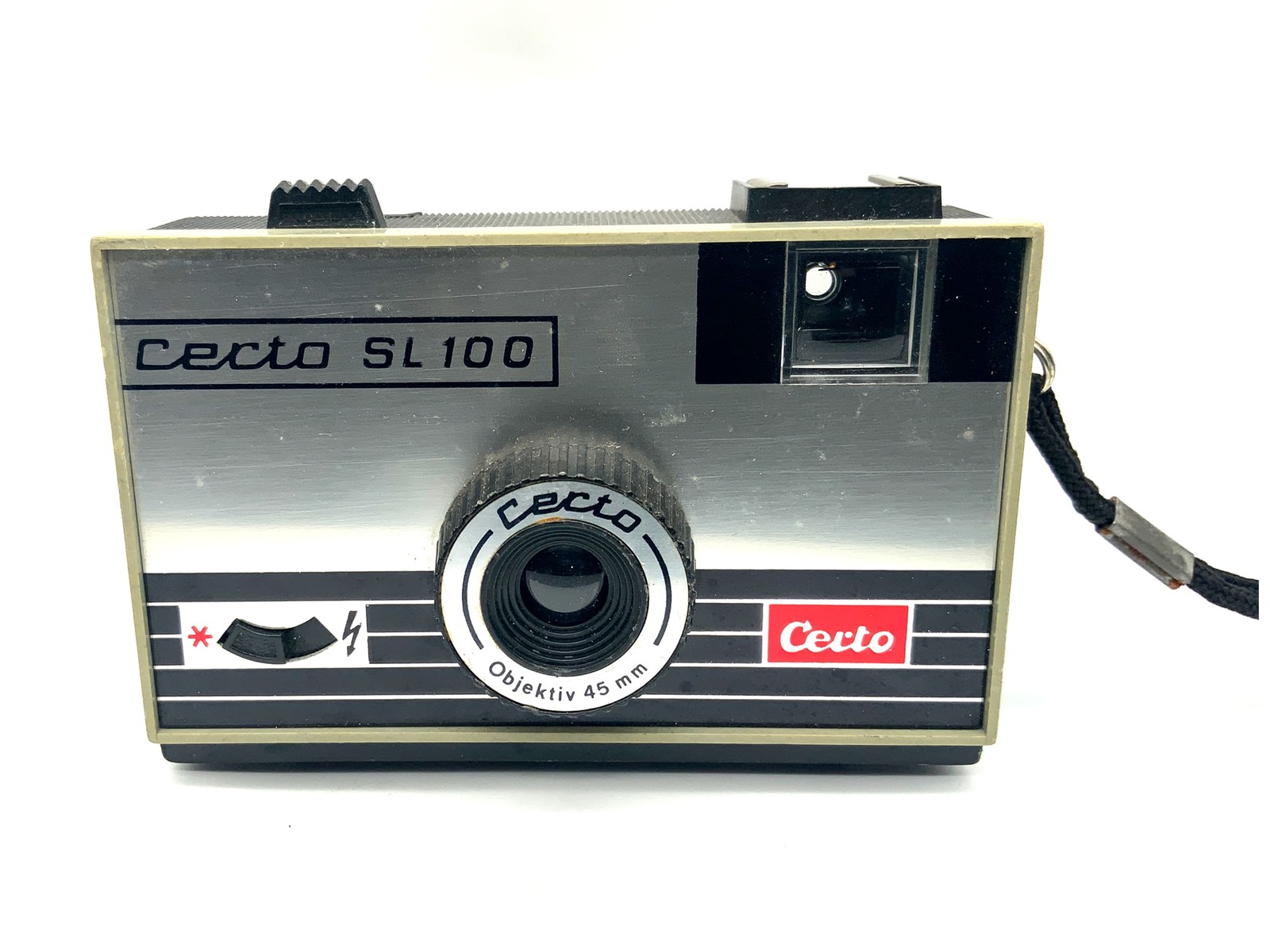
The Certo SL100 is a compact 35mm film camera produced by German manufacturer Certo between 1970 and 1974. Designed as an entry-level point-and-shoot option, it features a fixed lens, simple viewfinder, and fully manual exposure controls, reflecting the minimalist design philosophy aimed at amateur photographers during the early 1970s.
Overview
The Certo SL100 was introduced during a transitional period in consumer photography, when compact 35mm cameras were rapidly replacing larger rangefinders and twin-lens reflex models in the amateur market. Manufactured by Certo-Cameras, a company historically known for its high-quality folding plate cameras in the early 20th century, the SL100 represented a modern pivot toward affordable, lightweight 35mm photography. Despite the "SL" designation, which might suggest a single-lens reflex design, the SL100 is not an SLR but rather a compact viewfinder camera with a fixed-focus lens, indicating that the naming was likely a marketing choice rather than a technical descriptor.
Targeted at casual photographers and budget-conscious consumers, the SL100 emphasized simplicity and reliability. It featured a rigid metal body with a minimal control layout: a shutter release on top, a manual film advance lever, and a basic frame counter. The camera lacked a built-in light meter, requiring users to rely on external metering or sunny-16 rule estimation. Its compact form factor and lightweight construction made it suitable for travel and everyday use, aligning with the growing trend of snapshot photography popularized by brands like Kodak and Olympus.
Within Certo’s product lineup, the SL100 marked a departure from the company’s earlier reputation for precision engineering in medium format and plate cameras. By the 1970s, Certo had shifted focus to compete in the mass-market 35mm segment, though it never achieved the same prominence as Japanese contemporaries such as Canon, Minolta, or Pentax. The SL100 was one of the last notable models released under the Certo name before the brand faded from prominence in the mid-1970s, making it a minor but historically representative artifact of the decline of traditional German camera manufacturers in the face of Japanese industrial efficiency.
Specifications
| Specification | Value |
| Type | Compact viewfinder camera |
| Film Format | 35mm (135 cartridge) |
| Years Produced | 1970–1974 |
| Lens Mount | Fixed Certo Triostigmat 38mm f/3.5 triplet lens |
| Shutter | Leaf shutter with speeds of B, 1/30, 1/60, 1/125, 1/250 sec |
| Metering | None (unmetered) |
| Exposure Modes | Manual only (shutter speed and aperture selected manually) |
| Viewfinder | Simple optical viewfinder with central aiming mark |
| Dimensions | Approx. 110 x 65 x 40 mm; Weight: ~320 g (without film) |
Key Features
- Fixed Triplet Lens: The Certo Triostigmat 38mm f/3.5 is a three-element lens offering decent sharpness for its class, with focus fixed at hyperfocal distance (~8 ft to infinity).
- Leaf Shutter Design: Provides quiet operation and flash synchronization at all speeds via PC sync terminal.
- Manual Exposure Control: Aperture ring (f/3.5 to f/16) and shutter speed dial on the top plate allow full user control despite lack of automation.
- Simple Construction: Durable metal body with minimal moving parts, contributing to reliability and ease of repair.
- Compact Form: Small size and light weight make it ideal for pocket carry and travel photography.
Historical Context
The Certo SL100 was released at a time when the global camera market was undergoing rapid change. Japanese manufacturers dominated innovation, introducing compact, automated cameras with built-in meters and lightweight plastics. In contrast, German brands like Certo, Wirgin, and Rollei struggled to maintain relevance. The SL100 was Certo’s attempt to remain competitive by offering a no-frills, mechanically simple camera at an accessible price point.
It entered a crowded market alongside models like the Olympus 35SP, Canonet QL17, and the Zeiss Ikon Super Ikonta II. However, unlike these competitors, the SL100 lacked a coupled rangefinder, light meter, or automatic exposure features. Its primary advantage was mechanical simplicity and low cost. While it found modest success in European markets, particularly in mail-order catalogs and department stores, it received little critical attention and was overshadowed by more advanced offerings. By 1974, Certo ceased production of the SL100, and the brand gradually disappeared from the consumer camera landscape.
Collectibility & Value
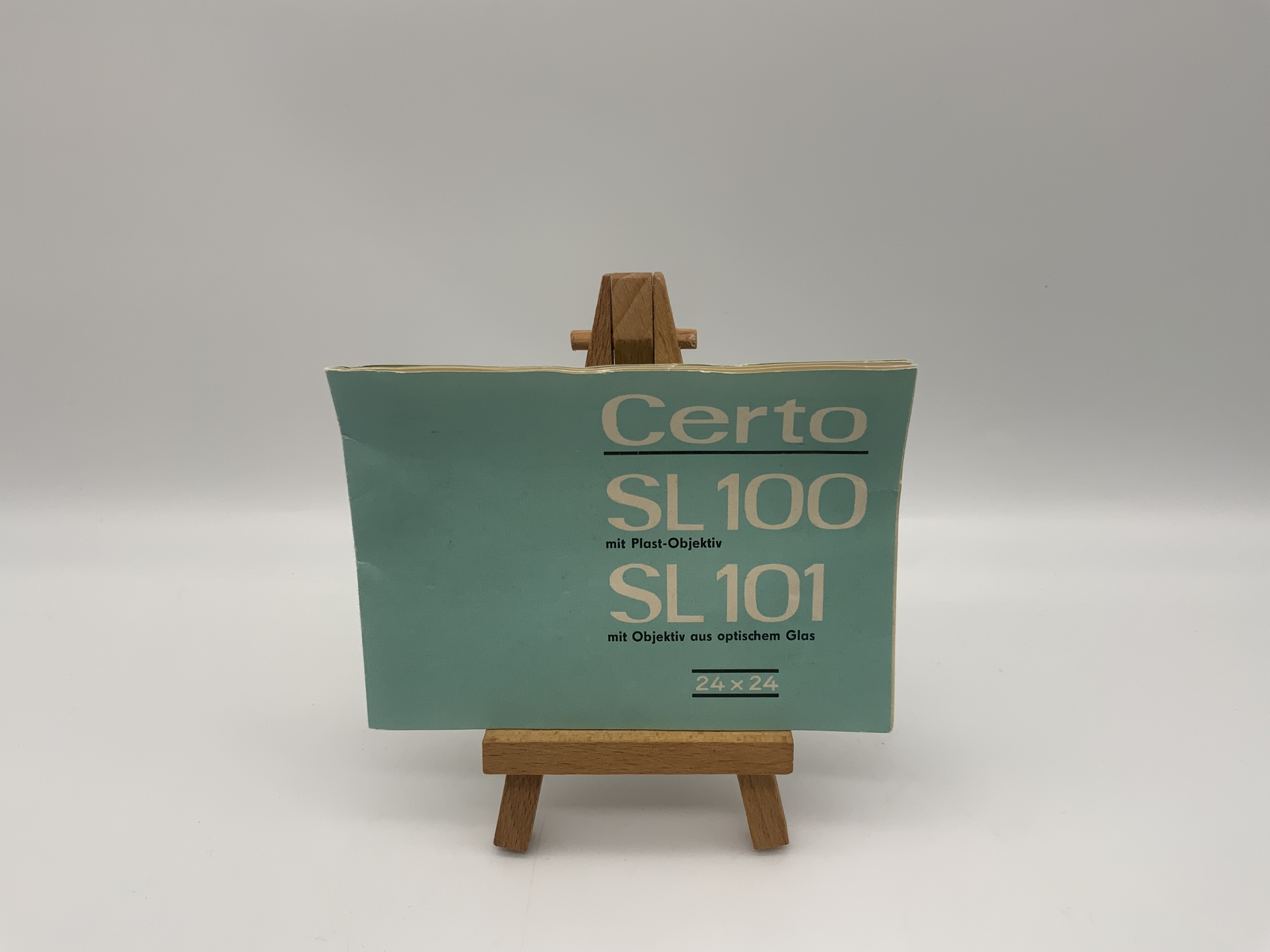
Today, the Certo SL100 is considered a niche collectible, primarily sought by enthusiasts of obscure European cameras or those interested in the transition from mechanical to automated photography. It is not rare but is uncommon outside of Germany and Central Europe. In working condition, with a clean lens and functional shutter, the SL100 typically sells for $30–$60 USD on secondary markets such as eBay or collector forums. Values increase slightly for boxed examples with original manuals or accessories.
When purchasing an SL100, collectors should inspect the shutter operation at all speeds, check for lens fungus or separation (common in older triplet lenses), and ensure the film advance and rewind mechanisms function smoothly. The most common issues include stiff shutter blades due to dried lubricant and light leaks from deteriorated film door seals. Because the camera lacks electronics, it does not require batteries and is generally repairable by technicians familiar with vintage leaf shutters.
Similar Cameras
- Kodak Instamatic 330 (1970) – A cartridge-loaded 35mm compact with fixed focus and simple controls.
- Olympus 35 RC (1975) – Slightly later, but similarly compact with a high-quality lens and manual controls.
- Canon Demi RF (1963) – A smaller 35mm half-frame camera with rangefinder, more advanced but in the same compact class.
- Zeiss Ikon Super Ikonta IV (1963) – A premium German compact with coupled rangefinder and superior optics.
- Fujica FM II (1973) – A more advanced Japanese compact with metering and interchangeable lenses.
Repair & Maintenance
The Certo SL100 requires no batteries, making it fully mechanical and suitable for long-term storage. Common maintenance issues include sluggish shutter operation, particularly at slower speeds, often due to hardened lubricants in the Compur-type leaf shutter. A full CLA (clean, lubricate, adjust) by a qualified technician is recommended for cameras that have been stored for decades. The PC sync terminal supports flash use, but the flash contact may oxidize over time and require cleaning. The film pressure plate and door light seal should be inspected and replaced if cracked or compressed. Due to the simplicity of its design and use of standard screw mounts, spare parts such as rewind knobs and shutter blades are occasionally available through European camera repair specialists.
eBay Listings


As an eBay Partner, we earn from qualifying purchases. This helps support our independent vintage technology research.