CERTO DOLLINA II
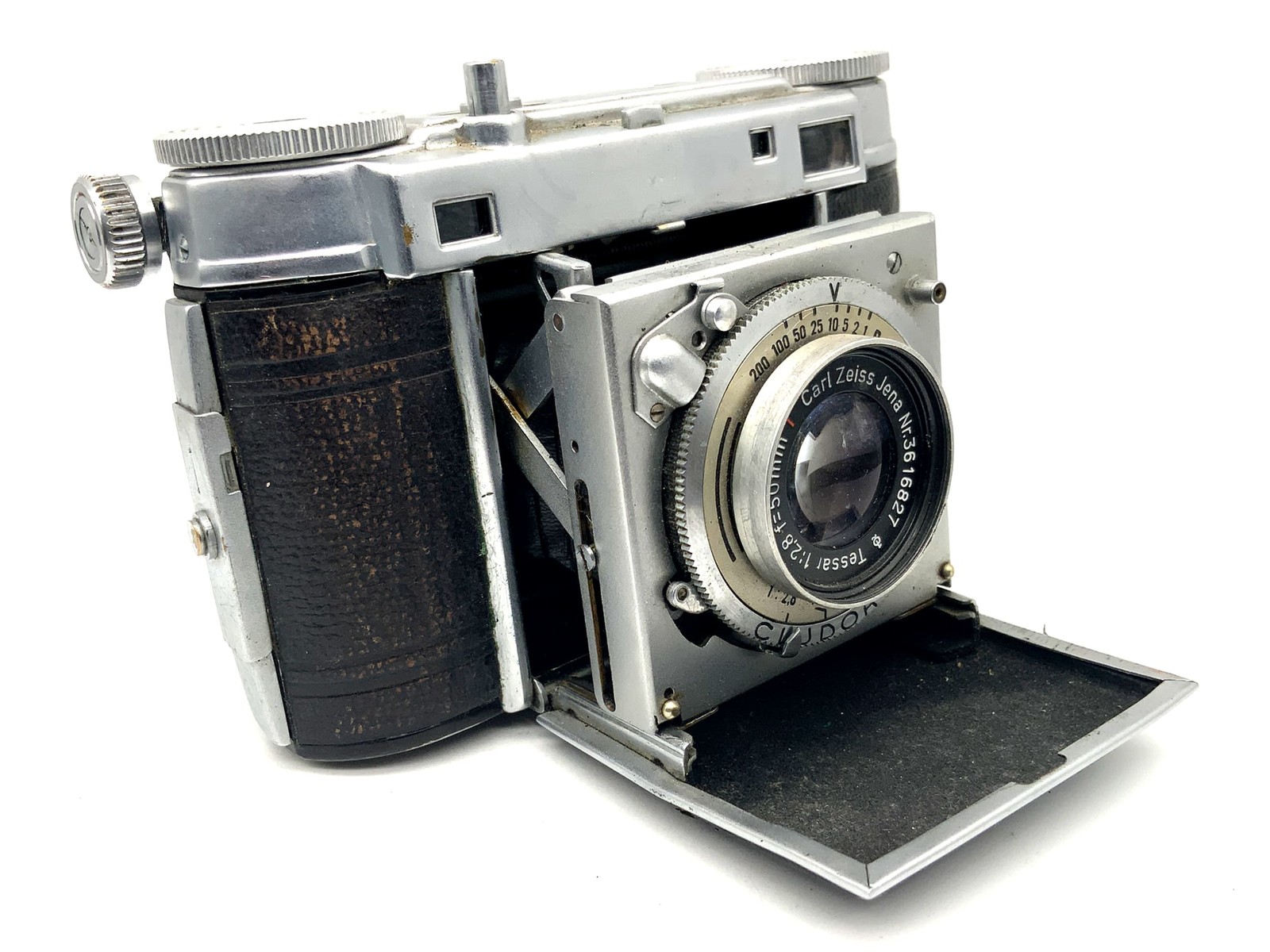
The Certo Dollina II is a compact, folding 35mm viewfinder camera produced by Certo of Dresden, Germany, beginning in 1936. Exact end of production is uncertain, but likely around 1939 due to wartime disruptions. An evolution of the original Dollina, it offered modest improvements in build and usability, reflecting ongoing development in pre-war 35mm camera design for amateur photographers.
Overview
Introduced in 1936, the Certo Dollina II was developed during a period of rapid innovation in 35mm camera design, as German manufacturers sought to capitalize on the growing popularity of Leica-inspired miniature formats. Certo, primarily known for its high-quality plate and roll-film cameras such as the Certo Reflex series, entered the 35mm market with the original Dollina in 1933. The Dollina II was its direct successor, incorporating user feedback and mechanical improvements to enhance usability and reliability. Marketed toward serious amateur photographers and traveling enthusiasts, the Dollina II combined a rigid folding body with a coupled rangefinder (on certain models) and high-grade optics, positioning it as a premium alternative to more basic 35mm folders.
The Dollina II was offered with a range of lenses, most commonly the 45mm f/2.8 or f/3.5 Cella or Steinheil Culminar, mounted on a helical focusing unit. The camera used standard 35mm film in cassettes, advancing via a knob wind and featuring a red-window frame counter on the back. Its folding design allowed for remarkable portability while maintaining a rigid lens standard when extended. Unlike many contemporaries, the Dollina II featured a top-mounted shutter speed selector and aperture controls, with a combined shutter-release and film advance mechanism.
Certo positioned the Dollina II between its entry-level 35mm offerings and its more advanced press and studio equipment. While not as widely exported as Leica or Contax models, the Dollina II found a loyal following in Central Europe and among photographers who valued its balance of portability and image quality. Production ceased in 1940 due to wartime manufacturing restrictions, making surviving examples relatively rare today.
Specifications
| Specification | Value |
| Type | Folding 35mm viewfinder camera |
| Film Format | 35mm (24 x 36mm) |
| Years Produced | 1936–1940 |
| Lens Mount | Fixed lens with helical focusing (non-interchangeable) |
| Shutter | Compur or Prontor-Compur leaf shutter; speeds from 1 sec to 1/300 + B |
| Metering | None (uncoupled) |
| Exposure Modes | Manual only |
| Viewfinder | Separate optical viewfinder and rangefinder (on RF models); not fully coupled in the way later cameras were |
| Dimensions | Approx. 110 x 65 x 40 mm (folded); weight ~380 g |
Key Features
- High-quality fixed lenses: Typically equipped with 45mm f/2.8 Cella or Steinheil Culminar, delivering sharp, contrast-rich images.
- Precision leaf shutter: Compur or Prontor-Compur shutter with speeds up to 1/300 sec, offering reliable performance for available-light photography.
- Rangefinder option: Select models featured a coupled rangefinder for accurate manual focusing, a significant advantage over basic viewfinder cameras.
- Rigid folding design: Uses a strut-braced front standard that locks securely when extended, minimizing lens wobble.
- Compact portability: When folded, the camera slips easily into a jacket pocket, making it ideal for travel and street photography.
Historical Context
The Dollina II was released at a pivotal moment in 35mm camera development. By the mid-1930s, the success of the Leica I and the emergence of the Contax I had demonstrated the viability of small-format photography for both professionals and enthusiasts. German manufacturers like ICA, Wirgin, and Zeiss Ikon were rapidly expanding their 35mm lines, prompting Certo to refine its earlier Dollina model to remain competitive. The Dollina II improved upon the original Dollina with a revised film advance and shutter sync, though only M-sync was standard; X-sync was not available until postwar models.
Despite these improvements, the Dollina II faced stiff competition from more established brands. The Kodak Retina I (introduced in 1934) offered similar portability with a built-in film loading system, while the Leica remained the gold standard for image quality and lens availability. The Dollina II’s niche was its combination of premium German optics and solid build in a folding body, appealing to photographers who wanted Leica-like performance without the premium price. However, Certo’s limited international distribution and lack of a comprehensive lens system hindered widespread adoption. Production ended abruptly in 1940 as Certo’s Dresden factory was repurposed for wartime optics, and the model was never revived post-war.
Collectibility & Value
Today, the Certo Dollina II is a sought-after collector’s item, particularly models equipped with the 45mm f/2.8 Cella lens and coupled rangefinder. Surviving examples are relatively rare, especially in working condition, due to the fragility of the folding mechanism and the age of the shutter components. Unrestored examples typically sell for $150–$300; working, serviced models with good optics may reach $400–$600 in strong markets.
When evaluating a Dollina II for purchase, collectors should inspect the shutter operation across all speeds, check for lens haze or separation (common in older Cella lenses), and ensure the folding struts are tight and free of corrosion. The leather covering is often deteriorated, but replacements are occasionally available. One common issue is misalignment of the rangefinder, which requires specialized calibration tools to repair. Given the complexity of the Compur shutter and the scarcity of replacement parts, repair should be undertaken only by technicians experienced in pre-war German cameras. Despite these challenges, the Dollina II remains a rewarding restoration project and a historically significant example of Germany’s rich 35mm camera heritage.
Similar Cameras
- Kodak Retina I (Type 117) – Folding 35mm camera with high-quality lens and excellent build; introduced 1934.
- Wirgin Edinex – German 35mm folder with interchangeable lenses; produced 1938–1940.
- Zweiverschluss 45 – Dual-shutter 35mm folder with Compur and Ibsor shutters; known for precision.
- Adox Adrette – Compact 35mm folder with coupled rangefinder; produced by Agfa subsidiary.
- Plaubel Peco Profia – High-end folding camera with interchangeable lenses; targeted press photographers.
Repair & Maintenance
The Certo Dollina II requires no batteries, as it is fully mechanical. However, the leaf shutter (typically Compur or Prontor-Compur) is prone to lubricant hardening after decades of disuse, leading to inaccurate speeds or complete failure. A full shutter service by a qualified technician is recommended before regular use. The film advance mechanism is generally robust but may require cleaning and lubrication to ensure smooth operation. The folding struts and hinge system should be inspected for wear, as loose joints can affect lens alignment. The rangefinder, if present, may require recalibration using a collimator. Due to the scarcity of spare parts, sourcing replacements for damaged components (such as the viewfinder hood or shutter blades) can be challenging. Regular use and storage in a dry environment are advised to prevent corrosion and mold.
eBay Listings



As an eBay Partner, we earn from qualifying purchases. This helps support our independent vintage technology research.