CANON TL
The Canon TL is a 35mm single-lens reflex (SLR) camera introduced in 1968 as an entry-level model in Canon’s FL-mount SLR lineup. Designed as a simplified, budget-conscious variant of the Canon FT QL, the TL offered manual exposure control and a robust mechanical design, targeting amateur photographers seeking reliable performance without advanced metering or automation.
Overview
Launched during a period of rapid expansion in the 35mm SLR market, the Canon TL was positioned as an affordable alternative to Canon’s more sophisticated models like the FT and FX. Manufactured from 1968 to 1972, the TL filled a strategic gap in Canon’s product hierarchy, appealing to novice photographers and students who required a durable, no-frills SLR. It shared the same core mechanical chassis as the Canon FT QL but omitted the TTL (through-the-lens) full-aperture metering system, instead relying on a simpler, stop-down CdS (cadmium sulfide) metering system that required the lens to be stopped down for accurate exposure readings.
The TL retained the FL lens mount, which was compatible with Canon’s FL-series lenses and, via adapters or stop-down metering, with earlier R-series and later FD lenses (though without full functionality). Its all-mechanical shutter and manual exposure controls made it independent of batteries for operation, with power only required for the light meter. The camera featured a horizontally traveling, cloth-curtain focal-plane shutter with speeds from 1 second to 1/1000 second, plus B (bulb) mode, providing versatility for its class.
Despite its simplified design, the TL maintained high build quality, with a die-cast aluminum top plate and a rugged metal body typical of Japanese SLRs of the late 1960s. It was marketed as a lightweight, user-friendly SLR that balanced cost and performance, making it accessible during a time when SLRs were transitioning from professional tools to mainstream consumer products. The TL was succeeded in 1973 by the Canon FTb, which reintroduced TTL metering and became one of Canon’s most popular manual-focus SLRs.
Specifications
| Specification | Value |
| Type | 35mm Single-Lens Reflex (SLR) |
| Film Format | 35mm (135 cartridge) |
| Years Produced | 1968–1972 |
| Lens Mount | Canon FL mount (compatible with R, FL, and FD lenses via stop-down metering) |
| Shutter | Horizontal-travel cloth focal-plane shutter; 1 sec to 1/1000 sec, plus B |
| Metering | Center-weighted CdS meter with stop-down measurement (requires stopping lens to shooting aperture) |
| Exposure Modes | Manual only |
| Viewfinder | Fixed pentaprism eye-level viewfinder with microprism collar and split-image rangefinder spot |
| Dimensions | 140 mm (W) × 87 mm (H) × 47 mm (D); approx. 570 g (body only, no battery) |
Key Features
- Mechanical reliability: Fully mechanical shutter operation ensures functionality without batteries; only the light meter requires power (1 × 1.35V mercury battery, e.g., PX625, now replaced by 1.4V Wein Cell or adapters with modern zinc-air).
- Stop-down TTL metering: Though not full-aperture, the CdS meter allows TTL exposure readings when the lens is stopped down, improving accuracy over external meters.
- FL mount compatibility: Supports Canon FL lenses natively; R-series lenses can be used in stop-down mode; FD lenses require stop-down use (no automatic diaphragm).
- Compact and lightweight design: At approximately 570 g, the TL is among the lighter mechanical SLRs of its era, enhancing portability.
- Interchangeable viewfinder screen: Allows users to replace the standard focusing screen with alternatives (though limited availability today).
Historical Context
The Canon TL was released at a pivotal moment in the evolution of 35mm photography. By the late 1960s, SLRs were becoming increasingly popular among amateur photographers, driven by improvements in lens technology, metering systems, and manufacturing efficiency. Canon, having established itself with the Canonflex series in the 1950s, sought to expand its market share by offering tiered models. The TL was part of this strategy, providing a lower-cost option compared to the TTL-metering Canon FT QL.
Competitors included the Nikon FM (introduced later in 1977), Pentax Spotmatic series, Minolta SRT-101, and Olympus FTL. While the TL lacked the full-aperture metering of the Spotmatic or the ruggedness of the Nikon F-series, it offered solid build quality and a refined shutter mechanism. Market reception was moderate; while not a bestseller, the TL gained a reputation for reliability and simplicity, particularly in educational and travel photography circles. Its short production run (1968–1972) reflects Canon’s rapid transition toward more advanced metering systems, culminating in the FD-mount era.
Collectibility & Value
Today, the Canon TL is a modestly collectible camera, valued more for its historical significance and mechanical integrity than rarity. Units in good working condition typically sell for $75–$150 USD, depending on lens inclusion and cosmetic state. Fully functional meters are uncommon due to the obsolescence of mercury batteries and degradation of CdS cells. Collectors should inspect the shutter accuracy across all speeds, mirror movement, and light seals, which often degrade and cause light leaks.
Common issues include stiff shutter blades (from dried lubricants), inaccurate metering (due to aging CdS cells or incorrect battery voltage), and worn shutter curtains. The top-mounted rewind crank can also become loose. When purchasing, verify that the stop-down metering coupling works correctly with FL lenses and that the self-timer (if present) functions smoothly. Because the TL lacks electronic dependencies beyond the meter, it remains a viable user camera with proper maintenance.
Similar Cameras
- Pentax Spotmatic (1964–1976) – Full-aperture TTL metering, M42 screw mount, highly influential.
- Minolta SRT-101 (1966–1977) – Robust build, CLC metering, SR-mount.
- Olympus FTL (1967–1970) – Early Olympus SLR with TTL metering, Four Thirds predecessor.
- Nikkormat FT (1965–1975) – Nikon’s budget line, F-mount, mechanical reliability.
- Yashica TL Electro-X (1970s) – Similar naming, but electronically controlled shutter.
Repair & Maintenance
The Canon TL uses a 1.35V mercury PX625 battery for its CdS light meter, now obsolete. Modern replacements include 1.4V alkaline (LR9), zinc-air (hearing aid batteries), or Wein Cell (MRB625), though the higher voltage may cause overexposure; a voltage reducer or meter recalibration is recommended. The camera’s mechanical shutter requires periodic CLA (clean, lubricate, adjust) service every 5–10 years depending on use. Common repair needs include replacing light seals, cleaning viewfinder components, and adjusting shutter timing. Due to its mechanical simplicity and lack of integrated circuits, the TL is considered moderately easy to repair by experienced technicians, though parts availability is limited. Regular use and storage in dry conditions help prevent corrosion and shutter cloth degradation.
eBay Listings
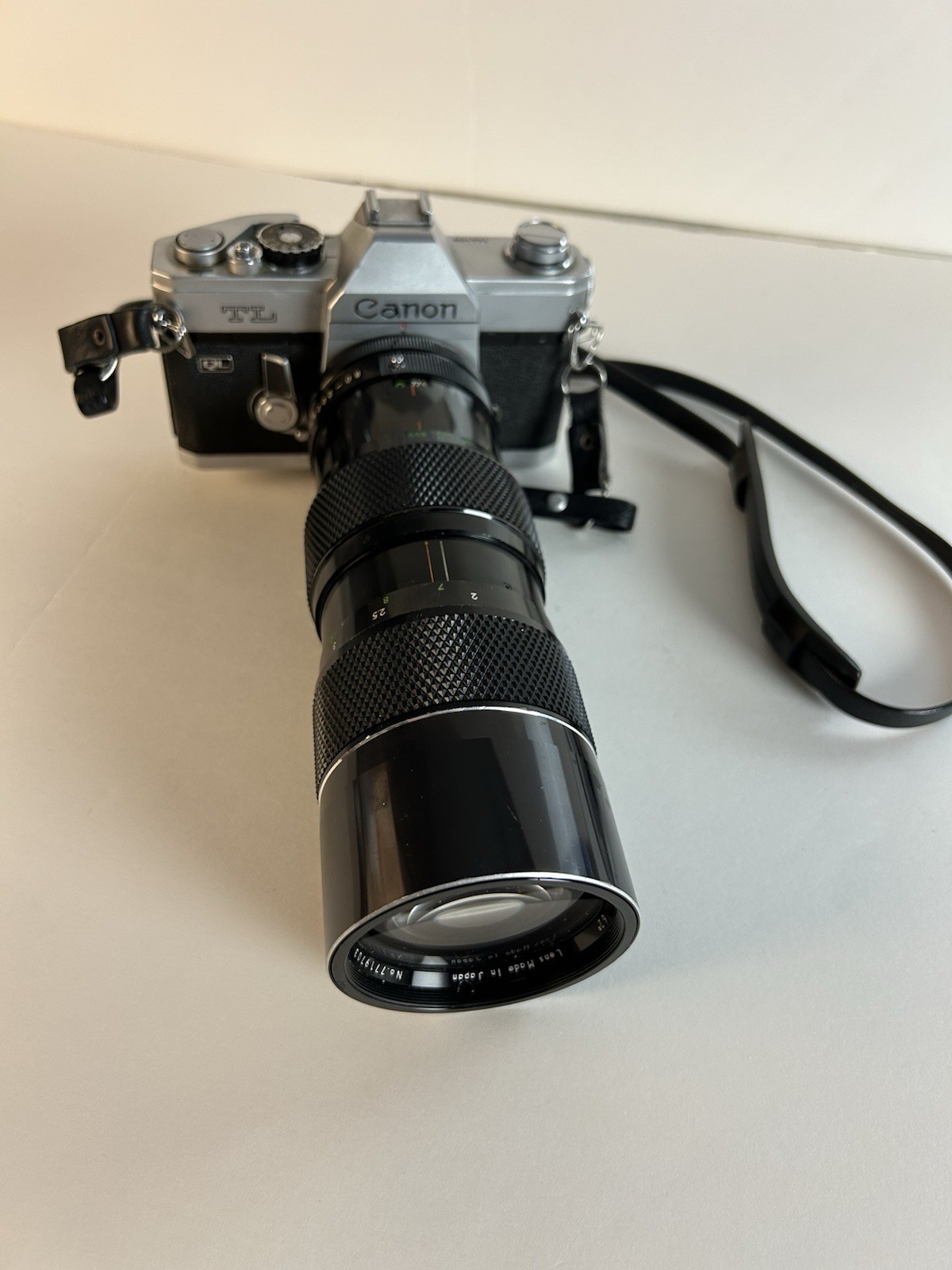
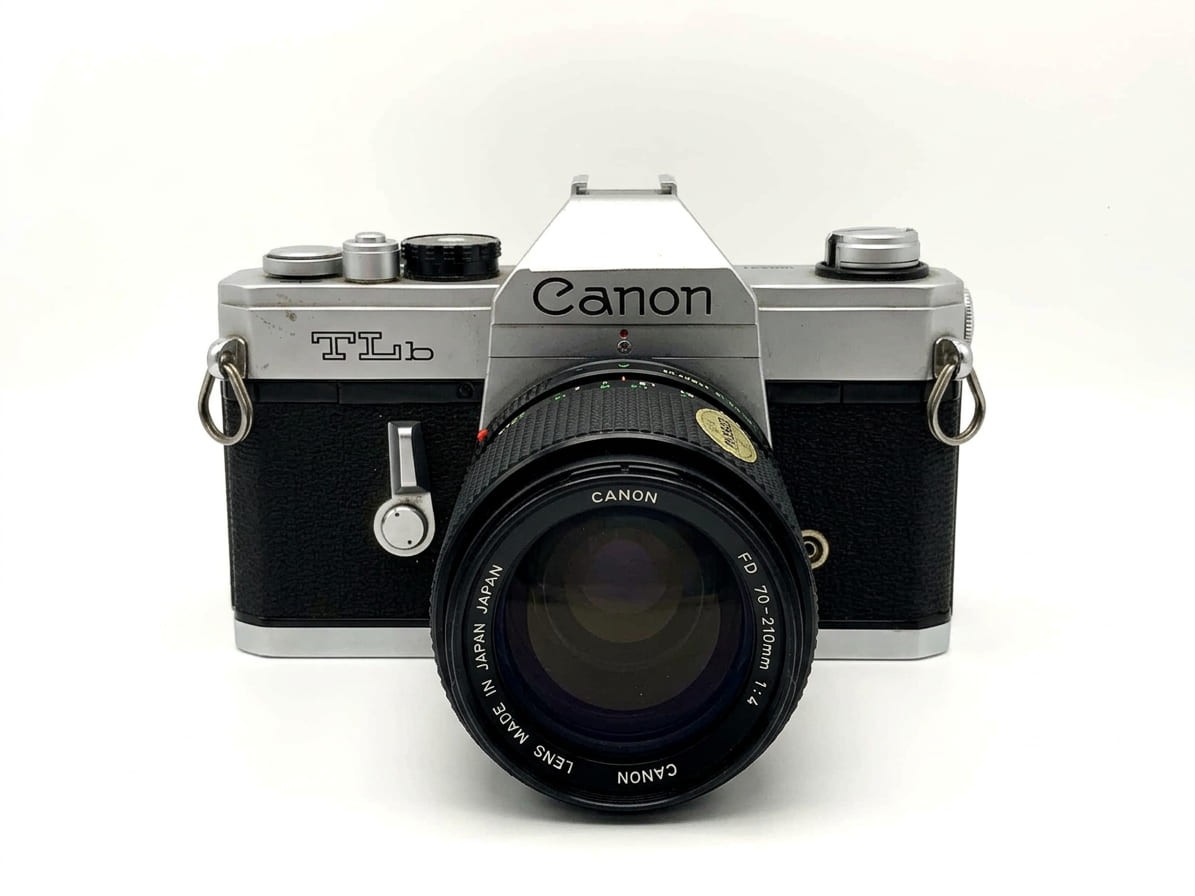
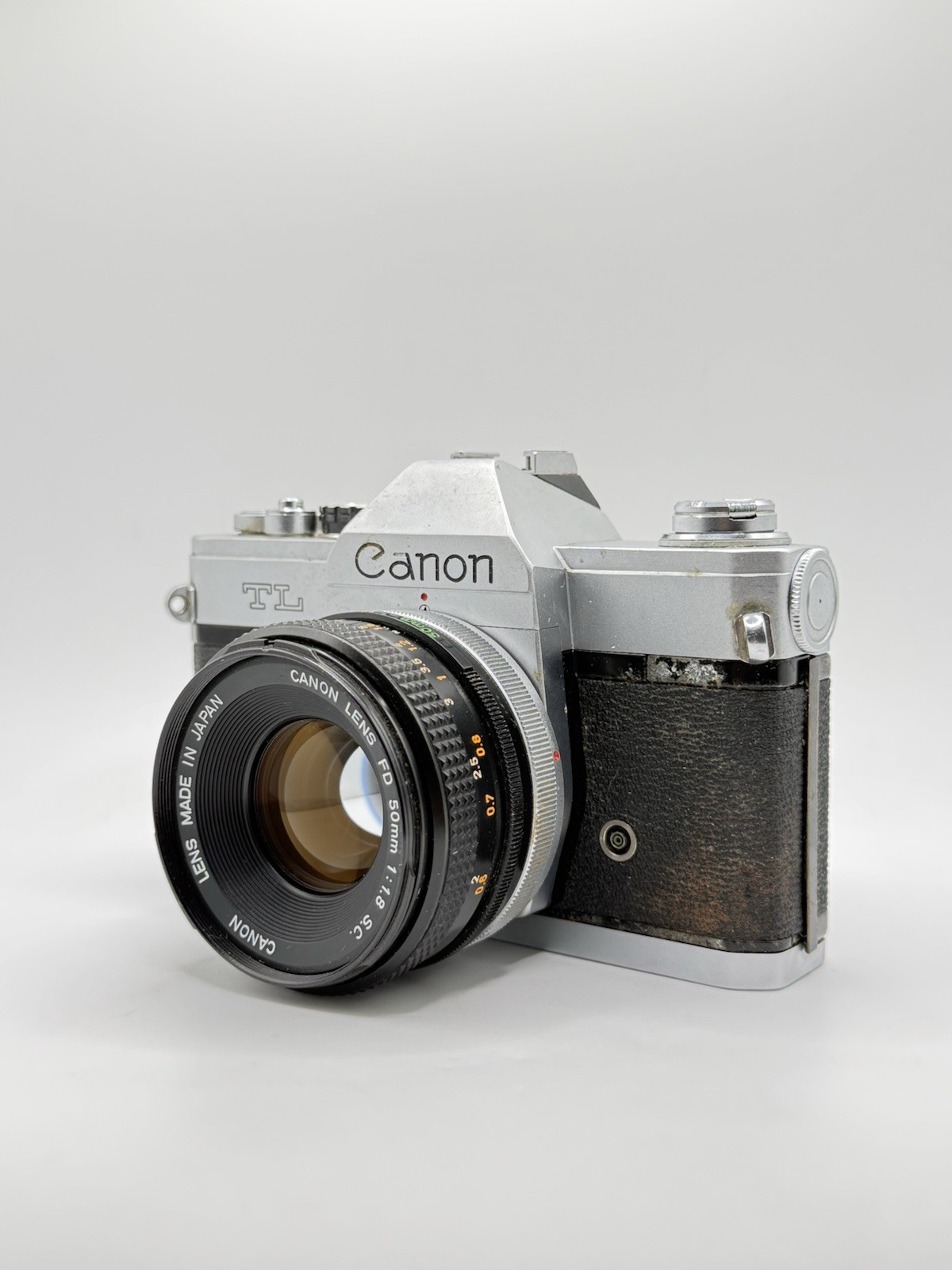

As an eBay Partner, we earn from qualifying purchases. This helps support our independent vintage technology research.
Service Manuals, Schematics & Catalogs
Related Models
- Canon A-1 (1978-1985)
- Canon AE-1 Program (1981-1984)
- Canon AE-1 (1976-1984)
- Canon AL-1 (1982-1985)
- Canon AT-1 (1977-1982)
- Alpa 6 (1948-1953)
- Agfa Agfaflex
- Agfa Ambiflex
- Agfa Easy
- Agfa Futura Af zoom