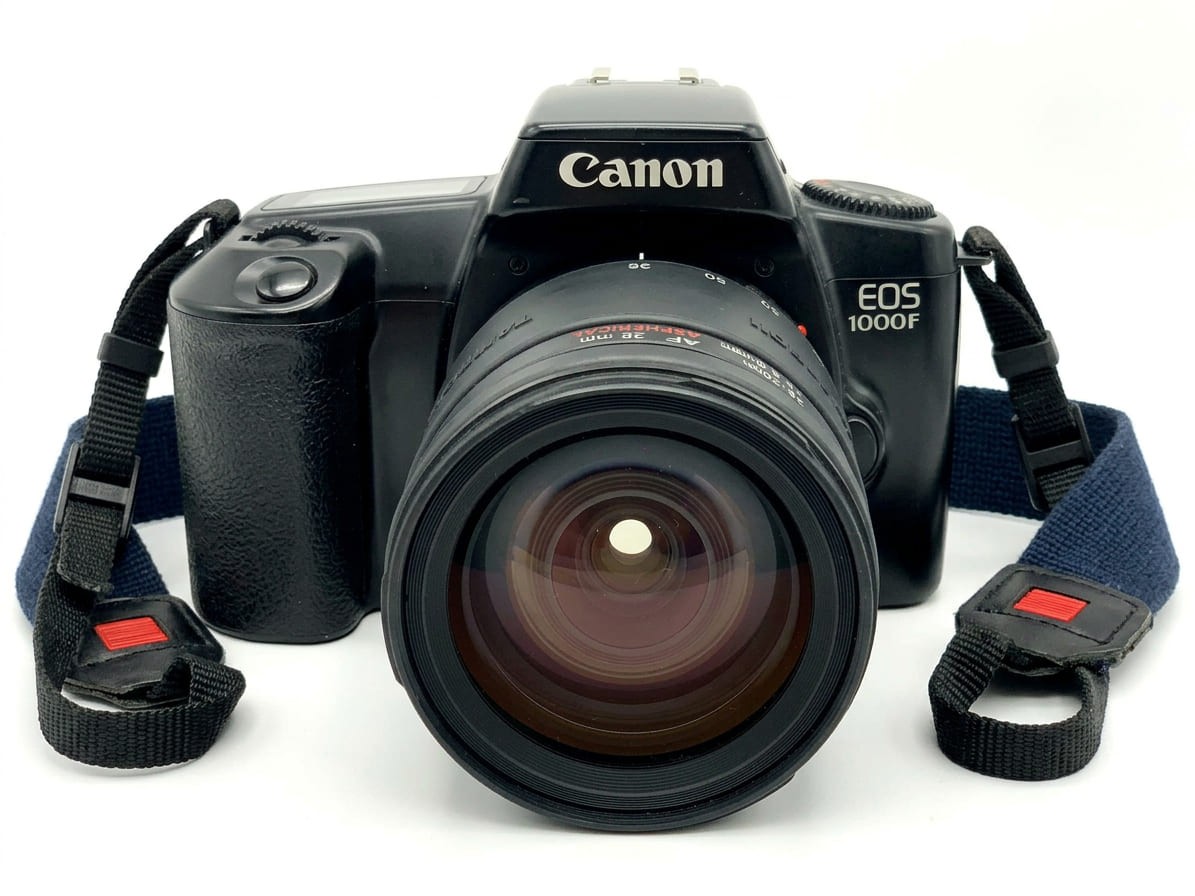
Canon EOS 1000F (1990)
At $32.15 on the used market, it’s not the camera that broke the bank — but one that helped break autofocus wide open for beginners.
Overview
The Canon EOS 1000F, also known as the Rebel S in North America, arrived as Canon’s first budget-conscious foray into the 35mm autofocus SLR market. Launched in 1990, it marked a strategic pivot toward mass-market accessibility, trading some of the premium build of earlier EOS models for a lighter, more affordable package aimed squarely at new photographers. This was the camera that said you didn’t need deep pockets to step into the world of autofocus — just a roll of film and a willingness to let the electronics do the work.
It belongs to the EOS 1000 Series, a line designed to simplify SLR photography without sacrificing core functionality. The 1000F was positioned as the entry point, preceding the updated EOS 1000F N. While stripped of some pro-level refinements, it retained essential features like TTL exposure metering and a capable autofocus system, all wrapped in a compact body built around Canon’s EF lens mount. The design favored practicality: it’s constructed from well-made plastic, keeping weight down and production costs lower, which translated into wider availability and affordability at retail.
Owners report it was never meant to dazzle with specs or heft, but to deliver reliable, point-and-shoot simplicity in an SLR form. For many, it became their first real camera — the one that lived in a dorm room drawer, documented road trips, or sat on a nightstand ready for family snapshots. Its presence in today’s used market reflects that legacy: not as a rare collectible, but as a functional relic of a time when film and autofocus were becoming household norms.
Specifications
| Manufacturer | Canon |
| Exact product name | Canon EOS 1000F (aka Rebel S) |
| Product type | 35mm camera |
| Product type | 35mm SLR |
| Product type | autofocus 35mm SLR |
| Production years | Launched in 1990 |
| Lens Mount | EF mount |
| Shutter speed | 30sec to 1/2000 sec + Bulb (reportedly) |
| Exposure | TTL (reportedly) |
| Flash | Hotshoe (reportedly) |
| Film type | 35mm film (reportedly) |
| Film Speed Range | ISO 6 to ISO 6400 (reportedly, based on 1000F N) |
Key Features
EF Lens Mount Compatibility
Built around Canon’s full EF mount system, the EOS 1000F could accept any EF lens, giving even first-time buyers access to a wide range of optics. This wasn’t a cropped or compromised mount — it was the same electronic interface used on Canon’s professional bodies, ensuring full autofocus and aperture control. That compatibility became one of its strongest selling points, allowing users to grow into the system without hitting a glass ceiling.
Autofocus System
The camera features an autofocus system, a defining trait of the EOS line, though specifics about its sensor layout or low-light sensitivity aren’t documented in available sources. According to available documentation, autofocus was functional and responsive enough for typical daylight and indoor shooting, making it far more approachable than manual-focus SLRs for novice users. It didn’t hunt endlessly or give up easily, which mattered when every shot counted on a 24-exposure roll.
Plastic Shell Construction
The body is made of well-made plastic, a deliberate choice to reduce both weight and cost. It doesn’t have the heft of metal-framed contemporaries, but the shell holds up to regular use. The trade-off was clear: durability took a slight backseat to portability and price. It’s the kind of camera you could toss in a backpack without noticing — a feature, not a flaw, for the target audience.
Integrated Light Meter
Sources suggest the EOS 1000F includes a built-in light meter, likely center-weighted given the era and price point, though the exact metering pattern isn’t confirmed. This allowed for automatic exposure in aperture-priority mode, letting users focus on framing while the camera handled shutter speed. The system reportedly worked reliably under consistent lighting, a boon for casual shooters who didn’t want to fiddle with settings.
Historical Context
The EOS 1000F was the first of Canon’s budget, mass-market SLRs built with lighter plastic construction, signaling a shift in how manufacturers approached entry-level photography. It was part of a wave of cameras designed to be affordable and accessible, helping democratize SLR technology beyond enthusiasts and professionals. As the predecessor to the EOS 1000F N, it laid the groundwork for a series that prioritized ease of use and system expandability over ruggedness or manual control. By the mid-1990s, similar models from Nikon, Pentax, and Minolta followed, but Canon’s early push with the 1000F gave it a foothold in the beginner segment that lasted through the film era.
eBay Listings



As an eBay Partner, we earn from qualifying purchases. This helps support our independent vintage technology research.