CANON CANONET 28
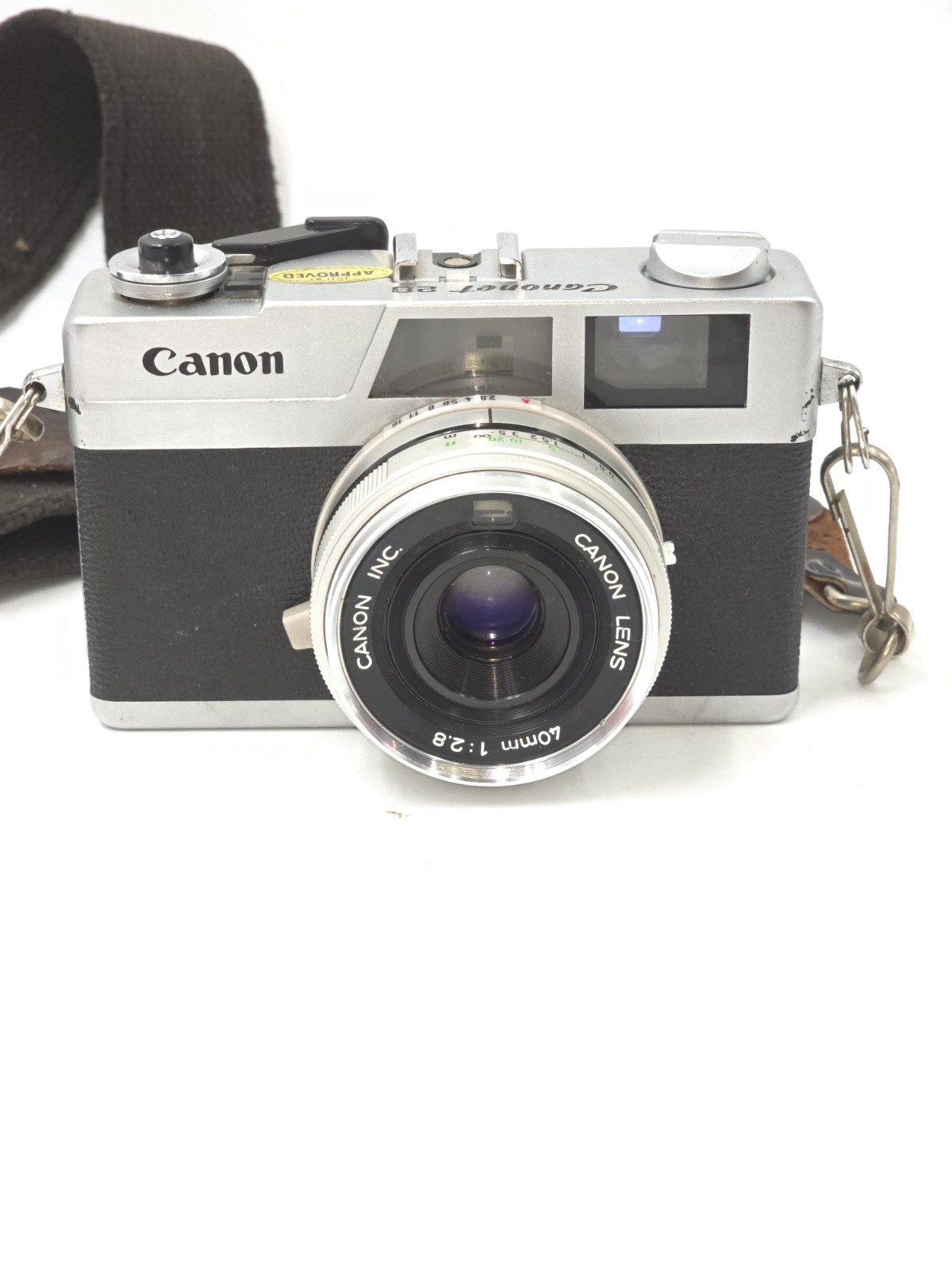
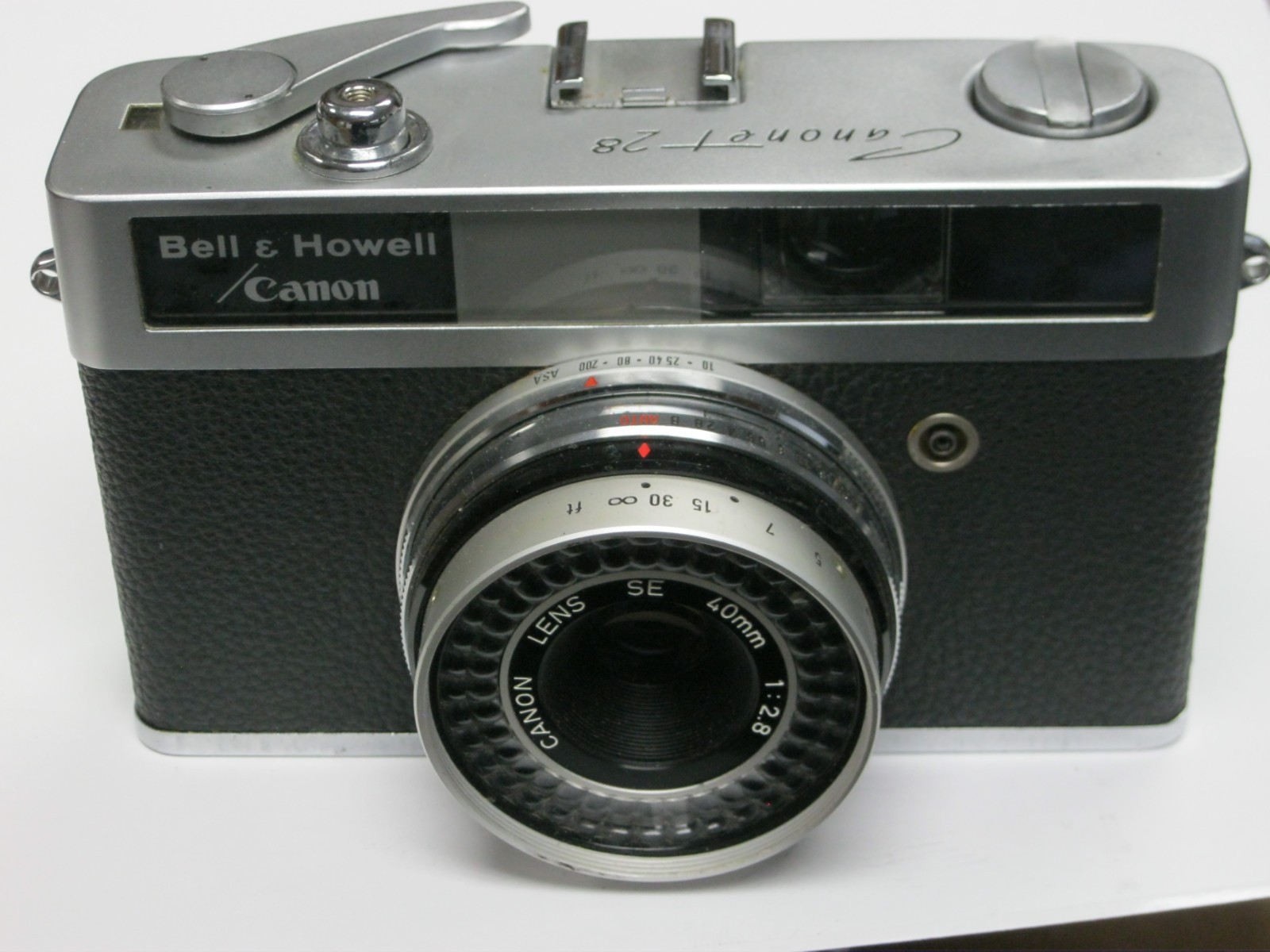
Meet the Canon Canonet 28: Canon’s quiet experiment in simplicity. Released in 1968, this compact 35mm viewfinder camera stripped away the rangefinder, manual controls, and fast glass of its siblings to deliver something rare for its time—a true point-and-shoot experience from a company known for precision engineering. With a fixed 40mm f/2.8 lens and fully automated exposure, it was built for snapshooters who wanted reliability without the learning curve. Not flashy, not fast, but quietly ahead of its time.
Overview
The Canonet 28 arrived when 35mm photography was going mainstream. Canon already had a hit with the rangefinder-based QL17 and QL19—beloved for their lightning-fast lenses and sleek quick-load film system. But instead of doubling down on performance, Canon took a different path. The Canonet 28 ditched the rangefinder and manual exposure entirely, opting for automation and affordability. This wasn’t a tool for enthusiasts. It was for travelers, students, and casual shooters who just wanted to point, focus, and fire.
At its heart is a fixed Canon 40mm f/2.8 FL lens—modest by Canonet standards, but still sharp and well-corrected for everyday use. Exposure is fully automatic, managed by a programmed AE system that links shutter speed and aperture based on readings from a built-in CdS light meter. The camera selects speeds from 1/4 to 1/500 second across ISO 25–400 film, all without user input. No overrides. No dials to tweak. Just load film, set the ISO, and shoot. For 1968, that was radical.
Despite its simplified operation, the build feels solid—metal chassis, clean layout, and Canon’s signature mechanical precision. The optical viewfinder includes a brightline frame for 40mm, but no parallax correction or focusing aid. You estimate focus by eye, a step back from the rangefinder elegance of its cousins. Production ran from 1968 to 1972, then ended without fanfare. No successor followed. Likely, it was caught between eras—too basic for rangefinder fans, too mechanical for the coming wave of electronic compacts.
Specifications
| Specification | Value |
| Type | Fixed-lens compact viewfinder |
| Film Format | 35mm (135 cartridge) |
| Years Produced | 1968–1972 |
| Lens Mount | Fixed Canon 40mm f/2.8 FL lens (non-interchangeable) |
| Shutter | Copal horizontal cloth focal-plane shutter; speeds from 1/4 to 1/500 second (automatically selected) |
| Metering | Built-in CdS (cadmium sulfide) center-weighted meter |
| Exposure Modes | Programmed automatic exposure only (no manual control) |
| Viewfinder | Direct optical viewfinder with 40mm brightline frame; no rangefinder or parallax correction |
| Dimensions | Approximately 130 × 75 × 45 mm; weight ~520 g (with battery) |
Key Features
- Programmed Automatic Exposure: The camera picks both shutter speed and aperture—no math, no guesswork. Just frame and fire.
- Compact 40mm f/2.8 FL Lens: A no-frills normal lens, lighter and slower than the f/1.7–f/1.9 optics on other Canonets, but still capable of crisp, well-balanced images.
- CdS Light Meter with ISO 25–400 Range: Powered by a single PX625 mercury battery, the meter delivers reliable readings in most lighting—when properly calibrated.
- Simple Point-and-Shoot Design: Focus manually, compose in the viewfinder, press the shutter. That’s the entire operation.
- Durable Metal Construction: Built like a late-’60s Canon should be—solid, precise, and built to last with basic care.
Historical Context
The Canonet 28 emerged as consumer photography shifted from craft to convenience. The late 1960s saw demand surge for cameras that anyone could use—no manual, no manual focus, no exposure calculations. Canon had already nailed the enthusiast market with the QL17. The 28 was their play for everyone else.
It marked a quiet departure from the Canonet identity. No rangefinder. No manual mode. Just a direct-view finder and a brain of its own. While Minolta’s Hi-Matic series and Yashica’s Electro 35 offered automation with focusing aids, Canon went all-in on simplicity. The result? A camera that feels more like a prototype for the 1970s point-and-shoot boom than a true Canonet. It didn’t win acclaim, but it signaled where Canon was headed—toward accessibility, electronics, and eventually, the AE-1 revolution.
Collectibility & Value
Today, the Canonet 28 flies under the radar. It’s rarer than the QL17, not because it’s sought after, but because fewer were made and fewer survived. Rangefinder purists pass it by. But for collectors tracking Canon’s evolution, it’s a fascinating pivot point—a moment when the company tested the waters of full automation.
Expect to pay $75–$150 for a working unit, depending on condition and shutter accuracy. The biggest hurdle? The CdS meter relies on the long-discontinued 1.35V PX625 mercury battery. Modern replacements (like 675 hearing aid cells) run at 1.4V and can throw off exposure without recalibration. Common issues include sticky slow speeds, stiff focus rings, and fogged light seals. Focus is entirely manual and estimation-based—no rangefinder patch means sharp shots depend on your eyes and luck. Still, the internals are robust, and some parts are interchangeable with other Canonets, making repairs feasible with the right technician.
Similar Cameras
- Minolta Hi-Matic 9: A compact 35mm viewfinder camera with programmed AE and a 45mm f/2 lens, produced from 1972–1976.
- Yashica Electro 35 CC: A popular aperture-priority AE rangefinder with a 45mm f/1.7 lens, released in 1973.
- Konica C35 Automatic: A true point-and-shoot 35mm camera with autoexposure and a 40mm f/1.8 lens, introduced in 1976.
- Pentax Espio 818: A later compact autofocus 35mm camera, but representative of the automation trend the Canonet 28 helped initiate.
- Olympus 35RC: A high-end compact with aperture-priority AE and a 42mm f/1.8 lens, produced from 1970–1977.
Repair & Maintenance
The Canonet 28 runs its CdS meter on a single 1.35V PX625 mercury battery—now obsolete. Most users swap in 675 zinc-air batteries (1.4V), but the slight voltage difference can skew meter readings, leading to under- or overexposure. For accuracy, consider a voltage-regulated adapter. Note: the mechanical shutter works without battery power, but the meter goes dark.
Over time, slow shutter speeds (1/4 and 1/8 sec) often drag due to dried lubricants or aging shutter curtains. The focus helicoid can stiffen, needing cleaning and relube. Light seals degrade—replace them during servicing to avoid fogging. Parts are scarce, but shared components with other Canonets can help. While the tight internal layout makes repairs tricky, the camera’s mechanical core is dependable. For the right tinkerer, it’s a satisfying restoration project.
eBay Listings


As an eBay Partner, we earn from qualifying purchases. This helps support our independent vintage technology research.
Service Manuals & Schematics
- Owner's Manual — archive.org