Canon 514 XL-S (1976)
At 1.5 kilograms with batteries, it rests in the hands like a promise—this was Canon’s first Super 8 camera built from the ground up to capture sound and image as one.
Overview
The Canon 514 XL-S wasn't just another step in the Super 8 race—it was Canon’s declaration that sound mattered. Introduced in August 1976, this was the company’s first true sound camera, engineered to sync audio directly to film without relying on external recorders or clumsy post-sync workflows. For filmmakers who wanted immediacy and cohesion, that integration was transformative. Built around a robust metal chassis and labeled “Made in Japan” with pride, the 514 XL-S targeted serious amateurs and institutional users who needed reliability without stepping into professional 16mm territory.
At its core, the camera combined a high-speed zoom lens with auto-exposure logic and a large shutter angle—denoted by the “XL” in its name—which allowed more light to hit the film, a critical advantage in low-light indoor shooting. The “S” designation remains partially ambiguous in documentation, but its presence alongside “Canosound” branding on some variants suggests a link to audio capability, though the base 514 XL-S already included an integral microphone. This wasn’t a toy; it was a mid-tier workhorse, positioned as a good mid-range camera with ambitions beyond snapshot filmmaking.
Specifications
| Manufacturer | Canon |
| Model | 514 XL-S |
| Type | Super 8 movie camera |
| Lens | Canon Zoom Lens C-8 / 9-45 mm 1:1.4 macro |
| Weight | 1390 g (body only), 1495 g (incl. batteries) |
| Dimensions | 64 × 136 × 210 mm |
| Film Speed | Automatic ISO setting; Tungsten: ISO 40, 160 |
| Features | Integral microphone |
| Tripod socket | 1/4" |
| Country of manufacture | Japan |
Key Features
9–45mm f/1.4 Power Zoom Lens with Macro Capability
Centered on a fast f/1.4 zoom lens spanning 9 to 45mm, the 514 XL-S delivered exceptional low-light performance for a consumer-grade Super 8 camera. The wide aperture wasn’t just for show—it enabled usable exposure under dim indoor lighting, especially when paired with tungsten-balanced film. The lens offered macro focusing at the wide end, allowing close-ups without additional attachments, a feature appreciated by educators and documentarians. Power zoom control was built into the body, giving smooth, motorized framing adjustments—a rarity in the format at the time.
XL Shutter Design for Increased Light Intake
The “XL” in the model name wasn’t marketing fluff. Collectors and technicians note that Canon reserved the suffix for cameras with a larger shutter opening angle, which increases the exposure time per frame. This design choice directly complemented the f/1.4 lens, further boosting low-light usability. The combination made the 514 XL-S one of the brightest-running auto-exposure Super 8 cameras of its era, reducing grain and improving image stability in challenging conditions.
Integrated Canosound Audio System
As Canon’s first true sound camera, the 514 XL-S embedded audio recording directly into the film transport system. An integral microphone captured sound during filming, syncing it magnetically to the film’s edge—a feature known as Canosound. While later models refined the system, this was the starting point for Canon’s push into synchronized amateur filmmaking. Owners report that while convenient, the microphone is prone to audio distortion over time, and aging components can degrade recording clarity.
Historical Context
Before the 514 XL-S, Canon’s Super 8 offerings lacked native sound integration. The August 1976 launch marked a strategic shift, aligning with broader industry efforts to make home movies more cinematic. At a time when most consumer cameras treated sound as an afterthought, the 514 XL-S treated it as essential. Positioned as a mid-range option, it offered a balance of automation and performance, appealing to schools, corporate training departments, and serious hobbyists who wanted more than silent montages.
Collectibility & Value
The Canon 514 XL-S has developed a quiet reputation among Super 8 collectors—not as rare as some boutique models, but valued for its historical role and optical quality. Units in working condition command strong prices, with recent listings reaching over $1,000, though non-functional examples can still be found for as little as $5 at flea markets. Common failures include sudden power loss, motor stalls, and internal plastic gear degradation—a known weakness in Canon’s design that often requires replacement with modern 3D-printed parts. Lens fogging and microphone distortion are also frequently reported. Repair manuals are available, but sourcing original spare parts remains difficult. Given its status as Canon’s first integrated sound camera, it holds a distinct place in the evolution of consumer filmmaking tools.
eBay Listings
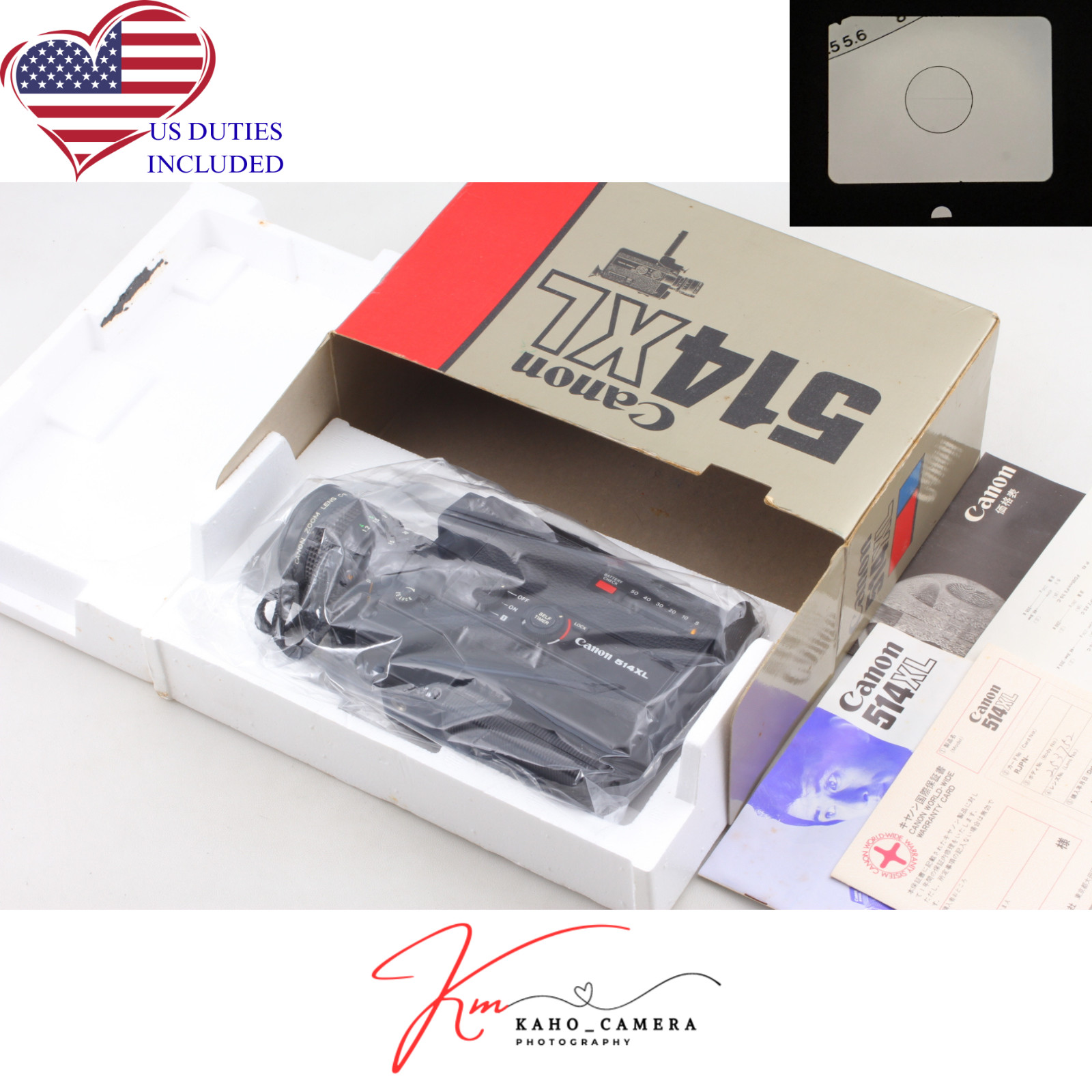
As an eBay Partner, we earn from qualifying purchases. This helps support our independent vintage technology research.