BRONICA ETR
The Bronica ETR, introduced in 1976, was the first 6×4.5 cm medium format single-lens reflex (SLR) camera produced by Bronica, marking the company’s strategic entry into the rapidly growing 645 format market. Designed as a compact, modular system camera, the ETR combined leaf shutter lenses with TTL metering and interchangeable components, offering professional-grade performance in a more portable form than traditional 6×6 or 6×7 systems.
Overview
The Bronica ETR was developed during a period of transition in medium format photography, as photographers sought more portable yet high-resolution alternatives to large format and 6×6 roll film systems. Released in 1976, the ETR was Bronica’s response to the rising popularity of the 6×4.5 cm format, which balanced image quality with economy of film use and faster shooting capabilities. Positioned between the compact 35mm SLRs and bulkier medium format systems, the ETR targeted semi-professional photographers, photojournalists, and advanced amateurs who required higher resolution than 35mm without the bulk of larger formats.
Built around a modular design, the ETR featured interchangeable film backs, viewfinders, focusing screens, and lenses—all centered on a leaf shutter system integrated into the lenses themselves. This allowed flash synchronization at all shutter speeds up to 1/500 sec, a significant advantage over focal-plane shutter systems limited to 1/60 or 1/125 sec sync. The ETR was the first Bronica model to use the ETR lens mount, later standardized across the ETR-S, ETR-Si, and EC-TL models, forming the foundation of Bronica’s 645 system lineage.
The camera was constructed primarily from die-cast aluminum alloy, providing durability while maintaining a relatively lightweight profile for a medium format SLR. It used 120 or 220 roll film to produce ten 6×4.5 cm exposures per roll, advancing via a manual crank with a built-in exposure counter. The ETR also featured a mirror lock-up function, critical for reducing vibration in long exposures and macro work, and supported a range of accessories including motor drives, polarizing filters, and close-up lenses.
Specifications
| Specification | Value |
| Type | Single-Lens Reflex (SLR) |
| Film Format | 6×4.5 cm (120/220 roll film) |
| Years Produced | 1976–1980 |
| Lens Mount | Bronica ETR bayonet mount |
| Shutter | Leaf shutter (in-lens); speeds from 1 sec to 1/500 sec, plus B |
| Metering | TTL open-aperture CdS metering via viewfinder |
| Exposure Modes | Manual only (stop-down metering via AE switch) |
| Viewfinder | Interchangeable pentaprism or waist-level finder |
| Dimensions | Approx. 145 × 100 × 105 mm (w/ standard finder); weight ~950 g (body only) |
Key Features
- Leaf shutter lenses: Enabled flash sync at all shutter speeds up to 1/500 sec, a major advantage for studio and on-location flash work.
- Modular system design: Interchangeable film backs, viewfinders, and focusing screens allowed rapid adaptation for different shooting scenarios.
- TTL CdS metering: Through-the-lens metering provided accurate exposure readings with any lens, using open-aperture metering for bright viewfinder visibility.
- Mirror lock-up: Reduced camera shake during long exposures and macro photography, improving image sharpness.
- 120/220 film compatibility: Supported both film types via interchangeable film backs, doubling frame count with 220 film (20 exposures).
Historical Context
The Bronica ETR was launched at a pivotal moment in medium format history. The 1970s saw increasing demand for more portable, faster medium format systems, particularly from wedding, event, and documentary photographers who needed higher image quality than 35mm but found 6×6 systems like the Mamiya RB67 or Hasselblad 500C/M too cumbersome for rapid shooting. The 6×4.5 cm format, popularized by cameras like the Pentax 6×4.5 and later the Mamiya 645 series, offered a practical compromise—15% more negative area than 35mm with manageable camera size.
Bronica, already established with its SQ and RF series, entered the 645 market with the ETR to compete directly with the Pentax 6×7 (which also offered 6×4.5 with an adapter) and the emerging Mamiya M645. Unlike Mamiya’s focal-plane shutter design, Bronica opted for leaf shutters, prioritizing flash flexibility over high-speed mechanical shutter performance. This decision appealed to studio photographers and portrait artists who relied heavily on strobes. The ETR’s release also predated Nikon’s FM2 and Canon’s AE-1, underscoring Bronica’s early commitment to professional modular systems in the 645 space.
Despite its advanced features, the ETR faced criticism for its manual film advance and lack of aperture-priority automation—features later added in the ETR-Si (1981) and EC-TL (1987). Nevertheless, it was well-received for its build quality, optical compatibility, and system flexibility, laying the groundwork for Bronica’s dominance in the 645 professional market throughout the 1980s.
Collectibility & Value
Today, the Bronica ETR is a sought-after model among medium format film enthusiasts and collectors, particularly those interested in vintage system cameras with full modularity. While not as rare as some of Bronica’s later electronic models, original ETR bodies in working condition typically sell for $250–$450 on the used market, depending on included accessories, film back condition, and viewfinder type. Complete kits with multiple lenses (especially the 75mm f/2.8 or 150mm f/3.5) and a functioning meter can command upwards of $800–$1,200.
When purchasing an ETR, buyers should verify the functionality of the leaf shutters on all lenses, as corrosion or lubricant degradation can cause inconsistent speeds or complete failure. The CdS meter cells are also prone to drift or failure over time; while some can be recalibrated, others require replacement with modern equivalents. Film transport issues—such as misalignment or pressure plate wear—are common in heavily used bodies, and the leatherette and foam light seals should be inspected and replaced if deteriorated. Despite these age-related concerns, the ETR remains repairable through specialized medium format technicians, and parts are still available through niche suppliers and online marketplaces.
Similar Cameras
- Pentax 6×7 – Though primarily a 6×7 camera, it offered 6×4.5 capability via frame mask; known for superb optics but larger size.
- Mamiya M645 (1000s) – Focal-plane shutter system with interchangeable film backs; lighter and simpler but limited to 1/60 sec flash sync.
- Hasselblad 2000 FC – A later 645 system from Hasselblad; more advanced electronics but significantly more expensive and less common.
- Konica Autoreflex TC 645 – A fixed-back 645 SLR with aperture-priority metering; less modular but more automated.
- Fuji GX680 – Though larger and technically a 6×8 cm system, it shared modularity and leaf shutter advantages in studio applications.
Repair & Maintenance
The Bronica ETR uses two PX625 (or equivalent 1.35V mercury) batteries for its CdS meter, typically housed in the prism finder. Modern replacements include Wein Cell MRB625 or adapters for SR44 batteries, though exposure compensation may be required due to voltage differences. The camera body itself is mechanically operated and does not require batteries for shutter function.
Common maintenance issues include sluggish leaf shutters due to dried lubricants, especially in lenses stored for long periods. These require professional CLA (clean, lubricate, adjust) servicing. The film advance mechanism can develop wear in the sprocket gears, leading to inconsistent frame spacing. Mirror movement should be checked for smooth operation, and the focusing screen should be cleaned or replaced if scratched or hazy. Regular use, proper storage, and periodic servicing every 5–10 years are recommended to maintain optimal performance.
eBay Listings
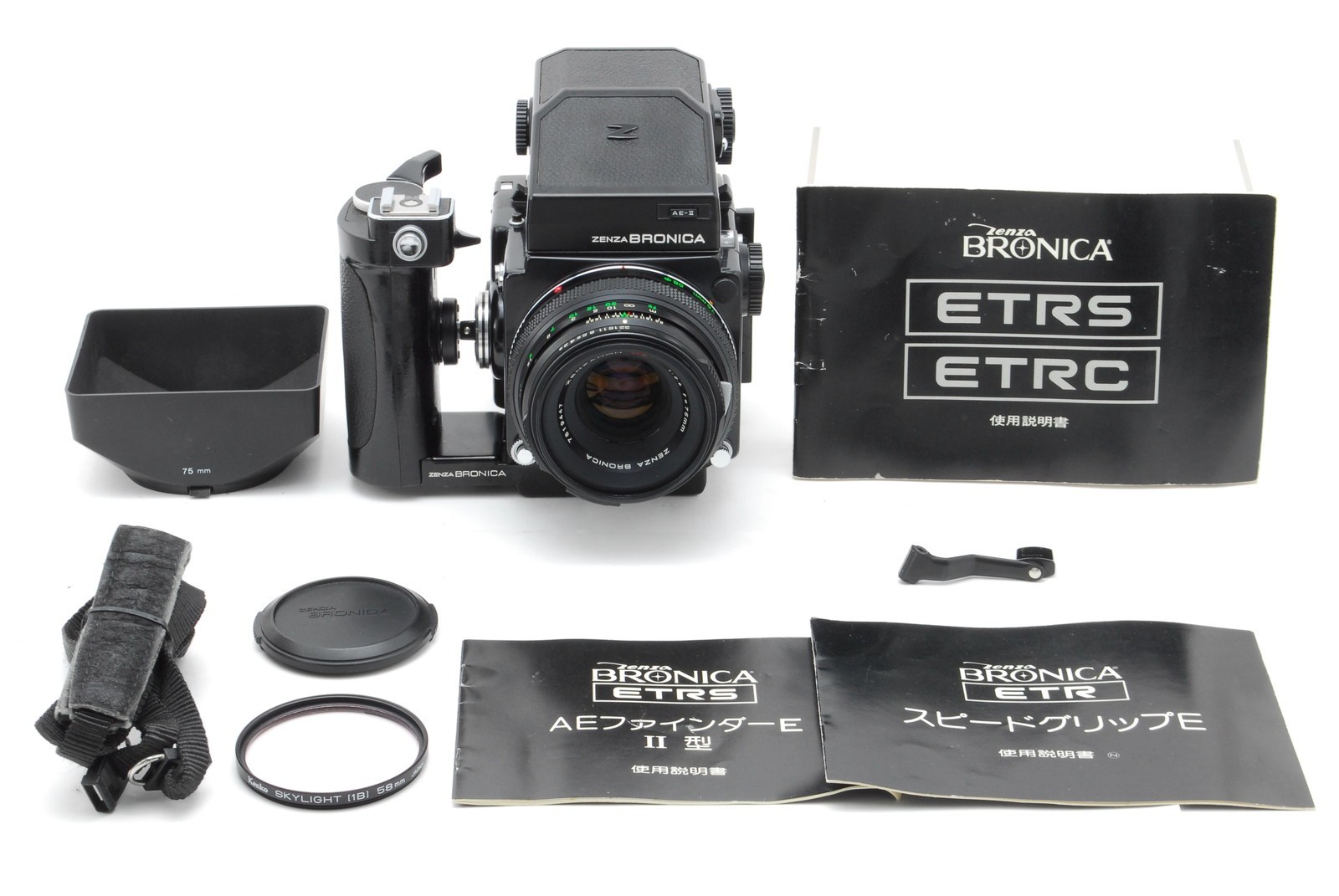

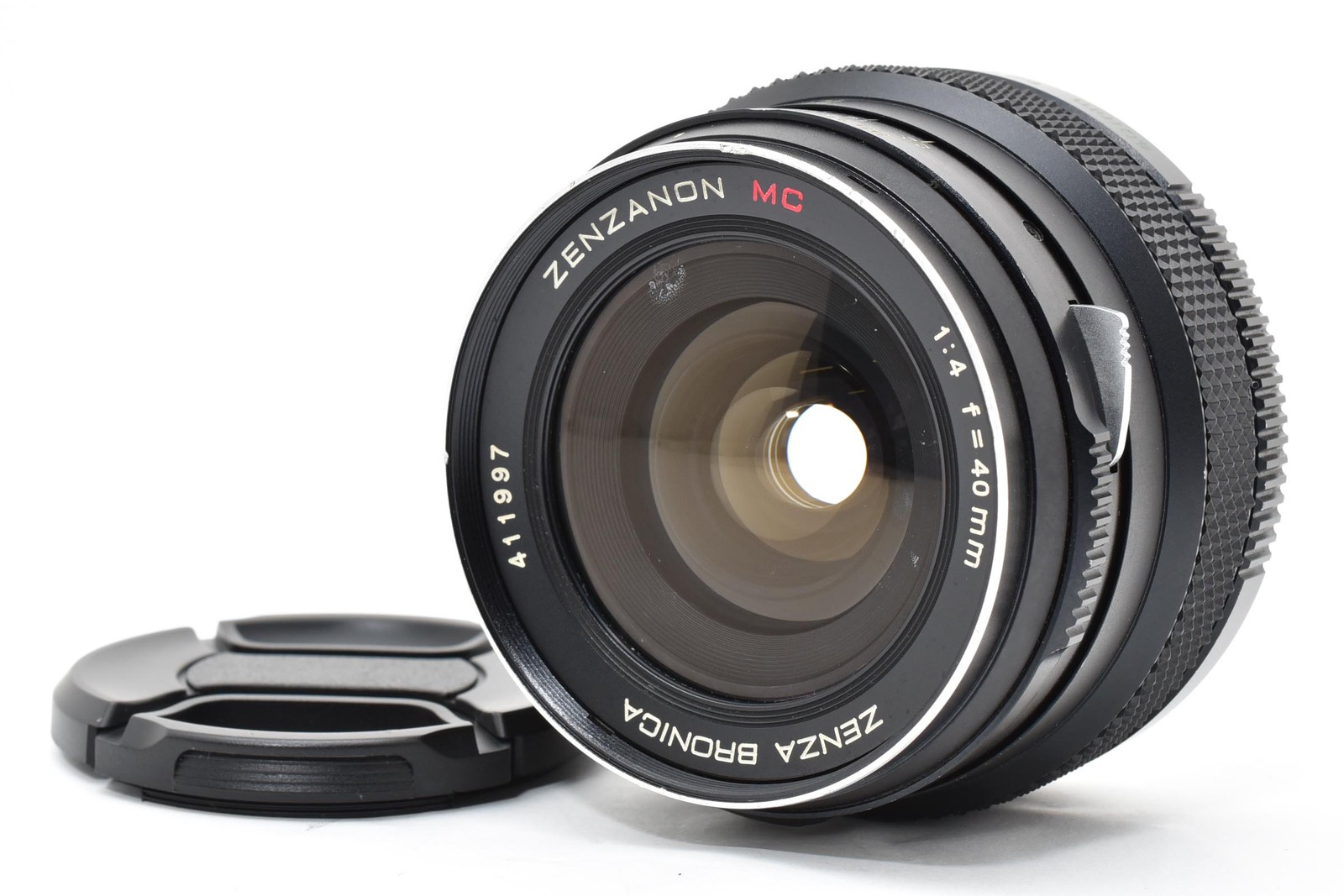

As an eBay Partner, we earn from qualifying purchases. This helps support our independent vintage technology research.
Service Manuals & Schematics
- Owner's Manual — archive.org
- Owner's Manual — archive.org
- Owner's Manual — archive.org
- Manual — archive.org